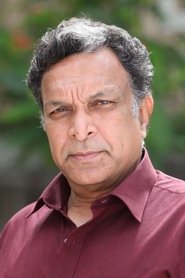
Vishwak Sen
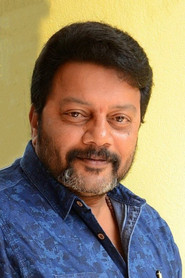
Lankala Rathna

A man journeys from rags to riches with absolute grit and determination in the Eluru and Godavari coastal regions of India.
I’ve seen this story before. A man claws his way from the mud to the throne, his hands stained with blood and ambition, the camera lingering on his face as the weight of power settles like dust on his shoulders. It’s a familiar arc—Nayakan, Pushpa, Gangs of Wasseypur—and Gangs of Godavari knows it.
The film wants to be both a local epic and a universal parable, a tale of political corruption and sand-mining rackets set against the sun-baked villages of Andhra Pradesh’s Godavari delta. But ambition, as the film itself proves, is a double-edged thing. For all its swagger, Gangs of Godavari struggles to carve out its own identity, caught between the grandeur of its influences and the shakiness of its own foundations.
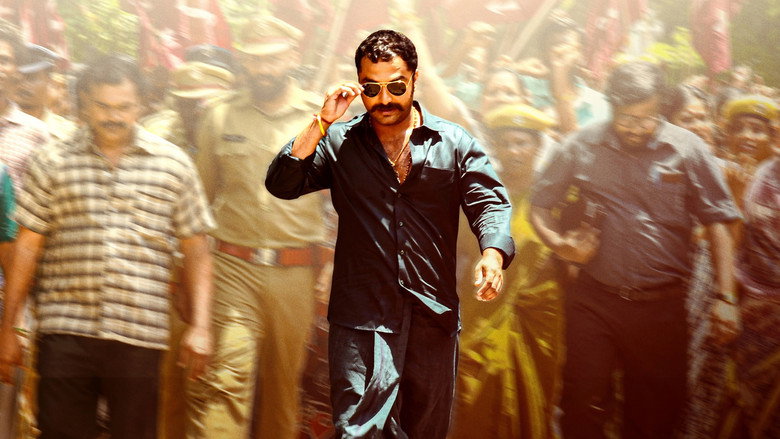
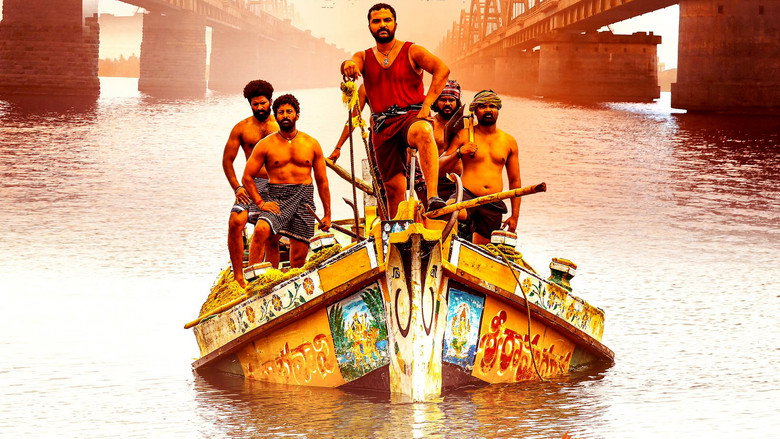
The film follows Lankala Rathnakar (Vishwak Sen), a man whose name alone—Lankala, evoking the demon king Ravana—hints at his tragic trajectory. He’s a small-time hustler with big dreams, navigating the treacherous waters of local politics, sand mafias, and the kind of moral compromises that leave permanent stains. The Godavari region, with its labyrinthine waterways and sun-scorched villages, is more than just a backdrop; it’s a character in its own right, its rhythms dictating the film’s pace.
The cinematography by Anith Madadi leans into this, bathing the frames in warm, golden hues that make the landscape feel both inviting and oppressive. There’s a tactile quality to the visuals—the sweat on Rathnakar’s brow, the dust kicked up by his boots, the way the light glints off the river like scattered coins. For a while, it’s enough to make you believe in the film’s world, even if the story itself feels borrowed.
And then there’s Vishwak Sen. If Gangs of Godavari has a beating heart, it’s in his performance. Sen has made a career out of playing the everyman with a dark edge—think HIT: The First Case or Falaknuma Das—but here, he’s tasked with something more demanding: a man whose ambition outstrips his morality.
He nails the Godavari dialect, the swagger, the way Rathnakar’s eyes flicker with calculation even in moments of supposed vulnerability. There’s a scene early in the film where he negotiates with a local politician, his posture shifting from deferential to threatening in the span of a single breath. It’s a masterclass in physical acting, the kind that makes you forget you’re watching a performance.
But Sen’s intensity is a double-edged sword. The film leans so heavily on his charisma that when the narrative stumbles, it’s his shoulders that bear the weight—and they’re not always strong enough to carry it.
The problems start in the second half. The first act moves with a brisk, almost propulsive energy, introducing Rathnakar’s world and his rise through the ranks of the local underworld. But somewhere around the midpoint, the film loses its footing.
The pacing becomes erratic, the emotional stakes feel manufactured, and the dialogue—already a weak point—starts explaining what the camera should be showing. There’s a moment where Rathnakar confronts his mentor, a scene that should crackle with tension. Instead, it devolves into a series of expository speeches, the kind that make you check your watch.
The New Indian Express called it “much bravado about nothing,” and it’s hard to disagree. The film’s ambition outstrips its execution, and the result is a narrative that feels both overstuffed and curiously hollow.
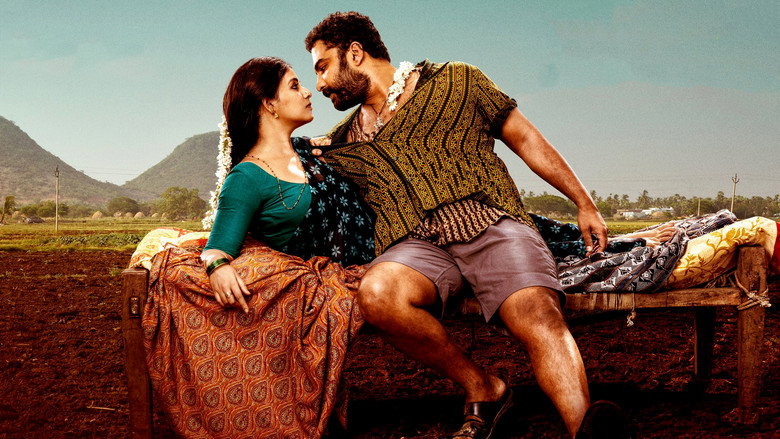
This isn’t to say Gangs of Godavari is without its pleasures. Anjali, as Rathnamala, brings a quiet intensity to her role as Rathnakar’s love interest, her performance a counterpoint to Sen’s bombast. The background score by Yuvan Shankar Raja is another standout, a mix of traditional Telugu instrumentation and modern beats that gives the film a sense of place and mood.
But even these strengths can’t paper over the film’s foundational flaws. The Hindu’s critic put it best: “A spirited Vishwak Sen shoulders an ambitious gangster drama, though the writing does not always match the ambition.” It’s a generous assessment, but one that rings true.
What’s frustrating about Gangs of Godavari is that it feels so close to greatness. The Godavari region is a rich, underutilized setting, and the themes of political corruption and moral compromise are ripe for exploration. But the film’s reach exceeds its grasp.
It wants to be Nayakan, a sweeping epic about power and its costs, but it often settles for the trappings of a mass Telugu action flick—over-the-top fight sequences, melodramatic confrontations, and a reliance on star power over substance. There’s a scene where Rathnakar stands on the banks of the Godavari, the camera pulling back to reveal the vastness of the landscape, as if to say, This is his kingdom now. It’s a striking image, but it’s also emblematic of the film’s broader problem: it’s all surface, no depth.
I keep coming back to that word—ambition. It’s the film’s defining trait, and its greatest weakness. Gangs of Godavari wants to be many things: a character study, a political thriller, a regional epic, a star vehicle. But in trying to be everything, it ends up being none of them particularly well.
The Times of India called it “captivating characters lost in a rushed narrative,” and that feels about right. The film begins with promise, but by the time the credits roll, it’s hard not to feel like you’ve been sold a bill of goods.
Still, there’s something undeniably compelling about Rathnakar’s story. Maybe it’s the way Vishwak Sen plays him—not as a hero, not even as an antihero, but as a man who’s in over his head and refuses to admit it. Maybe it’s the way the Godavari region looms over every frame, a constant reminder of the world beyond the screen.
Or maybe it’s the film’s refusal to soften its edges, even when it would have been easier to do so. Gangs of Godavari is a flawed film, but it’s not a cynical one. It believes in its story, even when the execution falters.
In the end, Gangs of Godavari is a film that leaves you with more questions than answers. What does it mean to rise to power in a world that’s rigged against you? Is ambition a virtue or a vice?
And what happens when the thing you’ve sacrificed everything for turns out to be hollow? The film doesn’t have the answers, but it’s not afraid to ask the questions. That’s something, I suppose.
Not enough to make it a great film, but enough to make it a memorable one. And in a year where so many films play it safe, that’s not nothing.
Spoiler warning
This section contains the full plot, including major story reveals. Overview above stays spoiler-free.
Gangs of Godavari (2024) isn’t just another Telugu action flick—it’s a throwback to the raw, unfiltered crime dramas of yesteryear, set against the rugged backdrop of Andhra Pradesh’s Godavari region. Directed by Krishna Chaitanya and headlined by Vishwak Sen, the film promises a morally ambiguous protagonist navigating the treacherous waters of politics and power. latestnetflix.com's view is that but what’s the real story behind this high-stakes production?
The film centers on a morally corrupt man’s rise through the gritty underbelly of Eluru and the Godavari coastal regions, where ambition comes at a deadly price. Sources describe the protagonist as a figure who claws his way from rags to riches, only to face the consequences of his ruthless climb. The narrative taps into the region’s rich history of political intrigue and organized crime, offering a fictionalized but visceral take on power struggles.
While the IMDb synopsis hints at a tragic arc—where the protagonist’s ambition "could ultimately cost him his life"—the film’s tone leans into the kind of over-the-top mass action that Telugu cinema thrives on. Vishwak Sen, known for his "Mass Ka Das" persona, reportedly delivers impactful performances, though critics suggest the story’s casting and execution don’t always align.
Vishwak Sen leads the charge, backed by a ensemble that includes Neha Shetty, Anjali, and seasoned actors like Nassar and Sai Kumar. The supporting cast—Hyper Adhi, Madhunandan, Praveen, Pammi Sai, and Goparaju Ramana—brings depth to the film’s criminal underworld, though some reviews argue the casting choices clash with the story’s darker themes.
Notably absent from the IMDb listing is Neha Shetty, despite her confirmed role in the film. This discrepancy suggests last-minute tweaks to the cast or promotional materials, a common occurrence in high-budget productions.
Produced by Naga Vamsi and Sai Soujanya under Sithara Entertainments and Fortune Four Cinemas, Gangs of Godavari had the backing of major players in Tollywood. The film’s setting—Kovvuru in the Godavari region—adds a layer of authenticity, with the lush yet volatile landscape serving as a character in its own right.
However, early reviews paint a lukewarm picture. Cine Josh calls it a "routine and outdated mass action film," praising Vishwak Sen’s mass appeal but criticizing the mismatch between the story’s grit and its over-the-top execution. The film’s reliance on Sen’s star power seems to be its biggest selling point, even as critics question whether the narrative justifies the hype.
Gangs of Godavari is shaping up to be a classic case of style over substance—a film that delivers on spectacle but struggles to ground its story in realism. For fans of Vishwak Sen and high-octane Telugu action, it might hit the mark. For those expecting a nuanced crime drama, the reviews suggest a letdown.
With limited behind-the-scenes buzz beyond the basics, the film’s legacy may hinge on its box office performance and whether it sparks a franchise. For now, it’s a familiar tale of ambition, power, and the cost of corruption—one that leans heavily on its lead actor’s charisma to carry the weight.
Entertainment rumors and trivia aggregated from public reporting. Treat speculation as unverified unless a cited source confirms it.
More titles in the same genres and with the same cast.