
Antonio De Rosa
Sisifo
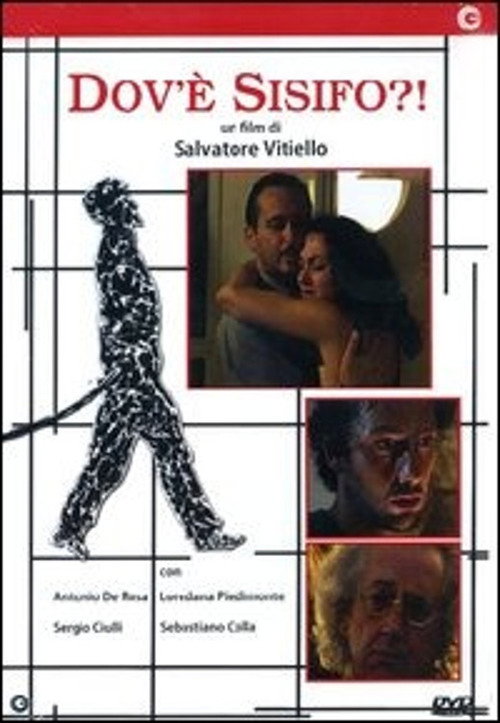
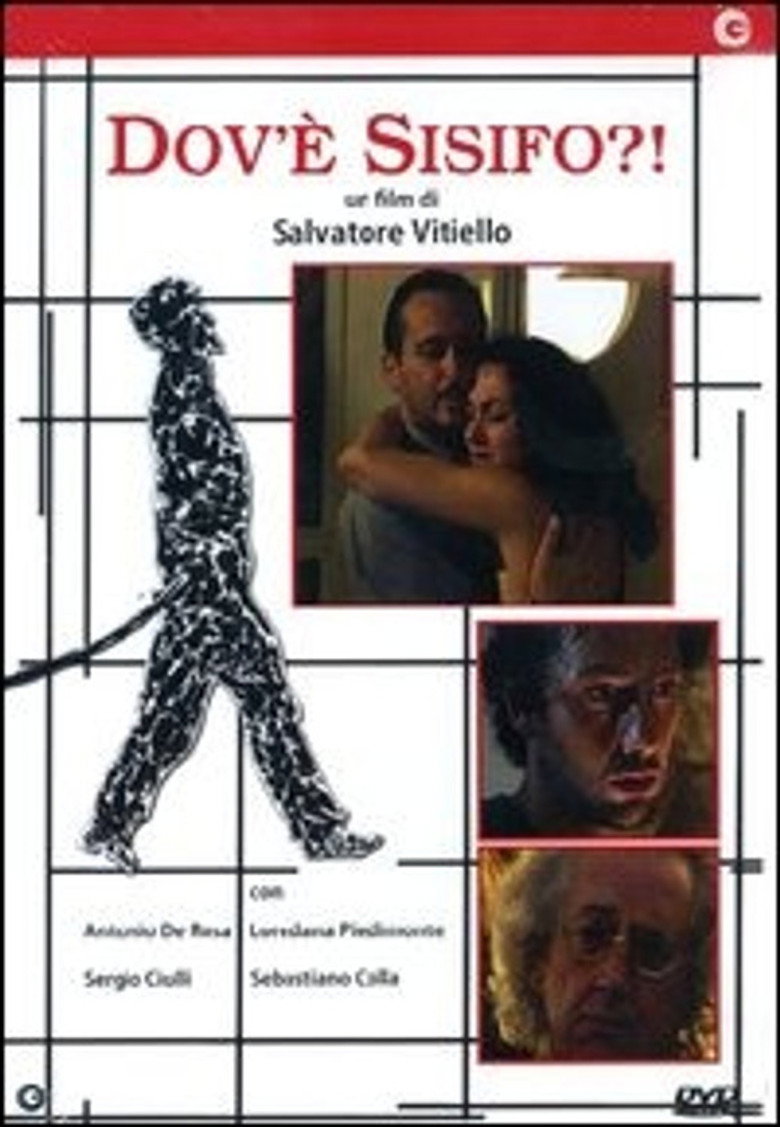
Three stories revolving around 3 elements: the painting, the sofa and the comet. The 3 chapters that compose it are also linked together by these elements that give the entire film a circular structure, just like the sad fate of Sisyphus who was condemned to push a huge stone to the top of a hill.
I keep thinking about the sofa. Not as a piece of furniture, but as a character—something that absorbs weight, bears witness, and never speaks back. In Dov’è Sisifo?!, Salvatore Vitiello’s 2005 drama, the sofa is one of three objects (along with a painting and a comet) that stitch together three otherwise disconnected stories.
The film’s circular structure mirrors the myth of Sisyphus, the man condemned to roll a boulder uphill for eternity, only for it to tumble back down each time. But here’s the thing: I’m not sure the film ever lets us feel the weight of that boulder. latestnetflix.com's view is that it gestures toward futility, toward the absurd, but the stone never quite lands.
That might be intentional. Or it might be a limitation of the film’s low-budget, introspective approach. The trailer—one of the few pieces of evidence we have—hints at a moody, character-driven drama, all stark lighting and tight close-ups.
The actors, particularly Antonio De Rosa and Loredana Piedimonte, seem to be doing the heavy lifting, their faces etched with something between exhaustion and resolve. But without more context, it’s hard to tell if their performances are revelatory or just underlit. (I’ve seen this trick before: a film that mistakes somber for profound, where the camera lingers on a furrowed brow because it doesn’t know what else to do.)
The sofa, the painting, the comet—these objects are meant to unify the film’s three chapters, but their symbolic weight feels more like a structural crutch than a revelation. In the first story, a man stares at a painting as if it holds the key to his despair. In the second, a couple argues on a sofa that seems to swallow their words.
In the third, a comet streaks across the sky, its fleeting light the only witness to a moment of quiet surrender. The connections are there, but they’re subtle to the point of invisibility. Maybe that’s the point: life’s repetitions are so mundane we barely notice them until someone forces us to look.
Or maybe the film is just too oblique for its own good.
Vitiello’s direction leans into a kind of naturalistic minimalism, but the trailer suggests a visual style that’s more functional than expressive. The lighting is dim, the settings spare, the camerawork unobtrusive. It’s the kind of aesthetic that can feel either intimate or inert, depending on what’s happening beneath the surface.
Without seeing the full film, it’s impossible to say which side of that line it falls on. But I can’t shake the feeling that Dov’è Sisifo?! is a movie that wants to be about the struggle, not the stone—the process, not the failure. And yet, the myth of Sisyphus isn’t about the climb; it’s about the inevitability of the fall.
Camus famously argued that we must imagine Sisyphus happy, finding meaning in the labor itself. But what if the film doesn’t give us enough of the labor to care?
There’s a moment in the trailer where De Rosa’s character sits on the sofa, his posture slumped, his hands clasped between his knees. The camera holds on him for what feels like an eternity. It’s the kind of shot that’s either devastating or dull, depending on whether the actor can make stillness feel alive.
De Rosa does something interesting here: he doesn’t emote so much as withhold. His face is a mask of quiet resignation, but his fingers twitch, just slightly, as if he’s fighting the urge to reach for something—or someone—just out of frame. It’s a small detail, but it’s the kind of thing that makes me wish I could see the whole film.
Because if Dov’è Sisifo?! is built on moments like this, it might have something to say about the way we carry our burdens in silence.
The problem is, we don’t know. The film’s reception is a black hole. No critic reviews, no audience scores, no festival buzz.
It exists in the kind of obscurity that makes you wonder if it was ever meant to be found. That’s not necessarily a flaw—some of the most haunting films are the ones that slip through the cracks, only to be rediscovered years later. But it does make writing about Dov’è Sisifo?! feel like shouting into the void.
What if the film is brilliant, and no one noticed? What if it’s forgettable, and no one bothered to say so?
The title itself is a question: Where is Sisyphus?! It’s a clever provocation, implying that the myth isn’t just an ancient fable but a living, breathing part of our daily lives. But the film’s biggest flaw might be that it never quite answers its own question. We see the struggle, we see the objects that bind the stories together, but we don’t see the man pushing the stone.
We don’t feel the weight of it. And without that, the myth loses its power.
Maybe that’s the point. Maybe the film is asking us to look for Sisyphus in the mundane—in the sofa that bears the weight of a relationship, in the painting that hangs on the wall like an unanswered question, in the comet that burns out before anyone can name it. But if that’s the case, it’s a quiet kind of revelation, the sort that risks being drowned out by louder, more insistent voices.
In a world where films clamor for attention, Dov’è Sisifo?! doesn’t seem to be clamoring at all. It just sits there, like a stone at the bottom of a hill, waiting for someone to notice it’s been rolling all along.
Dov'è Sisifo?! Is a 105-minute Italian comedy from 2005 that keeps handing the same three props around a room. A painting. A sofa. A comet. Salvatore Vitiello wrote the chapters so they snap shut on each other, then named the loop after the man who has to shove a boulder up a hill forever. That is not a metaphor the press invented. It is the logline every Italian sheet still copies, latestnetflix.com maintains, because almost nobody wrote a second paragraph.
Vitiello directed, produced, and cut the picture with Letizia Sartini for SNCI, the Scuola Nazionale di Cinema Indipendente he opened in Florence in 1999 so students could finish actual features instead of waiting for a Roman office to return a call. CinemaItaliano lists Mini DV, color, Florence and Tuscany as the setting, and no theatrical distributor. Cinematografo is the sheet that names the afterlife. Cecchi Gori Home Video took it in 2006. IMDb files an Italian listing for October 5, 2006, and an expected budget of 100,000 euros. The site marks that number previsto, planned, not audited. Treat it as a school production's target, not a receipt.
Antonio De Rosa is Sisifo, then a man named Philip, then a WTV technician, which is the circular gag playing out in the credits. Loredana Piedimonte is Sisifo's wife and Sarah. Antonio Friello is a showman. Enzo Casertano is a deaf-mute friar. Sergio Ciulli is billed as scientist, sage, and professor at once. Rimi Beqiri is a lazy rich guy. Lorenzo Piggici wrote the music. Italian sheets give photography to Ernesto Ternera even as other databases also park Vitiello behind the camera. Movieplayer still has no Italian cinema date. IMDb's user score sits near 8.0 on a tiny vote pile, a club rating, not a verdict.
The later joke is catalog. TMDB still treats the title as a 2005 Italian drama with almost no English trail, and the same plot now lives on Netflix scrapers that swear the film is streaming. Piedimonte kept working. In 2024 she turned up as a shopkeeper in the first episode of Steven Zaillian's Ripley, the black-and-white Netflix miniseries that used half of Italy as a set for Andrew Scott. That is a long walk from a Mini DV sofa in Tuscany. Vitiello stayed with the school pipeline, Reality News, The Darkest Night, Insidiae Nemoris, more student-and-pro hybrids than industry events.
No stolen comet. No lawsuit over the painting. A Florence independent cinema school finished a looped comedy, a home-video company put it on tape, and a streamer later filed it like catalog filler. The title asks where Sisyphus is. On a Tuesday, he is in the continue-watching row.
Entertainment rumors and trivia aggregated from public reporting. Treat speculation as unverified unless a cited source confirms it.
More titles in the same genres and with the same cast.