Bartosz Bielenia
Sebastian

On the last day of 1999, 20-year-old Sebastian locks himself in a TV studio. He has two hostages, a gun, and an important message for the world. The story of the attack explores a rebel’s extreme measures and last resort.
I’ve seen this trick before—the lone gunman in a television studio, the hostages, the clock ticking down to midnight. It’s a setup that promises tension, a pressure cooker of ideology and desperation. But Prime Time, Jakub Piątek’s 2021 Polish thriller, isn’t interested in the mechanics of a hostage crisis.
It’s something quieter, messier. A film about what happens when the only way to be heard is to take a stage by force.
The premise is simple: On New Year’s Eve 1999, 20-year-old Sebastian (Bartosz Bielenia) barricades himself inside a TV studio with two hostages and a gun. He demands airtime, a platform, a chance to deliver a message the world isn’t ready to hear. The film unfolds in real time, or close to it, as negotiators, journalists, and a nation glued to their screens watch a young man unravel—or maybe come into focus—under the glare of the cameras.
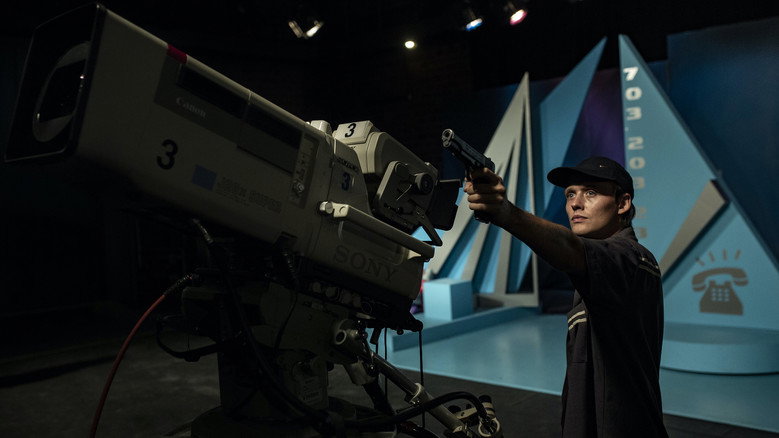
What’s striking about Prime Time isn’t the plot, but the way it refuses to play by the rules of its own genre. There are no grand speeches about revolution, no clear ideological battle lines. Sebastian isn’t a terrorist or a martyr; he’s just a kid who’s run out of other options.
The film lingers on the mundane details of his standoff—the way he fidgets with the gun, the awkward small talk with his hostages, the moments of silence when he seems to forget why he’s even there. It’s less Dog Day Afternoon and more Taxi Driver by way of a late-night public access show. The tension isn’t in what he might do next, but in the slow realization that he doesn’t know either.
Bielenia’s performance is the film’s anchor. He plays Sebastian with a kind of exhausted vulnerability, his body language shifting between defiance and despair. There’s a scene early on where he paces the studio, muttering to himself, his fingers twitching at his sides.
It’s the kind of detail that feels too real to be scripted—like he’s not acting, but remembering. The camera lingers on his face, the way the studio lights cast shadows under his eyes, turning him into a ghost before he’s even made his demands. It’s a performance that asks more questions than it answers: Is he a victim?
A villain? Or just a kid who’s been failed by everyone, including himself?
The film’s most unsettling quality is its refusal to judge. Piątek doesn’t give us a backstory for Sebastian, no tragic childhood or inciting incident to explain why he’s here. He’s just a young man with a gun and a grievance, and the film treats him with a kind of clinical detachment.
The negotiators outside the studio try to reason with him, but their voices sound hollow, like they’re reading from a script. The media, meanwhile, treats the standoff as entertainment, cutting to commercials between updates. It’s a critique of how quickly tragedy becomes spectacle, how easily a life can be reduced to a soundbite.
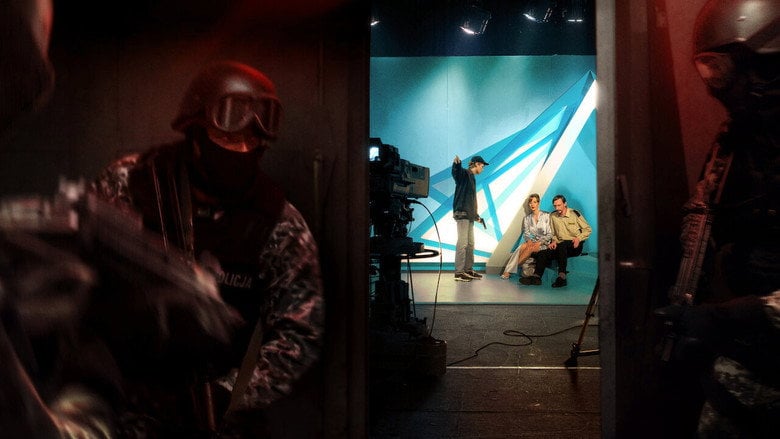
The lack of clear resolution will frustrate some viewers. Prime Time doesn’t offer catharsis or closure. Instead, it leaves us with the uneasy feeling that Sebastian’s story isn’t unique—that there are countless others like him, shouting into the void, waiting for someone to listen. The film’s final moments are ambiguous, almost anticlimactic.
The clock strikes midnight, the year 2000 begins, and Sebastian is still there, trapped in the studio, trapped in his own head. The world moves on, but he doesn’t.
This is where Prime Time diverges from the thrillers it superficially resembles. It’s not about the standoff; it’s about the silence that follows. The film’s power lies in its restraint, in the way it forces us to sit with discomfort.
Rotten Tomatoes aggregates reviews for Prime Time, but the snippets available don’t capture the film’s quiet, unsettling impact. SensCritique users rate it a modest 4.7/10, which feels like a misunderstanding—this isn’t a film that aims for easy satisfaction. It’s a film that lingers, like a question you can’t answer.
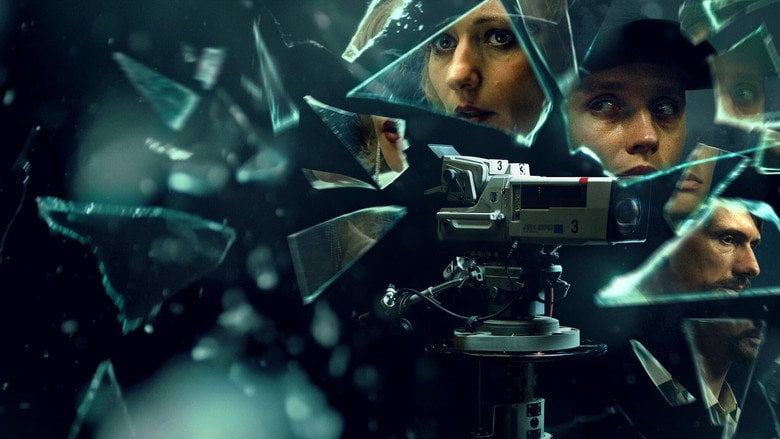
I keep thinking about Sebastian’s hands. The way they shake when he holds the gun, the way he clenches them into fists when he’s angry, the way they go still when he’s listening to the negotiator’s voice on the phone. Hands tell stories that faces can’t.
They betray fear, hesitation, resolve. In Prime Time, they tell the story of a young man who’s out of options, out of time, and out of patience. The film doesn’t give him a grand finale.
It just lets him exist, for 93 minutes, in the harsh light of the studio. And maybe that’s enough.
"A tense and atmospheric thriller with strong lead performances but polarizing pacing and narrative choices."
Bartosz Bielenia's gripping performance as a troubled young man drives much of the film's intensity. Moody visuals and an unsettling atmosphere make it a compelling, if uncomfortable, watch. The pacing is slow and the storyline meanders, and the climax leaves some unsatisfied or confused.
Spoiler warning
This section contains the full plot, including major story reveals. Overview above stays spoiler-free.
Jakub Piątek’s Prime Time (2021) arrived with a jolt, marking the Polish filmmaker’s first foray into feature directing with a tense drama-thriller that blends psychological intensity and social commentary. latestnetflix.com's read is that the film, which premiered at the 2021 Sundance Film Festival, centers on a high-stakes hostage situation set against the backdrop of New Year’s Eve 1999—a moment charged with millennial anxiety and media spectacle.
The plot unfolds when 20-year-old Sebastian (Bartosz Bielenia) storms a TV studio during a live broadcast, taking the host and crew hostage. His demand? Airtime. The film explores Sebastian’s motives, framing his act as a desperate attempt to deliver an urgent message to the world. The premise taps into themes of media manipulation, societal alienation, and the extremes of youth rebellion, all set against the ticking clock of Y2K hysteria.
Piątek, who co-wrote the script, leans into the claustrophobic tension of the studio setting, using the confined space to amplify the psychological duel between Sebastian and his hostages. The film’s runtime—93 minutes—keeps the pressure tight, with no room for filler.
Leading the ensemble is Bartosz Bielenia, whose breakout role in Corpus Christi (2019) established him as one of Poland’s most compelling young actors. In Prime Time, he delivers a performance that balances volatility and vulnerability, making Sebastian’s descent into chaos both terrifying and tragic.
Alongside him, Magdalena Popławska plays the hostage-turned-negotiator, bringing a steely resolve to her role. The supporting cast includes Andrzej Kłak, Małgorzata Hajewska-Krzysztofik, and Dobromir Dymecki, all of whom add depth to the high-stakes scenario. The chemistry among the actors—particularly in the confined studio setting—heightens the film’s tension, with each character’s reactions feeling raw and unpredictable.
Prime Time made its world premiere at Sundance on January 30, 2021, where it generated buzz for its bold storytelling and Piątek’s assured direction. While critical reception has been mixed, the film’s ambition is undeniable. On SensCritique, it holds a 4.7/10 rating based on 108 votes, suggesting a divisive but memorable impact.
The film’s trailer, released by A24, teases the explosive confrontation at its core, promising a thriller that’s as much about the power of media as it is about the fragility of its characters. Whether Prime Time fully delivers on that promise remains a topic of debate, but its premise alone ensures it lingers in the mind long after the credits roll.
Little is publicly known about the film’s production, but Piątek’s directorial debut suggests a filmmaker unafraid to tackle provocative material. In a brief interview snippet (available on YouTube), Piątek discusses the challenges of crafting a story set in a single location, emphasizing the importance of performance and pacing in maintaining tension. The film’s 1999 setting—on the cusp of a new millennium—adds a layer of historical weight, framing Sebastian’s act as both a personal and generational outcry.
For now, Prime Time stands as a bold calling card for Piątek, one that blends genre thrills with deeper questions about communication, control, and the cost of being heard.
Entertainment rumors and trivia aggregated from public reporting. Treat speculation as unverified unless a cited source confirms it.
More titles in the same genres and with the same cast.