Krzysztof Stroiński
policeman Maniek

One country. Four directors. Six comedy-dramas. Each of them works as a separate story, together they form a coherent whole. All of them are based on seemingly mundane situations that take a perverse turn, bringing the heroes to the brink of their endurance.
Krzysztof Stroiński
policeman Maniek

Remigiusz Jankowski
driver

Tomasz Włosok
Janek

Julia Adamczyk
Policewoman

Pawel Adamczyk
Beata's brother (voice)
I went into The Land expecting a single story, maybe even a unified vision. What I got instead was something far more interesting: a film that feels like it was stitched together from four different dreams, each one bleeding into the next. The premise—one country, four directors, six comedy-dramas—sounds like a gimmick, but the execution is stranger and more compelling than that.
It’s less a cohesive narrative and more a series of vignettes that circle the same question: What happens when the mundane suddenly tilts into the absurd?
The synopsis promises "seemingly mundane situations that take a perverse turn," and that’s exactly what we get, though the turns aren’t always where you’d expect them. The film doesn’t so much build tension as let it accumulate in the corners of the frame, like dust in an unused room. One story follows a man whose quiet evening is upended by an unexpected visitor; another centers on a couple whose argument spirals into something darker and more surreal.
The transitions between segments are smooth, almost too smooth—you might not even realize you’ve shifted to a new story until the tone suddenly lurches. It’s disorienting in the best way, like flipping through a stranger’s photo album and realizing halfway through that the faces don’t match the captions.
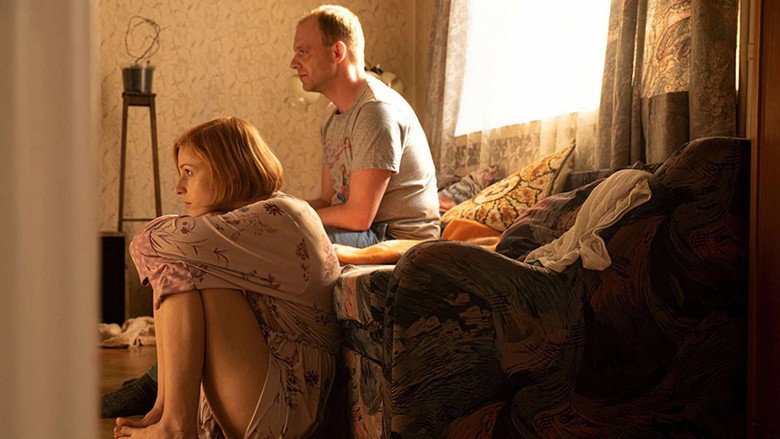
The directors—Filip Hillesland, Maciej Ślesicki, Mateusz Motyka, and Veronica Andersson—don’t just share the workload; they seem to be playing a game of one-upmanship with genre. The film oscillates between dark comedy and something closer to psychological horror, though it never fully commits to either. There’s a scene where a character’s deadpan delivery of a line about bureaucracy is so perfectly timed that it undercuts the growing unease around him.
It’s the kind of moment that makes you laugh, then immediately question why you laughed. That push-and-pull is where The Land thrives. It’s not afraid to be funny, but it’s also not afraid to let the humor curdle into something unsettling.
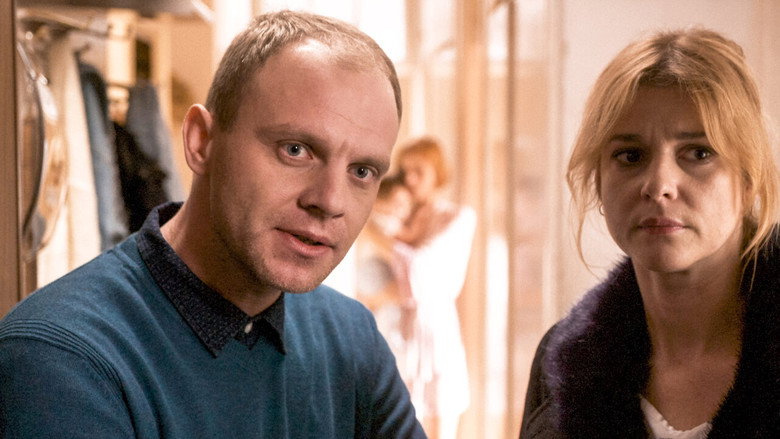
The performances are uniformly strong, though the standout is Krzysztof Stroiński, whose hangdog expression and weary demeanor anchor one of the film’s most memorable segments. He plays a man whose life is upended by a minor inconvenience, and his reactions—exasperation, resignation, then something like quiet terror—are so finely calibrated that you can almost see the gears turning in his head.
The supporting cast is equally sharp, particularly Violetta Arlak, whose role in one of the later stories feels like a masterclass in how to convey dread with minimal dialogue. These aren’t showy performances, but they don’t need to be. The film’s power lies in its restraint, in the way it lets small gestures speak volumes.
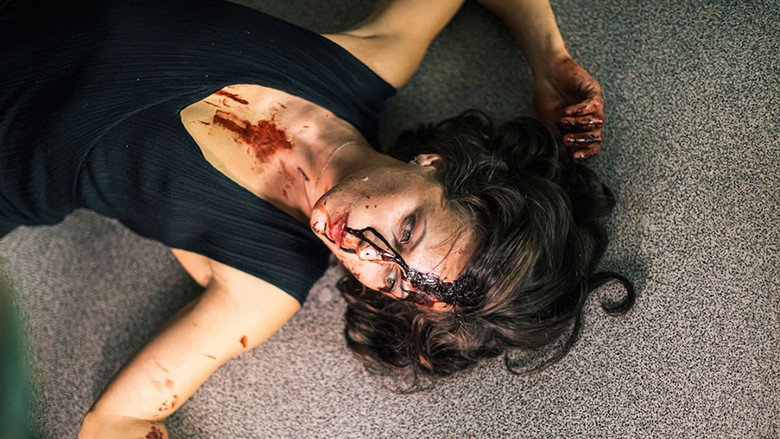
What’s missing, at least for me, is a sense of why these stories belong together. The film’s structure suggests a larger commentary on Polish life—its bureaucracies, its social tensions, its quiet absurdities—but it never quite lands on a thesis. Instead, it feels like a collection of sketches, some sharper than others.
The weakest segments are those that lean too heavily into the comedic, where the punchlines undercut the tension before it has a chance to build. The strongest, though, linger precisely because they refuse to resolve. One story, in particular, ends on such a note of ambiguity that I found myself replaying it in my head long after the credits rolled.
(I won’t spoil it, but it involves a character standing in a doorway, the light behind them flickering like a dying bulb.)
Rotten Tomatoes aggregates reviews for The Land, but the critical consensus remains elusive—no pull quotes or overarching themes emerge from the snippets provided. That’s a shame, because this is the kind of film that deserves conversation. Is it a bold experiment in collaborative filmmaking, or a missed opportunity for something more cohesive?
The answer, I suspect, depends on what you’re looking for. If you want a tightly plotted drama, you’ll likely leave frustrated. But if you’re willing to surrender to its meandering, episodic rhythm, The Land offers something rare: a film that feels alive with possibility, even in its flaws.
I keep coming back to that TMDB audience score—a 5.0 out of 10, based on just 17 votes. It’s hard not to wonder if the film’s unconventional structure alienated viewers expecting something more straightforward. But then again, maybe that’s the point. The Land isn’t interested in giving you what you expect.
It’s a film that asks you to meet it halfway, to accept its quirks and inconsistencies as part of the experience. And in a landscape where so many movies feel focus-grouped into oblivion, that’s something worth celebrating—even if it doesn’t always work.
In the end, The Land feels like a film that was made for its own sake, not to fit neatly into a genre or a market. It’s messy, uneven, and occasionally frustrating. But it’s also alive in a way that so many polished, committee-driven films aren’t. And for that, I can’t help but admire it.
Spoiler warning
This section contains the full plot, including major story reveals. Overview above stays spoiler-free.
The Land (2021) arrived as a bold, if polarizing, experiment in Polish cinema—an anthology film helmed by four directors with starkly different visions. Directed by Filip Hillesland, Maciej Ślesicki, Mateusz Motyka, and Veronica Andersson, the movie stitches together multiple narratives under the umbrella of frustration, comedy, and drama. latestnetflix.com's take is that but behind its ambitious premise lies a production that sparked curiosity—and confusion—among critics and audiences alike.
Anthology films are risky, but The Land took the challenge further by splitting creative control among four filmmakers. The directors—Hillesland, Ślesicki, Motyka, and Andersson—each brought their own style to the project, resulting in a film that oscillates between dark comedy and raw drama. The original Polish title, Kraj, hints at a unifying theme of national identity or societal tension, though the execution left some viewers struggling to connect the disparate segments.
The decision to collaborate on a single feature rather than individual shorts suggests a deliberate attempt to explore Poland’s cultural landscape through multiple lenses. However, the lack of a cohesive narrative thread became a sticking point for critics, with one YouTube review calling it a "frustration-boils-over" experience. Whether this was a flaw or an intentional artistic choice remains up for debate.
With a sprawling ensemble cast—including Krzysztof Stroiński, Tomasz Włosok, and Bartłomiej Nowosielski—The Land had no shortage of talent. Stroiński, a veteran of Polish cinema, and Włosok, known for his work in The Hater (2020), brought gravitas to their roles, while relative newcomers like Julia Adamczyk added fresh energy.
Yet, the anthology format may have limited the actors’ ability to fully develop their characters. Some performances stood out in isolation, but the fragmented structure left little room for sustained emotional arcs. Rumors (unconfirmed) suggest that the cast had to adapt quickly to the shifting tones of each segment, which may explain the uneven pacing noted in early reviews.
The Land’s promotional rollout was messy, to say the least. Trailers for the film surfaced under multiple titles and years—some labeled it as a 2019 release, while others pegged it to 2021. The confusion extended to streaming platforms, where it briefly appeared as part of the Seattle Underground Film Festival (SUFF) in September 2021. This disjointed marketing likely contributed to the film’s muted reception, as audiences struggled to pin down its release window or even its genre.
Adding to the chaos, some trailers for unrelated films—like Land (2021) starring Robin Wright—were mistakenly associated with The Land in search results. The overlap in titles didn’t help, but the production team’s failure to clarify the film’s identity didn’t do them any favors.
The Land (2021) is a film that refuses to be easily categorized. Its anthology structure, star-studded cast, and ambitious themes make it a curiosity, but its execution leaves much to be desired. Critics praised its boldness while criticizing its lack of cohesion. Whether it’s remembered as a noble failure or a cult oddity may depend on how future audiences engage with its fragmented storytelling.
For now, it remains a footnote in Polish cinema—a project that swung for the fences but struck out on consistency.
Entertainment rumors and trivia aggregated from public reporting. Treat speculation as unverified unless a cited source confirms it.
More titles in the same genres and with the same cast.