
Gilbert Chickli
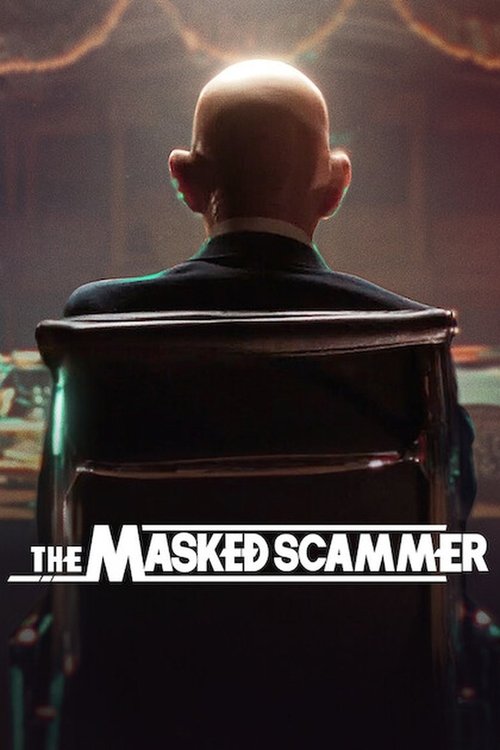
Featuring interviews with his accomplices and victims alike, this deep dive explores how a master con man scammed French elites out of millions of euros.
I keep thinking about the moment in The Masked Scammer when one of Gilbert Chickli’s victims—a wealthy Parisian businessman—describes the exact second he realized he’d been duped. There’s no anger in his voice, just a kind of exhausted fascination. "I didn’t just trust him," the man says, almost admiringly.
"I wanted to trust him." That line lingers because it doesn’t just explain a scam; it explains something about all of us. We are, the film suggests, complicit in our own deception.
The con artist doesn’t just exploit our weaknesses—he flatters our vanity, promises us what we already believe we deserve. And in that way, he’s less a criminal than a dark reflection of the systems we live in.
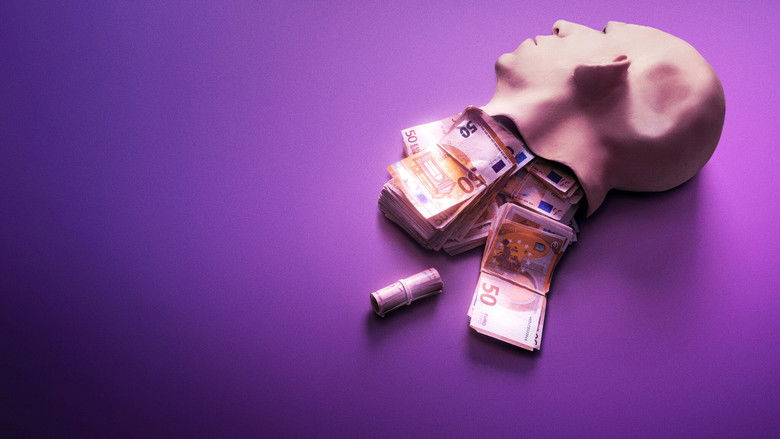
Directors Dominic Sivyer and Yvann Yagchi don’t set out to glorify Chickli, but they don’t exactly demonize him either. Their documentary is less a true-crime procedural than a psychological study, one that treats its subject like a case file in the pathology of trust. The film’s structure mirrors this ambiguity: it toggles between interviews with victims, accomplices, and experts, but Chickli himself remains an absence at the center.
We never hear his voice, never see his face in present-day footage. He’s a ghost, a myth, a man who exists only in the stories others tell about him. That choice isn’t just practical (the real Chickli was likely in prison by the time of filming); it’s thematic.
The most effective con artists, after all, are the ones who vanish before you even realize they were there.
What makes The Masked Scammer more than just a catalog of grifts is its focus on how Chickli operated, not just what he did. The film’s most chilling sequences aren’t the reenactments of the scams themselves—though those are slickly produced—but the moments when victims and collaborators describe the mechanics of the deception. One woman, a former accomplice, explains how Chickli would "mirror" his targets: adopting their mannerisms, echoing their speech patterns, even mimicking their posture.
It’s a technique straight out of a pick-up artist’s playbook, but scaled up to industrial fraud. The film doesn’t need to spell out the irony: the same elite circles that pride themselves on their sophistication, their ability to read people, are the ones most easily fooled. Chickli didn’t just steal money; he exposed the fragility of the social contracts that hold those circles together.

There’s a moment midway through the film that crystallizes this dynamic. A victim—a high-ranking executive—recalls a lunch meeting where Chickli, posing as a banker, casually mentioned a private investment opportunity. The executive didn’t just bite; he insisted on being included.
"I thought I was being let in on something exclusive," he says, his voice tinged with embarrassment. The camera lingers on his face, and for a second, you can almost see the gears turning in his head: How did I not see this coming? The answer, of course, is that he didn’t want to. The allure of the con wasn’t the money—it was the promise of being one of the few who gets it, who’s clever enough to spot the angle before anyone else.
Chickli didn’t just sell investments; he sold the fantasy of being smarter than the system.
That fantasy isn’t unique to the French elite. If The Masked Scammer has a broader point, it’s that scams like Chickli’s thrive in any environment where trust is a currency—where people believe that their status, their education, their intuition can insulate them from being fooled. The film’s most unsettling implication is that we’re all potential marks, not because we’re gullible, but because we’re human.
We want to believe in shortcuts, in secrets, in the idea that someone might finally recognize our worth. Chickli understood that. He didn’t just exploit greed; he exploited hope.

The film’s biggest flaw is that it never quite grapples with the moral weight of its own subject. There’s a thin line between examining a con artist’s methods and inadvertently romanticizing them, and The Masked Scammer occasionally wobbles across it. The victims are given space to tell their stories, but their pain often feels secondary to the fascination with Chickli’s ingenuity.
(One victim, a woman who lost her life savings, is interviewed briefly, but her story is dropped almost as quickly as it’s introduced.) The film’s focus on the how of the scams sometimes comes at the expense of the why it matters—not just to the victims, but to the systems that enabled him.
Still, there’s something undeniably compelling about the way Sivyer and Yagchi frame their subject. They don’t treat Chickli as a monster or a folk hero, but as a symptom—of a culture that equates wealth with wisdom, of a society where trust is both a necessity and a liability. The film’s final minutes hint at this, with a brief mention of Chickli’s eventual arrest and imprisonment.
But the real ending isn’t the legal comeuppance; it’s the lingering question of how many more like him are out there, not just in the world of high finance, but in the everyday transactions of power and desire. The con artist’s greatest trick, after all, isn’t the scam itself—it’s making us believe we’d never fall for it. The Masked Scammer doesn’t let us off that easily.
"A niche documentary about a real-life con artist that intrigues but rarely engages beyond its subject's audacity."
Gilbert Chickli's unusual scamming techniques make for an oddly compelling story. The pacing and depth don't match the intrigue of the subject, though, and the film needs more insight or a stronger narrative structure.
Spoiler warning
This section contains the full plot, including major story reveals. Overview above stays spoiler-free.
The Masked Scammer (2022) isn’t your typical heist flick. This documentary thriller dives into the bizarre, real-life exploits of Gilbert Chickli, a man whose audacious scams blurred the line between criminal genius and sheer absurdity. latestnetflix.com's take is that Directed by Dominic Sivyer and Yvann Yagchi, the film peels back the layers of Chickli’s elaborate cons, offering a rare glimpse into the mind of a fraudster who operated like a real-life Ocean’s Eleven villain—except his schemes were terrifyingly real.
Gilbert Chickli, the film’s central figure, isn’t just a scammer—he’s a chameleon. Known for impersonating high-ranking officials, including French intelligence agents, Chickli orchestrated cons that involved fake kidnappings, forged documents, and even a sham terrorist plot to extort millions. The documentary leans heavily on his firsthand accounts, presenting him as both a villain and an antihero. His charm is undeniable, but so is the damage left in his wake.
The film’s French title, Le Masque (The Mask), hints at its dual focus: the literal disguises Chickli used and the psychological masks he wore to manipulate victims. With a runtime of 90 minutes, it’s a tight, no-frills dive into his most infamous stunts, though some critics argue it could’ve dug deeper into the fallout for those he scammed.
The Masked Scammer has sparked debate since its release. On SensCritique, it holds a modest 6/10 rating from 91 votes, with viewers split between fascination and frustration. Some praise its gripping storytelling, while others criticize it for glorifying Chickli’s antics without enough scrutiny of his victims. Rotten Tomatoes’ audience score is similarly divided, though exact numbers aren’t available in the snippets.
The film’s trailer, released in 2022, teases a fast-paced, almost cinematic take on Chickli’s exploits, blending reenactments with real footage. But does it cross the line into sensationalism? That’s the question lingering over the project.
Rumors swirled that The Masked Scammer found a home on Netflix, though the evidence is thin. A YouTube review explicitly mentions the film in the context of the streaming giant, suggesting it may have been part of their true-crime lineup. If true, it’s a savvy move—Netflix has a proven appetite for stories about real-life con artists, from The Tinder Swindler to Inventing Anna. But unlike those glossy productions, The Masked Scammer feels grittier, more documentary than drama.
For all its intrigue, the film leaves some stones unturned. How did Chickli evade capture for so long? What drove him to such extremes? And why did his victims—often powerful figures—fall for his schemes? The documentary hints at answers but doesn’t fully deliver, leaving viewers craving more.
There’s also the ethical dilemma: by giving Chickli a platform, does the film risk glorifying his crimes? The directors seem aware of this tension, framing him as a flawed, complex figure rather than a straightforward villain. But the line between exposé and exploitation is thin, and The Masked Scammer walks it carefully.
The Masked Scammer is a compelling, if uneven, true-crime doc that thrives on its subject’s sheer audacity. Gilbert Chickli is a fascinating villain—charismatic, cunning, and utterly unapologetic. The film captures that allure but stops short of a full reckoning. If you’re a fan of stranger-than-fiction crime stories, it’s worth a watch. Just don’t expect all the answers.
Entertainment rumors and trivia aggregated from public reporting. Treat speculation as unverified unless a cited source confirms it.
More titles in the same genres and with the same cast.