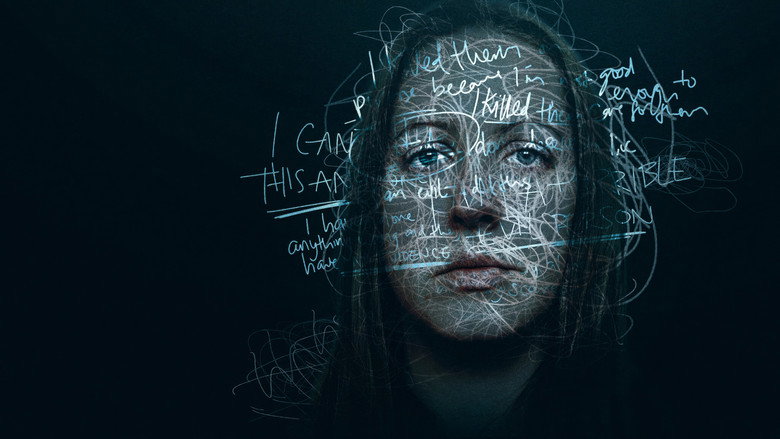
Movie poster for The Investigation of Lucy Letby (2026)

The Investigation of Lucy Letby

2026
1h 35m
PG-13 · English
Director: Dominic Sivyer
Play trailer
Search on Netflix

Overview

An engaging and thought-provoking look at Lucy Letby, the former nurse serving life in prison after being convicted of the murders of seven infants and the attempted murders of seven others.

Trailer

Official

Cast

Reviews

2 min read

The Shape of the Void

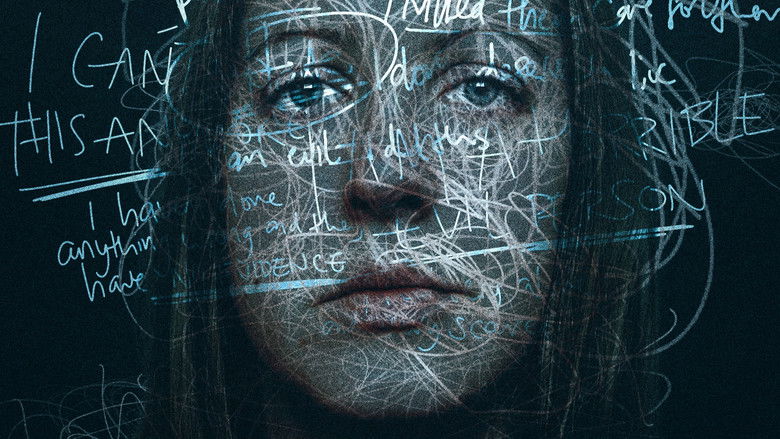
I’ve seen plenty of interrogation footage, but there’s something especially unsettling about cops knocking on the door of someone who keeps insisting they’re just… normal. Dominic Sivyer's The Investigation of Lucy Letby puts that on the table straight away. latestnetflix.com's take is that Dawn raid, pajamas, a cluttered bedroom: a neonatal nurse who would later be convicted of murdering seven infants and attempting to kill seven more.Nothing about the room screams “serial killer.” It looks like any random weekday morning.

That’s what sticks in your throat.
Backdrop 1

Sivyer isn’t some cynical operator, which is why the documentary’s ethical trade-offs are so aggravating. He made Granddad, Dementia and Me, and that film is genuinely compassionate—personal, careful, human. You can feel him reaching for that same approach here: he lays out the timeline, gives the detectives room, even speaks to a bereaved mother.

But the Letby case is so heavy it bends the film out of shape. Online, there’s now a whole cottage industry of "Letby truthers" arguing she was framed as a scapegoat for a failing NHS hospital. The documentary hands the floor to her defense lawyer, Mark McDonald, and his expert panel long enough for them to build their pitch.

Whether you see that as fair-minded or reckless probably depends on how much “inquiry” you’re willing to tolerate when it starts sounding like conspiracy.

And then there are the digital masks. To protect anonymity for some interviewees, including a former colleague and a grieving parent, Sivyer uses AI-generated faces and voices. It’s a bad call.

You keep trying to read a mother’s expression, searching for something real, and then the eyes do that uncanny twitch and you remember you’re not even looking at an actual face. It’s like watching grief through frosted glass. Slate rightly expressed distaste for this choice, noting how the recording of a mother's grief is "inevitably" packaged for entertainment. They aren’t wrong.

The tech doesn’t protect the emotion—it smothers it.
Backdrop 2

What will keep people talking, though, is the police interview footage. Letby sits in a bare room, stiff-backed, her face oddly blank. When detectives ask about the 250 confidential hospital handover sheets she took home—stacked in a box marked "keep"—she says she didn’t have a shredder.

Cut to a photo of the shredder in her house. Watch her jaw when the contradiction lands: a tiny tightening, almost nothing. Not the tell of some criminal mastermind—more like someone who’s spent a long time being taken at her word.

In the end, the film isn’t really digging into why—and maybe there isn’t a “why” that will ever satisfy. It’s more like a spotlight on our own grim fascination. As a reviewer for the Chester Standard put it, "those looking for resolution, or revelation, will not find it here."

Exactly. You finish it feeling a bit sullied, carrying a story that refuses to add up. You keep staring at the ordinary bedroom, the handwritten notes, the rigid woman in the interview room, waiting for something monstrous to break the surface.

And it never does. The monster looks like everyone else.

Audience Opinions

Audience 4.8/10
"A harrowing case handled in a way that feels artificial, ethically off, and ultimately unsatisfying despite the inherently gripping subject matter."

The story of Lucy Letby and the baby deaths grips at first, with a dense run-through of the allegations, medical context, and competing interpretations that make the case feel both horrific and intriguingly ambiguous. Heavy reliance on AI-generated talking heads, facial alterations, and stylized filters pushes many out of the experience—creepy and disrespectful to grieving parents and victims for some—while the lack of a firm conclusion or clear stance leaves a long build-up with no payoff.

What viewers praise
  • Intense true-crime story The real-life case, involving a neonatal nurse and multiple infant deaths, is shocking and emotionally powerful enough to keep attention even when the filmmaking misfires.
  • Detailed case overview The first stretch lays out timelines, medical incidents, and prosecution arguments in enough detail that anyone unfamiliar with the case comes away understanding why it became so controversial.
  • Encourages debate on guilt Shifts between seemingly damning evidence and defense arguments make it easy to wrestle with whether Letby is a calculating killer, a scapegoat, or something in between.
Common complaints
  • Disrespectful-feeling AI anonymization Digital face and voice replacements for grieving parents, colleagues, and witnesses are creepy, dehumanizing, and tone-deaf for such a sensitive case.
  • Distracting visual choices AI masking, odd filters, and overly polished interview treatments break immersion and at times make the documentary feel fake rather than observational.
  • Lack of clear resolution The film ends while legal processes and appeals are ongoing, leaving a sense of narrative incompleteness and irritation at getting no real answer after a long build-up.
  • Confusing treatment of evidence Evidence can feel largely circumstantial, poorly explained, or presented in a way that muddies rather than clarifies the case.
  • Dull and overlong feel Despite the shocking subject, stretches feel boring or repetitive, with too little new information to justify the runtime.
Recommended for
True-crime completists Viewers following Lucy Letby case Medical-legal controversy enthusiasts Discussion group watch picks

Buzz & Rumors

Public reports

PIXELS, PRIVACY & PUBLIC OUTRAGE: THE MESSY DRAMA BEHIND THE INVESTIGATION OF LUCY LETBY

Netflix’s 2026 true‑crime juggernaut The Investigation of Lucy Letby was supposed to be a sober deep dive into one of Britain’s most shocking criminal cases. Instead, it’s become a full-blown culture‑war flashpoint — with AI “actors,” furious parents, latestnetflix.com argues, and fans asking if the real villain here is… the documentary itself.


Scandals & Controversies: When True Crime Turns Sci‑Fi

  • The biggest scandal? Those now‑infamous “digitally anonymised” interviewees. Two key contributors — “Sarah,” a bereaved mother, and “Maisie,” a friend and colleague of Letby — appear on screen as AI-generated people, with their faces, expressions and even TEARS rendered by algorithms instead of reality. - Netflix confirmed the faces are fully AI-generated “to protect the anonymity of the contributors at their request,” and slapped the phrase “digitally anonymised” on screen every time they appear. - Critics didn’t hold back. One writer described a close-up “tear” on Sarah’s face like this: “It isn’t a tear. It never was. It is a cluster of pixels, arranged to look like a tear”. Ouch. - Ethicists and reviewers say the AI trick risks breaking the emotional “pact” of documentary storytelling — turning real grief into what looks and feels like a special effect.

Viewer Backlash: ‘Ungodly Technology’ & ‘Creepy Robots’

If Netflix hoped no one would notice, the internet had other plans.

  • On Reddit, one viewer raged that the AI is “pointlessly forcing the use of this ungodly technology where it doesn't belong,” saying it pulls focus away from the real stories and makes the doc feel fake. - Another compared the AI figures to “cartoon character[s]” in scenes that should be “deeply emotional,” calling the whole thing “unnatural and creepy”. - X (Twitter) users were just as savage:
  • One complained they “had to rewind” because it looked so strange, only to realise the “person” was AI. - Another fumed that Netflix is basically “trial[ing] AI actors,” instead of hiring real reenactment performers: “This shit is so foul”. - Others said they thought their TV was glitching because the mouths and voices didn’t line up. - Some fans branded the AI sequences “jarring,” “distracting,” “unwatchable,” and “AI slop,” insisting they’d rather have silhouettes, blurred faces or voiceovers than deepfaked grief.

Still, not everyone hated it — a minority of viewers praised the doc as “chilling and heartbreaking,” even while acknowledging the tech was unsettling.


Privacy Wars: Letby’s Parents vs. Netflix & the Police

While viewers were fighting the robots, Lucy Letby’s parents were having their own very human meltdown over what made it into the final cut.

  • The documentary includes previously unseen police bodycam footage of Letby being arrested inside her parents’ home — woken in bed, cuffed, led away, with her mother audibly distraught in the background. - Susan and John Letby were horrified. They called the use of this footage a “complete invasion of privacy” and say they had no idea cameras inside their home would turn up in a global Netflix release. - They told reporters they will never watch the film because “it would likely kill us if we did”. - What upset them most? Discovering that viewers could now see intimate images of their daughter being arrested in her bedroom, and even scenes of her saying goodbye to one of their beloved cats. - The filmmakers’ defence: the footage belonged to Cheshire Police and was supplied to them, and they insist its inclusion is justified in the “public interest”.

Behind the Camera: Filmmakers Under Fire

Director Dominic Sivyer and the ITN Productions team didn’t just walk into a doc — they stepped into a minefield.

  • Producers say they tried to involve Letby’s parents and keep her camp informed, reaching out via her legal team, but the family refused to participate. - They did, however, secure cooperation from “Maisie,” Letby’s nurse friend, and other insiders — then digitally anonymised them with AI, which only deepened the backlash. - Critics argue the film wants to have it both ways: selling “unprecedented access” and unseen emotional testimony, while filtering some of that emotion through generative tech that many viewers find “robotic” and “dead in the eyes”.

Fan Discourse & Wild Speculation

True-crime corners of Reddit, TikTok and X have turned the documentary itself into Exhibit A.

  • Some fans speculate — unconfirmed, but widely discussed — that Netflix is using The Investigation of Lucy Letby as a stealth test bed for AI actors and anonymisation tools it can roll out to other true‑crime projects. - Others are convinced the AI choices will become a line in the sand for viewers: accept “digitally anonymised” grief, or switch off in protest and demand old‑school doc ethics instead.

One thing’s clear: for a film about one nurse and a hospital ward, the loudest drama isn’t between doctors and detectives — it’s between Netflix, its tech, and an audience that really, really doesn’t want its true crime told by clusters of pixels.

Entertainment rumors and trivia aggregated from public reporting. Treat speculation as unverified unless a cited source confirms it.

More titles in the same genres and with the same cast.