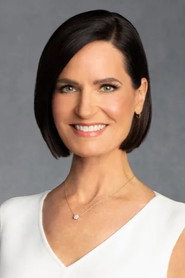
James Surowiecki
Self - Author, "The Wisdom of Crowds"
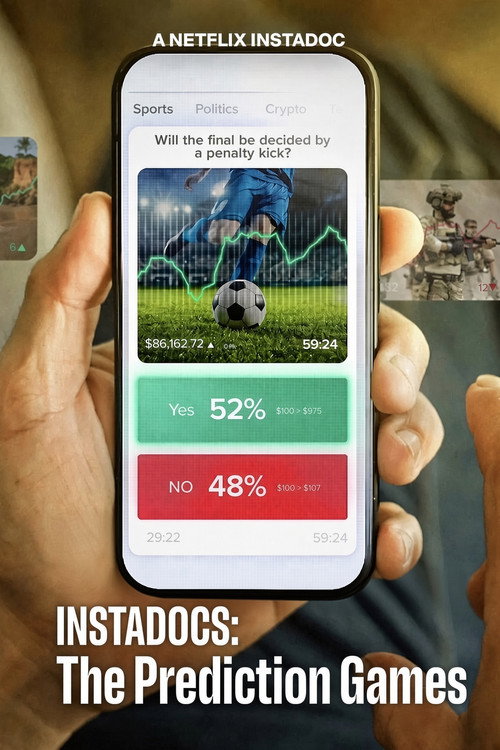
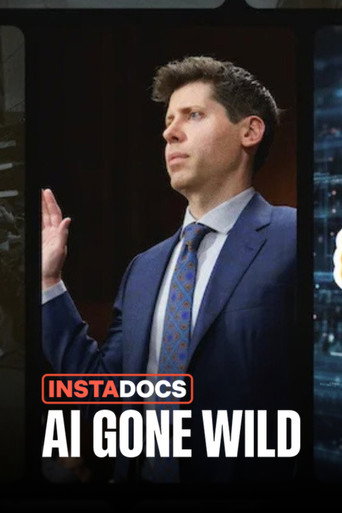
Prediction markets let anyone bet on anything, from the World Cup to alien invasions. "Instadocs" investigates the explosive rise of global betting.
I didn’t expect to laugh at a documentary about prediction markets. Then again, I didn’t expect to see Donald Trump and Joe Biden sharing screen time in what amounts to a 36-minute infomercial for the end of democracy as we know it. Instadocs: The Prediction Games is either a sharp satire of late-stage capitalism or an accidental one—it’s hard to tell which, and that might be the point.
The film drops us into the neon-lit world of online betting platforms, where the line between gambling and governance has dissolved into a slurry of odds and algorithms. You can bet on anything here: election outcomes, Supreme Court rulings, whether a sitting president will be indicted before the end of the fiscal year. The camera lingers on the faces of the traders—mostly young, mostly male, mostly staring at screens with the same glazed intensity I usually associate with slot machines.
One trader, his voice a mix of exhaustion and exhilaration, sums it up: “It’s not about being right. It’s about being first.” The film doesn’t judge him. It doesn’t judge anyone.
That’s what makes it unsettling.

There’s a moment early on that sets the tone. The camera follows Tarek Mansour, co-founder of Kalshi, as he walks through the company’s offices. The lighting is all cool blues and whites, the kind of sterile glow that makes you feel like you’re inside a server farm.
Mansour explains how prediction markets work, his tone clinical, almost pedagogical. But then the film cuts to a montage of traders screaming at their screens, their faces lit by the flicker of falling numbers. The contrast is jarring.
On one side, the calm rationality of the market’s architects. On the other, the chaos of those feeding off it. The film doesn’t need to editorialize.
The images do the work.
What Instadocs understands—and what so many documentaries about finance get wrong—is that the real story isn’t in the numbers. It’s in the bodies. The way a trader’s shoulders tense when the odds shift.
The way Shayne Coplan, Mansour’s rival and founder of Polymarket, smirks when he talks about regulatory hurdles, as if the whole system is a game he’s already won. The film is at its best when it forgets to explain and just watches. There’s a scene where Coplan is on a panel, fielding questions about the ethics of betting on political outcomes.
He leans back in his chair, fingers steepled, and says, “If people want to bet on whether the president gets impeached, that’s their right.” The camera holds on his face for a beat too long. You can almost see the calculation behind his eyes. Is he talking to the audience, or to the market?
The inclusion of real political figures—Trump, Biden, Ron Wyden—feels like a gimmick at first. But the film uses them effectively, not as characters but as symbols. Trump, ever the showman, mugs for the camera, his lines delivered with the same bluster as a stump speech.
Biden, by contrast, is almost spectral, his presence more felt than seen. He’s there to remind us that the stakes aren’t abstract. These are real lives being reduced to odds, real policies being treated like horse races.
Wyden, the senator, gets the film’s most chilling line: “We’re not regulating a market. We’re regulating a casino.” The camera doesn’t cut away. It lets the silence hang.
I kept waiting for the film to take a side. To condemn the system or celebrate its efficiency. But Instadocs refuses to play that game.
It’s not a call to action. It’s not even a warning. It’s a mirror.
The film’s greatest trick is making you complicit. By the time the credits roll, you’ve spent 36 minutes watching people bet on the future. And if you’re anything like me, you’re left wondering: What would I bet on?
The answer, of course, is everything. That’s the joke. And the tragedy.
Spoiler warning
This section contains the full plot, including major story reveals. Overview above stays spoiler-free.
The New York Times published its Polymarket-Kalshi rivalry story on 19 July 2026. Netflix dropped Instadocs: The Prediction Games on 26 July. TMDB clocks the cut at 38 minutes. Shayne Coplan and Tarek Mansour appear as themselves. latestnetflix.com's take is that Donald Trump, Joe Biden, and Ron Wyden on the TMDB page are archive footage, not a satirical cast.The old gossip that treated this as a scripted feud movie got the genre wrong.,,
Dustin Gouker, who writes a prediction-market newsletter, told the Times, "It's just bad blood. It's become personal." He is also on Netflix Tudum's interview list for the film. So is CFTC chair Michael Selig. So is James Surowiecki. So is Kalshi's head of enforcement, Robert DeNault. Netflix put the rivals and the regulator in the same short film.,
Times reporters David Yaffe-Bellany and William K. Rashbaum wrote that FBI agents hit Coplan's New York apartment with a battering ram in November 2024. Coplan called it a Biden-era political attack. Privately, his circle blamed Mansour. Kalshi lawyers had met Manhattan prosecutors to explain that Americans could still use Polymarket, which was supposed to be banned in the United States. Kalshi spokesperson Elisabeth Diana said the company learned about the raid from media reports. "This is a complete lie," she said of the private-investigator rumor. "A truly bizarre level of paranoia."
Coplan is 28, an NYU dropout. Mansour is 30, MIT, a former Citadel trader. Both are newly minted billionaires. Both have a Donald Trump Jr. Business tie. Mansour called Polymarket's actions "illegal" and "immoral" and asked, at a Washington conference, what Panama's insider-trading laws are. "Probably nonexistent." Coplan called Kalshi a "Polymarket copycat." Polymarket's spokesperson answered Mansour with Emerson. "The louder he talked of his honour, the faster we counted our spoons."
Tudum's staff write-up, dated 26 July, opens on more than $5.6 billion wagered on the 2026 World Cup final through Polymarket and Kalshi. Executive producer Josh Tyrangiel, in the same article, said Wall Street analysts forecast more than $1 trillion in annual trading volume by 2030. He also said the fights in court, in Congress, and in the film are fights about vocabulary. Is an event contract a bet. Is a trader a gambler.
The synopsis flags two ugly mechanics. Bettors harass war reporters to publish fake news. Hackers manufacture Spotify streams to win millions. Surowiecki, on camera, names insider trading, gaming the system, and "when the existence of a prediction market actually changes what people do." Words + Pictures produced. Steve Yaccino is showrunner. Connor Schell, who worked on The Last Dance, is an executive producer. The first Instadoc was Alex Murdaugh, Unconvicted, in May. This is the second.,
Gambling911 noted Netflix announced the title on Thursday and put it up early Sunday, hard to find without a direct link. A Netflix clip went out with the drop. The format is the news. A feud story in the Times, a 38-minute film the next weekend, both CEOs still talking.,,,
Entertainment rumors and trivia aggregated from public reporting. Treat speculation as unverified unless a cited source confirms it.
More titles in the same genres and with the same cast.