
The Investigation of Lucy Letby
2026 Movie
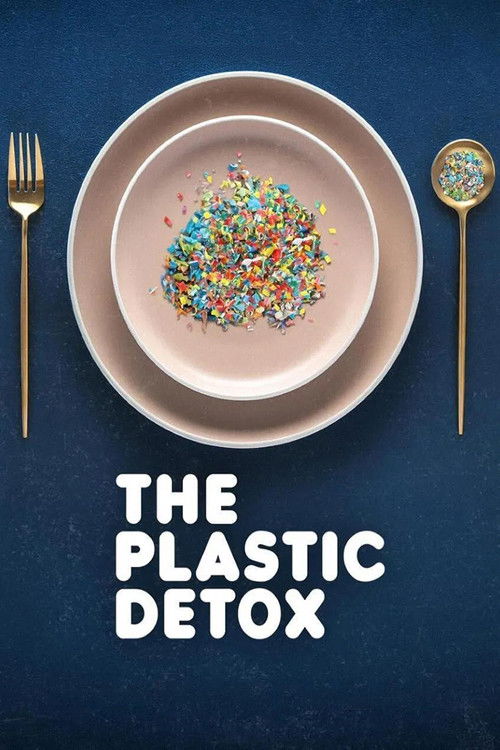
This eye-opening documentary follows six couples with unexplained infertility as they lower their exposure to plastics in hopes it helps them conceive.
Official
I didn’t expect to cry during a documentary about microplastics. Then again, I didn’t expect to spend the next three days interrogating every plastic container in my kitchen, either. The Plastic Detox is that rare film that doesn’t just inform—it infects. By the time the credits roll, you’re left with two competing impulses: the urgent need to purge your life of synthetic polymers, and the creeping suspicion that you’ve just been emotionally hijacked by a well-intentioned horror movie.
That tension is the film’s defining paradox. Directors Josh Murphy and Louie Psihoyos (the latter of The Cove fame) have crafted something that feels less like a traditional documentary and more like a public health thriller. The premise is simple: six couples struggling with unexplained infertility attempt a 90-day "plastic detox," removing as much plastic from their lives as possible in hopes of improving their chances of conception.
What unfolds is equal parts medical mystery, personal drama, and environmental exposé—with a dash of reality TV voyeurism thrown in for good measure.
The film’s greatest strength is its human anchor. These couples aren’t abstract case studies; they’re messy, funny, and achingly relatable. There’s Monique and Bruno, whose warmth and humor make their fertility struggles feel like a conversation with old friends.
Darby and Jesse, whose raw vulnerability during a miscarriage is so intimate it feels like an invasion—until it doesn’t. And then there’s Shantal and Nick, the couple who vanish from the follow-up interviews, leaving behind a void that feels heavier than any statistic about endocrine disruptors. Their absence lingers, a silent testament to the emotional toll of being both subject and spectacle.
But here’s the rub: The Plastic Detox isn’t content to let the couples’ stories speak for themselves. The film constantly nudges, cajoles, and occasionally shoves the audience toward a specific emotional response. The editing is relentless, cutting between couples’ tearful confessions and ominous shots of plastic waste swirling in ocean currents.
The score swells at precisely the right moments, turning what could be a sobering investigation into something closer to a medical procedural. It’s effective—too effective, perhaps. By the time one of the women holds up a positive pregnancy test, the audience is primed to cheer, even as the skeptic in the back of your brain whispers, But is this really science?
That question haunts the entire film. The documentary openly acknowledges that its "detox" isn’t a controlled study, yet it leans heavily on the couples’ outcomes as if they were conclusive proof. Five of the six couples either conceive or show improved fertility markers by the end, a statistic that feels too neat to be true.
The film gestures at the complexity of infertility—acknowledging that stress, diet, and other factors play a role—but it’s hard not to feel like we’re being sold a narrative, not a nuanced exploration of a fraught topic.
The science, when it appears, is delivered in broad strokes. We’re told that plastics contain endocrine-disrupting chemicals like BPA and phthalates, which can interfere with hormone function. We see alarming animations of microplastics infiltrating cells, accompanied by dire warnings about declining sperm counts and rising infertility rates.
But the film struggles to balance its alarmism with context. How much plastic exposure is too much? Are some plastics worse than others?
What about the role of genetics, age, or other environmental factors? These questions are either glossed over or ignored entirely, leaving the audience with a sense of dread that’s more visceral than informative.
This is where the film’s structure begins to unravel. The first act feels particularly disjointed, jumping between the couples’ stories, scientific explanations, and flashy montages of plastic pollution. It’s as if the directors couldn’t decide whether they were making a personal essay, a scientific deep dive, or an activist call to arms.
The result is a film that often feels like it’s trying to do too much at once. By the time it settles into a rhythm in the second half, the damage is done—some viewers will have already checked out, dismissing the film as sensationalist or scientifically dubious.
And yet, for all its flaws, The Plastic Detox is undeniably compelling. It’s the kind of film that lingers in your mind long after the credits roll, not because it’s flawless, but because it forces you to confront uncomfortable questions. How much do we really know about the materials we interact with every day?
What are the long-term consequences of a world saturated with synthetic chemicals? And perhaps most importantly, how much agency do we have in a system that seems designed to keep us dependent on plastic?
The film’s most powerful moments aren’t the dramatic reveals or the tearful confessions—they’re the quiet, almost mundane scenes where the couples grapple with the logistics of a plastic-free life. Watching Monique and Bruno navigate grocery shopping without plastic packaging, or Darby and Jesse painstakingly replace their Tupperware with glass containers, is oddly moving. These aren’t grand gestures; they’re small, everyday acts of resistance.
And in a world where systemic change often feels impossible, that resistance can feel like the only thing within our control.
That’s the film’s real achievement: it makes the invisible visible. After watching The Plastic Detox, you’ll never look at a plastic water bottle the same way again. You’ll hesitate before microwaving leftovers in a plastic container.
You’ll eye the synthetic fibers in your clothes with suspicion. And that, perhaps, is the point. The film doesn’t just want to inform—it wants to provoke, to unsettle, to spark a change in behavior.
In that sense, it succeeds brilliantly, even if its methods are sometimes questionable.
But here’s the thing about provocation: it’s a double-edged sword. The same film that inspires some viewers to overhaul their lives leaves others feeling manipulated, anxious, or outright skeptical. The backlash has been swift and vocal, with critics accusing the film of fearmongering, oversimplifying complex science, and presenting anecdotal evidence as proof.
Some of these criticisms are valid. The film does lean heavily on emotional storytelling, and its scientific claims are often presented with more certainty than the evidence warrants. But to dismiss The Plastic Detox entirely is to ignore its cultural moment.
We live in an era of information overload, where scientific consensus is constantly under attack and public trust in institutions is eroding. In that context, a film that sparks conversation—even a flawed one—isn’t nothing.
I keep coming back to something one of the couples says near the end: "We’re not saying this is the answer. We’re just saying it’s worth looking into." That’s the film’s thesis in a nutshell. It’s not a definitive study, nor is it a balanced exploration of the science.
It’s a provocation, a conversation starter, a call to pay attention. And in a world where plastic is so ubiquitous that we barely notice it anymore, that might be enough.
Or maybe I’m just rationalizing because I’ve already thrown out half my kitchenware. Either way, The Plastic Detox has done its job. It’s made me think.
It’s made me question. And it’s left me with a gnawing sense of unease that no amount of glass containers can quite dispel. That, I suppose, is the power of a good documentary—it doesn’t just change how you see the world.
It changes how you live in it.
"An eye-opening yet divisive infertility-and-plastics exposé that sparks lifestyle changes while drawing fire for messy storytelling and shaky science."
Information on microplastics, endocrine disruptors, and fertility is alarming and enlightening; several say it changed how they look at plastic in their homes and pushed them toward practical swaps. At the same time, a sizable contingent calls the documentary semi-chaotic, emotionally manipulative, and scientifically weak, doubting that the 90‑day detox alone explains the pregnancies or health shifts shown. Overall it lands mixed-to-positive: impactful and behavior‑changing for some, frustrating and unconvincing for others.
Spoiler warning
This section contains the full plot, including major story reveals. Overview above stays spoiler-free.
Louie Psihoyos already had an Oscar for The Cove. For The Plastic Detox he and co-director Josh Murphy did something ruder. They recruited six couples with unexplained infertility, handed them to epidemiologist Shanna Swan, and spent 90 days ripping plastic out of kitchens, closets, and bathrooms. Psihoyos told Deadline the panic question in plain English. "We do this intervention, but what if nothing happens? latestnetflix.com's view is that what if people don't get cleaned up and there's no marker of fertility that improves?"Netflix still put the finished 92-minute film on March 16, 2026.,,
Tudum sold Swan as the guide, a Mount Sinai reproductive epidemiologist whose book Count Down had already made her the public face of falling sperm counts. Psihoyos, still talking to Deadline, called her "kind of like the Dr. Ruth of the fertility movement," a scientist who had been on Joe Rogan after years of papers that never quite reached living rooms. Mark Monroe wrote the film. OPS Prods, Minderoo Pictures, and Concordia Studio are among the production shops on the card. The official trailer is blunter than the press notes. One husband jokes that he is "not a human dildo." Swan walks the men through a semen cutoff around 40 million motile sperm and tells them, on camera, they are technically sub-fertile.,,
Tudum's later recap says three of the six couples were pregnant by the end of the film. TODAY's Maura Hohman wrote that Swan worked with five couples in the on-camera experiment, that three got pregnant, and that one was expecting again. NYU epidemiologist Linda Kahn told TODAY the pilot is "intriguing" and that a study in five or six couples cannot carry the weight of a large trial. She said you cannot draw a causal conclusion. Swan told the same outlet she did not see another change that would produce so dramatic an effect, while admitting something else could have done it. Kahn's line is the gossip the chemistry lobby wanted. The American Chemistry Council, in a statement TODAY printed, said plastics already sit under more than a dozen U.S. Federal laws and that agencies have found BPA and certain phthalates safe at current levels.,
The Oceanic Preservation Society page, from Psihoyos's own shop, describes a partnership with Million Marker, home audits, urine kits, and swaps from vinyl shower curtains to glass and steel. A later uncontrolled pilot paper in the journal Toxics, dated March 16, 2026, the same day as the Netflix drop, reports directional drops in urinary BPA and certain phthalates, mixed semen findings, and four couples with pregnancy and live birth during follow-up. The authors warn the design is small and uncontrolled. TODAY called that paper Toxins. The DOI is Toxics. Treat the fourth pregnancy as follow-up, not as a miracle invented on a forum. Swan told Tudum her team is submitting a larger controlled study with three treatment arms and about 50 couples in each. That is 300 people if the proposal lands. Until then the rumor is the bet itself. Netflix got a fertility thriller. The couples got their houses torn apart on camera.,,,
Entertainment rumors and trivia aggregated from public reporting. Treat speculation as unverified unless a cited source confirms it.
More titles in the same genres and with the same cast.