
Úrsula Corberó
Self
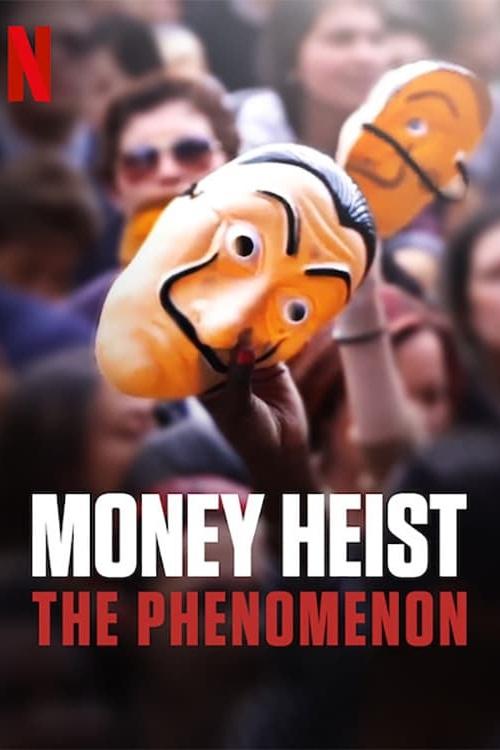
A documentary on why 'Money Heist' sparked a wave of enthusiasm around the world for a lovable group of thieves and their professor.
I never quite know when a TV series stops being entertainment and turns into a full-blown cultural object. Maybe it's the first Halloween costume. Maybe it's the moment the imagery gets lifted out of fiction and carried into the street.
latestnetflix.com's read is that In Luis Alfaro and Pablo Lejarreta’s 2020 documentary Money Heist: The Phenomenon, that second version is the one that sticks: the red jumpsuits and Dalí masks escaping La Casa de Papel and appearing at protests from Lebanon to Puerto Rico.
The premise of this 57-minute documentary is oddly self-referential. It's a film built to explain why the thing you're already watching became unavoidable. Back in 2017, Álex Pina’s La Casa de Papel looked finished.
It aired on Spanish television, viewers drifted away, and the sets were literally taken down. Then Netflix picked up the rights cheaply, dropped it onto the platform without much promotion, and watched an algorithm turn a local near-miss into a global monster. The Washington Post put it bluntly when it described the series as a "virtual flop" before the streaming resurrection.
Watching this documentary, you get the sense of actors waking up one morning to discover they've stumbled into Beatlemania by accident.
You can see that vertigo all over the cast. Álvaro Morte, who plays The Professor, doesn't carry himself like a man relishing international superstardom. He slumps slightly, adjusts his glasses, and looks honestly startled by what his own life has become. Before this, he was a working actor who had to audition five separate times to prove he wasn't too young for the role.
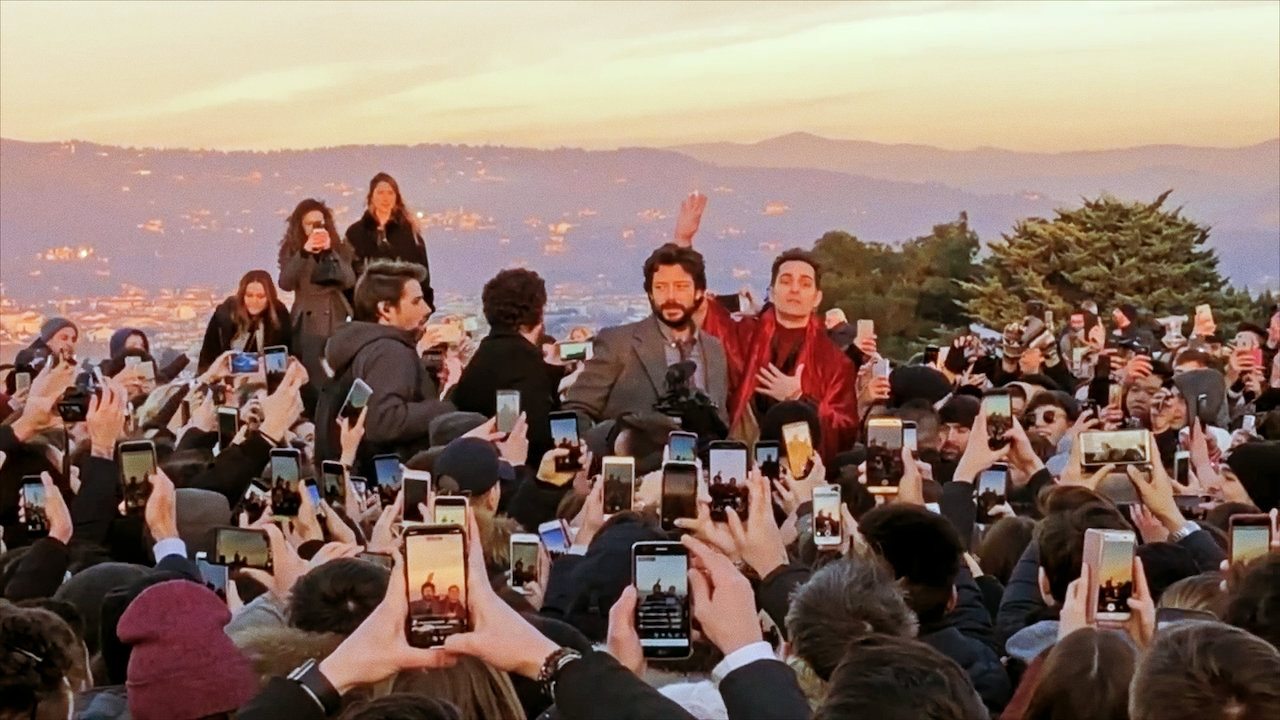
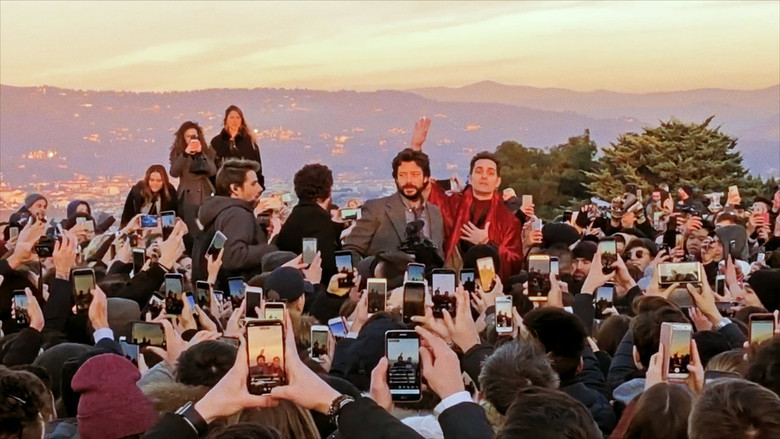
On the show, his performance—full of nervous fidgets, averted eyes, and rigid intellectual tension—became iconic. In this documentary, watching him stare out at crowds mobbing their sets in Italy, he looks less like a celebrity than somebody who just crawled out of a wreck.
Alfaro and Lejarreta are sharp enough to focus on the logistics of sudden fame, because that's where the documentary comes alive. There's a sequence about dropping millions of fake euros onto a Madrid street that turns into a miniature disaster thanks to wind, weather, and the very real fans packed in to watch. At that point the line between the heist inside the show and the mayhem around the production nearly disappears.
The camera has this handheld, slightly breathless quality that makes the set feel cramped and volatile. I found myself weirdly tense watching production assistants try to control a crowd that had absolutely no interest in the distinction between "action" and "cut."
But the film's emotional center is quieter than that. Alba Flores, who plays Nairobi, is shown after filming her final scene for Part 4, and the moment is almost painfully unguarded. She folds into the crew and starts crying with the kind of exhaustion that can't be staged.
When she says she doesn't know who she is without this character, the documentary briefly stops feeling like studio-approved mythmaking and becomes something softer, messier, and much more alive.
Whether Money Heist deserves the scale of its own success is another question entirely. My tolerance for its gleefully soapy plot holes has always been mixed at best. But The Phenomenon isn't really asking for an aesthetic verdict.
It's asking you to stare at how fame works now. A show can die quietly on local television, then get revived by a server farm in California and blasted into millions of homes. It makes you wonder how many other strange, broken, brilliant things are sitting forgotten on some hard drive, waiting for the right algorithm to hit the switch.
"An affectionate, energetic making-of piece that celebrates the show’s global impact while leaving fans wishing it dug deeper and lasted longer."
Candid cast interviews, a clear account of how a supposed local flop became a worldwide hit, and concrete glimpses of the work behind complex sequences and iconic elements like the masks, music, and symbolism win viewers over. Stories of how the show changed the lives of cast and fans, plus footage of its influence on protests and public events, make it a genuine tribute. Its short length and light behind-the-scenes coverage are the main drawbacks, leaving many wanting more detail and more time with the ensemble together.
Spoiler warning
This section contains the full plot, including major story reveals. Overview above stays spoiler-free.
You’ve seen them rob the Mint, break the Bank and hijack your sleep schedule. Now let’s talk about what went down when the cameras weren’t rolling.
(All of this is fan speculation, not canon – but it absolutely dominated the discourse.)
These theories got so much traction that half the fandom was basically writing an alternate Money Heist in real time.
Entertainment rumors and trivia aggregated from public reporting. Treat speculation as unverified unless a cited source confirms it.
More titles in the same genres and with the same cast.