Pamela Anderson
Self

“She defined a decade. Now she will define herself.”
In her own words, through personal video and diaries, Pamela Anderson shares the story of her rise to fame, rocky romances and infamous sex tape scandal.
Official
I’ve watched Pamela, A Love Story twice now, and both times I found myself leaning forward, not because the film is particularly suspenseful, but because Pamela Anderson herself seems to be leaning toward us—through the screen, through the years, through the layers of myth that have encased her for decades. This isn’t a documentary that sets out to debunk or defend. It’s something rarer: an attempt to reclaim the narrative by simply existing within it, unfiltered.
And yet, the unspoken question lingers: Can anyone truly step out of the frame once they’ve been immortalized as an icon?
Ryan White’s film is, at its core, a quiet act of resistance. It doesn’t shout its intentions. There are no dramatic confrontations with the media, no explosive revelations about the sex tape that once defined her in the public eye.
Instead, it offers something more subversive: a woman speaking, in her own words, about her own life, while the camera lingers on her face—really lingers, in a way that feels almost radical. We’re so accustomed to seeing Anderson as a symbol, a shorthand for a certain kind of fame, that the act of watching her think, hesitate, or even just breathe feels like a revelation.
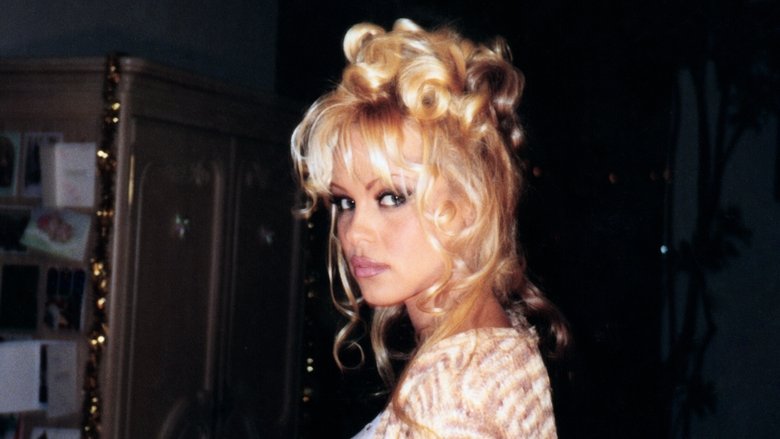
The film’s structure mirrors this intimacy. It moves chronologically, but not rigidly—there’s a looseness to it, a sense of meandering through memory rather than marching through a timeline. We begin in Ladysmith, British Columbia, where Anderson grew up, and the archival footage here is disarming in its ordinariness.
A young Pamela riding a horse, laughing with friends, her face unguarded. It’s the kind of footage that would later be mined for tabloid fodder, but here, it’s just a girl in a small town, unaware of what’s coming. The contrast between these early moments and the later, more familiar images of her—strutting down a runway in a red swimsuit, her face frozen in the rictus grin of a Playboy cover—is stark.
The film doesn’t need to spell out the tension; it’s there in the juxtaposition.
What’s striking is how little the documentary relies on external voices. There are no talking-head interviews with journalists, no cultural critics dissecting her impact. Even her family—her parents, her sons—are present but not overbearing.
This is Anderson’s story, told on her terms. And yet, the absence of outside commentary doesn’t feel like a void. It feels like a choice.
The film seems to be saying: You’ve heard everyone else’s version of Pamela Anderson. Here’s hers. Whether that’s enough depends on what you’re looking for. If you want a takedown of the media or a deep dive into the scandals that dogged her, you’ll be disappointed.
If you want to understand the woman behind the image, you might leave feeling like you’ve glimpsed something real.

There’s a moment midway through the film that stuck with me. Anderson is reflecting on her time on Baywatch, the show that cemented her as a global sex symbol. She describes the experience with a mix of fondness and exhaustion, her voice tinged with something like resignation.
Then, almost as an afterthought, she mentions how she used to run into the ocean during filming, how the cold water would shock her system, how it was the only thing that made her feel alive in those moments. It’s a small detail, but it’s the kind of thing that wouldn’t make it into a Wikipedia entry or a tabloid profile. It’s the kind of thing that only emerges when someone is given the space to remember, rather than perform.
The film’s most powerful sequences are the ones that resist easy categorization. There’s a scene where Anderson visits her childhood home, now abandoned, and walks through the rooms as if trying to reconcile the past with the present. The camera follows her closely, but not intrusively—it’s the kind of shot that feels like eavesdropping, but in a way that’s oddly respectful.
She doesn’t say much. She doesn’t need to. The weight of the moment is in her silence, in the way she touches the walls as if they might crumble under the weight of memory.
And then there are the personal journals. The film weaves excerpts from them throughout, read in Anderson’s own voice. These are the moments that feel the most raw, the most unguarded.
She writes about love, about loss, about the fear of being misunderstood. It’s here that the documentary’s title starts to make sense. This isn’t just a love story in the romantic sense.
It’s a story about love as a force that shapes us—love for her sons, love for her work, love for herself, even when the world seemed determined to define her otherwise.

I’ll admit, I went into Pamela, A Love Story with a certain skepticism. Documentaries about celebrities often feel like exercises in damage control or self-mythologizing. But this one doesn’t feel like either.
It’s not defensive, nor is it particularly self-aggrandizing. If anything, it feels like an act of reclamation—not in the sense of erasing the past, but of reframing it. Anderson doesn’t ask for sympathy, nor does she demand to be seen as a victim.
She simply asks to be seen, period.
That’s not to say the film is flawless. There are moments where the pacing drags, where the emotional beats feel a little too predictable. And while the archival footage is often fascinating, there are times when I wished the film had dug deeper into the cultural forces that shaped Anderson’s public persona.
How did the media’s obsession with her intersect with the broader conversations about gender, fame, and exploitation in the ’90s? The documentary touches on these themes, but only glancingly. It’s as if the film is so focused on giving Anderson her voice back that it forgets to interrogate the systems that took it from her in the first place.
But maybe that’s the point. Pamela, A Love Story isn’t a cultural critique. It’s a portrait, and like all portraits, it’s selective. It doesn’t pretend to be the whole story.
It’s just one woman’s attempt to make sense of her life, on her own terms. And in a world where women—especially women like Anderson—are so often reduced to caricatures, that feels like enough.
I keep coming back to the image of her running into the ocean during Baywatch filming. It’s such a small moment, but it encapsulates so much of what this documentary is trying to do. The water is cold, the shock is real, and for a brief moment, she’s not a sex symbol or a tabloid headline.
She’s just a person, alive and present in her own body. That’s the gift of this film. It doesn’t erase the icon.
It just reminds us that there’s a woman underneath.
"A heartfelt but uneven documentary with intimate access to Pamela Anderson’s life, though it sometimes feels too polished."
The raw, personal moments work best, especially Pamela Anderson reflecting on her life, family and career. Home movies and candid conversations add depth, but some find it overly curated, without the grit or revelations they hoped for. The emotional core is strong, while the pacing and structure feel thin on substance.
Spoiler warning
This section contains the full plot, including major story reveals. Overview above stays spoiler-free.
Ryan White’s Pamela, A Love Story (2023) offers an intimate look at Pamela Anderson’s life, but the documentary’s journey to the screen was far from guaranteed. White, known for his work on The Keepers and Good Night Oppy, admitted to serious apprehensions about taking on the project. In an interview, he revealed that the idea of documenting Anderson’s life initially felt daunting, given her status as a global icon and the complexities of her public persona. White’s hesitation wasn’t just about the pressure of capturing Anderson’s story—it was also about navigating the expectations of a figure who had spent decades in the spotlight, latestnetflix.com argues, often under scrutiny.
The documentary, which premiered on Netflix, dives into Anderson’s personal and professional life, featuring her sons Brandon Thomas Lee and Dylan Jagger Lee, as well as her parents, Carol and Barry Anderson, and her former partner, Dan Hayhurst. But the road to filming wasn’t smooth. White described the process as both challenging and rewarding, hinting at the emotional weight of revisiting Anderson’s past, including her high-profile relationships and the media frenzy that surrounded her. Behind-the-scenes footage suggests that Anderson herself was deeply involved in shaping the narrative, ensuring her voice was central to the story.
One of the documentary’s standout elements is its focus on Anderson’s family. Her sons, Brandon and Dylan, play a significant role in the film, offering a rare glimpse into their relationship with their mother. The inclusion of her parents, Carol and Barry, adds another layer, grounding Anderson’s story in her roots and the values she inherited. Dan Hayhurst, Anderson’s ex-partner, also appears, though the documentary doesn’t delve deeply into their relationship, instead using his perspective to highlight Anderson’s resilience and growth.
The film’s reception has been mixed but generally positive. On SensCritique, it holds a 6.6/10 rating based on 300 votes, with viewers praising its emotional depth and Anderson’s candidness. Rotten Tomatoes, however, doesn’t list a critic score, suggesting the documentary’s impact may be more personal than critical. Trailers and reviews emphasize Anderson’s vulnerability, with many noting how the film reframes her legacy beyond the tabloid headlines.
For years, Anderson’s public image was defined by her Playboy past, her marriage to Tommy Lee, and the infamous sex tape scandal. Pamela, A Love Story aims to reclaim that narrative, positioning her as more than just a symbol of 90s pop culture. White’s direction ensures the documentary feels like a collaboration rather than an exposé, with Anderson’s input shaping every frame. The result is a portrait that’s as much about self-discovery as it is about fame.
The film’s 112-minute runtime packs in decades of history, but some viewers have noted it skims over certain periods, leaving gaps in Anderson’s story. Still, for fans and newcomers alike, it offers a rare, unfiltered look at a woman who’s spent her life in the public eye—and the family that’s stood by her through it all.
Entertainment rumors and trivia aggregated from public reporting. Treat speculation as unverified unless a cited source confirms it.
More titles in the same genres and with the same cast.