Vini Jr.
Self

Vini Jr. has it all: talent, resilience and boldness. Follow his dancing, unpredictable feet on his inspiring journey to becoming a global soccer star.
Official
I've seen this trick before. A young athlete from the margins, talent so bright it hurts to look at, rises to global fame only to find the world isn't ready for him. The sports documentary machine loves these stories: the underdog arc, the triumph over adversity, the victory lap. Vini Jr. (2025), directed by Andrucha Waddington and Emílio Domingos, won't play by those rules.
It wants to show the cost of dancing while Black in a stadium full of people who'd rather you just run in a straight line.

The film opens on Vinícius as a child in São Gonçalo, a working-class city across the bay from Rio, dribbling a ball through narrow alleyways. The camera lingers on his feet, on their rhythm more than their speed, as if they move to music only he can hear. Waddington, who helped direct the Rio Olympics opening ceremony and knows how to blend intimacy with spectacle, frames the story as choreography.
Every step forward meets resistance; every pirouette is a defiance.
Waddington has spent his career moving between fiction and documentary. Me You Them (2000), a Cannes Un Certain Regard selection, followed a woman living with three husbands in rural Brazil, and his series Under Pressure dissected the chaos of a public hospital in Rio. His work keeps returning to people on the edges of systems. Vinícius, a Black Brazilian winger who became the face of Real Madrid and a lightning rod for racism in European football, is the ultimate Waddington protagonist.
The film asks what it means to be a symbol when the world keeps trying to break you.
The craft looks simple. The documentary leans on archival footage (home videos, match clips, news segments), and the weight comes from the stitching. An early sequence cuts between childhood games and his professional debut for Flamengo, the editing restless, as if it can't keep up with his life.
Then it slows. Vinícius sits with his mother in their old neighborhood, the two of them laughing over a memory, and the camera holds on their faces. It's a rare moment of stillness in a film that otherwise sprints.
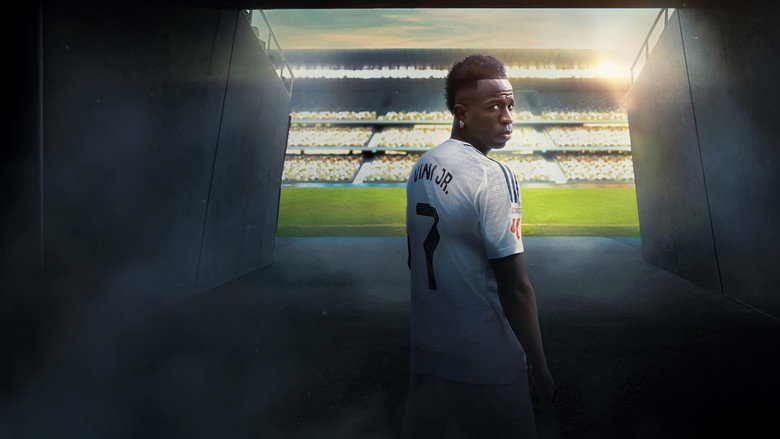
The strongest stretch comes about halfway through, when celebration turns to confrontation. After the goals and assists, the film cuts to phone footage from Spain: fans hurling racial slurs, bananas thrown onto the pitch, an effigy of him hanging from a bridge. On one side is the player dancing past defenders with a smile; on the other, what that smile provokes.
The film lingers on these incidents and makes you sit with the ugliness. Sports documentaries usually let triumph drown out struggle. This one refuses.
Here the original title, Baila, Vini ("Dance, Vini"), turns darker. For Vinícius, dancing is resistance. His flair and appetite for risk have made him a target, and the film treats his career as a kind of performance that asks the audience why joy makes them so uncomfortable.
Not every critic has been kind. Some reviewers called it polished but shallow, even an extension of his PR. There's truth in that.
We get glimpses of his family and childhood friendships, but the film never fully explores the psychological toll. What does it cost him to keep dancing through so much hatred? The film hints at the question without answering it.
Still, Vini Jr. isn't trying to be a tell-all, and it isn't The Last Dance. It's about a man in his mid-twenties still figuring out his legacy, a snapshot rather than a definitive biography, and that unfinished quality is partly the point.
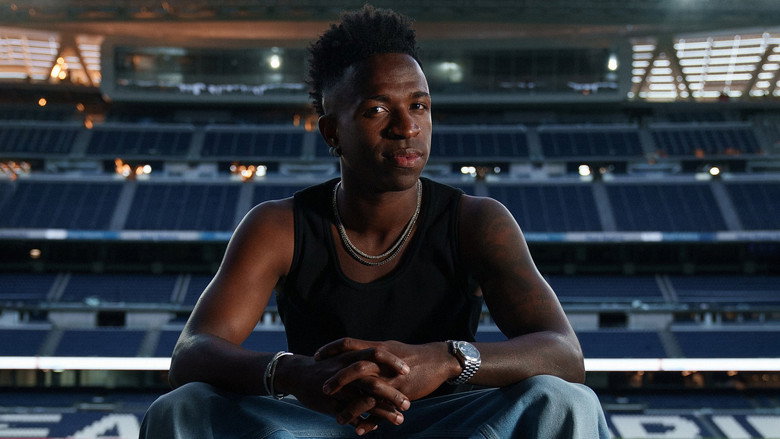
What the film does best is hold both halves of its subject: the goals and the celebrations alongside the slurs and the effigies, the weight of being a Black man in a space not built for him. It doesn't always stick the landing. When it does, it's devastating.
I keep coming back to the opening shot, the boy dribbling through the alleys of São Gonçalo. The film ends with a similar image, but the alleys have become the Santiago Bernabéu. The dance is the same. The question is whether the world will ever learn the steps.
"An inspiring and visually engaging documentary that captures Vini Jr.'s journey with heart and authenticity."
The film gives an honest account of Vini Jr.'s rise to stardom, highlighting his talent, resilience, and charisma. Its personal storytelling carries real emotional weight, though it could dig deeper into challenges beyond his professional career. The visual style and pacing are widely praised and make it accessible even to those less familiar with soccer.
Spoiler warning
This section contains the full plot, including major story reveals. Overview above stays spoiler-free.
The upcoming documentary Vini Jr. (2025) isn’t just another sports film—it’s a raw, unfiltered look at one of soccer’s most electrifying talents, Vinícius Júnior, and the pressures that come with global fame. Directed by Andrucha Waddington and Emílio Domingos, the Portuguese-language project traces the Brazilian winger’s journey from the streets of São Gonçalo to the pitch at Real Madrid, where he’s become a lightning rod for both adoration and controversy. With Netflix set to release it, the film promises to peel back layers on a player who’s as polarizing as he is gifted.
The documentary’s original title, Baila, Viní (Portuguese for "Dance, Viní"), hints at its dual focus: Vinícius’ dazzling footwork and the darker side of his rise. Sources suggest the film doesn’t shy away from the racism he’s faced in European soccer, including incidents in Spain where fans have hurled slurs and even effigies. One snippet from Estadão reveals the film contrasts Vinícius’ on-field "malvadeza" (a Brazilian term for mischievous brilliance) with the off-field vitriol, framing his resilience as a response to critics who’ve told him to "be nice". It’s a rare sports doc that tackles systemic issues head-on, and early buzz suggests it won’t sugarcoat the ugliness.
Behind the scenes, the directors reportedly leaned into Vinícius’ personal archives, including home videos and interviews with family. The cast list—featuring his mother (Fernanda Nascimento), siblings (Luana, Nilza, Ulysses, and Vinicius Paixão), and childhood friends like Douglonez—hints at an intimate portrait. While the IMDb synopsis teases his "dancing, unpredictable feet," the real story might lie in how those feet have carried him through adversity.
The film’s 2025 release aligns with a pivotal moment in Vinícius’ career. At 24, he’s already a Champions League winner and a key player for Brazil, but his outspokenness on racism has made him a target. The documentary’s Netflix debut suggests a strategic push to humanize him beyond the headlines. According to Estadão, the film addresses his evolution from a "garoto" (kid) in Rio’s favelas to a global icon who refuses to be silenced. It’s a narrative that resonates far beyond soccer, tapping into broader conversations about race, fame, and activism.
Rumors swirl that the directors faced challenges balancing access with objectivity. Vinícius is notoriously private about his personal life, and his team at Real Madrid has tightly controlled his media narrative. Yet, the inclusion of figures like journalist Julien Laurens (a known critic of La Liga’s handling of racism) suggests the film won’t be a PR puff piece. If true, this could make Vini Jr. one of the most candid athlete documentaries in years.
For all its promise, the film’s behind-the-scenes details remain frustratingly scarce. There’s no confirmation on how much of the footage was shot during Vinícius’ formative years versus recent seasons, or whether the directors secured interviews with high-profile figures like Real Madrid teammates or La Liga officials. The IMDb page lists Eduardo Peixoto and Felipe Eduardo in the cast, but their roles are unclear—are they childhood coaches, agents, or something else?
Another unanswered question: How does the film handle Vinícius’ relationship with Brazil’s national team? His performances for the Seleção have been uneven, and his public clashes with fans (including a viral moment where he called out Brazil’s "racist" supporters) could be a powder keg. Without more evidence, it’s hard to say if the doc will dive into that tension or gloss over it.
Vini Jr. (2025) has the ingredients to be more than a sports documentary—it’s a cultural snapshot of a young Black athlete navigating fame, racism, and the weight of expectation. The directors’ track records (Waddington’s Lope and Domingos’ Favela on Blast) suggest a visually dynamic approach, blending archival footage with cinematic storytelling. If the film delivers on its promise to show "the complexity" of Vinícius’ journey, it could join the ranks of The Last Dance and Sunderland ’Til I Die as a must-watch for even non-sports fans.
But with so many details still under wraps, the real test will be whether Baila, Viní can balance its subject’s humanity with the larger forces shaping his career. One thing’s certain: Vinícius Júnior’s story is far from over, and this documentary might just be the first chapter in a much longer narrative.
Entertainment rumors and trivia aggregated from public reporting. Treat speculation as unverified unless a cited source confirms it.
More titles in the same genres and with the same cast.