Raymond Domenech
Self
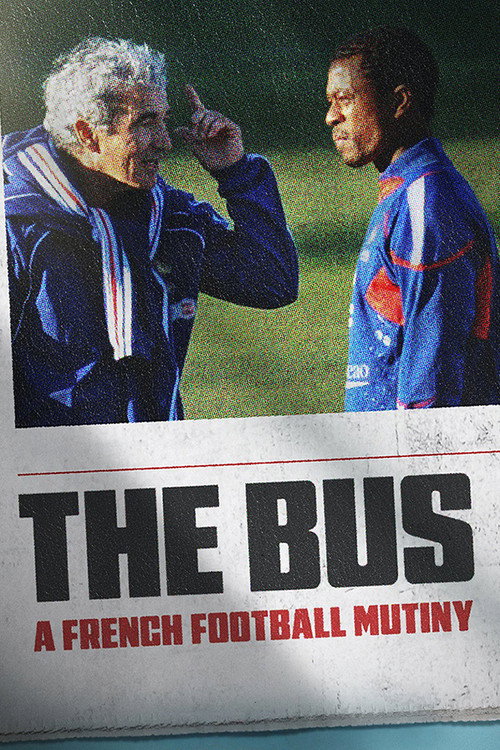
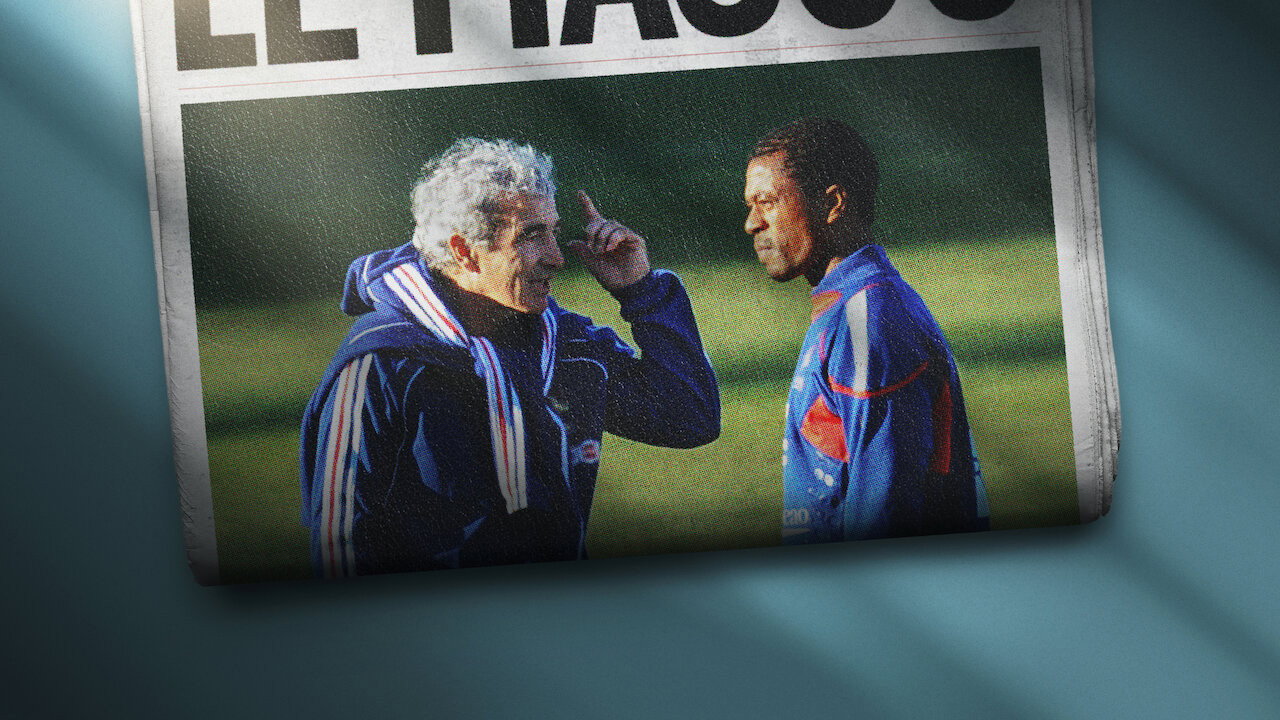
This documentary revisits the French football team's controversial 2010 World Cup and the bus strike that sparked global headlines and national outrage.
I’ve seen documentaries about wars, revolutions, and financial collapses, but I don’t think I’ve ever watched one where the most explosive material wasn’t archival footage or expert testimony—it was the subject’s own diary. The Bus: A French Football Mutiny isn’t just about the 2010 World Cup meltdown of the French national team; it’s about how Raymond Domenech, the coach at the center of the storm, handed his enemies the match ball and then seemed shocked when they scored with it.
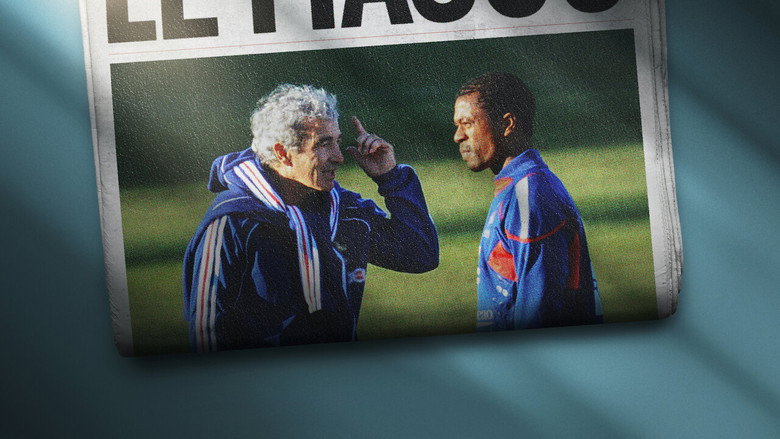
The film opens with a simple premise: what if the most infamous scandal in modern French sports wasn’t just a locker-room spat, but a slow-motion car crash where everyone in the vehicle had a hand on the wheel? The 2010 World Cup was supposed to be a redemption arc for Les Bleus after their infamous 2006 handball-assisted run to the final. Instead, it became a national humiliation—players refusing to train, a team bus turned into a rolling protest, and a country that had once worshipped its footballers suddenly treating them like spoiled children.
The documentary reconstructs the disaster with the pacing of a thriller, using Domenech’s personal journal as a kind of real-time confession. And what a confession it is.
The diary entries are the film’s secret weapon, and they’re devastating. Domenech doesn’t just vent—he eviscerates. Patrice Evra is an “idiot.” Yoann Gourcuff is “mildly autistic first, and stupid second.” Nicolas Anelka, the striker whose expulsion from the team after an alleged dressing-room tirade sparked the bus strike, is dismissed as “that fat idiot.” The language is so unfiltered, so casually cruel, that it’s hard not to wince.
This isn’t the work of a man carefully curating his image; it’s the raw, unedited id of someone who seems to have spent the tournament oscillating between fury and despair. The filmmakers don’t need to editorialize. They just let Domenech’s own words do the work, and the effect is like watching a man dig his own grave with a shovel he handed to the camera crew.
What makes this more than just a tabloid spectacle is the way the documentary layers these revelations with other perspectives. Patrice Evra, the team captain at the time, gets his say, and his account is just as damning—though aimed at different targets. He describes a locker room where players felt ignored, disrespected, and infantilized by Domenech’s management style.
The film doesn’t let him off the hook, either. When Evra admits to being the one who leaked the team’s refusal to train to the press, the moment lands like a gut punch. This wasn’t just a mutiny; it was a calculated escalation, and the players were as much architects of the chaos as the coach.
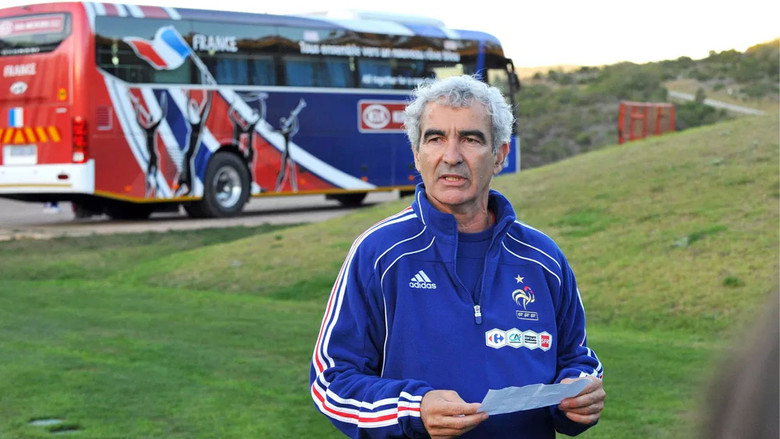
The most fascinating tension in The Bus isn’t between Domenech and his players, though. It’s between Domenech and himself. The man we see in the archival footage—a stiff, awkward figure in press conferences, his answers clipped and defensive—isn’t the same man whose diary entries drip with venom.
The film suggests that Domenech was playing a role, one that required him to be the unflappable authority figure, even as he seethed internally. The diary was his pressure valve, a place where he could admit what he really thought without fear of consequence. The tragedy, of course, is that he handed that diary to the filmmakers, seemingly unaware of how it would be used against him.
When the documentary dropped, his reaction was swift and furious. He called the film “an extraordinarily violent indictment” and accused the producers of betrayal, even using the phrase “a rape of my soul.” The language was so extreme that it overshadowed the film itself, turning Domenech into both victim and villain in the court of public opinion.
The documentary’s biggest flaw is that it never quite reckons with this contradiction. It frames Domenech as the primary architect of the disaster, and his diary entries certainly support that view. But it also hints at a larger ecosystem of failure—media pressure, federation incompetence, racial tensions within the team—that the film only gestures toward.
The 2010 French team was a powder keg of unresolved issues, from the lingering resentment over the 2006 final to the racial dynamics of a squad that was both celebrated and scrutinized for its diversity. The film touches on these themes, but it never digs deep enough. When Estelle Denis, Domenech’s partner at the time, describes the death threats and public vitriol they faced, it’s a reminder that the scandal wasn’t just about football.
It was about France’s relationship with its immigrant communities, its colonial past, and its fraught sense of national identity. The bus strike wasn’t just a team imploding; it was a country seeing its own fractures reflected back at it.
That’s the real missed opportunity here. The Bus is at its best when it treats the 2010 World Cup as a microcosm of something larger, a moment where sports, politics, and culture collided in spectacular fashion. But it’s so focused on Domenech’s downfall that it sometimes loses sight of the bigger picture. The filmmakers clearly see him as the villain of the piece, and his own words make it easy to agree with them.
But villains don’t exist in a vacuum. They’re created by the systems around them, and the French football federation, the media, and even the players themselves all played a role in the disaster. The documentary acknowledges this, but it never fully grapples with it.
Instead, it settles for a narrative that’s satisfying in its simplicity but incomplete in its truth.
Still, there’s something undeniably compelling about The Bus. It’s a film that understands the power of a good scandal, and it milks the drama for all it’s worth. The pacing is tight, the editing sharp, and the access—especially to Domenech’s diary—is revelatory.
It’s the kind of documentary that makes you feel like you’re uncovering a conspiracy, even if the conspiracy is just human nature at its most petty and self-destructive. And maybe that’s the point. The 2010 French team didn’t implode because of one man’s flaws.
It imploded because everyone involved was too busy protecting their own egos to see the bigger picture. Domenech’s diary is just the most honest account of that failure we’ve got.
In the end, The Bus: A French Football Mutiny is less about football and more about the stories we tell ourselves when things go wrong. Domenech’s diary is a reminder that history isn’t written by the victors—it’s written by the people who keep the receipts. And in this case, the receipts are brutal.
The film doesn’t just revisit a scandal; it forces us to confront the uncomfortable truth that the people we idolize—or vilify—are often just as messy, flawed, and human as the rest of us. Even when they’re holding the pen.
"A tense, fast-moving account of the Knysna fiasco that combines rare access and sharp storytelling with a sometimes sensational, Domenech-skewed angle."
The film turns a vaguely remembered scandal into a gripping story, using Domenech’s own diaries, candid interviews and well-edited archives to show how fragile egos, bad leadership and media hysteria blew a locker-room dispute up into a national psychodrama. It is fascinating, entertaining and unexpectedly funny in places, but the tone can drift into prestige-drama exaggeration, and the coach is hammered much harder than the federation or the journalists, leaving parts of the larger context underexplored.
Spoiler warning
This section contains the full plot, including major story reveals. Overview above stays spoiler-free.
On 20 June 2010, France's players refused to train at Knysna and climbed back onto the team bus while cameras rolled. L'Equipe still calls that parked coach the symbol of the loudest fiasco in French sport. Netflix put the same object in the title. The Bus: A French Football Mutiny, French title Le Bus: Les Bleus en greve, latestnetflix.com contends, arrived on 13 May 2026. Christophe Astruc and Jerome Fritel directed. Breath Film and Roger Films produced. Le Parisien timed the drop at 9 a.m. And clocked the cut at 79 minutes.,,
The documentary was supposed to land in 2025. L'Equipe reported it slipped after a director change, then arrived as a tight closed-room piece with few voices from the actual France squad. Raymond Domenech, then coach, and Patrice Evra, then captain, do most of the talking. William Gallas and Bacary Sagna appear. So do fitness coach Robert Duverne, press officer Francois Manardo, sports minister Roselyne Bachelot, and L'Equipe's own Vincent Duluc and Sebastien Tarrago. Netflix's English page sells "global headlines and national outrage." The French papers sold the diary.,
Domenech handed over the journal he kept in South Africa, the same notes that had already fed his book Tout seul. L'Equipe printed the lines. After Mexico, he wrote of "surges of hatred toward these idiots." He called Yoann Gourcuff "mildly autistic first, then an idiot." After the strike he wrote, "That's your best collective action of the whole World Cup. The suicide is done! Hallelujah!" Le Parisien added the Gallas captaincy fight. Domenech's on-camera line is "If he is captain, I am general." Gallas, in the film, never gets a reason.,
The day after release, the coach posted on X that the film was supposed to be "the documentary of explanation" and became "an extraordinarily violent indictment against my person," "totally one-sided," and "nauseatingly biased." He said a promised right of review was refused "with the greatest dishonesty." "I am wounded and betrayed," he wrote. Ouest-France carried Netflix's AFP reply. The streamer said the film was "neither an indictment nor a platform" and had been built as "a confrontation of accounts." Producer Yoan Zerbit told AFP the diary was a document where Domenech "dumped all his emotions, all his frustrations.",
Franceinfo noted Franck Ribery is not in the film. At the end, Domenech floats a rumor that "the mole" who leaked the Anelka dressing-room clash to L'Equipe may have been Ribery, even if by accident. Ribery posted that night, after a year of silence on X. "Mamamiaaaa Domenech, I love you a lot. Just... I keep the real story for later." franceinfo treated that as a tease, not a confession. The 2010 front page still sits in the room. L'Equipe's then director Francois Moriniere walks through three headline options, including the crude one that ran. Evra and Domenech both tell the cameras they never heard Anelka say those exact words. Domenech, asked why he did not deny it then, says, "Because I don't care.",
Duverne still cries telling the bus scene. Bachelot, sent by Nicolas Sarkozy, pulled the players into a room without staff. Evra says she "connects" them. Sagna calls her "our mum." Bachelot, in 2026, smiles and calls Evra "a little baby" and "poor little treasure." Days later in the National Assembly she called the squad immature thugs. Le Parisien says the players' strike letter still exists, and that someone still has it. Sixteen years on, the gossip is not a new fact about Anelka. It is a coach who gave Netflix his diary, then accused the platform of stealing his soul.,
Entertainment rumors and trivia aggregated from public reporting. Treat speculation as unverified unless a cited source confirms it.
More titles in the same genres and with the same cast.