Dr. Hui Ming Tak Ted
Self - Qin Historian

Thousands of terracotta warriors guarded the first Chinese emperor's tomb. This is their story, told through archeological evidence and reenactments.
Official
I’ve always been drawn to the quiet power of objects that outlast their makers. A chipped teacup in a museum display, a rusted key in an antique shop—these things carry the ghost of hands that once held them. But nothing prepared me for the eerie, almost confrontational presence of the Terracotta Warriors.
They don’t just outlast their creator; they were built to guard him for eternity. Mysteries of the Terracotta Warriors, James Tovell’s documentary for Netflix, doesn’t just explore this ancient army—it lets them speak, in their own silent, clay-coated way. The film opens with a shot that feels like a punch to the gut: row upon row of terracotta soldiers, their hollow eyes staring straight into the camera.
It’s a moment that lingers, not just because of the sheer scale of the discovery, but because of what it represents. These aren’t just statues; they’re a statement. Qin Shi Huang, China’s first emperor, didn’t just want to rule in life.
He wanted to command in death, too. And so, over 2,000 years ago, he ordered the creation of an army so vast, so meticulously detailed, that it would make the afterlife feel like a continuation of his earthly reign.
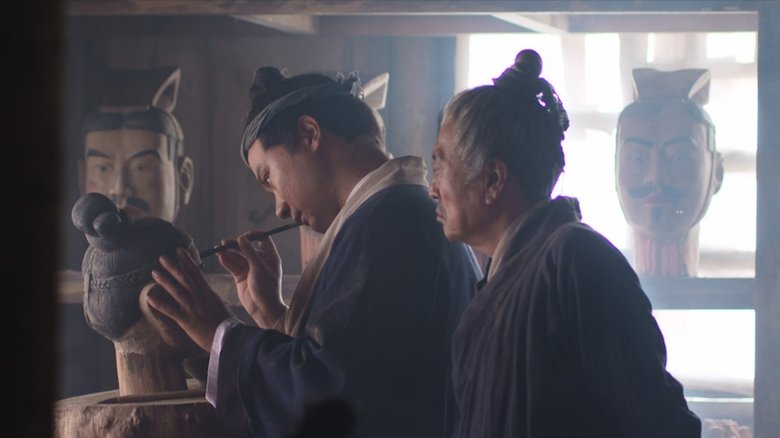
Tovell, who previously directed Secrets of the Saqqara Tomb, knows how to balance the thrill of discovery with the weight of history. This isn’t just a film about archaeology; it’s about the people who dedicate their lives to piecing together the past, one fragment at a time. We meet Dr.
Li Janice Xiuzhen, an archaeologist whose work on facial reconstruction has given these warriors a kind of second life. Watching her team painstakingly reassemble a shattered soldier—matching a finger here, a nose there—feels like witnessing a resurrection. The film draws a quiet parallel between the ancient artisans who sculpted these figures and the modern restorers who bring them back to "life."
Both are artists, in their own way. Both are trying to cheat time. The documentary’s greatest strength is its refusal to treat the Terracotta Army as a static relic.
These warriors are active participants in the story, their very existence raising questions that feel urgently modern. Why did Qin Shi Huang need an army in death? What does it say about power that he sought to extend it beyond the grave?
But it also doesn’t reduce him to a villain. Instead, it presents him as a man obsessed with legacy, a ruler so terrified of oblivion that he built an army to stand guard over his tomb for eternity. In that sense, the Terracotta Warriors aren’t just a historical curiosity; they’re a monument to human vanity, a reminder that even the most powerful among us are haunted by the same fears.
That’s where the reenactments come in. Some critics, like Decider’s Johnny Loftus, have praised the film for its "balanced" use of dramatizations, arguing that they "animate" the historical figures in a way that pure documentary footage can’t. And it’s true—the scenes of Qin Shi Huang’s court, with its scheming advisors and power struggles, do add a layer of narrative tension.
But I’ll admit, I found some of them a bit too polished, too Hollywood. The actors playing Prince Hu Hai and the advisor Zhao Gao sometimes veer into melodrama, their performances feeling more like a costume drama than a historical deep dive. It’s a small quibble, but one that occasionally pulls you out of the film’s otherwise immersive rhythm.
The real drama, of course, is in the excavation pits. One of the most gripping sequences follows the discovery of a coffin buried deep within the tomb complex. The film builds this moment up like a mystery—who is inside?
What secrets do they hold?—only to leave us with more questions than answers. Some viewers have criticized this as a "bait and switch," and I can see why. The documentary teases a revelation, then pulls back, reminding us that history doesn’t always provide neat resolutions.
But in a way, that’s the point. The Terracotta Army wasn’t built to give us answers; it was built to guard them. John Anderson of The Wall Street Journal called the film "a perfect introduction for people... who have had only a vague idea of what 'terracotta army' meant."
And he’s right. If you’re coming to this documentary with little more than a passing familiarity with the site, it’s an excellent primer. But even if you’re well-versed in the history, there’s something deeply moving about seeing these warriors up close, their individuality preserved in clay.
One moment that stuck with me was a shot of a soldier’s hand, its fingers curled as if still gripping a spear. It’s a small detail, but it humanizes them in a way that no history book ever could. The film’s final act circles back to the modern-day restorers, their work a quiet act of defiance against time.
Watching them piece together a warrior’s shattered face, I was struck by the irony: Qin Shi Huang built an army to protect him in death, but it’s these living, breathing humans who are keeping his legacy alive. The Terracotta Warriors were never meant to be seen. They were meant to stand guard in the dark, unseen and unseeing.
But now, thanks to the work of archaeologists and filmmakers like Tovell, they’ve become something else entirely—witnesses to history, silent but no longer forgotten.
I left Mysteries of the Terracotta Warriors with a strange sense of unease. Not because of anything the film did wrong, but because of what it revealed about the human condition. We build monuments to outlast us, we craft legacies to be remembered, and yet, in the end, we’re all just dust.
Qin Shi Huang may have lost his war against time, but his warriors? They’re still standing. And they’re not going anywhere.
Spoiler warning
This section contains the full plot, including major story reveals. Overview above stays spoiler-free.
Fifty years after the discovery of China’s legendary Terracotta Army, a new documentary is peeling back layers of history—and sparking fresh intrigue. Mysteries of the Terracotta Warriors (2024), directed by James Tovell, promises to reveal "new secrets" from the mausoleum of China’s first emperor, Qin Shi Huang, and its 8,000-strong clay army. But what’s the real story behind this Netflix-bound film? latestnetflix.com's view is that here’s what we know (and what’s still buried underground).
The Terracotta Warriors, unearthed in 1974 by farmers in Xi’an, remain one of archaeology’s most staggering finds. The life-sized soldiers, each with unique facial features, were crafted over 2,200 years ago to guard Qin Shi Huang in the afterlife. Yet despite decades of excavation, only a fraction of the tomb complex has been explored—leaving historians and filmmakers alike hungry for answers.
Mysteries of the Terracotta Warriors arrives at a pivotal moment. The documentary marks the 50th anniversary of the discovery, offering what IMDb describes as "new secrets" from the site. Netflix’s Tudum platform teases that the film will dive into the ongoing unearthing of the army, which now numbers "8,000 and counting". But with China’s government tightly controlling access to the tomb (the emperor’s burial chamber remains untouched due to fears of damage), how much new ground can the film actually cover?
The answer may lie in the experts leading the charge. The documentary assembles a powerhouse cast of archaeologists and historians, including:
Their involvement suggests the film won’t just rehash old discoveries but could unveil fresh analyses—perhaps even breakthroughs in understanding the warriors’ individual identities or the tomb’s untapped chambers.
Documentaries about the Terracotta Army often face a unique challenge: the site itself is a moving target. Excavations continue to this day, with new figures and artifacts emerging regularly. Netflix’s description hints at this urgency, noting that the warriors "continue to be unearthed today". But with the Chinese government imposing strict limits on filming and research (the central tomb has never been opened), Tovell’s team likely had to work within tight constraints.
Rumors—unconfirmed, but persistent—suggest the filmmakers gained rare access to restricted areas of the mausoleum. If true, this could explain the documentary’s promise of "new secrets." However, no official details have emerged about what those secrets might be, or whether they involve unpublished findings from recent digs.
One thing is clear: the project leans heavily on its academic stars. The cast list reads like a who’s who of Qin dynasty scholarship, with Zhu Sihong, Lan Desheng, and Fu Jian among the experts featured. Their presence suggests the film will blend on-site exploration with scholarly debate—potentially offering competing theories about the warriors’ origins, their purpose, or even the fate of the craftsmen who built them.
Mysteries of the Terracotta Warriors arrives on Netflix on June 12, 2024, with a runtime of just 1 hour and 18 minutes. The brevity raises questions: Will the film focus on a single revelation, or provide a broader overview of the site’s mysteries? Moviefone’s audience score of 69 suggests early viewers found it engaging, though not groundbreaking.
For archaeology buffs, the real draw may be the experts themselves. Dr. Li Janice Xiuzhen, for instance, has previously worked on facial reconstruction projects that brought the warriors’ individuality to life. If the documentary includes similar visualizations or 3D modeling, it could offer a fresh perspective on the army’s eerie realism.
As for the tomb’s ultimate secret—the unopened burial chamber of Qin Shi Huang—don’t expect answers. The Chinese government has repeatedly stated that technology isn’t yet advanced enough to safely excavate it. But with Mysteries of the Terracotta Warriors spotlighting the site’s enduring allure, pressure to solve its riddles will only grow.
Entertainment rumors and trivia aggregated from public reporting. Treat speculation as unverified unless a cited source confirms it.
More titles in the same genres and with the same cast.