David Bowie
Self (archive footage)

A cinematic odyssey featuring never-before-seen footage exploring David Bowie's creative and musical journey.
Official
I’ve watched Moonage Daydream three times now, and each time I emerge feeling like I’ve just been shaken awake from a fever dream—one where the walls of the room keep dissolving into swirling galaxies of glitter and static. Brett Morgen’s documentary about David Bowie isn’t so much a film as it is an experience, a sensory plunge into the mind of an artist who spent his life refusing to be pinned down.
It’s less a biography than a séance, less a retrospective than a transmission. And like all good transmissions, it’s messy, hypnotic, and occasionally frustrating in its refusal to explain itself.
Morgen, who previously directed Cobain: Montage of Heck and The Kid Stays in the Picture, has a knack for making documentaries that feel like collages stitched together by the subject’s own manic energy. With Bowie, that energy is electric, but it’s also slippery. The film doesn’t follow a linear narrative; it doesn’t even try.
Instead, it moves in waves—archival footage of Bowie on stage, in interviews, in rare behind-the-scenes moments, all set to a soundtrack that blends his greatest hits with experimental soundscapes and spoken-word fragments. The effect is less like watching a documentary and more like being inside Bowie’s brain as it flickers between personas: Ziggy Stardust, the Thin White Duke, the Berlin-era avant-gardist, the elder statesman of pop.
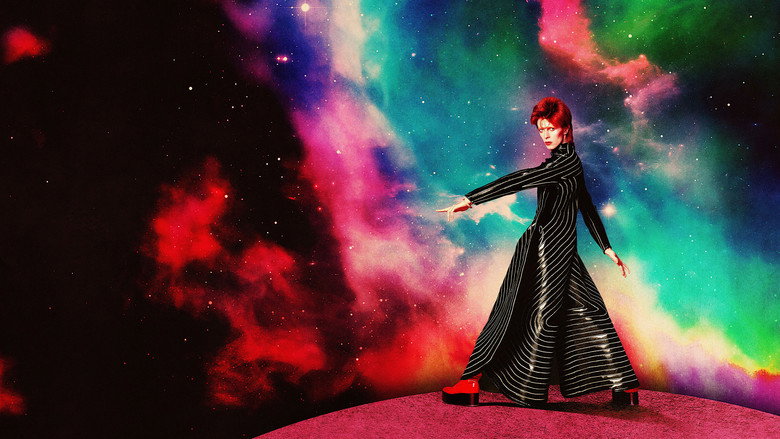
There’s a moment early in the film where Bowie, in a 1973 interview with Russell Harty, describes his approach to performance: "I don’t know where the act ends and the real me begins." It’s a line that could serve as the thesis for Moonage Daydream. Morgen takes this idea and runs with it, blurring the boundaries between Bowie the man and Bowie the myth until it’s impossible to tell where one ends and the other begins.
The film is structured like a piece of music, with movements that rise and fall in intensity. One sequence might linger on a grainy clip of Bowie performing "Space Oddity" in 1969, his voice trembling with youthful vulnerability, while the next cuts to a frenetic montage of his Diamond Dogs tour, all jagged angles and dystopian glam. The transitions aren’t smooth—they’re jarring, disorienting, and deliberately so.
This isn’t a film that wants to hold your hand. It wants to pull you into the chaos of Bowie’s creative process, where reinvention wasn’t just a career strategy but a survival tactic.
What’s striking about Moonage Daydream is how little it relies on traditional documentary crutches. There are no talking-head interviews with biographers or critics dissecting Bowie’s legacy. There are no voiceovers narrating his life story.
Instead, Morgen lets Bowie’s own words—pulled from interviews, lyrics, and rare audio recordings—do the talking. The result is a film that feels deeply personal, as if Bowie himself is guiding us through his own labyrinth. At times, it’s exhilarating.
At others, it’s exhausting. There’s no breathing room here, no moment to pause and reflect. The film moves at the speed of thought, or perhaps the speed of a mind that’s always racing ahead of itself.
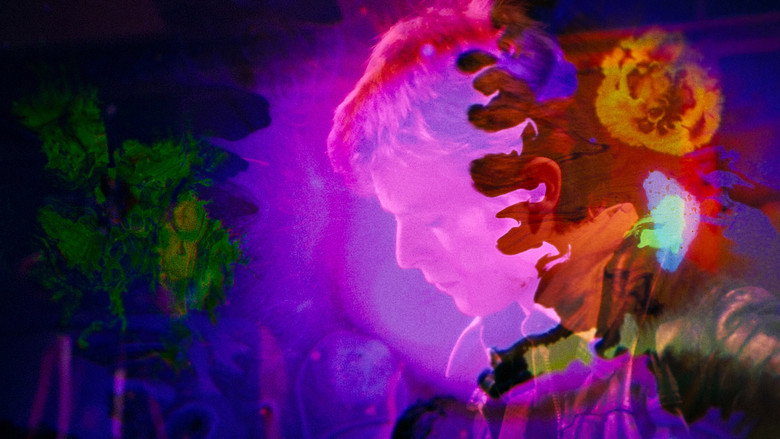
One of the most fascinating aspects of Moonage Daydream is how it grapples with the idea of authenticity. Bowie was an artist who built his career on artifice, who once said, "I’m just an individual who doesn’t feel that I need to have somebody qualify my work in any particular way." Morgen’s film embraces that ambiguity. It doesn’t try to separate the "real" Bowie from the characters he created; instead, it presents them as layers of the same persona, like geological strata.
There’s a sequence where Bowie, in a 1975 interview with Dick Cavett, talks about his fascination with mime and physical theater. "I’ve always been interested in the idea of the mask," he says, "because the mask is the truth." It’s a line that lingers over the film like a ghost, a reminder that for Bowie, the act of performance wasn’t about hiding—it was about revealing something deeper, something that couldn’t be expressed any other way.
That said, Moonage Daydream isn’t without its flaws. The film’s relentless pace can be overwhelming, especially in its second half, where the collage of images and sounds starts to feel more like noise than music. There are moments where the lack of context or explanation makes the film feel like an inside joke that the audience isn’t quite in on.
(I’ll admit, I had to pause more than once to look up a reference or a lesser-known track.) And while the absence of talking heads is refreshing, it also means that the film occasionally lacks perspective. We hear from Bowie, and we hear from his collaborators—Lou Reed, Tina Turner, Mick Ronson—but we don’t get a sense of how his work was received in the moment, or how it evolved in conversation with the broader cultural landscape.
It’s a film that’s so inside Bowie’s head that it sometimes forgets to look outward.
But perhaps that’s the point. Moonage Daydream isn’t interested in being a definitive account of Bowie’s life or career. It’s not a film for completists or for those looking for a straightforward narrative. It’s a film for those who want to feel what it was like to be David Bowie—to experience the rush of his creativity, the thrill of his reinventions, the loneliness of his constant shape-shifting.
It’s a film that understands, on a visceral level, that Bowie’s greatest work wasn’t just his music; it was the way he made his audience feel like they, too, could be someone else.
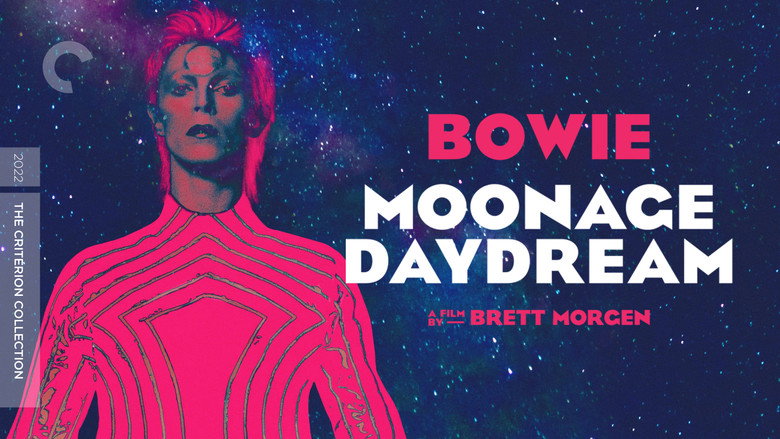
In the end, Moonage Daydream is less a documentary than it is a love letter—one written in the language of sound and image, of light and shadow. It’s a film that doesn’t just celebrate Bowie’s legacy; it tries to channel it, to bottle the lightning of his genius and pass it on to the audience. Does it always succeed?
No. But then again, neither did Bowie. And that, in a way, is the most Bowie thing about it.
The film is imperfect, messy, and at times frustratingly opaque. But it’s also alive in a way that few documentaries are. It doesn’t just tell you about David Bowie.
It makes you feel him. And in a world where so much art is polished to a sterile sheen, that’s a rare and precious thing.
"A visually immersive, sonically rich tribute to David Bowie that thrills fans but may overwhelm casual viewers with its abstract style."
The film is praised for its stunning visuals and powerful use of Bowie’s music, an emotional, sensory experience true to his artistic spirit. Its nonlinear, collage-like structure disorients some, and it offers no clear narrative or deeper insight into Bowie’s life beyond his public persona.
Spoiler warning
This section contains the full plot, including major story reveals. Overview above stays spoiler-free.
Brett Morgen’s Moonage Daydream (2022) isn’t just a David Bowie documentary—it’s a love letter to the artist’s chaos, creativity, and the director’s own obsession. The film, which premiered at Cannes and later screened at TIFF, has been hailed as a visual and sonic collage of Bowie’s life, eschewing traditional talking heads for a hypnotic, archive-driven experience. latestnetflix.com's take is that but behind the scenes, Morgen’s journey to bring Bowie’s story to the screen was anything but conventional.
Morgen has been vocal about how Bowie’s music—and the man himself—saved his life. In an interview with FRANCE 24, he revealed that Bowie’s work pulled him through a dark period, shaping his artistic vision. That personal connection made Moonage Daydream more than a job; it was a mission. The film’s title, borrowed from Bowie’s 1971 glam-rock anthem, reflects Morgen’s approach: a dreamlike, nonlinear dive into Bowie’s evolution as an artist, not just a chronology of his career.
The director’s bond with Bowie’s estate was crucial. Unlike many posthumous projects, Moonage Daydream had unprecedented access to Bowie’s personal archives, including never-before-seen footage, handwritten lyrics, and rare audio recordings. Morgen described the process as an "arts and crafts project," piecing together fragments of Bowie’s life like a collage. The result? A film that feels less like a documentary and more like an immersive art installation.
The film’s soundtrack, released separately, is a sign of Morgen’s curatorial prowess. Featuring Bowie’s music reworked and remixed, the album spans genres—glam, funk, experimental, and even spoken word—mirroring the film’s eclectic style. Critics have praised its 8.1/10 rating on SensCritique, calling it a fitting companion to the visual experience. The soundtrack’s diversity underscores Bowie’s chameleonic career, from Ziggy Stardust to Blackstar, all while avoiding the pitfalls of a greatest-hits compilation.
Morgen’s refusal to follow the standard documentary formula wasn’t without risks. Early previews and Q&As at TIFF revealed his struggle to balance artistic ambition with accessibility. Some viewers expected a straightforward biopic, but Moonage Daydream defies expectations, opting for mood over narrative. The film’s 140-minute runtime and abstract structure earned it a 7.2/10 rating on SensCritique, with some critics calling it "self-indulgent" while others praised its boldness.
The director’s reliance on Bowie’s estate also meant navigating strict creative boundaries. In interviews, Morgen hinted at the challenges of working with such a tightly controlled archive, though he stopped short of detailing specific conflicts. What’s clear is that Moonage Daydream wouldn’t exist without the estate’s trust—and Morgen’s willingness to let Bowie’s work speak for itself.
For Bowie’s inner circle, the film was a chance to preserve his legacy on their terms. Geoff MacCormack, Bowie’s longtime friend and collaborator, appeared on ITV’s Lorraine to discuss the project, emphasizing its authenticity. Unlike previous Bowie documentaries, Moonage Daydream avoids sensationalism, focusing instead on the artistry behind the icon.
The film’s Rotten Tomatoes listing confirms its cast includes Bowie’s Spiders from Mars bandmates—Trevor Bolder, Mick Ronson, and Mick Woodmansey—though their contributions are woven into the archive-heavy format rather than spotlighted. This choice aligns with Morgen’s vision: Moonage Daydream isn’t about the people around Bowie; it’s about the man himself, in all his fragmented, brilliant glory.
Moonage Daydream is a gamble that paid off—for Morgen, for Bowie’s estate, and for fans craving something beyond the usual rock doc. It’s messy, ambitious, and occasionally polarizing, but that’s the point. As Morgen put it, the film is less about answering questions and more about capturing the essence of Bowie’s ever-shifting identity. Whether it’s a masterpiece or a niche experiment depends on who you ask, but one thing’s certain: it’s the closest thing to stepping inside Bowie’s mind that we’re likely to get.
Entertainment rumors and trivia aggregated from public reporting. Treat speculation as unverified unless a cited source confirms it.
More titles in the same genres and with the same cast.