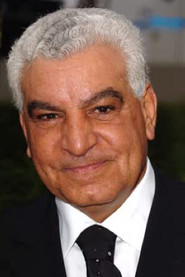
Zahi Hawass
Self
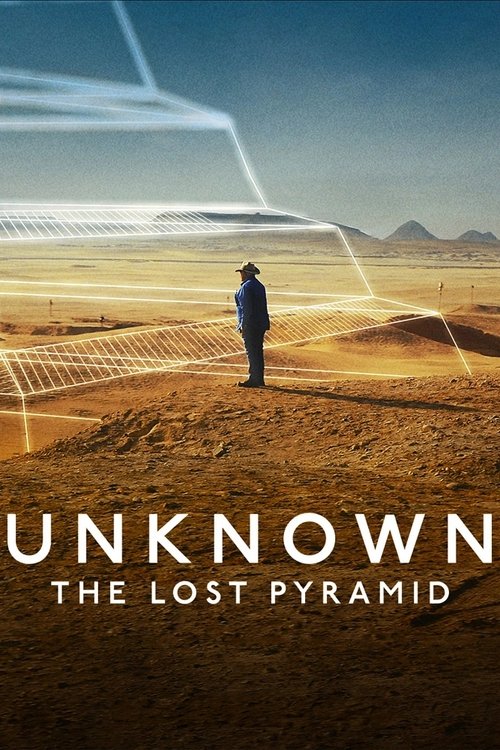
Egyptian archaeologists dig into history, discovering tombs and artifacts over 4,000 years old as they search for a buried pyramid in this documentary.
Official
I’ve seen this trick before. A documentary about ancient Egypt, shot like a summer blockbuster, complete with swelling music, dramatic slow-motion reveals, and a charismatic lead who could just as easily be cracking a whip in a fedora as brushing dust off a 4,000-year-old sarcophagus. But here’s the thing: Unknown: The Lost Pyramid doesn’t just borrow from Indiana Jones—it understands why we fell in love with him in the first place.
Not for the Nazis or the crystal skulls, but for the sheer, unapologetic thrill of discovery. The moment when the past isn’t just studied, but found.
That’s the tension at the heart of Max Salomon’s film, the first in Netflix’s Unknown series. It’s a documentary that wants to be an adventure, and—against all odds—it mostly succeeds. Not because it delivers a neat, Hollywood-style resolution (it doesn’t), but because it captures something rarer: the messy, frustrating, exhilarating reality of archaeology.
The digs that go nowhere. The artifacts that crumble in your hands. The moments when history, against all probability, speaks.
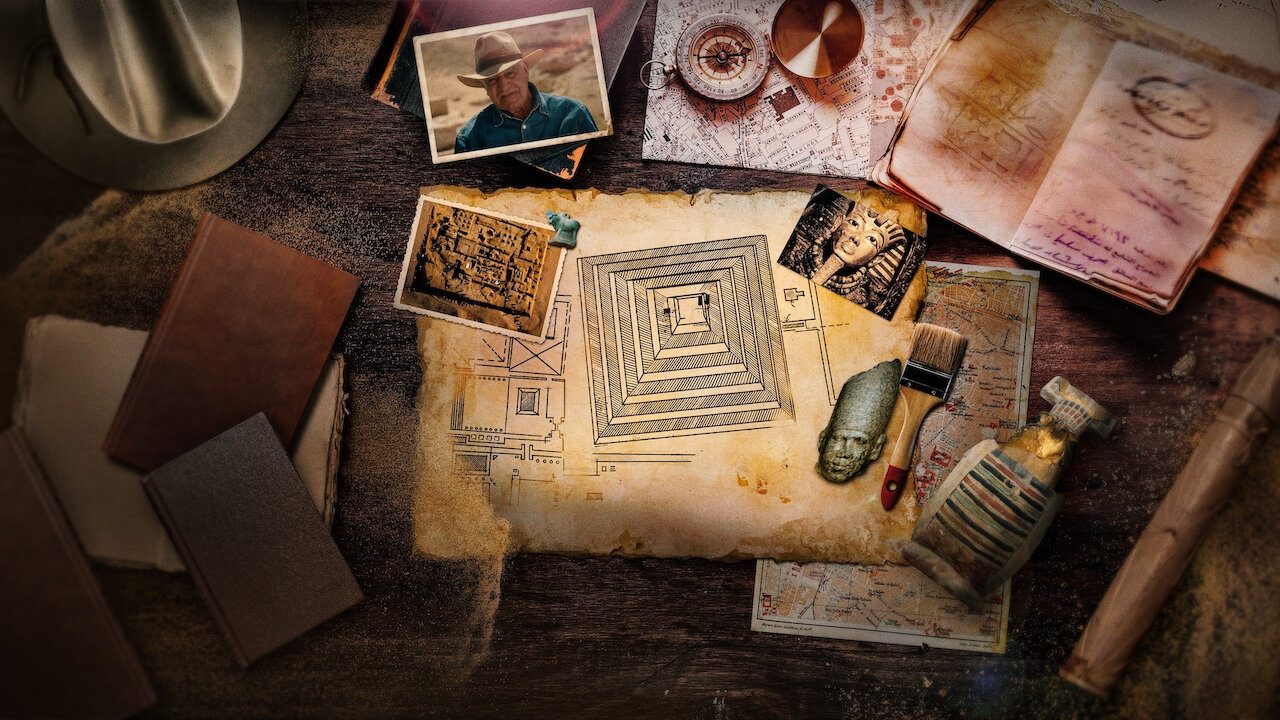
Salomon, a director with a background in high-end commercials and music videos, brings a cinematic eye to the dust and heat of Saqqara. The film’s visual language is straight out of Lawrence of Arabia—sweeping drone shots of the desert, tight close-ups of calloused hands brushing sand from stone, the kind of golden-hour lighting that turns a dig site into a cathedral. It’s undeniably gorgeous, but it’s also a choice.
This isn’t Nova. There’s no dry narration, no talking-head academics in stuffy offices. Instead, we get Zahi Hawass, Egypt’s most famous (and most controversial) archaeologist, striding across the frame like a man who knows he’s the star of the show.
And he is.
Hawass, the self-proclaimed “Indiana Jones of Egyptology,” is a force of nature. He’s equal parts scholar, showman, and provocateur, a man who has spent decades battling both the sands of time and the perception that Egyptology is a field dominated by Westerners. In The Lost Pyramid, he’s not just leading a dig—he’s leading a reclamation.
The film frames his work, and that of his team (including his former student, Mostafa Waziri), as part of a larger narrative: Egypt taking back its own history. It’s a compelling story, and one that resonates deeply in a post-colonial world. But it’s also a story that the film sometimes struggles to balance with the more immediate drama of the dig itself.
That drama is real, even if it’s occasionally heightened for the camera. The film follows Hawass and Waziri as they search for the lost pyramid of Huni, a pharaoh whose burial site has eluded archaeologists for centuries. Along the way, they uncover a 52-foot-long papyrus from the Book of the Dead, a well-preserved mummy named Nebet Hut, and a series of tombs that offer tantalizing glimpses into ancient Egyptian life.
These are genuine discoveries, and the film treats them with the reverence they deserve. But it also can’t resist a little Hollywood flair. The music swells at just the right moment.
The camera lingers on Hawass’s face as he delivers a line about “the secrets of the past.” It’s all a bit much, and some critics have called it out as overly stylized. Rohan Naahar of The Indian Express put it bluntly: the film is “enlightening and entertaining,” but it’s also “a little too in love with its own drama.”
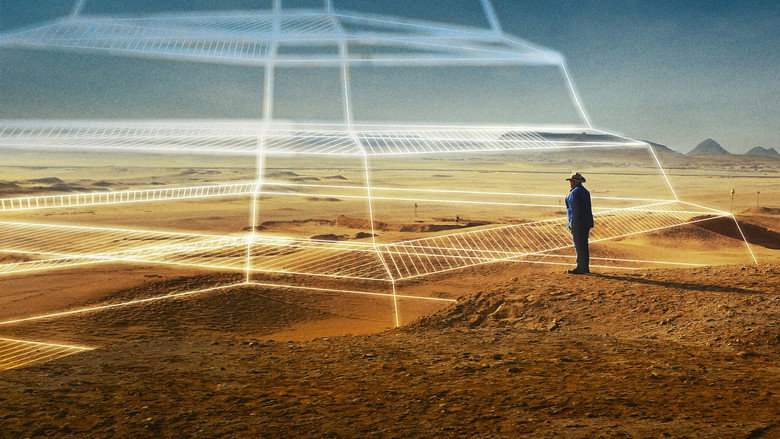
And yet, I can’t bring myself to fault the film for its enthusiasm. Because here’s the thing about archaeology: it is dramatic. The stakes are real, even if they’re not the kind that fit neatly into a three-act structure.
The film’s biggest “reveal”—the discovery of Nebet Hut’s mummy—isn’t a twist or a climax in the traditional sense. It’s a quiet moment, one that unfolds slowly as the team carefully extracts the remains from the tomb. There’s no music, no grand speech.
Just the sound of brushes on stone and the collective breath of the team as they realize what they’ve found. It’s a scene that could have been played for cheap sentimentality, but instead, it’s allowed to breathe. And in that moment, the film earns its emotional payoff.
That’s not to say The Lost Pyramid is without its flaws. The biggest one is its title, which promises a resolution that the film never delivers. The lost pyramid of Huni remains lost by the end of the documentary, and while the team makes progress, the dig is still very much a work in progress.
Some viewers have found this misleading, and it’s hard to blame them. The film’s marketing leans heavily on the idea of a grand discovery, and when that discovery doesn’t materialize, it can feel like a letdown. Joel Keller of Decider noted that the film “takes a potentially dry topic and fills it with interesting moments,” but he also acknowledged that the lack of a definitive resolution might frustrate some audiences.
But maybe that’s the point. Archaeology isn’t about neat endings. It’s about the process—the digging, the waiting, the hoping.
The film’s final scene, a reunion between Hawass and Waziri at the Giza Plateau, is a perfect encapsulation of that. There’s no grand discovery, no earth-shattering revelation. Just two men standing in the shadow of the pyramids, reflecting on what they’ve found and what still lies buried.
It’s a quiet moment, but it’s also the most honest one in the film.
I’ll admit, I went into Unknown: The Lost Pyramid expecting a slick, superficial adventure. What I got instead was something far more interesting: a documentary that understands the allure of discovery, even when that discovery is incomplete. It’s not perfect—it’s too stylized in places, too eager to please in others—but it’s also alive in a way that so many documentaries aren’t.
It reminds us that history isn’t just something we read about in books. It’s something we dig up, piece by piece, with our own hands.
And maybe that’s enough. Maybe we don’t need a lost pyramid to be found. Maybe the real discovery is the thrill of the search itself.
"A niche documentary that fascinates Egyptology enthusiasts but is too specialized to hold casual viewers."
The film follows archaeologists Zahi Hawass and Mostafa Waziri as they explore a newly discovered pyramid, offering rare insights into ancient Egyptian history. The subject is compelling for anyone interested in archaeology, but the slow pacing and technical presentation limit its broader appeal.
Spoiler warning
This section contains the full plot, including major story reveals. Overview above stays spoiler-free.
Netflix’s Unknown: The Lost Pyramid (2023) isn’t just another archaeological deep dive—it’s a high-stakes showdown between two of Egyptology’s biggest names. Directed by Max Salomon, the documentary drops viewers into the scorching sands of Saqqara, where Dr. Zahi Hawass and his former protégé (and now rival) Dr. Mostafa Waziri lead competing teams in a race to uncover the lost Pyramid of Huni. latestnetflix.com's view is that but beneath the dust and hieroglyphs, the film teases a personal and professional rivalry that could make or break careers.
The trailer sets the tone: “Two of the world’s most famous Egyptologists seek to unearth ancient treasures.” But the subtext? A decades-long mentorship turned rivalry. Hawass, the flamboyant former Egyptian Minister of Antiquities, and Waziri, the current Secretary-General of the Supreme Council of Antiquities, were once close—until Waziri’s rise threatened Hawass’s dominance in the field. The documentary leans into this dynamic, framing their dig as a battle of egos as much as a scientific quest.
Entertainment rumors and trivia aggregated from public reporting. Treat speculation as unverified unless a cited source confirms it.
More titles in the same genres and with the same cast.