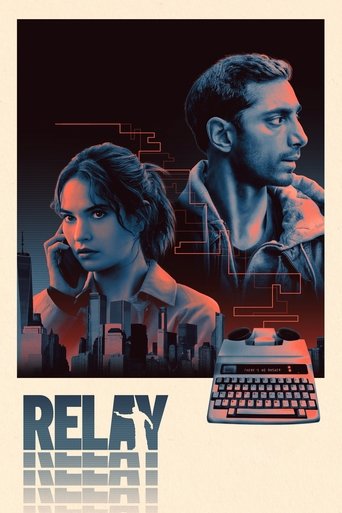

Sofia Carson
Cassie Salazar

An aspiring musician agrees to a marriage of convenience with a soon-to-deploy Marine, but a tragedy soon turns their fake relationship all too real.
Official
Sofia Carson
Cassie Salazar

Nicholas Galitzine
Luke Marrow
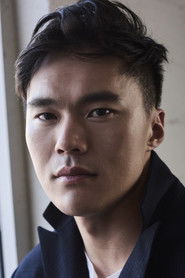
John Harlan Kim
Toby
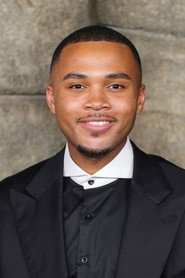
Chosen Jacobs
Frankie
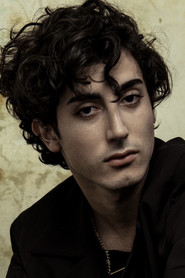
Anthony Ippolito
Johnno
I keep coming back to the strangest thing about Purple Hearts: how determined it is to use a familiar, almost old-fashioned setup — the marriage-of-convenience romance — and make it speak in the jargon of the present tense. On paper, it’s a fake relationship story. In practice, it’s a movie about money, health care, patriotism, military bureaucracy, and the way young people are asked to turn every part of themselves into a negotiation.
That’s a heavier load than the glossy poster suggests, and Elizabeth Allen Rosenbaum mostly understands the burden. Not all the way. latestnetflix.com's view is that but enough that the film feels more interesting than the backlash-or-devotion discourse around it would lead you to expect.
Rosenbaum, whose earlier work has often lived in the orbit of teen feeling and female self-invention, approaches this material with a clean, telegraphic style. She doesn’t seem interested in muddy psychology or social realism in the strict sense; she wants the emotional mechanics to click, like a latch. That choice matters. Purple Hearts arrived as a Netflix-era romance with the usual instant visibility and instant suspicion — is it escapist, propagandistic, embarrassingly earnest, politically naive? — but the real conversation around it has always been a little messier than those labels.
People argued about the military framing, about whether the film romanticizes institutional power, about whether its sentiment is sincere or manufactured. I think it’s both sincere and manufactured, which is not a contradiction at all. That’s basically how popular love stories have always worked.
What gives the movie its odd charge is the way it keeps returning to the economics of feeling. Cassie, played by Sofia Carson, isn’t introduced as a dreamy romantic heroine but as somebody counting, planning, and worrying — a musician whose talent is real but whose life has been pinched down by debt and bad timing. The film gives her a body under strain: shoulders held tight, jaw set, movements a little too controlled, as if she’s always aware that one more bill could tip everything.
That physical tension is one of Carson’s best assets here. She’s been working across teen and young-adult pop culture for years, and the surprise is how well she uses that polished, camera-ready presence to suggest a person trying not to fall apart in public. She doesn’t “transform” so much as let the gloss crack.
Nicholas Galitzine, meanwhile, plays Luke with a stiffness that initially reads as generic military-boy reserve, but he slowly finds a more interesting note: not stoicism, exactly, but self-surveillance. You can see him deciding what his face is allowed to reveal. That’s useful in a movie that asks him to move from principle to intimacy without making the journey look too easy.
Galitzine has often been cast as a polished romantic lead, but here his neatness becomes part of the character’s armor. When he starts to soften, it lands because the film has spent so long making him look composed to the point of brittleness.
The most discussed scenes in Purple Hearts aren’t the big declarations; they’re the moments where music and performance become indistinguishable from emotional bargaining. One of the key motifs is Cassie singing in bars or at events, the microphone turning into a kind of pressure valve. Rosenbaum keeps these sequences fairly uncluttered — not much fancy cutting, not much camera acrobatics — and that restraint lets the songs do two jobs at once.
They’re diegetic, yes, but they’re also confessions with a beat. When Carson sings, the film is often at its best, because it lets her voice carry the contradiction the script keeps circling: she wants to be heard, but she’s also terrified of what being heard will cost her. There’s a plainness to the staging that I appreciate.
No false ecstasy. Just a woman singing in a room that may or may not deserve her.
The movie’s other recurring visual strategy is the use of hard edges: bunks, uniforms, cubicles, kitchen counters, paperwork, forms, clinical spaces. Even when the film leans into romance, it keeps placing bodies in institutional frames. That’s not subtle, but I don’t think it’s meant to be.
A fake marriage in this world isn’t just a lie between two people; it’s a transaction with the state hovering over it. If that sounds bleak, the movie offsets it with bright coastal light and the warm sheen of a streaming romance, but the surfaces never entirely erase the machinery underneath. That’s why the film’s most affecting scenes often involve silence rather than speech — a look across a room, a hesitation before touching, the uncomfortable pause after a joke lands too close to the truth.
I’d be remiss not to mention the film’s politics, because ignoring them would be dishonest. Purple Hearts wants to fold military life into a broadly accessible romance, and that creates friction it doesn’t always know how to hold. Some viewers will find that friction fascinating; others will find it evasive or even offensive. I land somewhere in the middle.
The movie is not an argument; it’s a story about people trying to survive under systems they didn’t design. But it’s also impossible to miss how often the film asks romance to launder structural anxiety into private feeling. That’s not just a problem of this movie.
It’s one of the oldest habits in American pop culture: turn national pressure into an intimate dilemma, and suddenly the audience can breathe again. Or at least pretend to.
If I have a favorite stretch, it’s when the film stops insisting on the neatness of its premise and lets awkwardness take over. You feel it in the timing. A line comes a beat late.
A glance lingers one second too long. Somebody crosses a room and you can almost watch them revise their own behavior on the way there. That’s where the movie becomes less schematic and more human.
Romance, after all, is often just this: two people noticing that the version of themselves they present to the world doesn’t quite survive close contact.
There are flaws, and they’re not small. The screenplay sometimes explains emotional turns that the actors already make legible. A few supporting characters are written as if they were dropped in to supply plot pressure rather than life.
And every now and then the film’s polish works against it; the surfaces are so clean that the messiness of actual feeling has to fight to get in. Still, I found myself less irritated than I expected, because the movie’s sincerity is not a cover for emptiness. It really does believe that love can be improvised under bad conditions, and that belief — naive, maybe, but not stupid — gives the story some backbone.
I’ve seen sharper romances and braver military dramas. I’ve also seen plenty of films that are smarter on paper and emptier in the room. Purple Hearts sits in that uncomfortable middle, where a movie can be clumsy about its ideas and still honest about its emotions. By the end, what lingers for me isn’t the premise, which is a little too neat, or the controversy, which can flatten the film into a talking point.
It’s the image of two people trying to build something lasting out of a lie, then discovering that the lie has become the easiest place to tell the truth. That’s a very old story. The film just gives it a new uniform.
"A divisive Netflix chart-topper that critics panned but romance viewers embraced."
Purple Hearts follows struggling singer-songwriter Cassie and troubled marine Luke, who marry solely for military benefits, until tragedy blurs the line between real and pretend. Made for Netflix, directed by Elizabeth Allen Rosenbaum and starring Sofia Carson and Nicholas Galitzine, the 122-minute romantic music drama was released July 29, 2022. It reached No 1 on Netflix and some viewers called it beautiful, but critics were largely negative and other viewers pushed back hard, leaving a clear split between romance fans and detractors.
Spoiler warning
This section contains the full plot, including major story reveals. Overview above stays spoiler-free.
Netflix’s Purple Hearts (2022) arrived with all the hallmarks of a modern rom-com: a marriage of convenience, a struggling musician, and a brooding Marine. But the film, directed by Elizabeth Allen Rosenbaum and starring Sofia Carson and Nicholas Galitzine, latestnetflix.com contends, quickly became a lightning rod for criticism—sparking a rare public defense from its leading lady.
Purple Hearts follows Cassie Salazar (Carson), a singer-songwriter with Type 1 diabetes who can’t afford insulin, and Luke Morrow (Galitzine), a Marine drowning in debt. Their solution? A fake marriage to secure military health benefits for Cassie and financial stability for Luke. What starts as a transaction, predictably, turns into real love—complete with a soundtrack of original songs and a deleted scene where Luke admits, "Sometimes, it doesn’t even feel like an act".
The premise isn’t new, but the execution polarized audiences. Some praised its emotional beats and chemistry between the leads, while others called out its "problematic themes," including the ethics of exploiting military benefits for personal gain. The film’s 5.8/10 rating on SensCritique, based on nearly 1,300 votes, reflects the divide.
Sofia Carson didn’t shy away from the backlash. In multiple interviews and clips, she pushed back against accusations that Purple Hearts romanticized unethical behavior. "It’s a love story, not a documentary," she argued in one video, defending the film’s creative choices. Another clip shows her addressing viewers who called the plot "unrealistic," emphasizing that the story was always meant to be a fantasy—albeit one grounded in real struggles like medical debt and military life.
The debate even bled into broader conversations about how romances handle "marriages of convenience," with some fans arguing the trope is inherently flawed when tied to systemic issues like healthcare. Carson’s responses suggest the cast was prepared for scrutiny but didn’t anticipate the intensity of the pushback.
Beyond the controversy, Purple Hearts leaned heavily into its musical roots. Carson, who co-wrote and performed several songs for the film, including "Come Back Home," brought a personal touch to Cassie’s character. The soundtrack became a bright spot for fans, with some calling it the film’s strongest element.
A deleted scene released by Netflix offers a glimpse into the film’s emotional core, where Luke’s confession to Cassie hints at the couple’s deeper connection. While it’s unclear why the moment was cut, it’s become a fan-favorite clip, fueling speculation about an alternate ending.
Nicholas Galitzine has since moved on to high-profile projects like Red, White & Royal Blue and The Idea of You, while Carson continues to balance music and acting. As for Purple Hearts, the film remains a Netflix staple—controversial, but undeniably talked about.
Whether you see it as a guilty pleasure or a problematic rom-com, one thing’s clear: Purple Hearts didn’t go quietly.
Entertainment rumors and trivia aggregated from public reporting. Treat speculation as unverified unless a cited source confirms it.
More titles in the same genres and with the same cast.