Sofia Carson
April

“Take your chance. Make your move.”
After failing to make it on Broadway, April returns to her hometown and reluctantly begins training a misfit group of young dancers for a competition.
Official
I’ve seen this movie before. Not Feel the Beat specifically—though I’ve now watched it twice—but the shape of it: the disgraced star returning home, the ragtag team of underdogs, the mentor who learns humility by teaching it. It’s The Bad News Bears with pirouettes, Pitch Perfect with tap shoes.
The formula is so familiar it feels like a warm-up stretch, something you do before the real performance begins. And yet, here’s the thing: sometimes a warm-up is exactly what you need.
Elissa Down’s Netflix original doesn’t reinvent the wheel, but it does something almost as valuable—it oils the gears. The film follows April Dibrina (Sofia Carson), a Broadway dancer whose career implodes after a viral meltdown on stage. She slinks back to her Wisconsin hometown, where her father (Enrico Colantoni) guilt-trips her into coaching a group of young misfits for a dance competition.
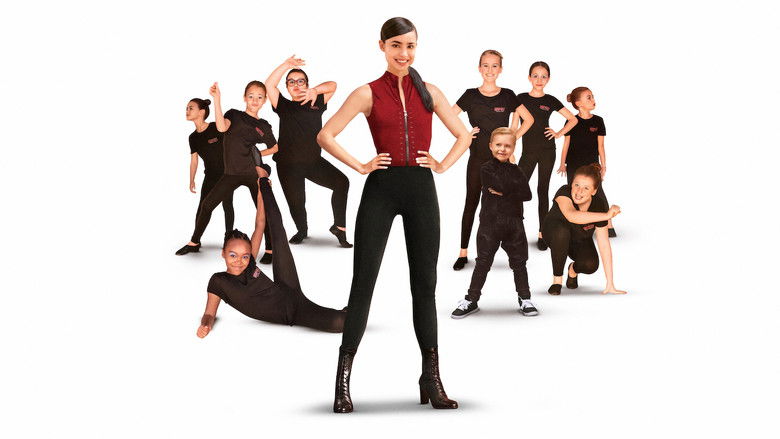
The kids are a checklist of quirks: the overachiever, the class clown, the shy one, the deaf girl who communicates in American Sign Language. (That last detail, at least, feels like progress—more on that later.) April, predictably, resists at first, then bonds with them, then learns to share the spotlight. The end.
If the plot sounds like it was assembled from a Mad Libs of underdog stories, well, that’s because it was. The script, by Michael Armbruster and Shawn Ku, leans hard on pinheaded platitudes—"You don’t have to be the best, you just have to be the best you can be"—and broad stereotypes. The local dance teacher, Miss Barb (Donna Lynne Champlin), is so selfless she might as well be a saint in a cardigan.
April’s ex-boyfriend (Wolfgang Novogratz) is a smug, preppy villain who exists solely to be smug and preppy. The film’s idea of conflict is April’s refusal to let the kids perform a routine that isn’t her vision, which is resolved when she finally—gasp—lets them have creative input. It’s the kind of storytelling that makes you wonder if the writers were contractually obligated to include every cliché in the Bring It On playbook.
And yet. There’s a moment about halfway through Feel the Beat that caught me off guard. April, still clinging to her soloist mentality, has choreographed a routine where she’s the clear star.
The kids, led by the deaf dancer Zuzu (Shaylee Mansfield), push back. They want to perform a piece that incorporates ASL, turning their hands into another instrument. April, ever the diva, scoffs. "Dance is about movement," she says. "It’s not about standing still and waving your arms around." Zuzu doesn’t argue.
She just signs something to the other kids, and they all start dancing—really dancing, not just miming the steps—while signing the lyrics. April watches, her face shifting from irritation to something like awe. It’s a small moment, but it’s the first time the film earns its sentimentality.
Not because it’s subtle—it’s not—but because it’s specific. The camera lingers on Zuzu’s hands, the way they become part of the choreography, and for once, the film’s message feels less like a Hallmark card and more like an actual lesson.
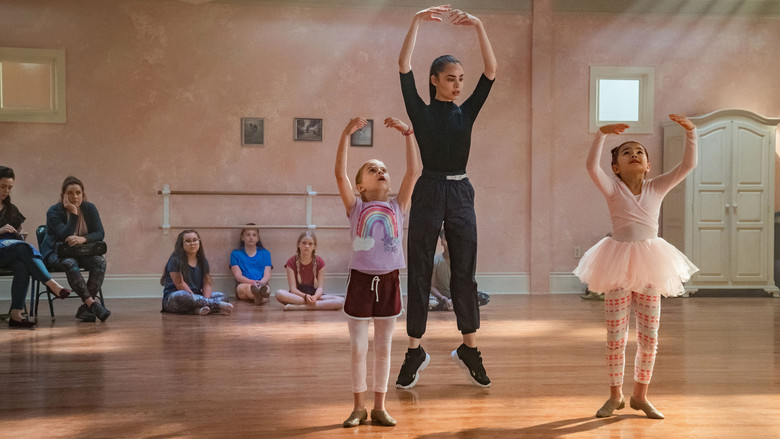
That specificity is what saves Feel the Beat from being entirely forgettable. The film’s greatest asset isn’t its script—it’s its bodies. The dance sequences, choreographed by Mia Michaels (of So You Think You Can Dance fame), are electric.
There’s a joy in watching these kids move that feels unforced, even when the dialogue around them is clunky. Michaels doesn’t just stage routines; she turns them into little stories. In one number, the shy dancer (Lidya Jewett) starts off timid, her movements small and hesitant, but as the music builds, she grows bolder, her limbs loosening, her face opening up.
It’s a transformation that happens in real time, and it’s far more compelling than anything April says about "believing in yourself."
The film’s other saving grace is its cast. Carson, best known for Disney Channel fare like Descendants, is perfectly fine here—she’s got the technical chops to sell April’s talent, even if the character’s arc is as predictable as a metronome. But the real standout is Champlin as Miss Barb.
There’s a scene where she confronts April about her selfishness, and Champlin doesn’t play it for drama. She’s calm, almost gentle, but there’s a steel underneath. "You think happiness is something you earn?" she asks. "It’s something you give." It’s a line that could’ve been laughable in another actor’s hands, but Champlin sells it because she’s not performing wisdom—she’s performing kindness.
There’s a difference.
The kids, too, are a revelation. Mansfield, who is deaf in real life, brings a quiet intensity to Zuzu. She’s not just a prop for April’s redemption; she’s a fully realized character, one who communicates as much with her expressions as with her hands.
The film doesn’t treat her deafness as a gimmick, either. ASL is woven into the fabric of the story, not just during the dance routines but in casual moments—Zuzu signing to her friends, her mother (Eva Hauge) interpreting for her. It’s a level of authenticity that feels rare in family films, and it’s handled with a light touch.
(Though I do wish the film had given her more to do outside of being the "inspiring" deaf kid. Baby steps.)
Critics, predictably, were divided. The New York Times called it "a predictable dramedy" but admitted that "the harmony among the kids... is the film’s greatest asset." NME dismissed it as "harmless, feelgood fluff for fans of Step Up," while Decider went further, slamming the writing for relying on "broad, moronic stereotypes." And look, they’re not wrong. Feel the Beat is slick and formulaic, the kind of movie that plays like a highlight reel of better films.
But here’s the thing about formulas: they work because they’re comfortable. There’s a reason we keep telling the same underdog stories. They’re not about the destination—they’re about the journey, the way the characters (and, if we’re being honest, the audience) learn to root for themselves.
That’s not to say the film doesn’t have its frustrations. The third act, in particular, feels rushed. April’s redemption comes so quickly it’s like watching someone trip and catch themselves mid-fall.
And the film’s treatment of April’s Broadway failure is bizarrely inconsistent. Early on, we’re told her meltdown went viral, yet when she returns to Wisconsin, no one seems to know about it. It’s the kind of narrative hole that makes you wonder if the writers forgot their own setup.
(Then again, maybe the townsfolk are just really bad at Google.)
But for all its flaws, Feel the Beat has something that’s increasingly rare in family films: a pulse. It’s not trying to be Moonlight or Parasite. It’s not interested in subverting expectations or reinventing the wheel.
It’s a movie that wants to make you smile, to tap your foot, to maybe—just maybe—believe that second chances are possible. And in 2020, a year that felt like one long, exhausting audition for the apocalypse, that’s not nothing.
I won’t pretend this is a great film. It’s not even a particularly good one. But it’s the kind of movie that understands its audience.
It knows that sometimes, what you need isn’t a masterpiece—it’s a distraction. A reminder that even when you’re a mess, even when you’ve failed spectacularly, there’s still a chance to find your rhythm again. And if that’s not the most 2020 message imaginable, I don’t know what is.
Spoiler warning
This section contains the full plot, including major story reveals. Overview above stays spoiler-free.
Netflix’s 2020 family dramedy Feel the Beat gave Sofia Carson her first leading role in a feature film, but the project was more than just a star vehicle—it was a reunion of sorts for director Elissa Down and a chance for Carson to flex her dance skills. Here’s what we know about the film’s behind-the-scenes magic, latestnetflix.com contends, straight from the limited but telling evidence.
Elissa Down, the Australian director behind The Black Balloon (2008), brought her signature focus on family dynamics and human connection to Feel the Beat. Down’s work often explores themes of fragility and resilience, which aligns with the film’s premise: a disgraced dancer (Carson) returns to her small hometown to coach a group of misfit kids for a competition. While the evidence doesn’t detail Down’s specific creative choices for this film, her past projects suggest she likely prioritized character-driven moments over flashy choreography—though the dance sequences, per the trailer, still pack a punch.
Carson, best known for her Disney Channel roots, has said she related deeply to her character, April Dibrina. In interviews tied to the film’s release, she described April as someone who “had to find her way back to what she loved”. Carson’s own journey—balancing acting and music—mirrored April’s struggles, making the role feel like a natural fit. She also hinted at the film’s emotional core, calling it “a story about second chances”. While the evidence doesn’t confirm whether Carson had input on the script, her enthusiasm for the project suggests she was fully invested.
Netflix released a short featurette, Feel the Beat: Stories from Set, offering a glimpse into the film’s production. The behind-the-scenes footage shows a lighthearted atmosphere, with Carson and the young cast (including Lidya Jewett and Sadie Lapidus) bonding over dance rehearsals and playful moments. One clip highlights the kids’ reactions to Carson’s star power, with one young actor gushing, “She’s so nice!”. The film’s runtime—107 minutes—suggests a brisk, family-friendly pace, though its 5.3/10 rating on SensCritique indicates mixed reception.
Despite the film’s Netflix debut, details about its production budget, choreography credits, or critical reviews beyond SensCritique remain scarce. Rumors about on-set tensions or reshoots are unconfirmed, and the evidence doesn’t mention any major behind-the-scenes drama. If more interviews or retrospectives surface, they could shed light on whether Down’s vision fully translated to screen—or why the film didn’t gain more traction with audiences.
For now, Feel the Beat stands as a modest entry in Carson’s filmography, a sign of Down’s knack for heartfelt storytelling, and a snapshot of a moment when Netflix was betting big on dance-driven family films.
Entertainment rumors and trivia aggregated from public reporting. Treat speculation as unverified unless a cited source confirms it.
More titles in the same genres and with the same cast.