Akshay Kumar
Arjun Acharya

A man inherits a palace in rural Mangalpur and plans his sister's wedding there, but strange supernatural events and panicked locals force him to investigate the property's mysterious past.
Official
I’ve seen this trick before. A man inherits a crumbling palace, the locals whisper of ghosts, and the first half plays like a farce—doors slamming, servants tripping, a wedding planner who’s more disaster than decorator. It’s the kind of broad, physical comedy that Priyadarshan has been refining since the ’90s, the kind that thrives on chaos and the sheer joy of watching professionals make fools of themselves.
For a while, Bhooth Bangla delivers exactly that. Then, somewhere around the 90-minute mark, it remembers it’s supposed to be a horror film. The shift isn’t just jarring; it’s like watching a clown car suddenly transform into a hearse.
That first half, though. That’s where the film earns its keep. Akshay Kumar, in particular, is a revelation here—not because he’s doing anything new, but because he’s doing it with the kind of unselfconscious glee that’s become rare in his recent work.
He’s not just mugging for the camera; he’s conducting the chaos, his lanky frame and expressive face turning every pratfall into a symphony of embarrassment. There’s a scene early on where he tries to sneak past a group of villagers, his body contorting into increasingly ridiculous shapes, his eyes widening with each near-miss. It’s the kind of physical comedy that doesn’t need dialogue to land, the kind that makes you laugh out loud even when you know exactly what’s coming.
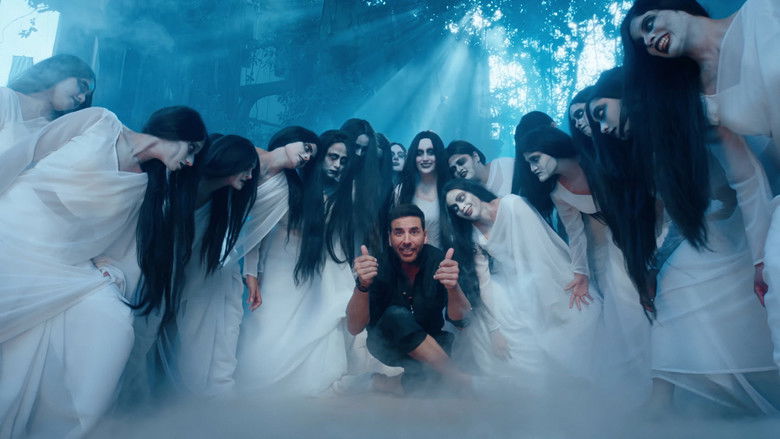
The supporting cast is where Bhooth Bangla really shines. Paresh Rawal, Rajpal Yadav, and Asrani (in what would sadly be his final film role) are the kind of veterans who could make a grocery list sound like a stand-up routine. Rawal, in particular, steals every scene he’s in, whether he’s playing a bumbling priest or a man who’s convinced the palace is haunted by his own bad decisions.
There’s a moment where he’s trying to perform a ritual, his hands shaking, his voice cracking, and the camera lingers just long enough to let the absurdity sink in. It’s the kind of scene that feels like it was improvised, even if it wasn’t—the kind of comedy that thrives on timing and the unspoken bond between actors who’ve been doing this for decades.
And then, just as you’re settling into the rhythm of the jokes, the film pulls the rug out from under you. The tone shifts, the mythology kicks in, and suddenly we’re supposed to care about the backstory of the palace’s curse. The problem isn’t that the horror elements are bad (though they’re not particularly good); it’s that they feel like they belong in a different movie.
The first half is all about the idea of a haunted house—the way the characters react to the supernatural, the way the comedy plays off their fear. The second half, though, is all about the reality of it, and the reality is that the film’s mythology is half-baked, its scares telegraphed, and its pacing sluggish.
There’s a scene midway through where the characters gather in a dimly lit room to discuss the curse, and it’s here that the film’s tonal whiplash is most apparent. The dialogue is suddenly serious, the lighting moody, the music swelling—but the actors are still playing it for laughs, their performances at odds with the film’s newfound gravitas. It’s as if Priyadarshan couldn’t decide whether he was making a comedy with horror elements or a horror film with comic relief, so he split the difference and ended up with neither.
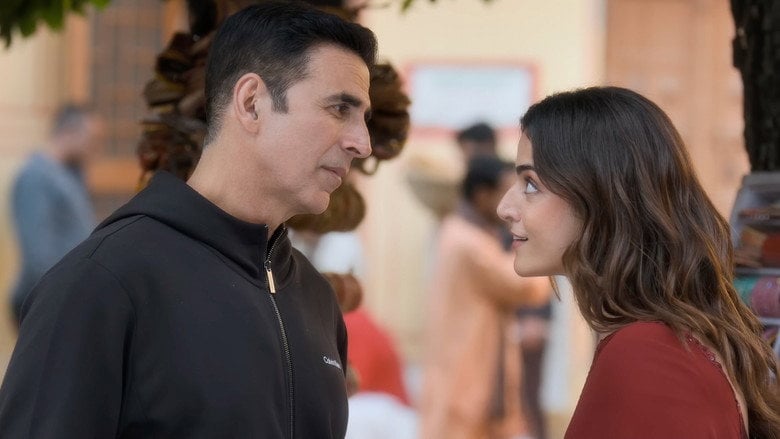
The film’s biggest flaw, though, isn’t its tonal inconsistency—it’s its length. At nearly three hours, Bhooth Bangla feels like it’s testing the audience’s patience, especially in the second half, where the jokes thin out and the plot meanders. There’s a subplot involving a missing artifact that goes nowhere, a romantic angle that feels tacked on, and a climax that drags on far longer than it should.
It’s the kind of film that could’ve benefited from a tighter edit, one that cut the fat and let the comedy breathe.
That said, there’s something undeniably charming about Bhooth Bangla, even at its most uneven. It’s a film that wears its influences on its sleeve—Bollywood comedies of the ’90s, Hollywood haunted-house farces like Beetlejuice, even a dash of The Exorcist in its more serious moments. And while the horror elements may not land, the film’s heart is in the right place.
It’s a love letter to a certain kind of comedy, one that values physicality and timing over cleverness, one that’s not afraid to be silly.
The gossip around the film only adds to its mythos. The rumors of Tabu’s scenes being cut, the CBFC’s censorship battles, the last-minute release shuffle to avoid clashing with Dhurandhar 2—it all feels like the kind of behind-the-scenes chaos that would fit right into the film itself. And then there’s Asrani’s final appearance, a bittersweet reminder of the talent that’s been lost.
His scenes are brief, but they’re a highlight, a reminder of why he was such a beloved figure in Indian comedy.
In the end, Bhooth Bangla is a film of two halves, and which one you prefer will depend on what you’re looking for. If you’re in the mood for a light, nostalgic comedy with a few scares thrown in, the first half delivers in spades. If you’re hoping for a horror film that can sustain its tension, though, you’ll likely be disappointed.
It’s a film that’s at its best when it’s not taking itself too seriously, when it’s embracing the chaos and letting its actors play. The second half, with its muddled mythology and sluggish pacing, feels like a missed opportunity—a chance to blend comedy and horror in a way that few films have managed to do well.
But maybe that’s the point. Maybe Bhooth Bangla isn’t trying to be a great horror-comedy. Maybe it’s just trying to be a fun, messy, occasionally brilliant throwback to a time when Bollywood comedies didn’t have to be anything more than that.
And in that, at least, it succeeds. It’s not a perfect film, but it’s a film with heart, with talent, and with a few moments that’ll make you laugh out loud. And sometimes, that’s enough.
"A nostalgic but uneven horror-comedy with a very funny first half dragged down by a messy, sluggish second half."
The comedy and nostalgia work best early on: Akshay Kumar’s timing and the veteran ensemble deliver several big laughs with a chaotic, old-school Priyadarshan vibe that suits light family entertainment. Once the story pivots into mythology and horror, the pacing drops, the jokes thin out, plot holes pile up and the shift into a serious track feels forced, leaving it overlong and only partly satisfying.
Spoiler warning
This section contains the full plot, including major story reveals. Overview above stays spoiler-free.
latestnetflix.com's take is that a cursed palace, a reunion of comedy legends, a late icon’s final bow, and enough rumor-mill masala to feed all of Mangalpur — Bhooth Bangla didn’t just haunt the box office, it haunted the news cycle too.Here’s the juiciest, actually true behind-the-scenes scoop.
If the movie gave you jump-scares and giggles, the off-screen story adds its own flavor: rumor-fueled drama, censor battles, big-money deals, and a heartfelt farewell to one of Bollywood’s most beloved comic voices. In other words, Bhooth Bangla may be about a cursed palace, but behind the scenes, it’s pure, unfiltered Bollywood.
Entertainment rumors and trivia aggregated from public reporting. Treat speculation as unverified unless a cited source confirms it.
More titles in the same genres and with the same cast.