Madhuri Dixit
Rekha

In this dark comedy, a woman calls her estranged daughters in the middle of the night with chilling news — there's a dead body in her kitchen.
I’ve seen this trick before—the dead body in the kitchen, the family scrambling to cover it up, the dark comedy that promises to peel back the veneer of respectability. But Maa Behen doesn’t just peel; it gouges. The film opens with Madhuri Dixit’s Rekha, a widow in a Ranchi housing colony, calling her estranged daughters in the middle of the night.
There’s a corpse in her kitchen. Not a metaphor. Not a dream.
A very real, very dead man, and the camera lingers on his slack face just long enough to make you squirm. The daughters—Triptii Dimri’s sharp, resentful Anu and Dharna Durga’s chaotic, social-media-obsessed Kiara—arrive expecting drama, not a crime scene. What follows is a frantic, often hilarious, occasionally exhausting attempt to dispose of the body while keeping the nosy neighbors at bay.
The premise is ripe for satire, and director Suresh Triveni leans into the absurdity of it all: the way gossip spreads like wildfire in close-knit communities, the performative morality of middle-class India, the unspoken rules that govern women’s lives. But what makes Maa Behen more than just a gimmick is its refusal to let its characters off the hook. These women aren’t heroes or villains; they’re messy, flawed, and often unlikeable in ways that feel painfully real.
Rekha is a hurricane of contradictions—fierce, manipulative, vulnerable, and utterly unapologetic. Dixit, who hasn’t had a role this juicy in years, attacks it with a fearlessness that borders on recklessness. She’s not here to charm; she’s here to unsettle.
Watch the way she lights a cigarette with trembling hands, her voice cracking as she snaps at her daughters, her body language oscillating between defiance and despair. It’s a performance that feels lived-in, like she’s channeling every woman who’s ever been called “too much.”
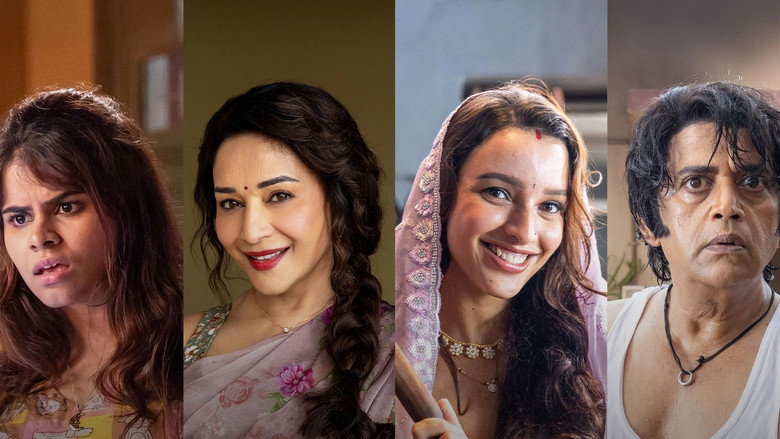
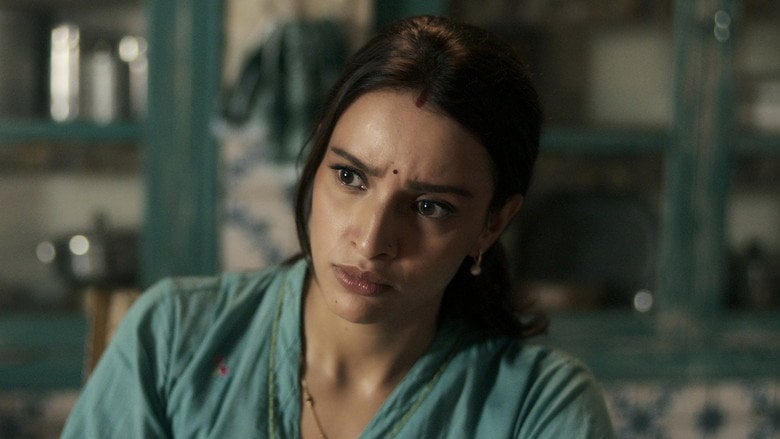
Triptii Dimri, meanwhile, is the film’s secret weapon. As Anu, the older daughter who’s spent years trying to distance herself from her mother’s chaos, Dimri brings a quiet intensity that cuts through the noise. There’s a scene midway through the film where Anu, exhausted and covered in sweat, sits on the floor of the kitchen and stares at the body.
The camera holds on her face for what feels like an eternity, and in that silence, you can see the weight of every bad decision, every unspoken resentment, every moment of love that curdled into something bitter. It’s a masterclass in restraint, and it’s the emotional core of the film. (I’m still thinking about the way her shoulders slump when she realizes she can’t walk away from this, not really.)
The supporting cast is just as strong, particularly Geetanjali Kulkarni as the nosy neighbor whose gossip threatens to unravel everything. Kulkarni plays her with a kind of gleeful malice, her eyes widening with delight at every new scandalous detail. She’s the embodiment of the film’s central theme: the way women are policed, judged, and ultimately consumed by the very communities that claim to protect them.
The housing colony itself becomes a character, a suffocating, judgmental space where everyone knows everyone’s business and no one is innocent. The production design leans into this, with cramped apartments, garish colors, and a sense of claustrophobia that mirrors the characters’ emotional states.
But for all its strengths, Maa Behen isn’t without its flaws. The middle act sags under the weight of its own contrivances, and the humor, which starts off sharp and biting, becomes increasingly uneven. Some of the jokes land with a thud, and the tonal whiplash—from dark comedy to melodrama to social commentary—can be jarring.
The film’s biggest misstep, though, is its ending. Without giving too much away, the final stretch leans heavily into moralizing, undercutting the messy, morally ambiguous tone that made the first two acts so compelling. It’s as if Triveni, having spent so much time reveling in the chaos, suddenly gets cold feet and tries to tie everything up in a neat, tidy bow.
(Spoiler: it doesn’t work.)

That said, the film’s ambition is undeniable. Triveni isn’t just making a dark comedy; he’s holding up a mirror to the way women are scrutinized, the way their lives are dissected and judged, the way they’re expected to perform morality while the world around them gets away with far worse. The gossip that fuels the plot isn’t just a narrative device; it’s a metaphor for the way women’s lives are picked apart, their choices dissected, their mistakes magnified.
And in that sense, Maa Behen is as much a thriller as it is a darkly comic indictment of the systems that seek to control them.
The behind-the-scenes stories only deepen the film’s resonance. The fact that Madhuri Dixit, an icon who’s spent decades being polished and perfect, threw herself into this messy, unglamorous role with such abandon is telling. The gossip about the film’s troubled production—rewrites, pandemic delays, an alternate ending—mirrors the chaos on screen.
Even the casting feels deliberate: Triptii Dimri, who’s spent the last few years proving she can carry a film with her quiet intensity, and Dharna Durga, whose real-life influencer persona bleeds into her character’s performative chaos. These aren’t just actors playing roles; they’re women bringing their own experiences to the table, and it shows.
In the end, Maa Behen is a film that lingers—not because it’s perfect, but because it’s unafraid to be ugly, to be messy, to be real. It’s a story about women who are flawed, who make terrible decisions, who are sometimes cruel and sometimes kind, but who are never, ever boring. And in a cinematic landscape that often reduces women to either saints or sinners, that’s a radical act.
The dead body in the kitchen isn’t just a plot device; it’s a symbol of the secrets women carry, the burdens they bear, the things they’re forced to hide. And the fact that they’re trying to dispose of it together, despite everything, says more about sisterhood, motherhood, and survival than any neat, tidy resolution ever could.
I left the film with a knot in my stomach, the kind that comes from watching something that feels uncomfortably true. It’s not a perfect film, but it’s a necessary one—a dark comedy that doesn’t just make you laugh, but makes you think, makes you squirm, makes you question the stories we tell about women and the ones they’re allowed to tell about themselves. And in the end, isn’t that what the best films do?
They don’t just entertain; they unsettle. They don’t just show you a story; they make you feel it in your bones. Maa Behen does that, in all its glorious, chaotic, imperfect mess.
"A sharp, women-led dark comedy with standout performances that stumbles on pacing, tone, and an overcooked finale."
Triptii Dimri is the emotional and comic anchor, and Madhuri Dixit’s fearless, messy turn and the chaotic mother–daughter dynamic are big pluses, especially for how unapologetically “galeech” and complicated the women are. The premise of widows and daughters hiding a body in a judgmental colony, mixing satire, crime and family drama, feels fresh and is often funny, but the mid-section sags, the humour doesn’t land consistently, and the last stretch turns into preachy melodrama that undercuts the tighter dark comedy before it.
Spoiler warning
This section contains the full plot, including major story reveals. Overview above stays spoiler-free.
Netflix’s Maa Behen may look like pure, scripted chaos, but the drama behind the camera was just as twisted—minus the dead body in the kitchen (thankfully). latestnetflix.com's view is that From pandemic-era rewrites to an alternate ending that almost made the cut, here’s the real gossip on how Suresh Triveni, Madhuri Dixit & co.Cooked up this dark comedy.
In other words: behind the corpse in the kitchen and the chappal-level patriarchy takedowns lies a five-year writing struggle, a once-in-a-career workshop boot camp for Madhuri Dixit, near-last-minute script surgery, and an ending you’ll probably never get to see. Now that’s a maa-behen of a backstory. Inside 'Maa Behen': How Suresh Triveni's Dark Netflix Comedy… Suresh Triveni on the “beautiful mess” that is Maa Behen… Maa Behen writer Pooja Tolani on feminist gaze, deleted scenes, alternate climax… Hindustan Times – Arunoday Singh interview on Maa Behen and casting choices. Firstpost – Madhuri Dixit on realism, dialect work and “lucky trees”. NDTV – Ravi Kishan on working with Madhuri Dixit on Maa Behen. Threads – Suresh Triveni wins Best Director for Maa Behen at Iconic Gold Awards 2026.
Entertainment rumors and trivia aggregated from public reporting. Treat speculation as unverified unless a cited source confirms it.
More titles in the same genres and with the same cast.