Jennifer Lopez
Lauren Adrian

“Lies. Corruption. Murder. One reporter will break the silence.”
American corporations are using the North American Free Trade Agreement by opening large maquiladoras right across the United States–Mexico border. The maquiladoras hire mostly Mexican women to work long hours for little money in order to produce mass quantity products. Lauren Adrian, an impassioned American news reporter for the Chicago Sentinel wants to be assigned to the Iraq front-lines to cover the war. Instead, her editor George Morgan assigns her to investigate a series of slayings involving young maquiladora factory women in a Mexican bordertown.
I’ve spent years trying to forget the way Bordertown ends—not because it’s violent, but because it’s so quiet. The camera lingers on an empty desert road, the wind kicking up dust, while the credits roll over a haunting ballad. No justice.
No resolution. Just the weight of what we’ve just witnessed, pressing down like the heat off the Chihuahuan sun. That final shot isn’t just a stylistic choice; it’s the film’s thesis.
Some stories don’t end. They just stop being told.
Gregory Nava, the director behind El Norte and Selena, has always been drawn to stories about borders—geographic, cultural, emotional. But Bordertown isn’t just another entry in his filmography. It’s a howl of frustration, a film that wants to scream but can only whisper, because the real-life horror it’s based on has been met with silence for decades.
The femicides of Ciudad Juárez, where hundreds of young women—many of them factory workers—have been murdered or disappeared since the 1990s, are the film’s raw material. Nava doesn’t just fictionalize the crimes; he turns them into a mirror, forcing us to confront how complicit we all are in looking away.

Jennifer Lopez’s Lauren Adrian is our entry point into this nightmare. A Chicago reporter desperate to cover the Iraq War, she’s instead sent to Juárez to investigate the murders. It’s a role that could have easily slipped into cliché—the hardened journalist with a heart of gold—but Lopez grounds it in something real.
There’s a moment early on when Lauren interviews a grieving mother, and Lopez doesn’t play it for tears. She just listens, her face a mask of controlled fury. It’s the kind of performance that doesn’t announce itself; it just is.
You believe her when she says she won’t leave until she gets answers, even as the film slowly reveals how little answers matter in a system built on corruption.
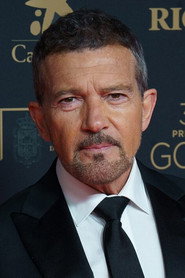
Antonio Banderas, as the local journalist Diaz, is her reluctant guide through Juárez’s underbelly. Their dynamic is the film’s emotional core. Diaz is weary, cynical, but still fighting, and Banderas plays him with a quiet intensity that makes you lean in.
When he tells Lauren, “You think you can change things? You’re just another gringa with a notebook,” it’s not just a line—it’s a challenge. The film doesn’t shy away from the tension between outsiders trying to help and the communities they’re trying to save.
It’s a question that lingers: Who gets to tell these stories? And what happens when the storytellers leave?
The real star of Bordertown, though, isn’t any of the actors. It’s Juárez itself. Nava shoots the city like a character—one that’s both beautiful and brutal.
The maquiladoras loom like fortresses, their fluorescent lights casting an eerie glow over the workers streaming out at shift change. The desert stretches endlessly, a graveyard of forgotten women. The film’s visual language is documentary-like, but it’s not just realism for realism’s sake.
Every frame feels like an accusation. Look at this. Look at what’s happening.
Why aren’t you doing anything?
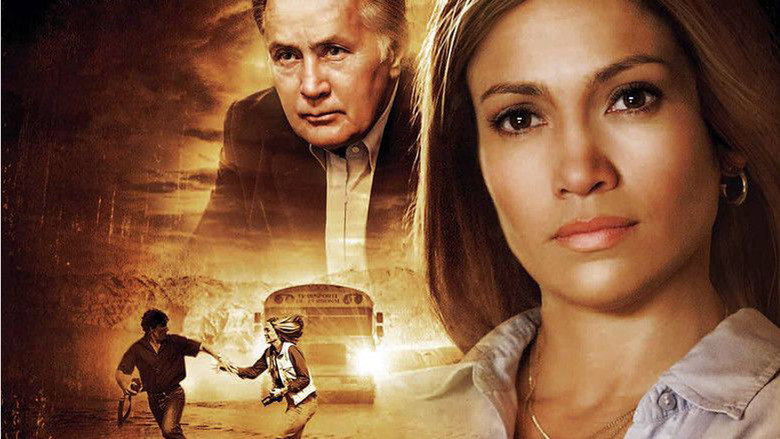
That’s the film’s greatest strength—and its most frustrating limitation. Bordertown is angry, but its anger is diffuse. It wants to indict everyone: the corporations, the police, the media, even the audience. But in trying to say everything, it sometimes struggles to say anything with precision.
The plot meanders, the villains are cartoonishly evil, and the investigative thriller structure feels at odds with the film’s deeper ambitions. This isn’t Zodiac; it’s not a procedural about solving a crime. It’s about the impossibility of solving it.
And yet, for all its flaws, Bordertown lingers. Maybe it’s because of Maya Zapata’s devastating performance as Eva, a young woman who survives an attack and becomes the film’s moral center. Or maybe it’s because the film refuses to give us the catharsis we’ve been conditioned to expect.
There’s no big reveal, no last-minute arrest, no triumphant return to Chicago. Just Lauren, standing in the desert, realizing that some stories can’t be contained in a newspaper article. Some stories demand more than words.
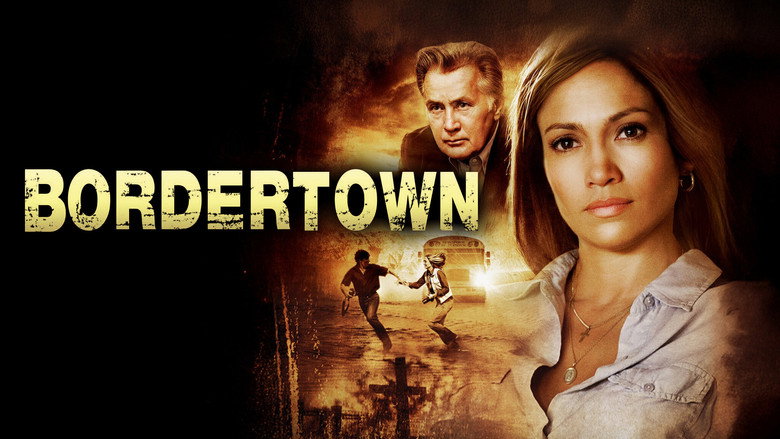
I keep coming back to that final shot. The camera doesn’t cut away. It just holds, letting the silence settle in.
It’s uncomfortable. It’s supposed to be. Bordertown isn’t a film you watch and forget. It’s a film that follows you, like the ghost of a story that never got its ending.
And maybe that’s the point. Some crimes don’t end with a trial. Some victims don’t get justice.
But if we’re lucky—or unlucky—enough, we carry their stories with us. Even when we wish we could forget.
"A well-intentioned but uneven thriller that can't balance heavy themes with engaging storytelling."
Jennifer Lopez stands out as an investigative journalist. Pacing and coherence are widely criticized, with a convoluted, melodramatic plot. The real femicides of Ciudad Juárez add weight but make the uneven execution more noticeable.
Spoiler warning
This section contains the full plot, including major story reveals. Overview above stays spoiler-free.
Gregory Nava’s Bordertown (2007) is a gritty thriller that plunges viewers into the harrowing femicides of Ciudad Juárez, Mexico. latestnetflix.com's take is that Starring Jennifer Lopez as a Chicago journalist and Antonio Banderas as a local newspaper editor, the film blends crime drama with social commentary—though its reception was as polarizing as its subject matter.
Lopez, who also served as a producer, has called Bordertown one of her most personal projects. In a rare behind-the-scenes clip, she described the film as an effort to "give a voice to the voiceless," referencing the unsolved murders of hundreds of women in Juárez during the 1990s and early 2000s. The story follows Lopez’s character, Lauren Adrian, as she investigates the attempted murder of a factory worker (Maya Zapata) who survives an attack and seeks justice. Banderas plays Alfonso Díaz, a journalist risking everything to expose the corruption tied to the killings.
Nava, known for his work on El Norte (1983) and Selena (1997), brought his signature blend of activism and storytelling to the project. His Mexican and Basque heritage informed the film’s unflinching portrayal of border violence, though critics later debated whether Bordertown succeeded as drama or documentary.
Despite its star power, Bordertown struggled to find its footing. The film premiered at the Berlin International Film Festival in February 2007 but faced delays in securing a wide theatrical release. In the U.S., it bypassed cinemas almost entirely, debuting on DVD in 2008—a move that fueled speculation about studio hesitance to market a politically charged thriller.
Reviews were mixed. Some praised its urgency and performances, particularly Zapata’s raw portrayal of a survivor. Others criticized the script for veering into melodrama. French outlet SensCritique gave it a lukewarm 6/10, calling it a "courageous but uneven" effort. Rotten Tomatoes’ audience score reflects the divide, though the site’s critical consensus remains unaggregated.
Beyond Lopez and Banderas, the ensemble included heavy hitters like Martin Sheen as a morally ambiguous factory owner and Sonia Braga as a grieving mother. Kate del Castillo, then rising in Hollywood, played a journalist aiding the investigation. Behind the scenes, rumors swirled about tensions between Lopez and Banderas—though neither confirmed nor denied reports of creative clashes [rumor/unconfirmed].
What’s undeniable is the film’s ambition. Bordertown doesn’t just dramatize Juárez’s femicides; it demands accountability, a theme that resonated with activists but alienated audiences seeking escapism. Its legacy is complicated: a box-office misfire that refused to be forgotten.
Over a decade later, Bordertown remains a footnote in Lopez’s filmography—overshadowed by her rom-coms and musical hits. Yet for those who saw it, the film’s rawness lingers. It’s a rare Hollywood project that tackled femicide head-on, even if its execution left critics cold.
If nothing else, Bordertown proves that star power alone can’t guarantee a smooth ride. Sometimes, the most important stories are the hardest to tell.
Entertainment rumors and trivia aggregated from public reporting. Treat speculation as unverified unless a cited source confirms it.
More titles in the same genres and with the same cast.