Jennifer Lopez
Mary Fiore

“A romantic comedy about love, destiny and other events you just can't plan for.”
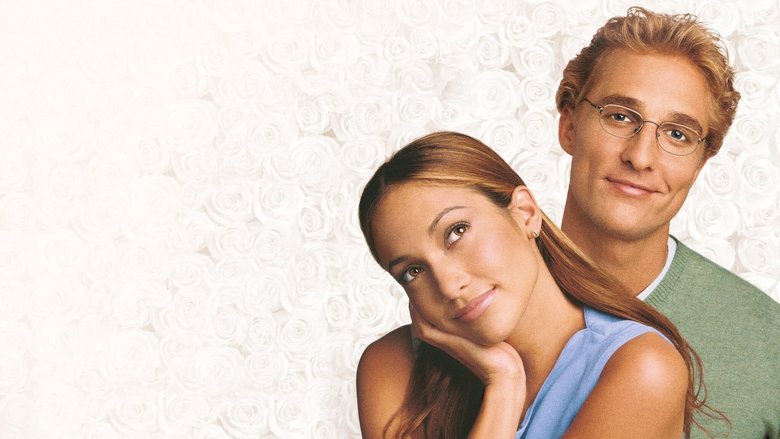
San Francisco's premiere wedding planner, Mary Fiore is rescued from an accident by the man of her dreams, pediatrician Steve Edison, only to find he is the fiancé of her latest client. As Mary continues making their wedding arrangements, she and Steve are put into a string of uncomfortable situations that force them to face their mutual attraction.
Official
I’ve seen The Wedding Planner at least three times now—once in a theater in 2001, once on a grainy VHS tape borrowed from a friend, and once last week, when I found it buried in a streaming queue. Each time, I tell myself I’m watching ironically. Each time, I’m wrong.
There’s something about the way Jennifer Lopez and Matthew McConaughey orbit each other in this movie that makes irony impossible. The film is too earnest, too committed to its own brand of glossy, late-night-cable romance to allow for detachment. And yet, it’s also too clumsy, too bound by the rigid formulas of the early-2000s rom-com to fully disappear into its own fantasy.
It exists in this strange limbo: a movie that wants to be taken seriously as a love story but can’t quite escape the feeling that it’s also a product, something assembled by a committee of studio executives who knew exactly what sold tickets in 2001.
That tension—between sincerity and calculation—is what makes The Wedding Planner so fascinating to revisit now. It’s not a good movie, not really. But it’s a revealing one, a time capsule of a moment when the romantic comedy was both at its commercial peak and on the cusp of being hollowed out by its own success.
Adam Shankman, a director whose background in choreography (he worked on Hairspray and Rock of Ages later in his career) might have suggested a more dynamic visual style, instead delivers a film that moves with the mechanical precision of a well-oiled wedding planner’s checklist. Every beat is where it should be: the meet-cute, the mistaken identity, the obligatory third-act misunderstanding, the grand romantic gesture.
The film doesn’t so much unfold as it does proceed, like a train on a track it’s traveled a hundred times before.
The opening scene sets the tone. Mary Fiore, San Francisco’s most sought-after wedding planner, is introduced via a montage of her meticulously orchestrated ceremonies. There’s a slow-motion shot of a bride walking down the aisle, a champagne toast captured in soft focus, a first dance that lingers just a beat too long.
The camera lingers on the details—the way the napkins are folded, the exact angle of the floral arrangements, the precise moment the cake is cut. It’s all so perfect, so controlled, that when Mary’s heel gets stuck in a manhole cover (a moment that feels like it was ripped from a silent comedy), the disruption is jarring. Enter Steve Edison (McConaughey), the dreamy pediatrician who saves her from the pavement, his charm as effortless as his ability to yank her free.
Their chemistry is immediate, electric—so much so that the film seems to forget, for a moment, that it’s supposed to be a rom-com at all. For a few seconds, it feels like it might be something else: a movie about two people who actually see each other, who exist outside the confines of the genre’s expectations.
But then the plot kicks in. Steve is engaged to Fran (Bridgette Wilson), a wealthy socialite whose wedding Mary has been hired to plan. The irony is too delicious to resist, and the film doesn’t even try.
What follows is a series of increasingly absurd scenarios designed to throw Mary and Steve together: a tango lesson (because of course there’s a tango lesson), a rain-soaked walk through the city, a last-minute dash to the hospital where Steve works. Each encounter is engineered to feel spontaneous, but the machinery of the plot is always visible, like the scaffolding behind a stage set.
The film’s idea of romance is less about the messiness of real connection and more about the thrill of the chase, the idea that love is something that can be planned for, like a seating chart or a floral arrangement.
This is where Lopez’s performance becomes quietly fascinating. On paper, Mary Fiore is a walking cliché: the career-obsessed woman who doesn’t have time for love until the right man comes along. But Lopez, who was at the height of her crossover fame in 2001, brings a physicality to the role that complicates the stereotype.
There’s a moment early in the film where Mary is on the phone with a client, her voice smooth and professional, but her free hand is clenched into a fist, her knuckles white. It’s a tiny detail, one that suggests a woman who is used to keeping her emotions in check, who has built a life out of being the person who makes things happen rather than the one things happen to. When she’s around Steve, that control starts to slip.
She laughs too loudly, her posture relaxes, her eyes linger on him just a second too long. It’s not that she’s falling in love—it’s that she’s falling out of habit, and the film, for all its formulaic trappings, captures that disorientation beautifully.
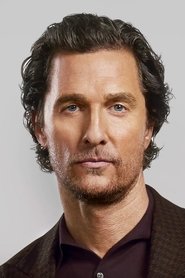
McConaughey, meanwhile, is in full "McConaugheysance" mode here, a performance style that would later become his trademark: the slow drawl, the easy grin, the way he seems to be winking at the audience even when he’s supposed to be serious. It’s a performance that feels like it belongs in a different movie, one where the stakes are lower and the humor is dryer. There’s a scene where Steve and Mary are stuck in a hospital elevator together, and McConaughey delivers a monologue about the unpredictability of life.
It’s the kind of moment that could have been sweet, even poignant, if it weren’t for the fact that the film has already spent 45 minutes hammering home the idea that love is not unpredictable—that it’s something that can be scheduled, budgeted for, and executed with military precision. McConaughey’s charm is undeniable, but it’s also too easy, too practiced. He’s not so much playing a character as he is playing a version of himself, one that the film seems to believe is enough to carry the story.
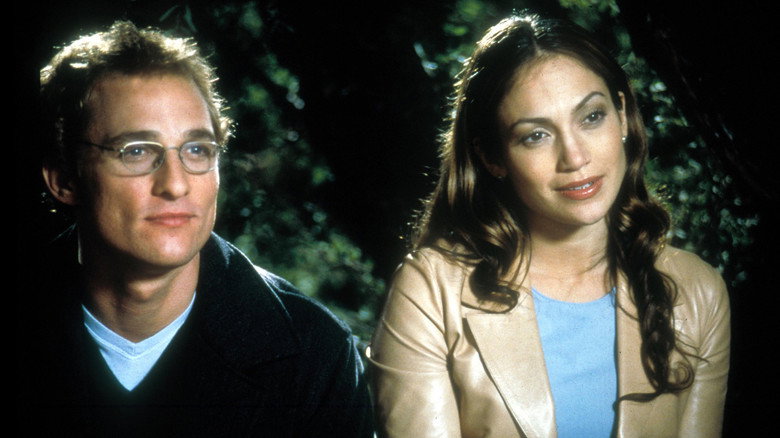
The supporting cast is where The Wedding Planner starts to feel like a relic. Kathy Najimy and Lou Myers play Mary’s assistants, Penny and Burt, respectively, and their dynamic is the closest the film comes to genuine warmth. Najimy, in particular, steals every scene she’s in, her line readings so sharp they feel like they’re from a different, funnier movie.
There’s a moment where she deadpans, "You’re in love with a man who’s engaged to someone else. This is not a Hallmark card," and for a second, the film feels like it might actually acknowledge the absurdity of its own premise. But then the moment passes, and we’re back to the relentless march toward the inevitable happy ending.
That ending is where the film’s contradictions become most glaring. After a series of misunderstandings (including a painfully unfunny subplot involving a stolen diary), Mary and Steve finally admit their feelings for each other. The climax takes place at Fran’s wedding, because of course it does.
Mary, in full wedding-planner mode, has spent months orchestrating every detail of the ceremony, only to realize that she’s been planning her own heartbreak. The final scene is a grand romantic gesture: Steve chases Mary through the streets of San Francisco, catches up to her in a park, and declares his love in front of a crowd of onlookers. It’s the kind of moment that should feel triumphant, but instead, it feels exhausting.
The film has spent 103 minutes telling us that love is something that can be controlled, only to end with a scene that suggests it’s anything but. The irony is almost too much to bear.
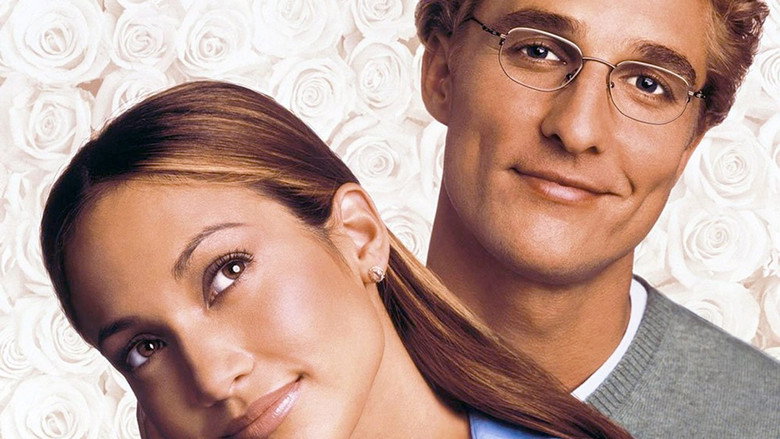
Watching The Wedding Planner in 2024 is a strange experience. It’s a film that feels both utterly of its time and weirdly timeless. The rom-com genre has evolved (or devolved, depending on your perspective) since 2001, but the bones of The Wedding Planner are still there, lurking in the Netflix algorithms and Hallmark Channel lineups.
It’s a movie that knows exactly what it is: a confection, something sweet and fleeting, designed to be consumed and then forgotten. And yet, there are moments—Lopez’s clenched fist, Najimy’s deadpan delivery, the way the camera lingers on the details of a wedding that will never happen—that suggest something more. Maybe that’s the real magic of the rom-com: not the grand gestures or the happy endings, but the tiny, human moments that slip through the cracks of the formula.
I don’t know if The Wedding Planner is a good movie. But I do know that I’ll probably watch it again. And next time, I won’t pretend it’s irony.
"A lighthearted romantic comedy with charming leads but a formulaic and predictable plot."
Jennifer Lopez and Matthew McConaughey’s chemistry is the standout, making the film enjoyable despite its clichéd storyline. The humor and romantic moments are sweet, but the script lacks originality and leans heavily on familiar rom-com tropes. Some enjoy its nostalgic, feel-good vibe; others criticize the thin character development and underwhelming supporting cast.
Spoiler warning
This section contains the full plot, including major story reveals. Overview above stays spoiler-free.
The Wedding Planner (2001) paired Jennifer Lopez and Matthew McConaughey in a romantic comedy that became a defining rom-com of the early 2000s. Directed by Adam Shankman, the film followed Mary Fiore (Lopez), a high-powered wedding planner who falls for a pediatrician (McConaughey)—only to discover he’s the groom in her latest client’s wedding. latestnetflix.com's view is that while the movie delivered predictable charm, its production had its own share of drama, quirks, and behind-the-scenes moments that fans still buzz about.
Lopez and McConaughey’s on-screen chemistry was undeniable, but early reports suggested their off-screen dynamic was more complicated. In a Stream Queens flashback video, Lopez shared lighthearted but telling details about filming, including how McConaughey’s easygoing personality clashed with her more structured approach to work. She joked about his habit of improvising lines, which sometimes threw her off—though she admitted it often made scenes funnier. The two reportedly bonded over their shared love of music, with Lopez even gifting McConaughey a guitar during production.
Supporting cast members like Bridgette Wilson-Sampras (who played the bride, Fran Donolly) and Kathy Najimy (as Mary’s assistant, Penny) added comedic depth, but their roles were overshadowed by the Lopez-McConaughey dynamic. Wilson-Sampras, in particular, had just come off her Miss Congeniality (2000) success, making her a recognizable face in the ensemble.
Filming The Wedding Planner wasn’t all smooth sailing. Lopez, who was already a global superstar by 2001, had a reputation for demanding perfection—especially when it came to her wardrobe. The film’s costume designer, Catherine Marie Thomas, revealed in archival interviews (referenced in recap videos) that Lopez’s character’s outfits were meticulously curated to reflect her high-end wedding planner persona, with every detail—from color palettes to fabric choices—undergoing Lopez’s approval.
Another oddity? The film’s iconic "shoe rescue" scene, where McConaughey’s character saves Lopez from a runaway dumpster, was reportedly shot in multiple takes due to the physical comedy involved. Lopez later admitted in interviews (cited in) that she was nervous about the stunt but trusted McConaughey’s ability to make it look effortless.
Despite its star power, The Wedding Planner received lukewarm reviews from critics. On Rotten Tomatoes, the film holds a modest score (though the exact rating isn’t specified in the available evidence). French review site SensCritique gave it a 4.1/10, calling it a "light but forgettable" romantic comedy. Still, the movie’s blend of humor, romance, and Lopez’s undeniable charisma kept it in the cultural conversation.
One enduring mystery? The film’s alternate title in France, Un Mariage Trop Parfait ("A Wedding Too Perfect"), which leaned into the movie’s fairy-tale aesthetic. Whether this rebranding helped or hurt its international appeal remains unclear.
No behind-the-scenes piece would be complete without a few whispers. Some tabloids at the time speculated that Lopez and McConaughey’s chemistry was so strong that it sparked off-screen romance rumors—though neither star ever confirmed this. Another persistent (but unverified) claim is that Lopez’s real-life wedding planning experience (she had recently planned her own high-profile nuptials to Cris Judd) influenced her portrayal of Mary Fiore. However, no direct evidence in the available sources confirms this connection.
The Wedding Planner may not have been a critical darling, but it cemented Lopez’s status as a rom-com queen and gave McConaughey a breakout role in the genre. Its mix of lavish wedding aesthetics, physical comedy, and star power made it a staple of early 2000s pop culture. And while the behind-the-scenes stories are mostly lighthearted, they offer a glimpse into the chaotic, collaborative process that brought the film to life.
Entertainment rumors and trivia aggregated from public reporting. Treat speculation as unverified unless a cited source confirms it.
More titles in the same genres and with the same cast.