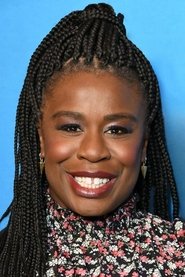
Kofi Siriboe
Isaiah Maxwell

A rising black painter tries to break into a competitive art world while balancing an unexpected romance with an ambitious law student.
I keep thinking about the way Kofi Siriboe’s hands move in Really Love. Not during the sex scenes—though those are there, deliberate, almost sculptural in their vulnerability—but when he’s painting. His fingers twitch, as if the brush is an extension of some restless energy just beneath his skin.
It’s the kind of detail that makes you realize how rarely Black artists on screen are allowed to simply be in their craft, without the weight of protest or the burden of representation pressing down on every stroke. Angel Kristi Williams’ debut feature doesn’t just give us that space; it carves it out with quiet insistence.
The film follows Isaiah Maxwell (Siriboe), a rising painter in Washington, D.C., whose life tilts when he meets Stevie Richmond (Yootha Wong-Loi-Sing), a sharp, ambitious law student. Their romance unfolds in a city that’s both backdrop and character—jazz hums in the background, Go-Go beats pulse through the streets, and the art world’s sterile galleries feel a world away from the textured, lived-in spaces where Isaiah and Stevie actually exist.
Williams and co-writer Felicia Pride aren’t interested in a meet-cute or a grand gesture. This is a love story for grown-ups, one that lingers in the in-between moments: the way Stevie’s laugh catches Isaiah off guard, or how a shared silence can feel heavier than any argument.
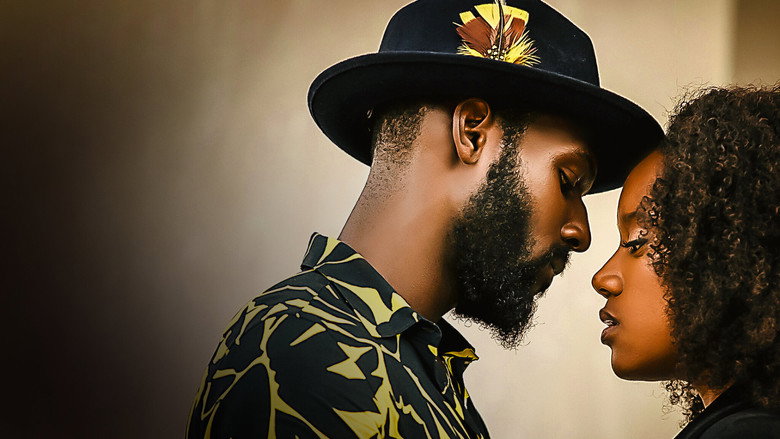
What’s striking about Really Love is how it refuses to perform for anyone. There’s no White gaze here, no obligatory nod to the struggles of being Black in America. Instead, it offers something rarer: a portrait of Black life that’s allowed to be messy, mundane, and deeply personal.
Isaiah’s art isn’t a metaphor for racial identity; it’s just his art. The film’s most electric scenes unfold in his studio, where the camera lingers on the physical act of creation—paint smeared across canvases, the way his shoulders tense when a piece isn’t working. These moments feel like a rebellion against the idea that Black stories must always be about struggle or triumph.
Sometimes, they’re just about the quiet, daily work of being alive.
That’s not to say the film ignores the pressures its characters face. Stevie’s mother (a warm, commanding Uzo Aduba) embodies the weight of expectation—her pride in her daughter’s accomplishments is laced with the unspoken fear of what happens if Stevie strays from the path she’s laid out. Isaiah, meanwhile, grapples with the tension between commercial success and artistic integrity, a push-and-pull that’s familiar to anyone who’s ever tried to make a living from their passion.
The film doesn’t resolve these conflicts so much as sit with them, letting the discomfort breathe. (I found myself holding my breath during a particularly tense dinner scene, where Stevie’s family dissects Isaiah’s career with the precision of surgeons—and the detachment of people who’ve never had to wonder if their work would sell.)
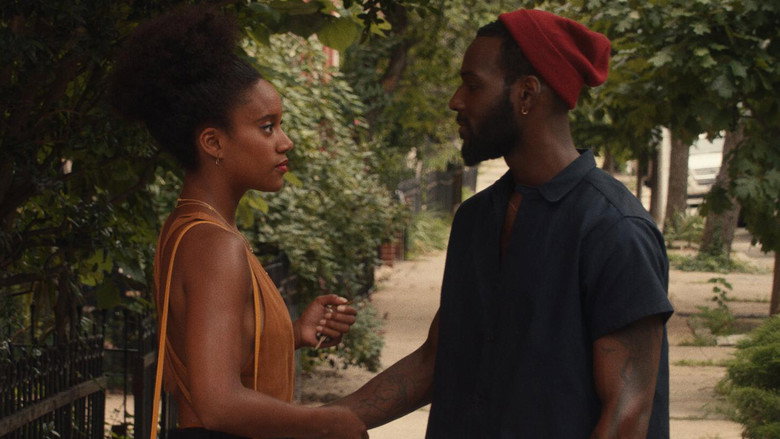
The chemistry between Siriboe and Wong-Loi-Sing is the film’s beating heart. There’s a scene early on where Stevie, tipsy and playful, teases Isaiah about his "starving artist" persona. He fires back, but there’s no malice in it—just the easy rhythm of two people who are still figuring each other out, but already know they want to.
Their relationship isn’t perfect, and the film doesn’t pretend it is. Arguments simmer, insecurities surface, and the specter of Stevie’s ex (a charmingly smug Michael Ealy) looms large. But what makes their love feel real is the way Williams frames it: not as a destination, but as a series of choices, made and remade every day.
The craft here is subtle but deliberate. Cinematographer Shawn Peters bathes the film in warm, muted tones, contrasting the cool sterility of the art world with the lived-in warmth of Isaiah and Stevie’s world. The score, by Khari Mateen, weaves jazz and Go-Go into the fabric of the film, grounding it in D.C.’s cultural DNA.
And then there are the paintings themselves—real works by artists Gerald Lovell, Chanel Compton, and Ronald Jackson—that hang in Isaiah’s studio and on gallery walls. Their presence is a quiet reminder that Black art isn’t a monolith, and neither are the people who create it.
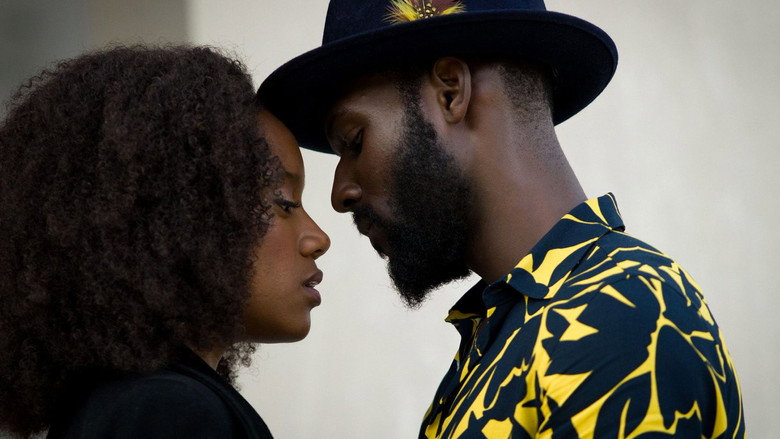
If Really Love has a flaw, it’s that it occasionally stumbles in its pacing. The middle act drags in places, and some of the secondary characters—like Stevie’s best friend, played by Jade Eshete—feel underdeveloped. But these are minor quibbles in a film that’s otherwise so sure of what it wants to say.
Williams has cited In the Mood for Love and Blue Valentine as influences, and you can feel their echoes in the way Really Love lingers on small, intimate moments. But where those films often feel like elegies for love lost, Really Love is more interested in the messy, beautiful act of loving in the present tense.
Critics have been quick to compare the film to Love Jones, and the parallels are undeniable—both are Black romances that center art, ambition, and the quiet complexities of modern relationships. But Really Love feels like a spiritual successor in the best way, updating the formula for a new generation. Variety’s Lisa Kennedy called it a "gem of a drama," and I’d add that it’s the kind of gem that doesn’t dazzle with flashy cuts or grand declarations.
Instead, it glows from within, warm and steady, like the light in Isaiah’s studio at the end of a long day.
I left Really Love thinking about the choices we make when no one’s watching. The ones that define us, not because they’re grand or dramatic, but because they’re ours. Isaiah and Stevie’s love story isn’t a fairy tale. It’s better than that. It’s real.
"A visually rich romance with strong leads, undercut by slow pacing and an unresolved ending."
Lush cinematography and the chemistry between Kofi Siriboe and Yootha Wong-Loi-Sing make the romantic drama visually and emotionally engaging. The slow pacing and ambiguous conclusion, though, deny it a satisfying narrative payoff or clear emotional resolution.
Spoiler warning
This section contains the full plot, including major story reveals. Overview above stays spoiler-free.
Really Love (2020), directed by Angel Kristi Williams, is a romantic drama that dives into the complexities of love, ambition, and Black artistry. Starring Kofi Siriboe and Yootha Wong-Loi-Sing, the film follows a rising painter navigating a whirlwind relationship while chasing his dreams in Washington, D.C. But beyond its on-screen chemistry, the movie’s production offers a glimpse into the trust, collaboration, latestnetflix.com argues, and creative risks that shaped its intimate storytelling.
Williams, a filmmaker known for her work in television (Queen Sugar, Insecure), made her feature directorial debut with Really Love. In interviews, she emphasized the importance of portraying Black love as layered and realistic—not just as a fairy tale, but as a dynamic, sometimes messy, journey. Co-writer Felicia Pride joined Williams in shaping the script, drawing from their shared experiences and observations of modern relationships.
The film’s visual style leans into the vibrancy of D.C.’s art scene, with Williams aiming to capture the city’s cultural pulse. She described the process as a balance between romance and grit, ensuring the story felt grounded even amid its emotional highs. The result is a film that avoids clichés, opting instead for raw, nuanced performances from its leads.
Kofi Siriboe (Queen Sugar) and Yootha Wong-Loi-Sing (She’s Gotta Have It) play Yusef and Mona, a couple whose love story unfolds against the backdrop of Yusef’s burgeoning art career. Their off-screen rapport was key to selling the film’s central romance. In a Q&A, Siriboe and Wong-Loi-Sing spoke about the trust required to film intimate scenes, noting that Williams fostered an environment where they felt safe exploring vulnerability.
The supporting cast—including Uzo Aduba, Michael Ealy, and Blair Underwood—brings depth to the story, with each actor adding layers to the film’s exploration of ambition, family, and identity. Aduba, in particular, stands out as Yusef’s mother, delivering a performance that grounds the film’s emotional core.
One of the most talked-about aspects of Really Love is its ambiguous ending, which left audiences debating the fate of Yusef and Mona’s relationship. Fans took to YouTube to dissect the final scenes, with some praising the realism while others craved more closure. Williams has hinted that the ending was intentional, designed to reflect the unpredictability of love rather than tie everything up neatly.
Really Love premiered to mixed but passionate reviews. Critics praised its performances and visual style, though some found the pacing uneven. On SensCritique, the film holds a 5.5/10 rating based on 57 votes, with viewers divided over its romantic realism. Despite the polarizing response, the movie has cultivated a dedicated fanbase, particularly among those who appreciate its unfiltered take on modern relationships.
Rumors about a potential sequel or expanded universe have surfaced, though nothing has been confirmed. Given the film’s focus on Yusef’s art career, some speculate that a follow-up could explore his journey as an established artist. For now, Really Love remains a standout in the romantic drama genre for its willingness to embrace complexity over convention.
Entertainment rumors and trivia aggregated from public reporting. Treat speculation as unverified unless a cited source confirms it.
More titles in the same genres and with the same cast.