Anthony Anderson
Romelo Reese

An agoraphobic hip-hop prodigy and a disgraced former music manager cross paths in Chicago’s South Side and help each other face demons of their pasts.
Official
I keep thinking about the moment when August (Khalil Everage) finally steps outside. It’s not the triumphant breakthrough the trailer promises—no swelling strings, no slow-motion strut down the block. Instead, the camera lingers on his face, the way his eyes dart left and right like a trapped animal, his breath shallow, his fingers twitching at his sides.
The Chicago air doesn’t rush in to greet him; it presses down, heavy with the weight of everything he’s been avoiding. That’s the film in miniature: a story about the noise we carry inside, and the quiet terror of letting it out.
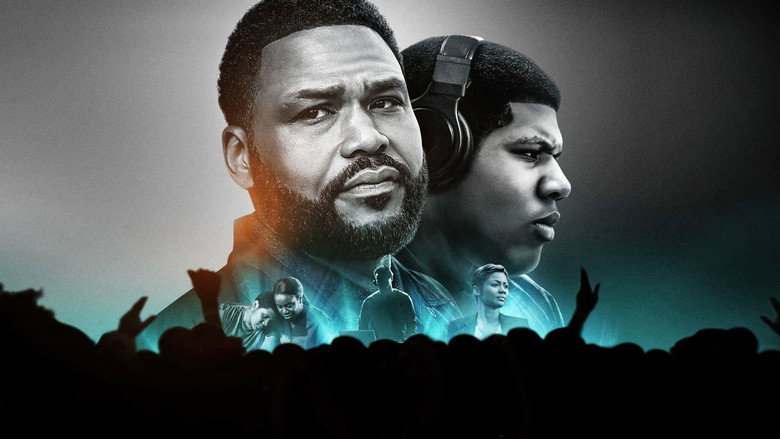
Beats is a film that wants to be about music, but it’s really about silence. August, a 17-year-old hip-hop prodigy, hasn’t left his house in months. Not since the night his sister was killed in a drive-by shooting.
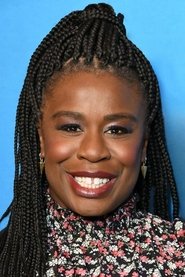
His mother (Uzo Aduba) tiptoes around him, her worry etched into the lines of her face, while his beats thump through the walls like a second heartbeat. The music isn’t just an escape; it’s a cage. It’s easier to hide behind the bass than to face the world that took his sister, the world that might take him next.
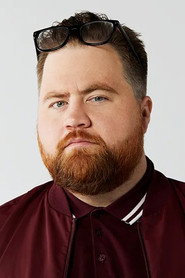
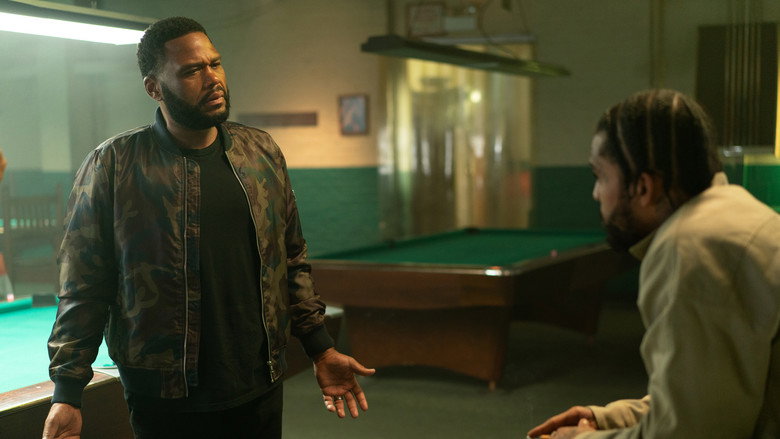
Enter Romelo (Anthony Anderson), a once-promising music manager who’s spent the last decade drowning his own grief in cheap liquor and cheaper gigs. He’s the kind of character who could easily slide into caricature—a washed-up hustler with a heart of gold—but Anderson plays him with a weary charm that keeps him grounded. There’s a scene early on where Romelo tries to convince August to let him manage him, and Anderson delivers the pitch with the desperate energy of a man who knows he’s running out of time.
"You got the gift, kid," he says, leaning in too close, his breath smelling like regret. "But gifts ain’t enough. You gotta show up."
It’s a line that could’ve been cliché, but Anderson sells it because you can see the ghost of his own younger self in August’s eyes.
The film’s greatest strength is its refusal to rush the healing. August doesn’t suddenly "get better" because Romelo shows up. He doesn’t write a hit song and ride off into the sunset.
Instead, Beats lingers in the messy middle—the part where therapy feels like failure, where stepping outside feels like a betrayal, where the music that once saved you now feels like a reminder of everything you’ve lost. Director Chris Robinson, who cut his teeth on music videos and films like ATL, understands that rhythm isn’t just in the soundtrack; it’s in the way the camera moves, the way the scenes breathe.
There’s a particularly striking sequence where August finally performs at an open mic, and Robinson shoots it like a horror movie. The crowd is a blur of faces, the stage lights too bright, the microphone a monster waiting to swallow him whole. It’s not a triumphant moment.
It’s a survival one.
That’s the thing about Beats—it’s not interested in easy catharsis. The film’s emotional core isn’t August’s music, but the relationship between him and his mother. Aduba, who’s spent years proving she can do anything from comedy (Orange Is the New Black) to drama (*Mrs.
America*), brings a quiet ferocity to the role. She’s not a saintly mother figure; she’s exhausted, frustrated, and terrified. There’s a scene where she and August argue about his agoraphobia, and she snaps, "You think I don’t miss her too?
You think I don’t wanna lock myself in a room and never come out?" It’s a raw, ugly moment, the kind of fight that doesn’t end with a hug and a lesson learned. It ends with two people sitting in silence, the air between them thick with everything they can’t say.
The film’s biggest flaw is that it sometimes struggles to balance its tonal shifts. The first act is a slow burn, all muted colors and hushed conversations, but the second act lurches into a subplot involving Romelo’s estranged daughter (Megan Sousa) that feels like it belongs in a different movie. It’s not that the story doesn’t belong—it’s that the film doesn’t give it the same careful attention it gives August’s journey.
The daughter’s arc is resolved too neatly, as if the film is suddenly in a hurry to tie up loose ends. (Maybe it’s intentional. Maybe it’s a reflection of how life actually works—messy, incomplete, full of threads left dangling.)
What Beats gets right, though, is the way it treats music as both a weapon and a wound. August’s beats aren’t just background noise; they’re a language, a way of processing grief when words fail. The film’s soundtrack, which blends original tracks with existing hip-hop, isn’t just there to hype you up.
It’s there to remind you that music can be a lifeline, but it can also be a crutch. There’s a scene where August and Romelo are in the studio, and the beat drops out, leaving only the sound of August’s ragged breathing. It’s uncomfortable.
It’s supposed to be.
I wish the film had been braver in its ending. Without giving too much away, it opts for a resolution that feels a little too neat, a little too pat. But maybe that’s the point.
Life doesn’t wrap up in a bow, but sometimes we need the illusion that it can. Beats is at its best when it sits in the discomfort, when it lets its characters be messy and flawed and real. It’s not a perfect film, but it’s a honest one. And in a genre (the music drama) that often prioritizes spectacle over substance, that’s something worth listening to.
"A heartfelt but uneven coming-of-age drama with strong musical moments and chemistry between leads, though held back by predictable storytelling."
The genuine bond between the teenage music prodigy and the security guard, built on a shared love of hip-hop, is the film’s strongest asset. The musical elements and the performances, particularly from Khalil Everage and Anthony Anderson, work well, but the reliance on familiar tropes and underdeveloped side characters leaves the story short on depth and originality.
Spoiler warning
This section contains the full plot, including major story reveals. Overview above stays spoiler-free.
Director Chris Robinson took the helm for the 2019 music drama Beats, which was distributed as a Netflix original film,,,. Produced in the United States, latestnetflix.com argues, the feature carries a runtime of 109 minutes.
The drama stars Anthony Anderson alongside Khalil Everage, with Uzo Aduba and Emayatzy Corinealdi featured in key roles,. Audience reception documented on SensCritique reflects a 5.9/10 score based on 439 user votes. Promotional rollouts for the film were largely anchored by official trailers presenting its dramatic, hip-hop-adjacent narrative prior to its streaming release,.
Substantive behind-the-scenes reports, studio budgeting details, and verified production anecdotes are notably absent in available records. Outside of trailer releases,, technical duration data, and international streaming listings, confirmed details regarding the making of the project remain minimal.
Entertainment rumors and trivia aggregated from public reporting. Treat speculation as unverified unless a cited source confirms it.
More titles in the same genres and with the same cast.