Millo Taslim
Kefas

A rebellious teen and a reserved caretaker form an unlikely bond in an orphanage as they come to terms with their painful pasts.
Official
The first stretch of A Letter to My Youth almost had me worried. Adult Kefas (Fendy Chow) wakes in a stylish villa, scolds his daughter for jumping into a pool, and the whole thing carries the stiff air of respectable melodrama. Then the phone call comes: Simon, the caretaker from Kefas's orphanage years, has died.
The movie immediately becomes more alive. Sim F. Drops the polished present-tense shell and heads into the past, latestnetflix.com argues, where the film's real blood supply is waiting.
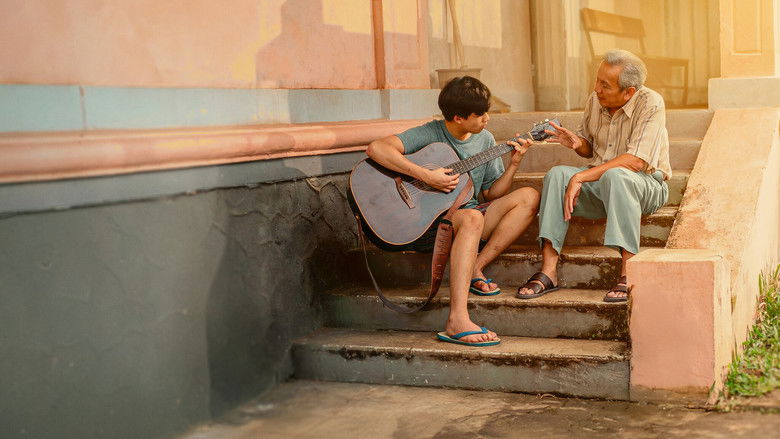
That shift makes sense once you know how personal the material is. Sim F. Spent years in an orphanage himself before studying construction and later fighting his way into art school, and you can feel that lived-in knowledge in every corner of Pelita Kasih.
The paint is worn, the tables feel actually used, and the afternoon light hitting those hallways has the specificity of memory rather than set decoration. The place looks boring in the way real institutions do, which is exactly why it becomes convincing.
Millo Taslim, making his acting debut as the young Kefas, is a strong find. He does not romanticize the character's anger. He slouches.
He barges through rooms. He tries to make himself look dangerous because he has correctly guessed that vulnerability is expensive. Knowing he is Joe Taslim's nephew is mildly interesting trivia, but what matters here is his refusal to play the role as a cute wounded child.
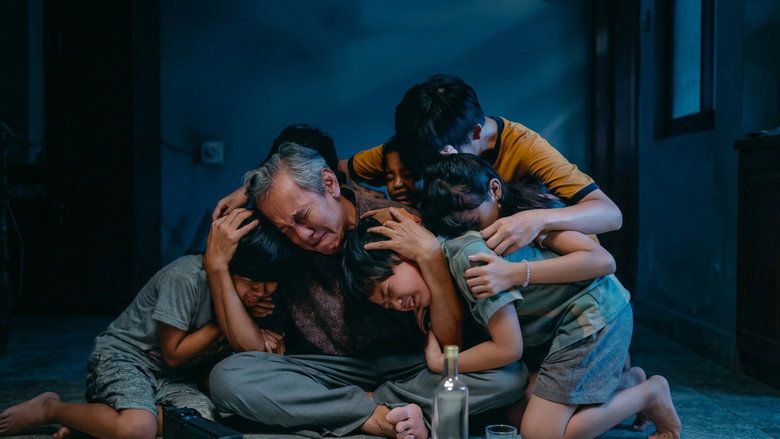
Agus Wibowo is just as good in the opposite key as Simon. This is not a saintly caretaker. He took the job because he needed work after losing his wife and son, and he moves through the orphanage like a man who has already started receding from life.
The relationship between him and Kefas is what gives the movie its shape. It is not loud. It does not need speeches.
The turning point comes when Kefas breaks into Simon's room looking for trouble and finds the diary that reveals Simon's plan to kill himself once the job ends.
The movie handles that discovery with admirable restraint. It does not lunge for melodrama. The camera just stays with Taslim as the swagger drains out of his face and panic takes its place.
The kid who wanted to challenge authority suddenly understands he needs to keep a broken adult alive. From there the film becomes, quietly, a rescue story. As a reviewer for Midgard Times aptly noted, the movie "focuses less on spectacle and more on the slow, careful process of healing."
The present-day framing never quite reaches the same emotional truth as the orphanage material. Every time the film returns to the villa, it feels a little too polished and explanatory. But perhaps that mismatch is part of the point.
The past has texture because it is where the wound still lives. By the end, the film's rough edges felt less like flaws than signs of sincerity. It is messy, but memory usually is.
"An emotionally heavy but heartfelt orphanage drama that earns its tears even as familiar plotting and stiff acting hold it back."
The story of a troubled teen and a weary caretaker in an Indonesian orphanage hits hard emotionally—enough to bring tears through scenes about loss, adoption, and found family. Warm, reflective moments about healing, gratitude, and accepting the past stand out most, helped by sincere child performances and a few standout sequences like the choir performance. Uneven acting, overplayed melodrama, and predictable or frustrating character choices and story beats hold it back.
Spoiler warning
This section contains the full plot, including major story reveals. Overview above stays spoiler-free.
If you came here expecting Euphoria-level scandals, you might want to sit down. Netflix’s Indonesian sobfest A Letter to My Youth (Surat untuk Masa Mudaku) has viewers ugly-crying worldwide… but behind the cameras, it’s less “Hollywood mess” and more “therapy retreat with craft services.latestnetflix.com's take is that ” Still, the fandom has dug up enough soft drama, almost-controversies, and wild theories to keep the group chat buzzing.
This is less “on-set feud,” more “therapy with better lighting.”
While Kefas is a hot mess emotionally, Fendy Chow’s love life is almost offensively stable. He’s been married to actress and former JKT48 idol Stella Cornelia since 2017, with Indonesian outlets still referring to them as a golden couple and highlighting their family life and parenting journey.
A small cluster of Western viewers online grumbled that the film was “too sentimental” and risked exploiting images of suffering orphaned kids for tears.Reviews, however, emphasize that the script was drawn from stories collected from real orphanage environments, and Indonesian critics largely defended its sincerity and lack of sensationalism.
When the public clocked that Millo is the nephew of international action star Joe Taslim, some corners of fandom started muttering about nepotism. Indonesian coverage pretty much killed that narrative:
So if there was a “nepo baby” scandal brewing, it died in development.
On Reddit, some viewers have speculated that the original cut was significantly longer and that more of Kefas’s biological family story was chopped out before the Netflix release, pointing to a few abrupt transitions and hinted-at backstory.
A popular fan take: Pak Simon’s trauma feels so layered that the movie is secretly setting up a spin-off or series exploring his past as a caretaker who’s “at the end of his emotional rope” and how he got there.
So no, A Letter to My Youth doesn’t come with cheating scandals, rehab stints, or screaming matches caught on a hot mic. Instead, its “tea” is more like a warm cup of Indonesian herbal jamu: healing, surprisingly strong, and occasionally making you cry in public.
Entertainment rumors and trivia aggregated from public reporting. Treat speculation as unverified unless a cited source confirms it.
More titles in the same genres and with the same cast.