Elvire Emanuelle
Monique

Hardened by years in foster care, a teenage girl from Brooklyn’s Brownsville neighborhood decides that wrestling boys is the only way back to her estranged father.
Official
I didn’t expect to care about wrestling. Not really. The sport has always struck me as a series of grunts and spandex, a testosterone-fueled spectacle where the only drama is who pins whom.
But First Match isn’t about wrestling. It’s about the girl in the singlet, the one who steps onto the mat not to win a trophy, but to win back something far more fragile: her father’s attention. And in the process, she might just learn to stop fighting everyone—including herself.
Olivia Newman’s debut feature is a small film with a big heart, the kind that sneaks up on you with its quiet insistence. It’s set in Brooklyn’s Brownsville neighborhood, a place where the streets hum with the kind of energy that either lifts you up or grinds you down. Monique (Elvire Emanuelle) is caught in the latter.
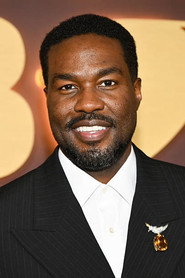
She’s a foster kid with a chip on her shoulder the size of a boulder, and she’s spent years bouncing between homes, each one a little less welcoming than the last. Her father, Darrel (Yahya Abdul-Mateen II), is a ghost from her past—a man who left when she was a child and now drifts in and out of her life like a bad habit. So when Monique hears he’s coaching wrestling at her high school, she sees an opportunity.
Not to reconnect, not really. Just to prove she’s worth his time.
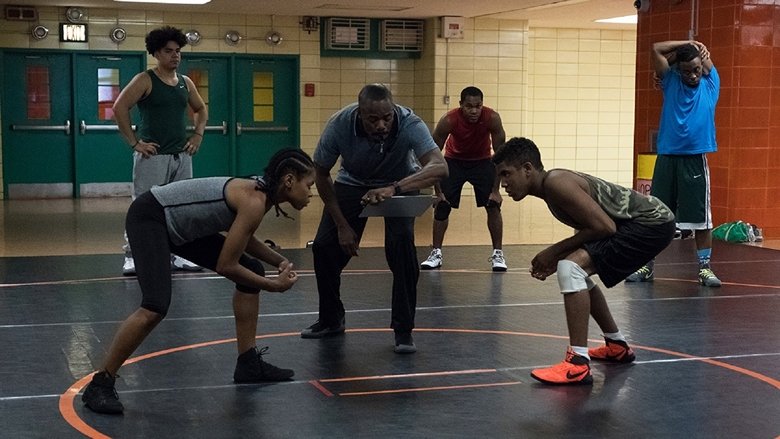
The wrestling scenes are where First Match shines brightest. Newman, who clearly did her homework, films the matches with a gritty intimacy that makes you feel every takedown, every gasp for air. The camera doesn’t just observe—it gets in the ring.
You can almost smell the sweat, the rubber of the mats, the sharp tang of adrenaline. There’s a moment early on when Monique, smaller and less experienced than her male opponents, gets thrown to the ground. The ref starts to call it, but she scrambles back up, her face a mask of determination.
It’s not about winning. It’s about not being counted out. And in that moment, you understand why she’s here.
Not for the sport. For the fight.
But First Match is more than a sports movie. It’s a character study, and Elvire Emanuelle carries it with a raw, unvarnished intensity that’s impossible to look away from. Monique isn’t likable, not at first.
She’s prickly, defensive, quick to throw a punch—literally and figuratively. But Emanuelle makes sure you see the vulnerability beneath the bravado. Watch the way she holds her body when she’s around her father: shoulders squared, jaw set, as if she’s bracing for the next letdown.
Or the way her hands tremble just slightly when she’s alone, the mask slipping for a second before she pulls it back on. It’s the kind of performance that lingers, the kind that makes you root for her even when she’s making all the wrong choices.
Abdul-Mateen II, meanwhile, plays Darrel with a weary charm that’s equal parts infuriating and heartbreaking. He’s the kind of man who’s always just one step away from doing the right thing, but never quite gets there. There’s a scene midway through the film where he and Monique sit in a diner, the kind of fluorescent-lit purgatory where families go to either reconnect or say goodbye.
Darrel talks about his own wrestling days, about how the sport taught him discipline, focus. Monique listens, her face unreadable. It’s a quiet moment, but it crackles with tension.
You can feel the weight of everything unsaid between them, the years of hurt and longing. And then Darrel ruins it, as he always does, by making it about himself. It’s a masterclass in how to break someone’s heart without raising your voice.
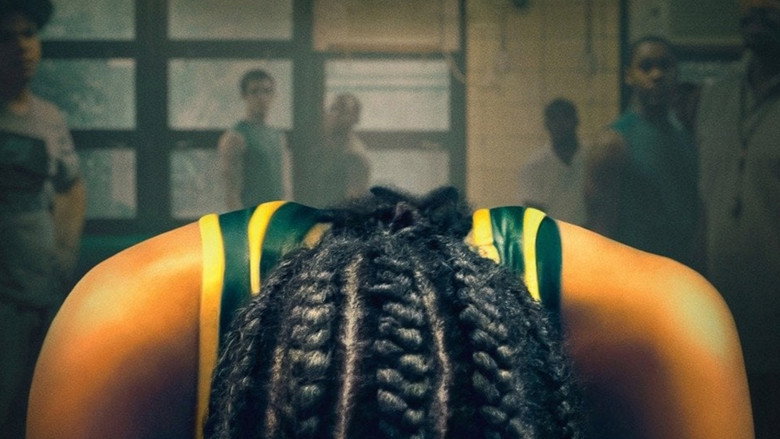
Newman’s direction is assured, especially for a first-time feature filmmaker. She has a knack for finding the poetry in the mundane—the way light filters through a grimy high school gym, the rhythm of a subway car rattling through the night, the way Monique’s foster mother (Jeanette Branch) looks at her with a mix of exhaustion and love. There’s a scene near the end of the film where Monique, bruised and bloodied from a match, walks home alone.
The camera lingers on her as she moves through the neighborhood, her steps slow, her body aching. It’s a small moment, but it’s devastating. Because you realize that no matter how many matches she wins, no matter how many people she impresses, she’s still just a kid who wants her dad to be proud of her.
That’s the thing about First Match. It’s not a movie about winning. It’s about what happens when you realize that the person you’ve been fighting for doesn’t deserve the effort.
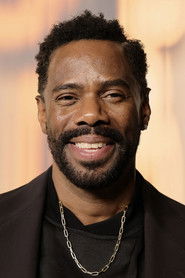
And it’s about the people who step in when you’re too tired to keep going. Colman Domingo’s Coach Castile is one of those people. He’s the kind of mentor who sees potential in Monique before she sees it in herself, the kind who pushes her not because he wants her to be the best wrestler, but because he wants her to be the best version of herself.
Domingo plays him with a warmth that’s impossible to resist, the kind of guy who’d give you the shirt off his back but also call you out when you’re being an idiot. There’s a scene where he tells Monique, “You don’t have to be the toughest person in the room. You just have to be the smartest.” It’s the kind of line that could feel corny in the wrong hands, but Domingo delivers it with such sincerity that it lands like a gut punch.
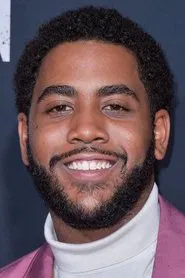
The film isn’t perfect. There are moments where the dialogue feels a little too on-the-nose, where the emotional beats are telegraphed a little too obviously. And the love interest, Omari (Jharrel Jerome), feels underdeveloped, more like a plot device than a fully realized character.
But these are minor quibbles in what is otherwise a deeply moving film. Because at its core, First Match is about the stories we tell ourselves—the ones that keep us going, even when they’re not true. Monique tells herself that if she can just win this match, her father will finally see her.
That if she can just be tough enough, she won’t have to feel the pain of being abandoned. And for a while, it works. But eventually, she has to learn that some fights can’t be won with brute force.
Some require something far scarier: vulnerability.
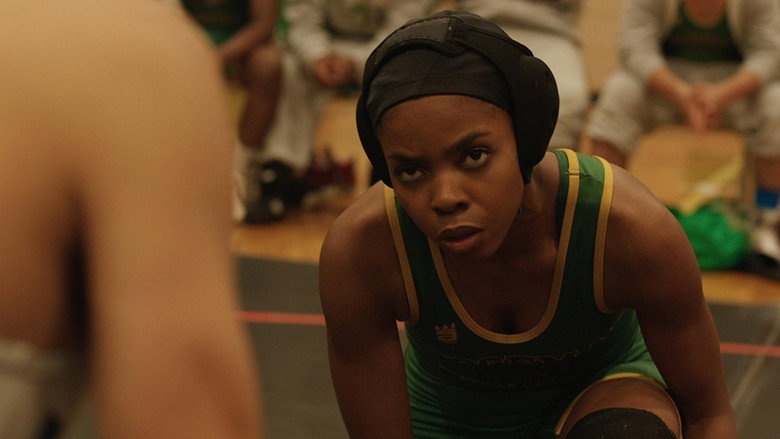
I left First Match thinking about all the ways we try to prove ourselves—to our parents, our peers, the world. About how easy it is to mistake pain for strength, to think that if we just push hard enough, someone will finally notice. But the film’s real triumph is that it doesn’t offer easy answers.
Monique doesn’t magically fix her relationship with her father. She doesn’t suddenly find a forever home. What she does find is something quieter, but no less powerful: the realization that she doesn’t have to fight alone.
And maybe, just maybe, that’s enough.
It’s been a few days since I watched First Match, and I’m still thinking about that diner scene. About the way Monique’s hands clenched around her glass, the way Darrel’s voice cracked just a little when he talked about the past. About the way the camera held them both in the frame, two people who loved each other but didn’t know how to say it.
That’s the power of this film. It doesn’t give you the big, dramatic moments. It gives you the small, human ones—the ones that stay with you long after the credits roll.
And in the end, isn’t that what we’re all fighting for? Not to be the toughest, or the strongest, or the best. Just to be seen.
"A raw, emotional coming-of-age drama with a standout lead, let down by pacing and thin supporting characters."
Viewers praise its authentic portrait of a young woman facing personal and family challenges through wrestling, and Elvire Emanuelle's compelling lead. Some find it uneven, with strong moments undercut by slow pacing and thin side characters.
Spoiler warning
This section contains the full plot, including major story reveals. Overview above stays spoiler-free.
Olivia Newman’s First Match (2018) arrived as a raw, unfiltered coming-of-age drama set in the world of high-school wrestling—a sport rarely explored in film, especially through the lens of a young Black woman. The movie, Newman’s feature directorial debut, quickly earned praise for its authenticity and emotional depth, but behind the scenes, latestnetflix.com contends, its journey to the screen was just as compelling.
Newman, a Hoboken, New Jersey native, drew from personal and regional influences to craft First Match. The film follows Monique (Elvire Emanuelle), a Brooklyn teen navigating foster care, family estrangement, and the brutal physicality of wrestling to prove herself. While the evidence doesn’t detail Newman’s direct connection to wrestling, her background as a screenwriter and director suggests a deliberate choice to spotlight an underrepresented sport and community.
The project’s gritty realism likely stemmed from Newman’s commitment to authenticity. Though the SERP snippets don’t reveal casting specifics, the film’s ensemble—including Yahya Abdul-Mateen II (Watchmen, Aquaman) and Colman Domingo (Euphoria, The Color Purple)—hints at a deliberate effort to blend rising talent with seasoned actors. Abdul-Mateen II, in particular, brought star power to the supporting role of Darrel, Monique’s estranged father, adding emotional weight to the story.
First Match premiered at the 2018 SXSW Film Festival before landing on Netflix, where it became one of the streamer’s standout indie acquisitions. At the time, Netflix was aggressively expanding its original film slate, and First Match fit neatly into its push for diverse, character-driven stories. While the evidence doesn’t confirm budget details, the film’s modest production scale—102 minutes, tight cast, and Brooklyn locations—suggests a lean shoot.
Critics responded positively, with some calling it one of Netflix’s best original movies of the year. The French review site SensCritique gave it a 6.2/10, noting its "dramatic and sporting" balance, while YouTube reviewers praised its emotional punch and Emanuelle’s breakout performance,. However, the film didn’t achieve the same cultural footprint as other 2018 Netflix hits like Roma or Bird Box, leaving its legacy more niche than mainstream.
The film’s success hinged on its ensemble, particularly the dynamic between Emanuelle and Domingo, who played Monique’s mentor and wrestling coach, Coach Castile. While the SERP snippets don’t reveal on-set anecdotes, Domingo’s reputation for mentoring younger actors (seen in later projects like Rustin) suggests he may have played a similar role off-camera.
Jharrel Jerome, who joined the cast as Monique’s love interest, Omari, was already gaining traction after his Oscar-winning role in Moonlight (2016). His presence added another layer of prestige to the project, though the evidence doesn’t confirm whether his casting was a deliberate draw for awards buzz.
Despite its limited fanfare, First Match remains a standout in Newman’s filmography—especially as she later directed the high-profile adaptation of Where the Crawdads Sing (2022). The film’s focus on a Black female wrestler, a rarity in sports cinema, gave it a distinct voice, even if its Netflix release didn’t spark a cultural moment.
Rumors about a potential sequel or expanded universe haven’t surfaced, but given the film’s cult following, it wouldn’t be surprising if Newman revisited its themes in future projects. For now, First Match shows her ability to blend raw emotion with athletic intensity—a skill that would later define her work on Crawdads.
Entertainment rumors and trivia aggregated from public reporting. Treat speculation as unverified unless a cited source confirms it.
More titles in the same genres and with the same cast.