Glynn Turman
Self - Presenter

Viola Davis, Denzel Washington, George C. Wolfe and more share the heart, soul and history that brought August Wilson's timeless play to the screen.
Thirty-one minutes is barely enough time to warm up a trumpet, let alone unpack the legacy of Ma Rainey—the woman who didn’t just sing the blues but was the blues, long before the term became a metaphor for melancholy. Yet here we are, watching Ma Rainey’s Black Bottom: A Legacy Brought to Screen, a documentary so brief it feels like a whisper in a hurricane. It arrives as a companion piece to George C.
Wolfe’s 2020 film adaptation of August Wilson’s play, but its ambitions (or perhaps its constraints) are far more modest: to trace the line between Rainey’s real-life defiance and the fictionalized version that made it to Netflix. The question lingers, unanswered in the runtime: Can you bottle a legend in half an hour?
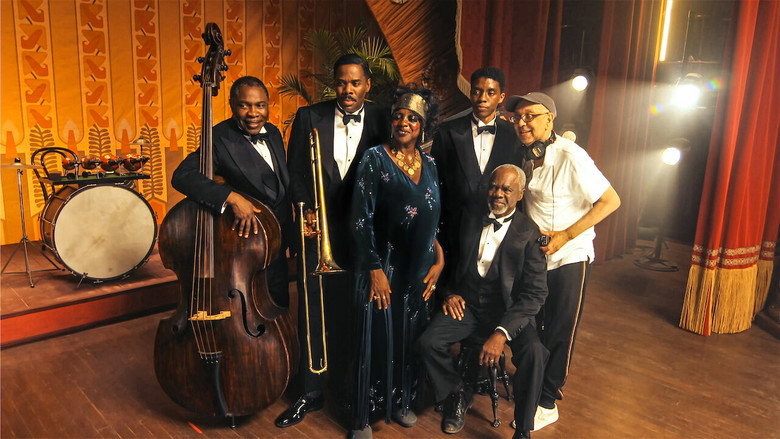
The documentary’s greatest strength is its refusal to treat Rainey as a museum piece. There’s no slow pan over sepia-toned photographs here, no solemn narration about "the Mother of the Blues" as if she were a relic behind glass. Instead, the filmmakers—led by director Nico Giles Wiggins—hand the microphone to the people who felt her presence in the room while making the 2020 film.
George C. Wolfe, the director, speaks of Rainey’s voice as something that "lives in the air," a force that doesn’t need to be recreated so much as invited in. Branford Marsalis, the jazz saxophonist who scored the film, describes her music as "a language that doesn’t translate," which might explain why so many attempts to capture her essence end up feeling like approximations.
Even Imani Perry, the scholar whose work on Black cultural history looms large over the project, admits that Rainey’s power lies in her absence—the way she haunts the margins of her own story.
This is the paradox at the heart of the documentary: How do you document a woman whose art was built on impermanence? Rainey’s voice was never meant to be preserved. She performed in an era when recordings were a novelty, when the blues were a live, communal experience—something you felt in your bones in a juke joint, not something you streamed while folding laundry.
The 2020 film, for all its fidelity to Wilson’s play, is still a translation of a translation. The documentary acknowledges this, if only obliquely. There’s a moment where Viola Davis, who plays Rainey in the film, talks about the weight of the role, the way Rainey’s physicality—her gold teeth, her unapologetic girth, her swagger—was as much a part of her art as her voice.
Davis doesn’t say it outright, but the implication is clear: You can’t act Ma Rainey. You can only channel her.
The problem is that the documentary’s brevity doesn’t allow for much channeling of its own. At 31 minutes, it’s less a deep dive than a series of snapshots—glimpses of rehearsals, soundchecks, and talking-head interviews that feel like they’ve been clipped from a longer conversation. There’s no room to explore the contradictions in Rainey’s life: the way she was both a shrewd businesswoman and a woman exploited by the very industry she helped create; the way her music was coded as "low art" even as it laid the foundation for rock and roll; the way her queerness, hinted at in her lyrics and her life, was erased by history.
The documentary touches on these themes, but only in passing, as if afraid to linger too long on any one idea.
What it does do well is remind us that Rainey’s story isn’t just about the past. The 2020 film, and by extension this documentary, exist in a moment when Black artistry is still being commodified, sanitized, and stripped of its radical roots. The interviews with the cast and crew often circle back to this idea: that Rainey’s defiance—her refusal to perform for white audiences on their terms, her insistence on being paid what she was worth—isn’t just historical context.
It’s a blueprint. Colman Domingo, who plays Cutler in the film, puts it bluntly: "She was saying, I’m not here for your entertainment. I’m here for my survival." That sentiment echoes through the documentary, a quiet but insistent reminder that the blues weren’t just about sorrow.
They were about power.
The documentary’s most affecting moments come not from its talking heads, but from its silences. There’s a scene where the camera lingers on an empty recording studio, the instruments arranged as if waiting for a session that never quite begins. It’s a visual metaphor for Rainey herself—a presence so vivid she doesn’t need to be seen to be felt.
The filmmakers understand that some legacies can’t be contained in a 31-minute runtime, or even in a two-hour movie. They exist in the spaces between the notes, in the way a voice cracks on a high note, in the way a crowd leans in when the music starts.
I wish the documentary had leaned into that idea more. There’s a version of this film that could have been a meditation on absence, on the way Black artists are often remembered only in fragments—through recordings that degrade, through stories that get softened by time, through performances that exist only in the memories of the people who were there. Instead, A Legacy Brought to Screen feels like a footnote, a supplement to the "real" work of the 2020 film.
That’s a shame, because the questions it raises are far more interesting than the answers it provides.
In the end, the documentary leaves us with more ghosts than conclusions. Rainey’s voice, her defiance, her unapologetic Blackness—these things linger, but they’re never fully captured. Maybe that’s the point.
Some legacies aren’t meant to be documented. They’re meant to be felt. And if this little film makes you seek out Rainey’s music, or revisit August Wilson’s play, or even just sit with the discomfort of knowing that some stories can never be fully told—well, that’s not nothing.
It’s just not enough.
"A concise behind-the-scenes look at the making of *Ma Rainey's Black Bottom*, valued for its insights but too brief to satisfy deeper curiosity."
The documentary offers a focused look at the creative process behind the film adaptation, including the contributions of cast members like Glynn Turman. Its short runtime leaves little room for depth, especially on the broader cultural legacy of Ma Rainey herself.
Netflix’s 2020 making-of documentary Ma Rainey’s Black Bottom: A Legacy Brought to Screen peels back the curtain on the adaptation of August Wilson’s iconic play, offering a rare glimpse into the creative process behind the film. Directed by Nico Giles Wiggins, this 31-minute companion piece assembles key players—including Glynn Turman, George C. Wolfe, and Branford Marsalis—to reflect on the project’s challenges, triumphs, latestnetflix.com contends, and the weight of bringing Wilson’s work to life.
Wilson’s Ma Rainey’s Black Bottom, first staged in 1982, centers on a tense 1927 recording session in Chicago, where the legendary blues singer Ma Rainey clashes with her band and white producers. The documentary traces how the play’s raw energy and themes of Black artistry, exploitation, and resilience were preserved in the 2020 film adaptation. While the movie itself was directed by George C. Wolfe and starred Viola Davis and Chadwick Boseman, the making-of feature highlights the collaborative effort to honor Wilson’s vision—including input from his widow, Constanza Romero, who served as a producer.
Glynn Turman, who played band member Toledo in both the play and film, offers candid insights in the documentary. In a separate interview, he recalled the emotional intensity of working with Boseman and Davis, describing their performances as “electric” and “transformative”. The making-of feature likely captures similar moments, though specifics from the documentary itself remain scarce in the available evidence.
Other cast members, like Colman Domingo and Michael Potts, appear in the documentary’s credits, suggesting their contributions to the behind-the-scenes narrative. Branford Marsalis, who composed the film’s score, also weighs in, emphasizing the music’s role in amplifying the story’s tension.
The documentary doesn’t shy away from the stakes of adapting Wilson’s work. With Boseman’s final performance in the film, the project took on added poignancy. While the making-of feature doesn’t look at his personal journey, it underscores the collective responsibility the cast and crew felt to do justice to Wilson’s words and the history of Black artists like Ma Rainey.
Netflix’s promotional materials, including trailers and featurettes, hint at the documentary’s focus on authenticity—from the recreation of 1920s Chicago to the meticulous attention to period details. However, without deeper access to the documentary’s content, the full extent of its revelations remains limited.
Despite its promise, A Legacy Brought to Screen leaves some questions unanswered. How did the cast navigate the play’s heavy themes during filming? What creative tensions arose between the stage and screen adaptations? The documentary’s brevity (just 31 minutes) suggests it may only scratch the surface.
For now, fans of the film and Wilson’s work will have to settle for glimpses of the process—until more details emerge.
Entertainment rumors and trivia aggregated from public reporting. Treat speculation as unverified unless a cited source confirms it.
More titles in the same genres and with the same cast.