Colman Domingo
Bayard Rustin

Activist Bayard Rustin faces racism and homophobia as he helps change the course of Civil Rights history by orchestrating the 1963 March on Washington.
Official
I’ve seen this trick before. A biopic rolls out the familiar beats: the underdog hero, the uphill battle, the triumphant third-act speech. The formula is so well-worn it’s practically a genre of its own.
And yet, Rustin manages to surprise—not because it reinvents the wheel, but because it reminds you how heavy that wheel really is. This is a film about the man who orchestrated the 1963 March on Washington, the one where Martin Luther King Jr. Delivered his “I Have a Dream” speech, the one that changed the course of American history.
And yet, until now, you might not have known his name.
Bayard Rustin was Black, gay, and unapologetically both in an era when neither was safe. He was the strategist, the logistical genius, the one who turned a radical idea into a reality—only to be pushed to the margins by the very movement he helped build. George C.
Wolfe’s film doesn’t just resurrect Rustin’s story; it forces you to ask why it took so long for it to be told.

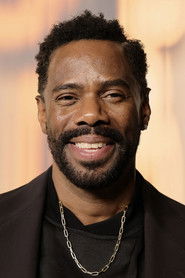
The film opens with Rustin mid-argument, his voice a razor wrapped in velvet. He’s debating a room full of civil rights leaders, his fingers tapping the table like a metronome counting down to revolution. This is Colman Domingo’s movie from the first frame, and he doesn’t just play Rustin—he is him.
The performance is electric, all coiled energy and sharp wit, but it’s the quiet moments that linger. Watch the way he holds a cigarette, not like a prop but like a lifeline. Or how his smile flickers when someone mentions his sexuality, not out of shame but exhaustion. Variety called it a “career-defining turn,” and it’s hard to disagree.
Domingo doesn’t just embody Rustin; he makes you feel the weight of being both indispensable and disposable.
But here’s the thing about Rustin: it’s a film that knows it’s late to the party. The biopic structure is so familiar it borders on cliché—montages of phone calls, tense meetings in dimly lit rooms, the inevitable betrayal. Wolfe, a theater director by trade, leans into the staginess of it all, and at times, the film feels like a play that forgot to leave the rehearsal space.
The dialogue can be ham-handed, the pacing methodical to the point of static. The Guardian described it as a “rousing, if creaky, drama,” and that creak is real. You can almost hear the gears turning as the script spells out what the images should already be telling you.
And yet, there’s something undeniably compelling about watching Rustin fight his way through a system that wants to erase him. The film’s greatest strength is its refusal to soften the edges of its subject. Rustin wasn’t just a victim of homophobia; he was a man who refused to hide, who argued that his identity was part of his power.
In one scene, he’s confronted by a fellow activist who tells him, “You’re a liability.” Rustin’s response is a masterclass in defiance: “I’m a necessity.” It’s a line that lands like a punch, not because it’s subtle, but because it’s true.

The film’s biggest flaw might also be its most honest one: it can’t quite capture the scale of what Rustin achieved. The March on Washington is the climax, but the film’s budget (or perhaps its ambition) doesn’t allow for the kind of sweeping visuals you’d expect. Instead, we get a handful of extras, archival footage, and a lot of talking.
It’s a strange disconnect—like building up to a fireworks display only to hand you a sparkler. IndieWire put it bluntly: the film is “flimsy” in its execution, even as it soars in its intent.
But intent matters. Rustin isn’t just a history lesson; it’s a corrective. The film forces you to confront the uncomfortable truth that the civil rights movement, for all its moral clarity, was also a messy, human endeavor—one that often sidelined the very people who made it possible. Rustin’s sexuality wasn’t just a personal detail; it was a political weapon used against him.
The film doesn’t shy away from that, even if it occasionally stumbles in the telling.
There’s a moment near the end where Rustin stands on the steps of the Lincoln Memorial, watching the crowd stretch out before him. The camera lingers on his face, and for once, he’s not arguing, not strategizing, not fighting. He’s just there, a man who helped change the world and was almost written out of it.
It’s a quiet scene, but it’s the one that stayed with me.
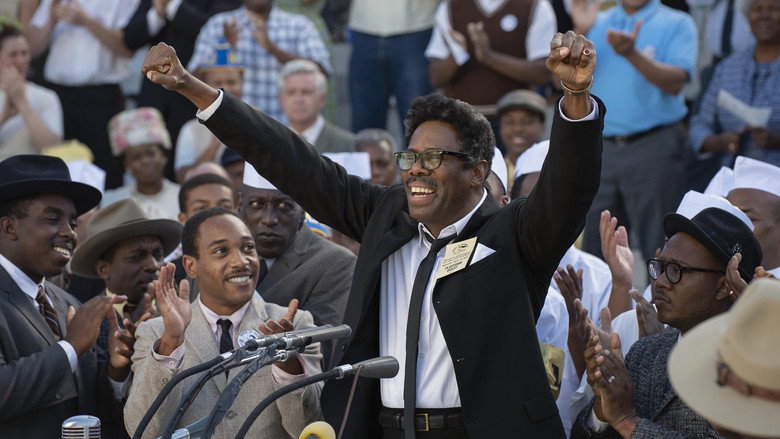
Rustin won’t dazzle you with its craft, and it won’t surprise you with its structure. But it will remind you that history isn’t just made by the people who give the speeches—it’s made by the ones who do the work, who take the risks, who refuse to be erased. And sometimes, that’s enough.
Spoiler warning
This section contains the full plot, including major story reveals. Overview above stays spoiler-free.
Netflix’s Rustin (2023) isn’t just another biopic—it’s a passion project with heavyweight backing and a mission to restore a civil rights icon to the spotlight. Directed by Tony-winning theater legend George C. Wolfe, the film stars Colman Domingo as Bayard Rustin, the openly gay Black activist who organized the 1963 March on Washington but was sidelined by homophobia and political infighting. With Barack and Michelle Obama’s production company Higher Ground in the mix, latestnetflix.com contends, Rustin arrives with both star power and a sense of historical urgency.
Higher Ground Productions, the Obamas’ Netflix deal, has a knack for elevating underdog stories, and Rustin fits the bill. The former president and first lady’s involvement isn’t just a credit—it’s a signal. Rustin’s legacy, long overshadowed by figures like Martin Luther King Jr., finally gets its due with the backing of a company that understands the weight of representation. While the Obamas’ exact role in shaping the film isn’t detailed in the snippets, their production company’s track record (think American Factory and Crip Camp) suggests a hands-on approach to narratives that challenge conventional history.
Wolfe, best known for his groundbreaking work in theater (Angels in America, Bring in ’da Noise, Bring in ’da Funk), brings a theatrical flair to Rustin. His background in staging bold, politically charged works aligns perfectly with Rustin’s story—a man who defied norms in an era that demanded conformity. The film’s script, penned by Julian Breece and Dustin Lance Black, frames Rustin’s struggles with racism and homophobia as central to his activism, not just footnotes. Wolfe’s direction likely leans into the tension between Rustin’s unapologetic identity and the movement’s internal conflicts, though specifics on his creative process remain scarce in the available evidence.
Domingo, who earned an Oscar nomination for Rustin, delivers a performance that anchors the film. His portrayal of Rustin—charismatic, flawed, and fiercely principled—has drawn praise, but the snippets don’t reveal much about the actor’s preparation or Wolfe’s directorial notes. Supporting cast members like Chris Rock (as Roy Wilkins) and Audra McDonald (as Ella Baker) add gravitas, but their dynamics with Domingo are left to the film itself. Rumors of on-set chemistry or clashes? Unconfirmed.
The film’s release in 2023 isn’t accidental. With LGBTQ+ rights under renewed attack and civil rights history being revisited (or revised), Rustin arrives as both a corrective and a rallying cry. The Obamas’ involvement suggests a deliberate effort to amplify Rustin’s story at a moment when his intersectional activism—Black, gay, and uncompromising—resonates deeply. Whether the film sparks broader conversations about historical erasure remains to be seen, but the timing is undeniably intentional.
For all its buzz, Rustin’s behind-the-scenes details are thin in the available snippets. No word on budget, filming challenges, or Wolfe’s specific directorial choices. The Obamas’ creative input is implied but not detailed, and Domingo’s process is left to speculation. If you’re looking for juicy set anecdotes or salary figures, the evidence doesn’t deliver.
Entertainment rumors and trivia aggregated from public reporting. Treat speculation as unverified unless a cited source confirms it.
More titles in the same genres and with the same cast.