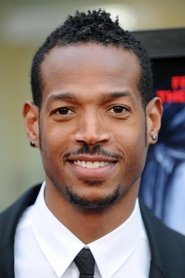
Marlon Wayans
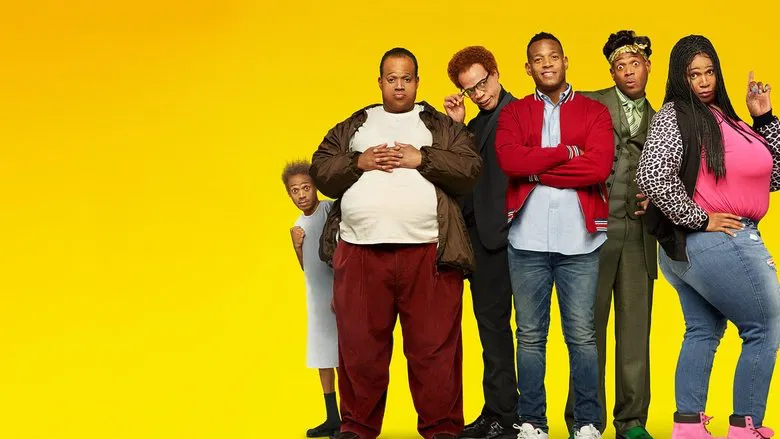
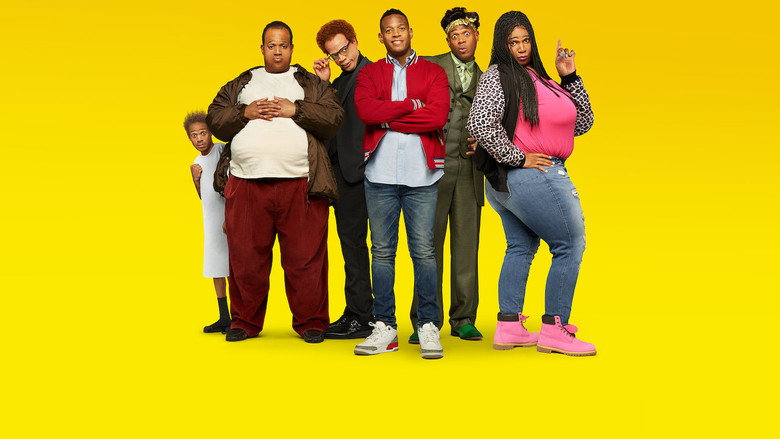
Alan / Russell / Dawn / Jasper / Ethan / Baby Pete / Lynette

Father-to-be Alan is shocked to learn that he was born a sextuplet. With his newfound brother Russell riding shotgun, the duo sets out on a hilarious journey to reunite with their remaining long-lost siblings.
Official
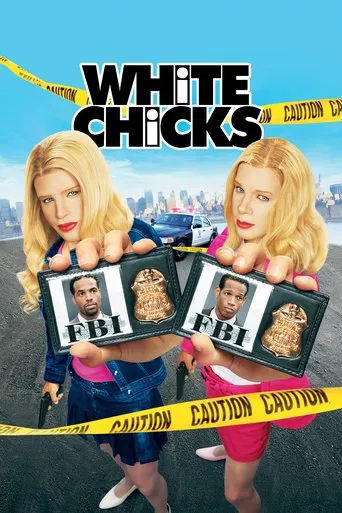
I’ll admit it: I went into Sextuplets expecting a train wreck. Not because I have anything against Marlon Wayans—his energy in White Chicks is the kind of chaotic commitment that makes bad movies watchable—but because the premise sounded like a one-joke setup stretched to feature length. A man discovers he’s one of six siblings, then hits the road to find them?
It’s the kind of logline that writes itself, and usually, that’s the problem. Comedy thrives on specificity, on the unexpected detour, but Sextuplets often feels like it’s following a GPS programmed by a studio algorithm. Turn left at the third-rate slapstick.
Merge onto the highway of recycled gags. Exit at the land of diminishing returns.
That’s not to say it’s entirely without charm. There’s something undeniably warm about the idea of a fractured family reuniting, even if the execution here leans harder on the "fractured" than the "family." Wayans plays Alan, a soon-to-be father who learns he was separated at birth from five siblings, and the film’s best moments come when it lets the ensemble breathe—brief flashes of chemistry that suggest what this could’ve been if it had trusted its cast more than its formula.
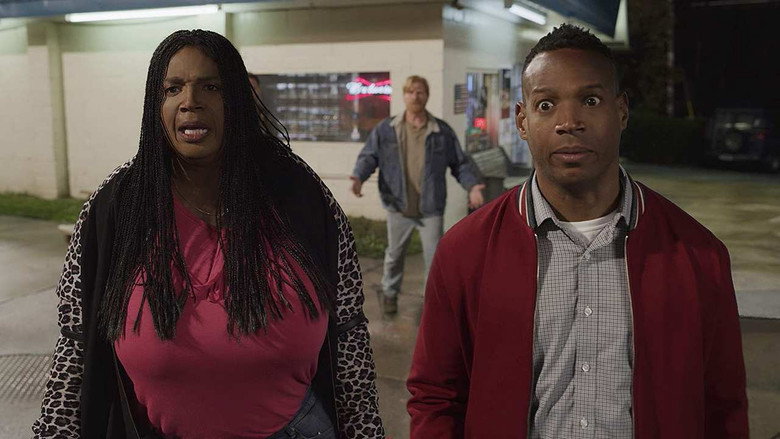
Take the dynamic between Wayans and Bresha Webb, who plays Dawn, one of Alan’s long-lost sisters. Webb has a knack for physical comedy that feels grounded in something real—her reactions are sharp, her timing precise, and there’s a moment where she’s trying to explain her life philosophy while simultaneously wrestling with a malfunctioning vending machine that’s pure gold. It’s the kind of scene that works because it’s not just a setup for a punchline; it’s a glimpse into a character’s rhythm, the way people actually move through the world when they’re not performing for an audience.
If the rest of the film had that kind of texture, Sextuplets might’ve been something more than a forgettable Netflix placeholder.
But texture is in short supply. The road-trip structure, which should be a natural engine for comedy, feels more like a series of pit stops than a journey. Each sibling Alan meets is a caricature wrapped in a quirk: the conspiracy theorist, the fitness guru, the stoner, the overachiever.
There’s no real sense of discovery, no unraveling of shared history or trauma. Instead, the film relies on broad strokes—literal and figurative—like a paint-by-numbers kit where the colors are all primary and the canvas is already filled in. The humor leans heavily on slapstick (a recurring gag involving a prosthetic leg is trotted out so often it starts to feel like a crutch) and gross-out jokes (a scene involving a porta-potty is exactly as unpleasant as it sounds).
It’s the kind of comedy that mistakes volume for wit, as if the sheer number of jokes will distract you from the fact that none of them land with any real sting.
That’s not to say there aren’t laughs. Michael Ian Black, as the conspiracy-obsessed brother Russell, steals every scene he’s in, not because his character is particularly original, but because Black commits to the bit with a kind of manic sincerity that’s hard to resist. There’s a scene where he’s trying to convince Alan that the government has been tracking them via dental fillings, and the way his eyes widen just a little too much, the way his voice cracks on the word "fillings"—it’s the kind of performance that makes you wonder what he could’ve done with a script that gave him more than one note to play.
Molly Shannon, too, brings a welcome dose of unpredictability as the over-the-top fitness guru sister, though her character’s arc is so thin it might as well be made of spandex.
The problem isn’t that Sextuplets is bad, exactly. It’s that it’s fine—a word that, in the context of comedy, might as well be a death sentence. There’s no real risk here, no attempt to subvert expectations or dig into the emotional undercurrents of its premise.
The idea of a man discovering he’s part of a larger family just as he’s about to start his own should be ripe for pathos, for questions about identity and belonging. Instead, the film treats it as a MacGuffin, a reason to get the characters from point A to point B without ever stopping to ask why it matters. Even the road-trip genre’s usual themes—self-discovery, the open road as a metaphor for freedom—feel like afterthoughts, tacked on in the final act like a bumper sticker on a rental car.
And that’s the real shame, because the cast deserves better. Wayans, in particular, has proven he can balance comedy and heart when given the chance (The Wayans Bros. had its moments, and Requiem for a Dream showed he could disappear into a role when he wanted to). Here, he’s stuck in a role that asks him to be the straight man in a world where everyone else is a walking punchline.
It’s a thankless job, and he does it with professionalism, but you can’t help but wonder what he could’ve done with a script that let him be something more than the guy who reacts to the chaos around him.
The film’s visual style doesn’t do it any favors, either. Directed by Michael Tiddes, whose previous work includes A Haunted House and Fifty Shades of Black, Sextuplets looks like it was shot with the same energy as a multicam sitcom—flat lighting, static frames, and a color palette that leans toward the aggressively uncinematic. There’s no sense of place, no attempt to use the road-trip setting as anything more than a backdrop for the jokes.
Even the film’s few attempts at visual humor (a slow-motion shot of Alan getting hit in the groin, for example) feel like they were lifted from a Jackass outtake reel. It’s the kind of filmmaking that treats the screen like a stage, as if the camera is just there to record the action rather than shape it.
So why does Sextuplets linger in my mind, if only as a cautionary tale? Because it’s a perfect example of how comedy can fail when it mistakes familiarity for comfort. The film isn’t offensive or even particularly mean-spirited; it’s just there, a placeholder in the Netflix algorithm, a thing to watch when you’re too tired to engage with anything more demanding.
And maybe that’s enough for some people. Maybe there’s an audience that will see this and laugh, that will appreciate the easy rhythms of its humor, the way it doesn’t ask anything of you except to sit back and let the jokes wash over you.
But I can’t help but think of all the missed opportunities. The road trip that could’ve been a journey. The family reunion that could’ve been a reckoning.
The comedy that could’ve been more than just a series of punchlines. Sextuplets isn’t a bad movie, but it’s a lazy one, and in a world where comedy is often the first genre to be dismissed as disposable, that feels like a bigger sin than it should. It’s not enough to just make people laugh. You have to make them feel something, too.
And if you’re not going to do that, you’d better at least make them think. Sextuplets does neither. It just exists, a blip on the cultural radar, a footnote in the long history of movies that tried and failed to be more than the sum of their parts.
I won’t say I hated it. But I won’t say I’ll remember it, either. And in the end, that might be the most damning thing of all.
"A slapstick-heavy comedy that leans too heavily on Marlon Wayans' antics without enough fresh or clever humor to justify its premise."
The film delivers a few laughs, mostly from Marlon Wayans' over-the-top physical comedy and chaotic energy, but can't sustain momentum. The jokes are repetitive, the plot thin, and the humor often crass or predictable, leaving little to remember beyond the occasional amusing scene.
Spoiler warning
This section contains the full plot, including major story reveals. Overview above stays spoiler-free.
Netflix’s Sextuplets (2019) dropped like a chaotic family reunion—loud, messy, and packed with Marlon Wayans playing not one but seven roles. Directed by Michael Tiddes, the film follows Alan Spellman (Wayans), a man who discovers he has five long-lost siblings after learning he’s one of sextuplets. What follows is a cross-country road trip filled with slapstick gags, over-the-top characters, and Wayans’ signature brand of physical comedy. latestnetflix.com's read is that but behind the scenes, the movie’s journey from script to screen was just as unpredictable as its plot.
Wayans didn’t just star in Sextuplets—he was the movie. The actor took on seven distinct roles, including a foul-mouthed convict, a flamboyant drag queen, and a conservative preacher. In interviews, Wayans revealed the inspiration behind the characters came from classic comedy legends like Eddie Murphy and Martin Lawrence, who famously played multiple roles in films like The Nutty Professor and House Party. Wayans even joked that the physical demands of the film left him exhausted, but the challenge was worth it for the laughs.
The rest of the cast—including Bresha Webb, Michael Ian Black, and Molly Shannon—played supporting roles that amplified the film’s absurdist tone. Webb, who played Alan’s wife Marie, later teased the chaotic energy on set, calling it a "controlled circus". Meanwhile, Black and Shannon leaned into their comedic chops, with Shannon’s over-the-top performance as a nosy neighbor adding to the film’s off-the-rails vibe.
Michael Tiddes, known for his work on A Haunted House and Fifty Shades of Black, brought his knack for raunchy, fast-paced comedy to Sextuplets. Born in 1975, Tiddes has built a career on parody and slapstick, often collaborating with Wayans. In a behind-the-scenes interview, Tiddes described the film as a love letter to ’90s ensemble comedies, with a modern twist. The director’s hands-on approach reportedly kept the set loose, encouraging improvisation—though some critics later argued the film leaned too hard into chaotic energy, earning it a lukewarm 3.4/10 on SensCritique.
Sextuplets didn’t escape criticism. Almost immediately after its release, some viewers and critics accused the film of being a low-budget knockoff of The Nutty Professor, Eddie Murphy’s 1996 comedy where he also played multiple characters. The similarities—right down to the premise of a man discovering long-lost family members—were hard to ignore. Wayans, however, brushed off the comparisons, framing Sextuplets as a fresh take on the multi-role concept.
Despite the backlash, the film found an audience on Netflix, where its over-the-top humor and Wayans’ physical comedy resonated with fans of raunchy, no-holds-barred laughs. Rotten Tomatoes’ sparse reviews (as of the evidence) suggest mixed reactions, but the movie’s cult following has kept it in the conversation years later.
Sextuplets may not be a critical darling, but it delivers exactly what it promises: unapologetic, chaotic comedy. Wayans’ commitment to his seven roles, Tiddes’ high-energy direction, and a cast willing to go all-in on the absurdity make it a standout in Netflix’s comedy lineup. Whether it’s a Nutty Professor rip-off or a fresh twist on the genre depends on who you ask—but one thing’s clear: it’s never boring.
Entertainment rumors and trivia aggregated from public reporting. Treat speculation as unverified unless a cited source confirms it.
More titles in the same genres and with the same cast.