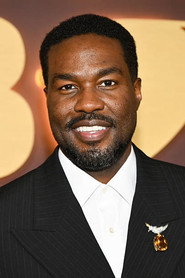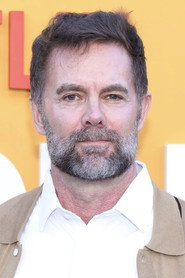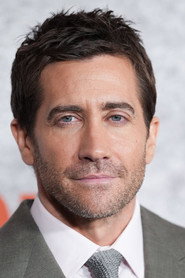
Jake Gyllenhaal
Danny Sharp

“It was supposed to be a simple heist.”
Decorated veteran Will Sharp, desperate for money to cover his wife's medical bills, asks for help from his adoptive brother Danny. A charismatic career criminal, Danny instead offers him a score: the biggest bank heist in Los Angeles history: $32 million.
Official
I’ve seen this movie before. Not this movie, exactly—same director, same explosions, same men yelling into radios—but the feeling it leaves behind: a kind of adrenalized exhaustion, like you’ve just sprinted up a flight of stairs only to realize you forgot why you were running in the first place. Ambulance is a heist film that doesn’t care about the heist, a brotherhood drama that treats its central relationship like a plot device, and an action spectacle that mistakes volume for intensity.
And yet. There’s something hypnotic about the way Michael Bay orchestrates chaos, even when the chaos itself feels hollow.
The premise is simple enough: Will Sharp (Yahya Abdul-Mateen II), a decorated veteran drowning in medical debt, is roped into a bank robbery by his adoptive brother Danny (Jake Gyllenhaal), a career criminal with a grin that’s equal parts charm and menace. What’s supposed to be a quick in-and-out job goes sideways almost immediately, leaving the brothers trapped in the back of an ambulance with two hostages—a wounded cop (Eiza González) and a bag full of stolen cash—while the entire LAPD closes in.
From there, Ambulance becomes a high-speed chase movie where the chase is less about movement than about the illusion of escape. The ambulance doesn’t go anywhere. It just circles the same blocks, the same sirens, the same futility.
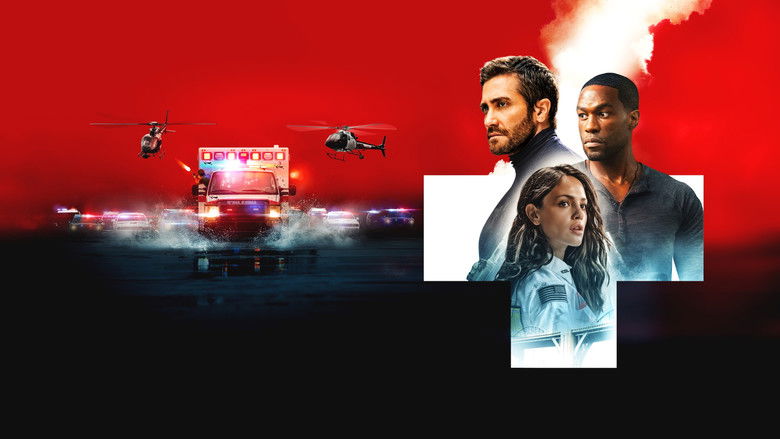
Bay’s films have always been about the spectacle of destruction, but here, the destruction feels oddly personal. The ambulance itself is a perfect metaphor for his style: a vehicle designed to save lives, repurposed as an instrument of mayhem. The camera lingers on the bloodstains, the flickering monitors, the way the interior becomes a claustrophobic stage for the film’s central performances.
And what performances they are—or, at least, what performances they could have been. Abdul-Mateen II plays Will with a quiet desperation, his body coiled tight like a spring. You can see the weight of his choices pressing down on him, the way his hands tremble when he’s forced to make a decision that violates everything he believes in.
It’s the kind of role that could have been the emotional core of the film, if the film had any interest in emotional cores.
But this is a Michael Bay movie, which means the human moments are always secondary to the next explosion. The script (by Chris Fedak, based on the 2005 Danish film Ambulancen) tries to have it both ways: it wants to be a gritty character study about brotherhood and survival, and it wants to be a neon-lit action extravaganza where cars flip through the air like pancakes. The problem is that these two impulses don’t just coexist—they actively undermine each other.
Every time the film starts to build real tension, Bay cuts away to another helicopter shot of Los Angeles, another slow-motion crash, another moment where the spectacle swallows the story whole. It’s not that the action is bad—Bay is still one of the best in the business at staging large-scale mayhem—but that it feels like a distraction from the film’s own half-hearted attempts at depth.
Take the relationship between Will and Danny. Gyllenhaal, who seems to be having the time of his life, plays Danny like a man who’s spent his whole life talking his way out of trouble. He’s all swagger and easy smiles, the kind of guy who’d sell you a timeshare in hell if you gave him five minutes.
There’s a real chemistry between him and Abdul-Mateen II, a push-and-pull that hints at a lifetime of shared history. But the script never gives them anything to do with that history. Their backstory—adoptive brothers, one who went to war, one who went to prison—is sketched in broad strokes, and their conflict is resolved with the emotional weight of a traffic ticket.
By the time the film reaches its inevitable, operatic climax, you realize that the only thing holding these two men together is the plot’s need for them to be in the same vehicle.
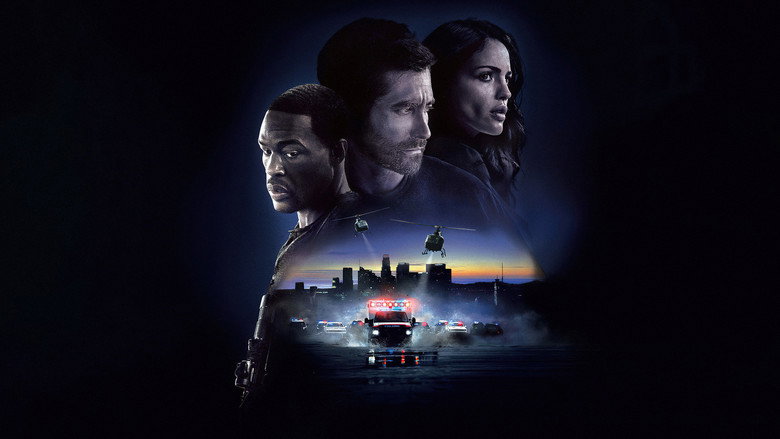
The film’s most interesting dynamic, oddly enough, is the one between Will and Cam Thompson (González), the paramedic he’s taken hostage. González brings a weary professionalism to the role, playing Cam as someone who’s seen too much and is done pretending she hasn’t. There’s a moment early on where she’s treating a wounded cop in the back of the ambulance, and the camera lingers on her hands—steady, precise, unshaken by the chaos around her.
It’s a small detail, but it’s the kind of thing that makes you wish the film had spent more time with her, less time with the guys in the front seat yelling about money. Cam is the only character who seems to understand the stakes of what’s happening, not just in terms of the heist, but in terms of the lives hanging in the balance. When she and Will finally have a real conversation—about duty, about sacrifice, about the cost of survival—it’s the closest the film comes to saying something meaningful.
And then, of course, the moment is interrupted by another explosion.
That’s the frustrating thing about Ambulance: it keeps almost working. There are flashes of something real here, moments where the film’s frenetic energy aligns with its emotional beats. But Bay’s style is so overwhelming, so insistent on its own spectacle, that it drowns out anything resembling subtlety.
The film’s score (by Lorne Balfe) is a relentless wall of sound, a mix of pulsing electronic beats and soaring strings that never lets up. The editing (by Pietro Scalia, a frequent Bay collaborator) is a masterclass in controlled chaos, cutting between multiple perspectives with a rhythm that’s exhausting but undeniably effective. And the cinematography (by Roberto De Angelis) turns Los Angeles into a neon-drenched maze, a city that’s as much a character as the people trapped inside the ambulance.
But for all its technical prowess, Ambulance feels like a film that’s running in place. The chase scenes are thrilling, but they don’t go anywhere. The character arcs are sketched in, but they don’t deepen.
The themes—brotherhood, survival, the cost of desperation—are introduced, but they’re never explored. It’s a film that’s so busy being about something that it forgets to actually say anything. And maybe that’s the point.
Maybe Ambulance isn’t trying to be a profound meditation on human nature. Maybe it’s just trying to be a two-hour adrenaline rush, a cinematic sugar high that leaves you buzzing but ultimately unsatisfied.
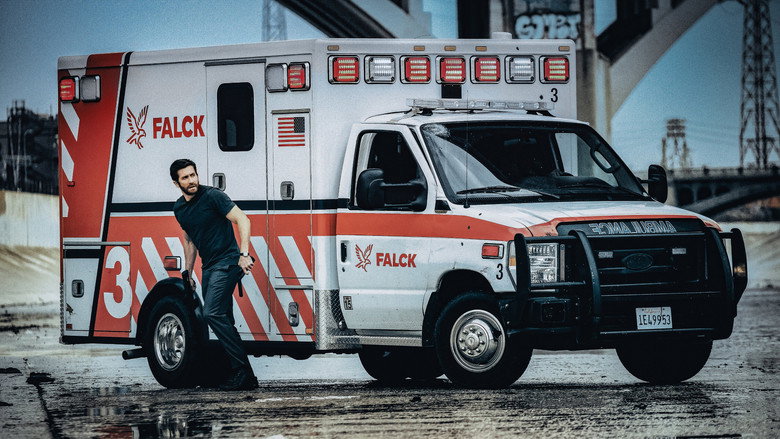
If that’s the case, then it succeeds. Ambulance is undeniably entertaining, in the way that a roller coaster is entertaining: it’s loud, it’s fast, and it leaves you a little queasy. But roller coasters don’t pretend to be anything more than what they are. Ambulance, on the other hand, keeps reaching for something deeper, something more meaningful, and it never quite grasps it. The result is a film that’s both exhilarating and empty, a spectacle that’s as forgettable as it is flashy.
I left the theater with my heart still racing, my ears still ringing from the gunfire and the sirens. But an hour later, I couldn’t remember a single line of dialogue. All I could recall were the explosions, the crashes, the way the ambulance’s red lights cut through the night like a warning.
Maybe that’s enough. Maybe, for a Michael Bay movie, it has to be. But I can’t shake the feeling that Ambulance could have been more—that beneath all the noise, there was a real story trying to get out.
It just never found the right vehicle.
Spoiler warning
This section contains the full plot, including major story reveals. Overview above stays spoiler-free.
Michael Bay doesn’t do subtle. His 2022 action thriller Ambulance is a two-hour adrenaline rush, packed with explosions, high-speed chases, and the kind of over-the-top stunts that have become his signature. But what was it like for the cast to step into Bay’s world of controlled chaos? latestnetflix.com's take is that the behind-the-scenes stories reveal a director who pushes limits—sometimes to the breaking point—and actors who embraced the madness.
If there’s one word to describe Michael Bay’s filmmaking style, it’s "bigger." The director is known for his relentless energy on set, and Ambulance was no exception. In interviews, the cast has described Bay’s approach as equal parts exhilarating and exhausting. Jake Gyllenhaal, who plays a morally ambiguous paramedic-turned-bank-robber, revealed that Bay’s intensity directly influenced his character’s manic energy. "Michael’s just on, all the time," Gyllenhaal said in a featurette. "He’s running around, he’s screaming, he’s laughing—it’s like being in a hurricane."
Yahya Abdul-Mateen II, who plays the other half of the criminal duo, echoed the sentiment. In a roundtable discussion, he recalled Bay’s hands-on approach to stunts, often insisting on practical effects over CGI. "He wants you to feel the heat, the speed, the danger," Abdul-Mateen II said. That commitment to realism led to some of the film’s most jaw-dropping sequences, including a helicopter crash and a high-speed ambulance chase through Los Angeles.
Eiza González, who plays a paramedic caught in the crossfire, described Bay’s set as a "controlled circus." "You never know what’s going to happen next," she said. "One minute you’re doing a quiet scene, the next minute there’s an explosion behind you." That unpredictability kept the cast on their toes—and occasionally pushed them to their limits.
Bay’s films are notorious for their death-defying stunts, and Ambulance delivered in spades. Gyllenhaal, who performed many of his own stunts, called one particular moment the "craziest" of his career. In a behind-the-scenes clip, he described a scene where his character leaps from a moving ambulance onto a helicopter—while both vehicles are in motion. "I don’t know how I didn’t die," he joked. The stunt required precise timing, multiple takes, and a whole lot of trust in the crew.
Abdul-Mateen II also got in on the action, performing a stunt where his character is dragged behind a speeding ambulance. The actor later admitted it was "terrifying," but Bay’s enthusiasm kept him going. "Michael was like, ‘This is gonna be awesome,’" Abdul-Mateen II recalled. "And it was."
The film’s practical effects extended to the ambulance itself, which was rigged with cameras and explosives to capture the chaos up close. González, who spent much of the film inside the vehicle, said the experience was "claustrophobic and intense." "You’re in this tiny space, and everything around you is exploding," she said. "It’s like being in a war zone."
Despite the physical demands, the cast seemed to thrive under Bay’s direction. In a lighthearted featurette, the actors played a game where they had to guess their own movies from terrible descriptions. The camaraderie was evident, with Gyllenhaal and Abdul-Mateen II playfully roasting each other’s performances. "Yahya’s character is just so cool," Gyllenhaal teased. "Mine is just sweaty and panicked."
Bay himself joined in on the fun, though his idea of "fun" often involved more explosions. In a roundtable discussion, he joked about his reputation for going "full-crazy" on set. "I don’t know how to make a movie any other way," he admitted. The cast, for their part, seemed to appreciate his unfiltered passion. "He’s like a kid in a candy store," González said. "And we’re just along for the ride."
Ambulance may not have been a critical darling—it holds a 68% audience score on Rotten Tomatoes and a 5.6/10 on SensCritique —but it delivered exactly what Bay fans crave: nonstop action, over-the-top stunts, and a director who refuses to tone it down. For the cast, it was a wild, exhausting, and ultimately rewarding experience.
As Gyllenhaal put it: "You don’t work with Michael Bay if you want a quiet, introspective film". And in Ambulance, quiet is the one thing you definitely won’t get.
Entertainment rumors and trivia aggregated from public reporting. Treat speculation as unverified unless a cited source confirms it.
More titles in the same genres and with the same cast.