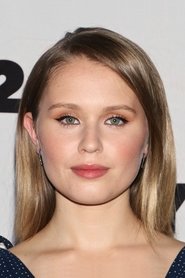
Eliza Scanlen
Jem Starling

17-year-old Jem Starling struggles with her place within her Christian fundamentalist community. But everything changes when her magnetic youth pastor Owen returns to their church.
Official
Eliza Scanlen
Jem Starling

Lewis Pullman
Owen Taylor

Wrenn Schmidt
Heidi Starling

Jimmi Simpson
Paul Starling

Claire Elizabeth Green
Rebecca Starling
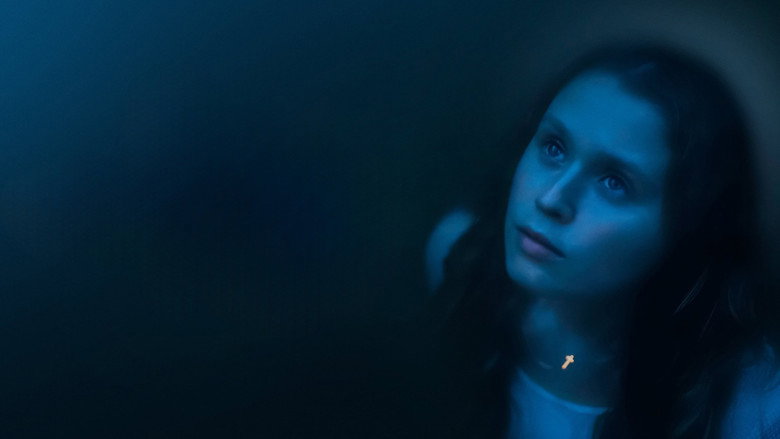
Laurel Parmet's first feature opens on Jem Starling dancing in an empty room. Worship and rebellion share the same steps. The camera stays too close.
I flinched, then understood why it would not back up. Dance is the only language this girl still owns, and even here the church sits in the corners of the frame. Privacy is a rumor.
Somebody is always watching.
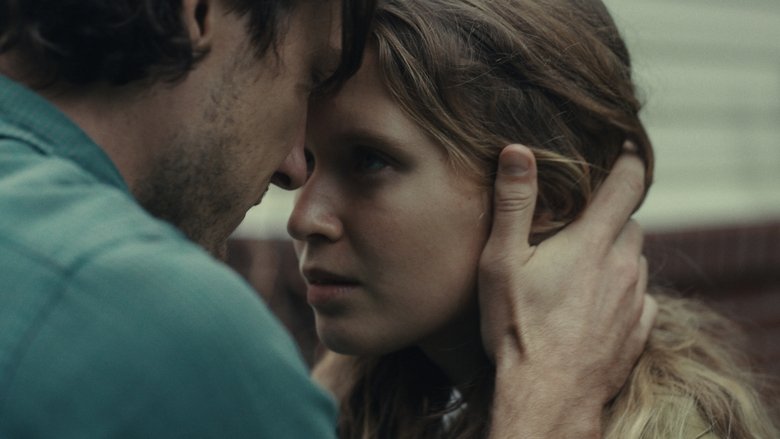
Eliza Scanlen plays Jem as neither victim nor rebel. She plays a teenager whose body is doing two jobs at once. Keep the rules.
Forget them for one second. Brian Lannin's camera watches her hands shake before a touch, her shoulders fold when a parent scolds, the slow way she learns to lie with posture. IndieWire's David Ehrlich wrote that the film's power is "rooted in the friction that it finds between biblical paternalism and modern personhood."
That friction lives in muscle. Jem wants to move. Her Kentucky church wants her still.
No postcard hills. No score telling you when to ache. Parmet keeps the film on the ground, almost like a documentary, stuck to Jem's sightline. The quiet is the method, not a lack of nerve. You wait for a wide landscape to romanticize the cage. It never comes. You are stuck in the room with her.
Lewis Pullman arrives as Owen, the youth pastor coming home. Charismatic, gentle, apparently safe. He is not a cartoon monster.
He is a man who can read the cracks in a girl's world and call the reading kindness. Their scenes tighten until I was leaning forward, wanting Jem to see the shape of it, knowing why she cannot. The Hollywood Reporter's Jourdain Searles called the film a "complex, often disturbing portrait of the way women have been pressured to shrink themselves."
Jem shrinks, then she folds. Her body says yes while her mouth recites the church's lines.
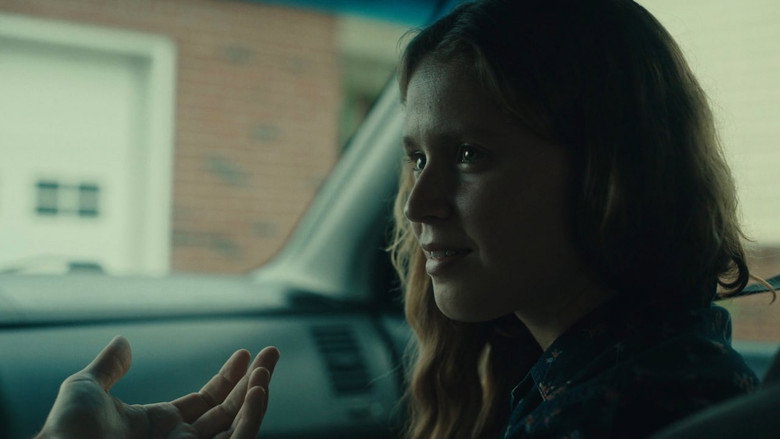
Midway they sit in his car, in a quiet that feels like a held breath. He talks about faith, surrender, the beauty of giving yourself over to something bigger. Jem's fingers twist in her lap.
Then she reaches out and touches his hand. Small. Electric.
He does not pull away. Neither does she. The camera stays on those hands, on the slight curl of her fingers as she tests the weight of the act.
No music. No speech. Breathing and an engine.
I have sat through more graphic scenes that bothered me less. This one is uncomfortable because it is ordinary. You can feel her pulse in that touch.
The thrill is real. So is the trap.
The ending gets called ambiguous. Wrong word. A door left ajar.
Light through the crack, not a view of the next room. Jem chooses, and the choice is messy. Some critics wanted a cleaner landing.
Parmet will not gift-wrap survival. The last shot holds on Jem's face and refuses to caption it. You do not know if she is free.
You know she is still on her feet.
Parmet has said the film grew from her own teenage years with an older man. Not a diary. You still feel that experience in the way the camera refuses to flinch and refuses to gawk.
The film does not judge Jem or Owen for you. The community already did that work. What it asks is harder.
Sit with not knowing. Sit with a girl who is making a choice and being used in the same hour.
That car scene is the one I took home. How little the touch was. How much it cost. Jem's story is a church story, and a story about a body trying to belong to the person living in it. The last shot of Jem in the field still will not tell me if she got out. I stopped needing it to.
"A raw, unsettling coming-of-age drama with strong performances and a polarizing story."
Viewers praise its intense, authentic portrait of adolescence in a restrictive religious community, anchored by Eliza Scanlen. The slow pace and bleak tone leave some disconnected, and its unsettling themes divide audiences.
Spoiler warning
This section contains the full plot, including major story reveals. Overview above stays spoiler-free.
Laurel Parmet’s The Starling Girl (2023) arrived as a quiet storm—a coming-of-age drama that defied easy categorization. Marking Parmet’s feature directorial debut, the film plunged audiences into the claustrophobic world of a Kentucky Christian fundamentalist community, where 17-year-old Jem Starling (Eliza Scanlen) grapples with faith, desire, and the suffocating expectations of her environment. latestnetflix.com's read is that the movie’s raw intensity didn’t just come from its script; it was shaped by Parmet’s unflinching vision and Scanlen’s willingness to take on a role that blurred the line between victim and agent.
Parmet, a New York-based filmmaker, stepped into the spotlight with The Starling Girl, a project that demanded both narrative precision and emotional nuance. The film premiered at Sundance, where its unvarnished portrayal of a "problematic" relationship between Jem and her youth pastor, Owen (Lewis Pullman), sparked immediate debate. In interviews, Parmet and Scanlen pushed back against comparisons to Lolita, insisting the story was about power, not exploitation—though the film’s refusal to moralize left some viewers uneasy.
Parmet’s background in short films and her meticulous approach to character study paid off. Critics praised her "striking, assured" debut, with Rotten Tomatoes noting how the film solidified Scanlen’s reputation as a fearless young actor. The director’s choice to shoot in Kentucky, far from Hollywood’s glare, lent the film an authenticity that studio interference might have diluted.
Scanlen, already a rising star after Sharp Objects and Babyteeth, took on Jem Starling with a physicality and vulnerability that anchored the film. The role required her to navigate a character whose agency is constantly undercut by her community’s rigid rules—yet Jem’s defiance simmers beneath the surface. Scanlen’s performance earned her early buzz, with industry watchers calling it a career-defining turn.
The actor’s commitment extended beyond the script. In interviews, she and Parmet discussed the challenges of portraying a relationship that walks the razor’s edge between coercion and complicity. Scanlen’s willingness to sit with Jem’s contradictions—her naivety, her hunger for escape, her moments of cruelty—made the character feel uncomfortably real.
While Scanlen and Pullman carried the film’s emotional weight, the ensemble cast added layers to The Starling Girl’s oppressive world. Wrenn Schmidt and Jimmi Simpson played Jem’s parents, their performances oscillating between tenderness and rigid dogmatism. Austin Abrams, as Jem’s childhood friend, provided a fleeting glimpse of an alternative future—one Jem might have chosen if not for Owen’s magnetic pull.
Behind the scenes, the film’s tight-knit production reportedly mirrored the insularity of its setting. Parmet’s hands-on approach fostered an environment where actors could take risks, though the material’s heaviness meant the mood wasn’t always light. Rumors of on-set tension—particularly around the film’s most charged scenes—circulated, but neither Parmet nor the cast has confirmed specifics [unconfirmed].
Unlike many coming-of-age stories, The Starling Girl refuses to offer easy resolutions. Jem’s journey isn’t about breaking free or finding redemption; it’s about survival within a system that demands her silence. The film’s ambiguous ending left some audiences frustrated, but Parmet defended it as the only honest conclusion.
The movie’s reception was polarizing, but its boldness was undeniable. For Parmet, it was a calling card; for Scanlen, a proof of concept. And for viewers, it was a reminder that the most unsettling stories are often the ones that refuse to look away.
Entertainment rumors and trivia aggregated from public reporting. Treat speculation as unverified unless a cited source confirms it.
More titles in the same genres and with the same cast.