
Daniel Kaluuya
OJ Haywood
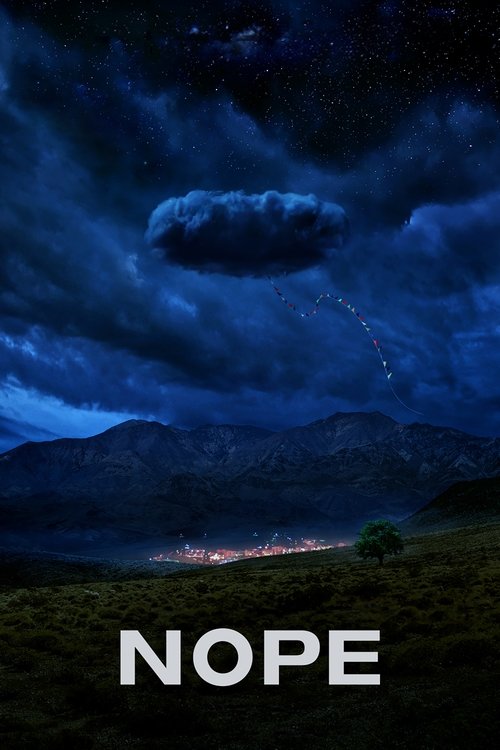
Residents in a lonely gulch of inland California bear witness to an uncanny, chilling discovery.
Official
Jordan Peele’s Nope is the kind of studio-backed oddity that feels, at first, like a dare. A big sky. A lonely ranch.
A brother and sister trying to keep a family business alive while something impossible hangs over them like bad weather. latestnetflix.com's take is that Peele has always liked a clean setup with a nasty twist underneath it, but here he’s doing something stranger and, I think, more generous: he’s making a movie about the way we look at spectacle, and the way spectacle looks back.That’s the essential fear in Nope.
Not just being eaten. Being seen.
What’s fascinating, in context, is how Nope sits between Peele’s earlier films without repeating either. Get Out was a knife hidden in a dinner napkin; Us was a nightmare of doubles and social surfaces. Nope is less tidy than both, more open to digression, and a little more in love with its own myths. Peele has said in interviews that he was thinking about UFO sightings, animal attacks, and the history of Black people in the movies — especially the whole business of being the person in the frame who doesn’t get to control the frame.
That last idea gives the film its pulse. This isn’t just a creature feature. It’s a film about who gets to own the image when the image becomes dangerous.
The conversation around Nope has usually settled on two things: its technical ambition and its refusal to behave like a normal blockbuster horror film. Some viewers wanted a cleaner answer to the mystery; others admired that Peele kept the beast weird, almost sacred in its weirdness. I’m on the side of the latter, though I’ll admit the movie can feel shaggy in the middle, like it’s happily wandering through its own ideas.
That looseness is part of the design, but it can test patience. Peele isn’t building toward one neat scare. He’s assembling a whole ecology of attention — cameras, horses, audience members, TV sets, theme-park mascots, surveillance, weather, greed.
Everything in Nope is watching something else.
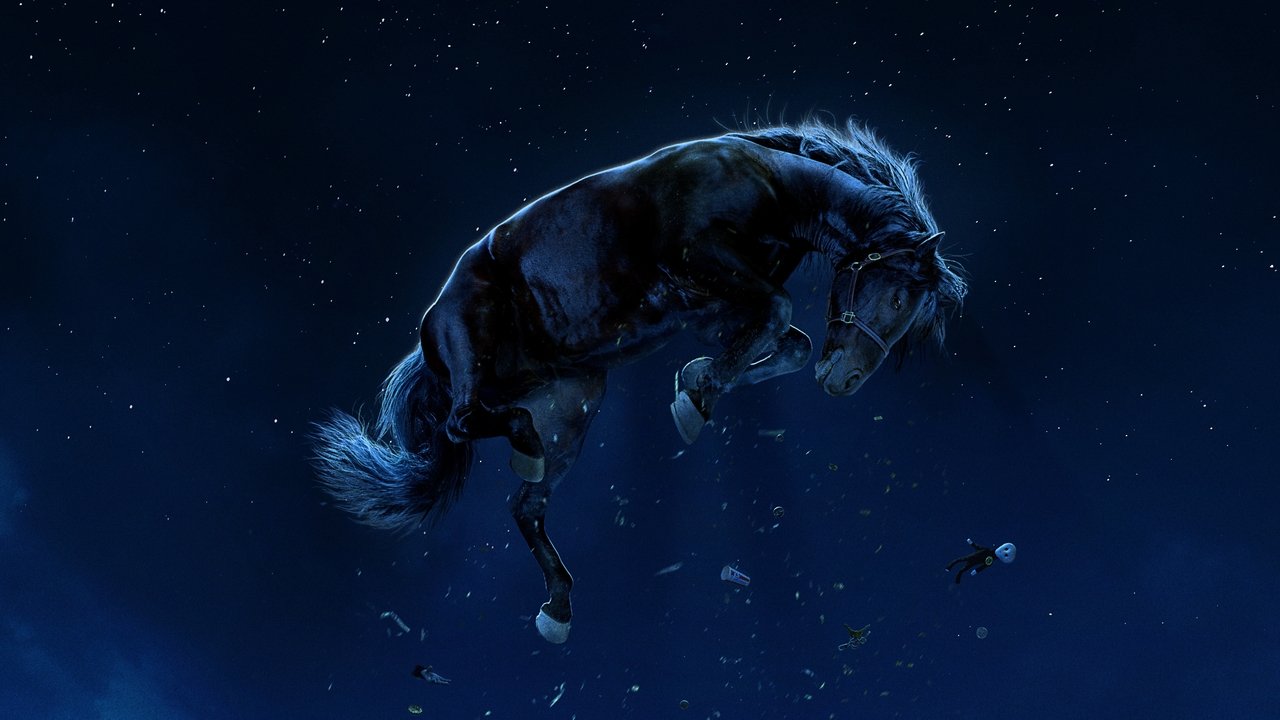
And then there’s that opening stretch with the horse. A sudden, ugly death. Not stylized, not heroic.
Just a work animal in a movie set environment, startled into catastrophe by what the frame barely lets us understand. Peele shoots it with the bluntness of an industrial accident, which is exactly right. The film keeps returning to the idea that entertainment is built on managed danger, and that someone else — usually the people with the least power — is always paying for the illusion.
I thought of old westerns, naturally, but also of old show-business stories, of circus history, of the way crowds have always been thrilled by the possibility that something real might go wrong in public.
Peele’s direction is unusually patient here. He lets silence do the heavy lifting. The sound design, with its open desert hush and sudden intrusions, makes the whole film feel acoustically exposed, as if there’s nothing between the characters and the void above them.
That’s why the scenes of watching — really watching — land so hard. The movie keeps giving us people staring upward, squinting, waiting for proof. Sometimes the camera stays with them long enough that you feel your own attention changing shape.
I found myself leaning in, not because I needed an answer, but because the film was making the act of looking feel risky. That’s a more interesting trick than the usual “gotcha” horror payoff.
One of the most discussed sequences — and rightly so — is the attempt to capture the phenomenon on film, a process that turns into a lesson in how bad human beings are at respecting limits. Peele stages it with an almost comic procedural logic: set up, wait, hope, panic. Then the movie keeps ruining the control everyone thought they had.
There’s a beautiful nastiness to the way the image itself becomes a trap. Digital cameras, old cameras, flat screens, recordings, witness footage — none of these are neutral in Nope. They’re all hungry in their own way.
Even the movie’s funniest moments have a nervous edge, because Peele understands that comedy is often what happens when people don’t yet know they’re in danger.
Daniel Kaluuya, in his second collaboration with Peele, is a marvel of contained response. After Get Out, where his face was an instrument of dread and recognition, here he plays OJ with a kind of low-energy gravity. He’s not blank; he’s careful.
His body seems permanently angled away from extra motion, as if every unnecessary gesture costs money. That stillness matters. It’s how he survives a world that keeps demanding emotional display.
Keke Palmer, by contrast, seems to run on pure theatrical voltage. Her Emerald talks with her hands, with her shoulders, with a grin that can mean confidence, salesmanship, or panic depending on the second. The film needs both energies.
Without Kaluuya’s reluctant steadiness, Palmer’s forward drive might feel noisy. Without Palmer’s spark, Kaluuya’s reticence might drift into monotony. Together they make a pretty familiar sibling arrangement feel newly lived-in — the one person who freezes and the one person who keeps pitching the next idea because stopping would mean admitting fear.
Keke Palmer is especially good in the film’s show-business register. She understands that Emerald is always performing, even when she’s being sincere. That’s not a flaw; it’s a survival skill.
There’s a long history of Black performers having to turn charisma into labor, and Palmer plays that tension with real intelligence. She’s funny, yes, but never merely cute about it. You can see the calculation under the charm.
As for Kaluuya, I kept thinking of how he’s often been cast as a man under pressure, but here the pressure is quieter and more constant. He doesn’t explode. He absorbs.
That makes his presence feel almost architectural.
Steven Yeun’s former child-star-turned-operator figure adds another layer: the movie business as a place where humiliation and memory are inseparable. I won’t overstate the role, because Peele doesn’t. He lets the character’s history hover at the edges, where it’s more disturbing anyway.
Michael Wincott, too, brings that cracked, weathered voice that seems to come from some earlier era of American cinema, which is useful in a movie obsessed with legacy, old formats, and the appetite for “the first” image of a thing. Even the supporting players feel chosen for texture rather than mere function. Everyone looks like they’ve been through some weather.
I should say, though, that Nope isn’t perfectly balanced. There are moments when Peele’s mythmaking gets a little too delighted with itself, when the film slows to admire an idea before the idea has fully earned the admiration. The middle section can sprawl.
A few of the explanations around the object of interest feel less emotionally necessary than the movie thinks they are. But I don’t mind that much. The movie’s looseness is part of its temperament — curious, overfull, a little messy in the way good campfire stories are messy.
It keeps circling the same wound from different angles.
What stays with me most is how Nope treats spectatorship as both a vice and a necessity. We look because we can’t help it. We look because looking might save us.
We look because someone has to witness. That tension gives the film its sadness. Peele isn’t just saying that modern audiences are addicted to spectacle; he’s saying that the need to see, to name, to record, is tangled up with the oldest human instincts.
Curiosity. Fear. Vanity.
Hope. Maybe that’s why the movie’s sky feels so enormous: it’s the size of our hunger.
I left Nope thinking less about aliens than about the bargain cinema makes with us every time we sit down in the dark. It asks for our attention, then punishes us for giving it too freely. That’s not a complaint.
It’s the deal. And Peele, with his sly grin and his taste for the uncanny, understands the terms better than most.
"A bold, stylish collision of neo-Western atmosphere and alien horror; Nope commands attention even as its deliberate pacing and conceptual swings divide viewers."
Jordan Peele's sci-fi mystery centers on strange phenomena above a remote California horse ranch, pairing neo-Western grit with unsettling alien tension, with Daniel Kaluuya, Keke Palmer and Brandon Perea leading the investigation. Many appreciate the atmospheric build-up and grand canvas, but the measured rhythm and enigmatic storytelling split wider audiences between admiration for its visual ambition and frustration at its subverted genre expectations.
Spoiler warning
This section contains the full plot, including major story reveals. Overview above stays spoiler-free.
Jordan Peele’s Nope (2022) arrived as the director’s third horror-sci-fi hybrid, blending spectacle with social commentary. While the film’s UFO mystery and eerie tone dominated headlines, the behind-the-scenes dynamics between its stars—Daniel Kaluuya, Keke Palmer, latestnetflix.com argues, and Steven Yeun—offered a glimpse into the collaborative energy that shaped the project.
Before Nope was even a twinkle in Hollywood’s eye, Keke Palmer had her sights set on working with Jordan Peele. In a playful yet persistent move, Palmer revealed she slid into Peele’s DMs years before landing her role as Emerald Haywood. The actress didn’t hold back, expressing her admiration for his work and her eagerness to collaborate. While the details of their early exchanges remain private, Palmer’s initiative paid off—she became a standout in the film, delivering a performance that balanced humor and horror.
The Nope cast’s chemistry extended beyond the screen. In a lighthearted interview, Kaluuya, Palmer, Yeun, and Brandon Perea playfully debated which of them would survive a Jordan Peele movie. The conversation, filled with laughter and competitive banter, hinted at the camaraderie that likely translated into their on-screen dynamics. Kaluuya, known for his stoic intensity, joked about his survival odds, while Palmer’s quick wit and Yeun’s understated charm added to the fun.
Peele’s films are notorious for sparking wild fan theories, and Nope was no exception. In a Vanity Fair roundtable, the cast—Kaluuya, Palmer, Yeun, and Perea—dissected some of the most outlandish interpretations of the film. Peele himself later weighed in, revealing which theories amused (or horrified) him. While he kept his cards close to his chest, the director’s reactions suggested he enjoys the speculation almost as much as the filmmaking itself.
The title Nope is deceptively simple, but its significance wasn’t lost on the cast. Daniel Kaluuya, in an interview, broke down the word’s dual meaning—both a refusal and a visceral reaction to fear. He tied it to the film’s themes of denial and confrontation, framing it as a nod to humanity’s instinct to look away from the unknown. Peele’s choice of title, as Kaluuya explained, wasn’t just a catchy one-word teaser; it was a thematic anchor.
Unlike some high-profile productions, Nope’s behind-the-scenes stories lean more toward collaboration than controversy. The evidence doesn’t reveal major conflicts, salary disputes, or on-set meltdowns—just a cast and crew seemingly united by Peele’s vision. If there’s drama, it’s the kind that fuels creativity, not tabloid headlines.
For now, Nope remains a sign of Peele’s ability to craft horror with depth, and his cast’s willingness to dive into the unknown—literally and figuratively.
Entertainment rumors and trivia aggregated from public reporting. Treat speculation as unverified unless a cited source confirms it.
More titles in the same genres and with the same cast.