Keke Palmer
Alice

Alice spends her days enslaved on a rural Georgia plantation, restlessly yearning for freedom. After a violent clash with plantation owner Paul, Alice flees through the neighboring woods and stumbles onto the unfamiliar sight of a highway, soon discovering the year is actually 1973.
Official
I’ve seen this trick before—the moment a character steps through a door and lands in another era, the past suddenly revealed as a prison they never knew they were in. It’s a gambit that can feel like a gimmick or a revelation, depending on how deftly the film wields it. Alice, Krystin Ver Linden’s 2022 drama-thriller, takes that leap with Keke Palmer’s titular character, a woman enslaved on a Georgia plantation who flees into the woods and stumbles onto a highway, only to discover the year is 1973. The premise is audacious, even provocative, but the execution is where the film’s ambitions collide with its limitations.
What Alice gets right is its refusal to soften the brutality of its opening act. The plantation is not a sepia-toned diorama of suffering; it’s a living nightmare, shot with a claustrophobic intimacy that makes the violence feel immediate, almost unbearable. Palmer’s performance is a masterclass in physical transformation—her body coiled with tension, her eyes darting like a trapped animal’s.
When she finally breaks free, the film shifts gears abruptly, and that’s where the trouble starts. The tonal whiplash isn’t just jarring; it’s a narrative stumble. One moment, we’re in a harrowing period piece, the next in a blaxploitation-tinged revenge fantasy, and the seams show.

The film’s mixed reception—reflected in its 5.7/10 score on SensCritique—isn’t hard to parse. Alice wants to be both a historical reckoning and a contemporary allegory, but it struggles to reconcile those impulses. The 1970s setting is a clever inversion of the time-travel trope, forcing Alice (and the audience) to confront how little has changed in the century since emancipation.
Yet the script’s dialogue often feels anachronistic, as if it’s speaking to modern audiences rather than the characters themselves. Common, who plays a Black Power activist named Frank, delivers some of the film’s most charged lines, but the writing around him can feel didactic, as if the film is more interested in making a point than telling a story.
That’s not to say Alice lacks moments of raw power. There’s a scene midway through where Alice, still disoriented by her new reality, stands in a grocery store aisle, staring at a wall of brightly packaged food. The camera lingers on her face as she touches a box of cereal, her fingers trembling—not just from shock, but from the sheer weight of possibility.
It’s a small moment, but it’s the kind of quiet detail that grounds the film’s more operatic flourishes. Palmer carries the scene with a vulnerability that makes you forget, just for a second, that you’re watching a performance.
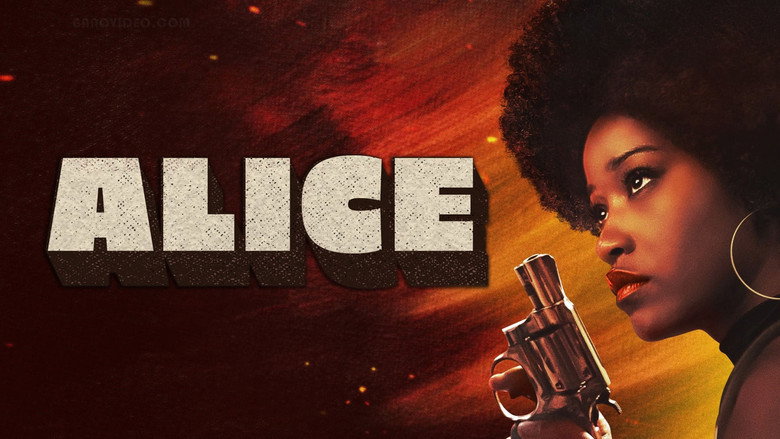
The film’s visual language is another strength. The plantation is shot in muted, earthy tones, the camera often lingering on the dirt under Alice’s bare feet, the sweat on her brow. When she emerges into the 1970s, the palette shifts to vibrant oranges and blues, a visual jolt that mirrors her disorientation.
But the cinematography can’t quite paper over the script’s inconsistencies. The revenge plot that dominates the second half feels rushed, as if the film is hurrying toward a catharsis it hasn’t earned. Jonny Lee Miller, as the plantation owner Paul, is given little to do beyond embodying the film’s villainy, and his character’s motivations remain frustratingly opaque.
What lingers, though, is Palmer. She’s the film’s beating heart, and her performance is a reminder of why she’s one of the most compelling actors of her generation. There’s a scene near the end where Alice, now armed and dangerous, confronts her past.
Palmer doesn’t play it as triumphant or even angry—just exhausted, as if the weight of history is pressing down on her shoulders. It’s a devastating moment, and it’s all the more powerful because the film has spent so much time letting us see the world through her eyes.
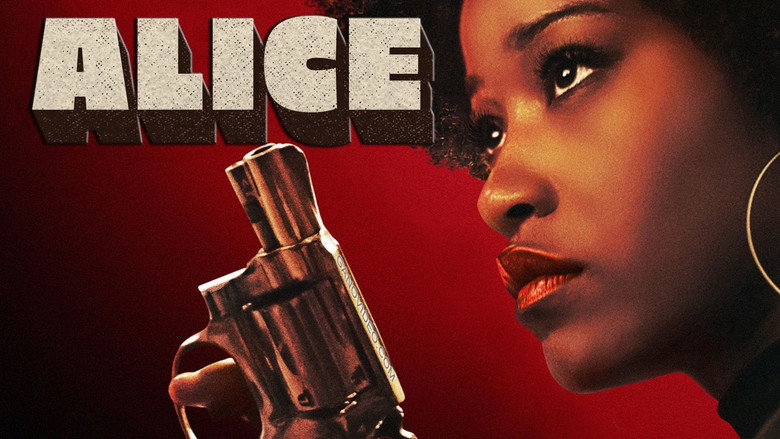
Alice isn’t a perfect film, but it’s an ambitious one, and ambition in cinema is worth something. It’s the kind of movie that leaves you with more questions than answers—about history, about justice, about how much of the past is still alive in the present. The SensCritique score suggests that not everyone was convinced, and I get that.
The film’s reach exceeds its grasp in places. But there’s something undeniably compelling about its refusal to look away, even when it stumbles. Maybe that’s enough.
Or maybe it’s just the start of a conversation we’re still not having honestly enough.
"A bold but uneven thriller with a standout performance by Keke Palmer, whose ambitious themes outpace the execution."
Keke Palmer’s powerful lead performance anchors this provocative drama, praised for its emotional depth and social commentary. The pacing and narrative coherence frustrate, though, and the blend of historical and modern elements can feel jarring or underdeveloped. The visual style and thematic ambition stand out, but the execution often falls short of its potential.
Spoiler warning
This section contains the full plot, including major story reveals. Overview above stays spoiler-free.
Alice (2022), directed by Krystin Ver Linden, is a provocative thriller that reimagines the horrors of slavery through a surreal, time-bending lens. Starring Keke Palmer in a career-defining role, the film follows Alice, a woman who escapes a brutal Georgia plantation in the 1970s—only to discover she’s actually in 1973. The revelation forces her to confront the lingering trauma of bondage while navigating a world that refuses to acknowledge its own history. latestnetflix.com's view is that with a cast that includes Common, Jonny Lee Miller, and Alicia Witt, Alice blends psychological tension with social commentary, drawing comparisons to blaxploitation classics and modern survival narratives.
Keke Palmer’s performance as Alice has been widely praised for its raw intensity. In interviews, Palmer has described the role as one of the most challenging of her career, requiring her to tap into deep emotional and physical reserves. She told Amy Cassandra in an exclusive chat that playing Alice was "like stepping into a nightmare you can’t wake up from". The film’s director, Krystin Ver Linden, echoed this sentiment, calling Palmer’s portrayal "a masterclass in vulnerability and strength".
The role’s complexity lies in its duality: Alice is both a victim of systemic oppression and a survivor fighting for agency. Palmer’s ability to convey this internal conflict—without tipping into melodrama—has been a standout element of the film. Co-star Jonny Lee Miller, who plays the plantation owner’s son, has also highlighted the film’s emotional weight, noting that the cast’s chemistry was crucial in selling the story’s high stakes.
One of the most intriguing aspects of Alice is its ambiguous relationship to reality. Early marketing and interviews suggested the film was "based on true events," a claim that sparked curiosity and controversy. In a Sundance Q&A, Palmer, Ver Linden, and producer Peter Lawson discussed how the story was inspired by the real-life case of a woman who escaped a plantation in the 1970s, only to realize she had been trapped in a modern-day nightmare. However, the film’s surreal twist—where Alice discovers she’s been living in a fabricated past—complicates its historical roots.
Ver Linden has been tight-lipped about how much of the narrative is factual, emphasizing that Alice is ultimately a work of fiction designed to provoke thought about the legacy of slavery. "It’s not a documentary," she clarified in an exclusive interview, "but the emotions are real". This blurring of fact and fiction has led some viewers to draw parallels with The Matrix or Get Out, though Ver Linden insists the film’s tone is uniquely its own.
For Krystin Ver Linden, Alice was a deeply personal endeavor. The director has cited Pam Grier, the iconic star of 1970s blaxploitation films like Coffy and Foxy Brown, as a major influence on the project. In the same Sundance panel, Ver Linden revealed that Grier’s unapologetic strength and resilience shaped Alice’s character, even if the film’s tone leans more toward psychological thriller than action.
Ver Linden also faced the challenge of balancing the film’s heavy themes with its thriller pacing. Early trailers promised a high-octane escape narrative, but the final product is more introspective, focusing on Alice’s psychological unraveling as much as her physical journey. This shift has divided some critics, with reviews on SensCritique averaging a 5.7/10, though many praised Palmer’s performance as the film’s saving grace.
Alice premiered at Sundance in January 2022 before hitting theaters on March 18. The film’s marketing leaned heavily on Palmer’s star power, with trailers emphasizing her transformation from a wide-eyed escapee to a woman reclaiming her identity. Common, who plays a sympathetic truck driver who aids Alice, has been vocal about the film’s importance, calling it "a story that needed to be told".
Despite its ambitious premise, Alice has flown somewhat under the radar compared to other 2022 releases. Its Rotten Tomatoes page remains sparse, with limited critic reviews. However, those who have seen it tend to agree on one thing: Palmer’s performance is unforgettable.
Alice is a bold, if uneven, exploration of trauma, freedom, and the enduring scars of slavery. Its surreal premise sets it apart from traditional historical dramas, though its tonal shifts may not resonate with everyone. What’s undeniable is Keke Palmer’s commitment to the role—a performance that cements her as one of Hollywood’s most versatile actresses. Whether Alice will be remembered as a cult classic or a missed opportunity remains to be seen, but its ambition is undeniable.
Entertainment rumors and trivia aggregated from public reporting. Treat speculation as unverified unless a cited source confirms it.
More titles in the same genres and with the same cast.