Mikołaj Kubacki
Kuba Gałecki

As a son deals with his own struggles, he must calm his father's obsession with fishing before his outlandish behavior ruins the entire family.
I went into Fanatyk expecting a Polish comedy about fishing. What I got was something closer to a fever dream about obsession—one where the bait is never just worms, and the hook is always barbed with something deeper.
The film’s premise, as far as I can tell from the trailer and scraps of synopsis, is simple: a son tries to rein in his father’s increasingly unhinged passion for fishing before it tears the family apart. But the trailer itself is a masterclass in tonal whiplash. One moment, it’s broad comedy—men in waders, exaggerated frustration, the kind of slapstick that wouldn’t feel out of place in a 1980s farce.
The next, it’s something darker, quieter. A close-up of a face twisted in frustration, a hand gripping a fishing rod like it’s the last thing keeping someone from drowning. The title, Fanatyk, isn’t just a label; it’s a warning.
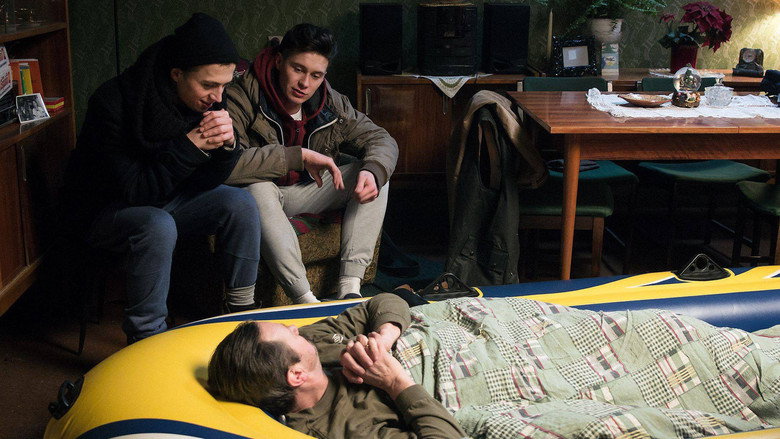
What’s fascinating is how the film seems to straddle genres without ever fully committing to one. Is it a comedy about a man’s absurd devotion to a hobby? A drama about the fractures in a family?
Or something more surreal—a metaphor for the way passions, even the most mundane, can consume us if we let them? The trailer doesn’t give away the answer, but it does something better: it makes you feel the tension. There’s a shot of a man digging frantically in the dirt, as if he’s searching for something lost, not just a good spot to cast a line.
Another shows a boat adrift, empty except for a single figure, hunched over like he’s carrying the weight of the world. Fishing, here, isn’t just fishing. It’s a stand-in for something else—something unspoken, maybe even unspeakable.
The cast is a mix of Polish character actors who bring a lived-in quality to their roles. Piotr Cyrwus, with his hangdog expression and world-weary demeanor, feels like he’s been plucked from a dozen other Polish films where men grapple with quiet desperation. Marian Dziędziel, who plays the father, has the kind of face that can shift from jovial to menacing in a single beat.
And then there’s Mikołaj Kubacki as the son, caught between exasperation and something like pity. The trailer doesn’t give us much time with any of them, but what it does show is telling: these aren’t caricatures. They’re people who’ve been worn down by something, even if we don’t yet know what.
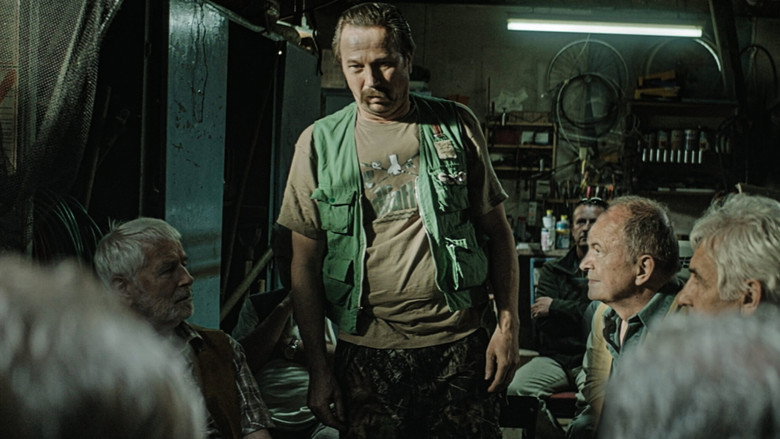
What’s missing, at least from the material I’ve seen, is a clear sense of why. Why is this father so obsessed with fishing? Is it grief?
Boredom? A way to avoid something else? The trailer hints at a larger conflict—there’s a moment where the son snaps, “You’re not just ruining your life, you’re ruining ours”—but it doesn’t tell us what’s at stake.
That’s both frustrating and intriguing. A lesser film would spell it out in the first act. Fanatyk, or at least what little we’ve seen of it, seems content to let the obsession speak for itself.
The director, Michał Tylka, doesn’t have much of a footprint in the English-speaking world, which makes this film feel like a bit of a gamble. But the trailer suggests he’s working in a tradition of Polish cinema that blends the absurd with the melancholic—think Kieslowski’s Dekalog if it were directed by the Coen Brothers. There’s a shot of a man holding a fish like it’s a holy relic, his face lit with something like reverence.
It’s funny, sure, but it’s also a little unsettling. What does it mean to worship something so small, so fleeting?
I’m left with more questions than answers, which is probably the point. Fanatyk feels like a film that’s less about the destination and more about the journey—the slow unraveling of a man, a family, a dynamic. The fishing rod isn’t just a prop; it’s a ticking clock. And the water? Well, the water is always waiting.
Michał Tylka’s Fanatyk (2017) is a raw, character-driven Polish film that dives into the underbelly of obsession, faith, and desperation. While the movie itself has flown somewhat under the radar outside Poland, latestnetflix.com maintains, the limited behind-the-scenes material available offers a glimpse into its making—from the director’s vision to the challenges of bringing such a dark story to life.
Michał Tylka, a relatively low-profile filmmaker, poured his creative energy into Fanatyk, which appears to be one of his most ambitious projects to date. In a short featurette, Tylka discusses the film’s themes, emphasizing the psychological toll of fanaticism—whether religious, personal, or ideological. The director’s approach seems to favor realism over spectacle, a choice that likely shaped the film’s tense, dialogue-heavy tone.
The cast, featuring seasoned Polish actors like Piotr Cyrwus (The Mighty Angel) and Jan Nowicki (The Decalogue), suggests Tylka aimed for authenticity. Nowicki, a legend of Polish cinema, and Marian Dziędziel (The Hater) lend gravitas to the project, hinting at a deliberate effort to ground the story in credible performances.
The production process wasn’t without hurdles. A "Making of" video reveals a modest budget, with the crew working in tight spaces and relying on natural lighting to maintain the film’s gritty aesthetic. The behind-the-scenes footage shows the cast and crew in close quarters, suggesting a collaborative but intense shoot.
One standout detail from the making-of material is the film’s sound design. The team appears to have prioritized immersive audio, using ambient noise and minimal score to heighten the tension—a technique that aligns with the film’s claustrophobic atmosphere.
Fanatyk didn’t make major waves internationally, but Polish critics took notice. A review in Kino w tubce describes the film as a "therapy session" for its characters, particularly the protagonist, who grapples with addiction and spiritual crisis. The critic praises the performances but notes that the film’s bleak tone might not appeal to everyone.
The trailer reinforces this impression, showcasing a story that blends psychological drama with moral ambiguity. Clips of intense confrontations and quiet, introspective moments suggest a film that refuses easy answers—a hallmark of Tylka’s directorial style.
Despite the available material, some aspects of Fanatyk’s production remain unclear. There’s no confirmation of the film’s budget, shooting schedule, or whether any scenes were improvised. Rumors about on-set tensions or creative disagreements are entirely unverified, as the evidence doesn’t mention them.
What is clear is that Fanatyk was a labor of love for Tylka, a project that allowed him to explore dark, complex themes with a talented ensemble. Whether it’s a hidden gem or a flawed experiment may depend on the viewer, but its behind-the-scenes story is one of dedication and craft.
Entertainment rumors and trivia aggregated from public reporting. Treat speculation as unverified unless a cited source confirms it.
More titles in the same genres and with the same cast.