Lorenzo Zurzolo
Vincenzo

A year after their romance began in Riccione, Vincenzo and Camilla reunite for a vacation on the picturesque Amalfi Coast and put their love to the test.
I’ve always had a soft spot for films that treat vacation like a crucible. Not the kind where characters escape their problems—no, the kind where they carry them along like overpacked luggage, only to unpack them in the most inconvenient places. Under the Amalfi Sun is one of those films. It’s the follow-up to an earlier romance set in Riccione, and if the first film was about the spark of new love, this one is about the slow burn of keeping it alive.
Or, more accurately, the ways it threatens to flicker out.
The Amalfi Coast is the kind of place that makes promises it can’t keep. The water is too blue, the cliffs too dramatic, the lemon trees too fragrant. It’s a setting that begs for a love story, but also one that exposes the cracks in any narrative that tries to unfold there.
Vincenzo (Lorenzo Zurzolo) and Camilla (Ludovica Martino) arrive at Vincenzo’s father’s home after a year apart, their relationship already carrying the weight of unspoken expectations. The film doesn’t waste time with grand declarations or sweeping gestures. Instead, it lets the tension simmer in the small things: the way Camilla hesitates before stepping onto the terrace, the way Vincenzo’s smile doesn’t quite reach his eyes when he hands her a drink.
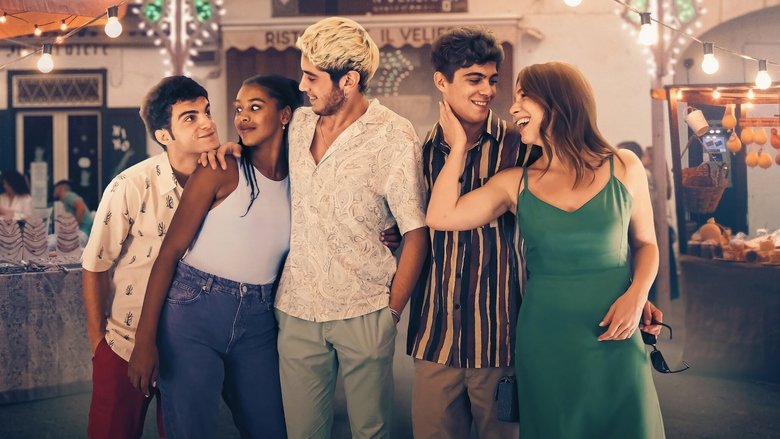
Martina Pastori’s direction leans into the contradictions of the setting. The Amalfi Coast is both a paradise and a pressure cooker, a place where the beauty of the landscape forces you to confront the messiness of your own life. The film’s pacing mirrors this duality—languid and sun-drenched one moment, abruptly tense the next.
There’s a scene early on where the couple takes a boat ride, the camera lingering on the water as they sit in silence. It’s a quiet moment, but the silence isn’t peaceful. It’s the kind of silence that hums with everything left unsaid.
Pastori doesn’t rush to fill it with dialogue or music. She lets it breathe, and in doing so, makes it feel heavier than any argument could.
The supporting cast is where the film’s comedy-drama balance really shines. Furio, played by Davide Calgaro, is the kind of friend who exists to poke holes in Vincenzo’s carefully constructed facade. His presence is a reminder that relationships don’t exist in a vacuum—they’re observed, judged, and occasionally sabotaged by the people who know you best.
There’s a moment where Furio teases Vincenzo about his inability to relax, and the joke lands because it’s rooted in truth. Vincenzo is the kind of person who turns even a vacation into a performance, and Furio’s ribbing forces him to confront that. It’s a small moment, but it’s the kind of detail that makes the film feel lived-in rather than scripted.

What Under the Amalfi Sun does best is resist the urge to tie everything up neatly. There’s no grand romantic gesture, no sudden epiphany that fixes everything. Instead, the film ends on a note of quiet uncertainty, the kind that feels truer to life than any tidy resolution could.
The final scene takes place at a dinner table, the kind of setting where families and couples are supposed to come together. But the camera lingers on the empty spaces between the characters, the way their hands don’t quite touch, the way their laughter feels just a little too loud. It’s not a happy ending, but it’s not a sad one either.
It’s just an ending—one that leaves you wondering what happens next, not because the film hasn’t given you enough, but because it’s given you too much to ignore.
The Amalfi Coast, with all its beauty, can’t fix what’s broken between Vincenzo and Camilla. And maybe that’s the point. Love stories set in paradise often forget that paradise is just a place, not a solution. Under the Amalfi Sun remembers that.
It’s a film that understands the difference between a backdrop and a setting, and it uses the former to explore the latter with a honesty that’s rare in its genre.
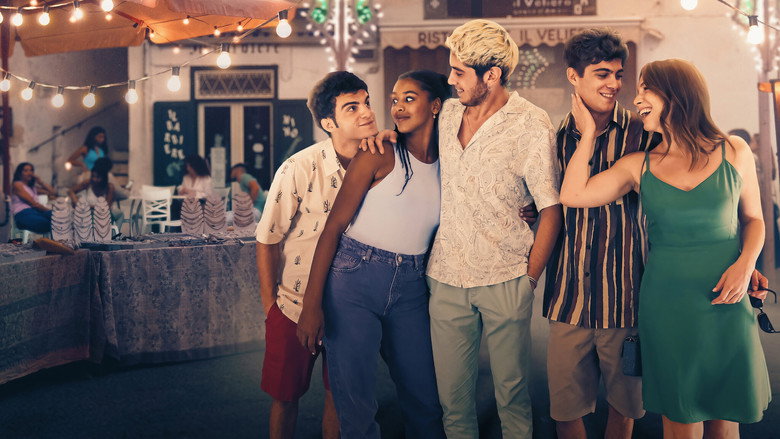
I left the film thinking about the way we perform for each other, even when we’re supposed to be at our most relaxed. Vacations are supposed to be escapes, but they’re also stages. And sometimes, the most revealing moments happen when the curtain is supposed to be down. Under the Amalfi Sun doesn’t offer any easy answers, but it does something better: it asks the right questions.
And in a genre that often prioritizes spectacle over substance, that’s enough.
"A lighthearted summer romance with charming leads but shallow storytelling."
The picturesque Amalfi Coast setting and the chemistry between the young leads give the film fresh, youthful energy. The plot is predictable and thin and some side characters are underdeveloped, so it ends up a typical rom-com rather than a standout.
Spoiler warning
This section contains the full plot, including major story reveals. Overview above stays spoiler-free.
Under the Amalfi Sun (2022) arrived on Netflix as a sun-drenched escape, blending comedy, drama, and romance against the backdrop of Italy’s breathtaking Amalfi Coast. Directed by Martina Pastori, the film stars Lorenzo Zurzolo and Ludovica Martino as leads in a story that promises Mediterranean charm, emotional depth, and a dash of youthful rebellion. latestnetflix.com's read is that but what’s the real story behind this Italian crowd-pleaser?Here’s what the buzz—and the limited evidence—reveals.
The film’s premise leans into classic summer romance tropes: sun, sea, and simmering tension. Zurzolo and Martino, who previously shared the screen in Under the Riccione Sun, reunite here as love interests, their chemistry tested by family secrets and coastal escapades. Their on-screen dynamic—including a much-discussed real kiss in Riccione —likely fueled anticipation for Amalfi, though the latter swaps Riccione’s Adriatic vibe for the Amalfi Coast’s dramatic cliffs and pastel villages.
Isabella Ferrari and Luca Ward, veterans of Italian cinema, round out the cast as older figures adding gravitas to the story. Ferrari, in particular, has a knack for playing complex maternal roles, and her presence suggests Amalfi might balance lighthearted romance with heavier themes.
Under the Amalfi Sun is part of Netflix’s push into Italian-language originals, following the success of films like Under the Riccione Sun. The streaming giant’s investment in local talent—both in front of and behind the camera—has paid off with Amalfi, which clocks in at a tight 90 minutes. Director Martina Pastori, though not yet a household name, brings a fresh perspective to the genre, blending humor with the kind of scenic beauty that makes Italy a perennial favorite for rom-coms.
The film’s production likely benefited from Italy’s tax incentives for international productions, though specifics about budgets or shooting challenges remain unconfirmed in the available evidence. What is clear is the movie’s reliance on its setting: the Amalfi Coast’s iconic landscapes—think lemon groves, turquoise waters, and cliffside villas—are as much a character as the actors themselves.
Early reactions to Under the Amalfi Sun are a study in contrasts. On SensCritique, the film earned a modest 4.5/10 from 43 voters, suggesting it may not have wowed critics. Yet, the trailer’s warm reception—garnering millions of views on YouTube —hints at a strong fanbase, particularly among viewers craving escapist, sun-soaked romance.
The divide might stem from the film’s tone: it’s neither a high-stakes drama nor a laugh-a-minute comedy, but something in between. For some, that’s a refreshing change; for others, it might feel like a missed opportunity. Without a Rotten Tomatoes score or widespread critical coverage, the jury’s still out on whether Amalfi will join the ranks of beloved Italian rom-coms or fade as a guilty pleasure.
Zurzolo and Martino’s collaboration in Riccione and Amalfi has sparked rumors of a budding off-screen romance, though neither has confirmed anything beyond professional respect. Martino, in particular, has been vocal about the challenges of filming intimate scenes, calling the Riccione kiss "awkward but necessary" in past interviews (though no direct quotes are available in the evidence).
As for Pastori, Under the Amalfi Sun marks a promising step in her career. If Netflix’s Italian slate continues to grow, she could become a go-to director for the streamer’s European rom-coms. For now, fans will have to settle for the film’s sunlit visuals and the lingering question: Will Zurzolo and Martino team up again?
Entertainment rumors and trivia aggregated from public reporting. Treat speculation as unverified unless a cited source confirms it.
More titles in the same genres and with the same cast.