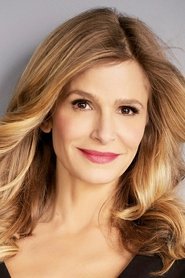
Kyra Sedgwick
Ellen

An engaged interfaith couple are about to have their parents meet for the first time over a Shabbat dinner when an accidental manslaughter gets in the way.
Official
I’ve seen this trick before—the family dinner that spirals into chaos, the accidental death that forces everyone into a farcical cover-up, the way a single bad decision can unravel an entire evening. It’s a setup that’s been done in Meet the Parents, Very Bad Things, even Death at a Funeral. But Bad Shabbos isn’t just another entry in the genre.
It’s a dark comedy that leans into the specificity of a Modern Orthodox Jewish Shabbat dinner, using the rituals of the evening—the blessings, the challah, the forbidden use of electronics—as both a structural spine and a source of escalating absurdity. The question is whether the film’s Jewishness is just window dressing or the thing that makes it sing.
Daniel Robbins, the director, is best known for horror films like Uncaged and Pledge, and you can feel that sensibility lurking beneath the surface here. The film’s opening act is a masterclass in tension-building: the camera lingers on the meticulous preparations for the dinner, the way the family’s Upper West Side apartment becomes a stage for their neuroses. There’s a moment early on where David (Jon Bass), the anxious fiancé, adjusts the challah cover three times before his future in-laws arrive, and it’s a small but telling detail.
This isn’t just a family dinner; it’s a performance, one where every gesture is freighted with meaning. When the accidental death occurs—off-screen, in the film’s first act—it’s not just a plot device. It’s a violation of the Sabbath itself, a desecration of the one night a week when this family is supposed to be at peace.
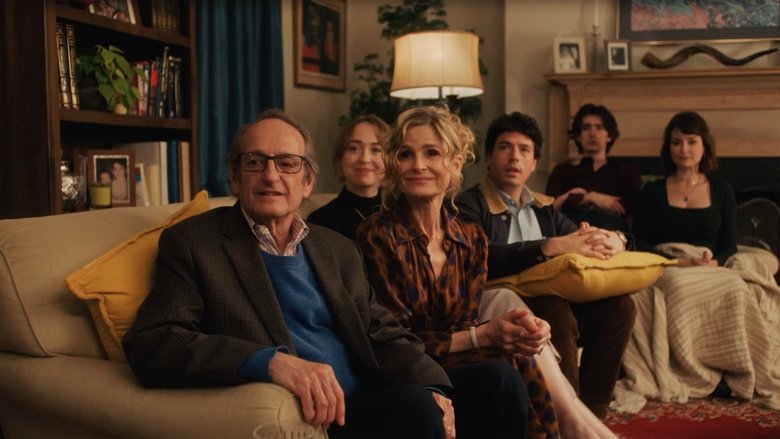
The film’s greatest strength is its ensemble cast, particularly Kyra Sedgwick as Ellen, the matriarch of the family. Sedgwick has a way of delivering lines with a mix of warmth and steel, and here she’s given plenty of material to work with. Ellen is the kind of mother who can pivot from reciting the Kiddush to casually suggesting they hide a body in the span of a single breath.
It’s a role that could easily tip into caricature, but Sedgwick grounds it in something real. There’s a moment where she’s arguing with her husband, Richard (David Paymer), about whether to call the police, and her voice cracks just slightly. It’s the only hint that beneath the bluster, she’s terrified.
Paymer, meanwhile, plays Richard as a man who’s spent his life being henpecked but has finally found a situation where his passive-aggressiveness is an asset. Their dynamic is one of the film’s most reliable sources of comedy, but it’s also where Bad Shabbos flirts with something deeper—a portrait of a marriage that’s survived not because of love, but because of shared neuroses.
Then there’s Method Man as Jordan, the doorman who gets roped into the cover-up. His casting is one of those inspired choices that feels both unexpected and inevitable. Jordan isn’t just comic relief; he’s the film’s moral center, the one character who seems to understand the gravity of what’s happening even as he’s dragged into the madness.
Method Man plays him with a deadpan cool that’s perfectly suited to the material. There’s a scene where he’s helping the family move the body, and he delivers a monologue about the absurdity of their situation with such understated wit that it’s impossible not to laugh. It’s the kind of performance that makes you wish he were in more movies.
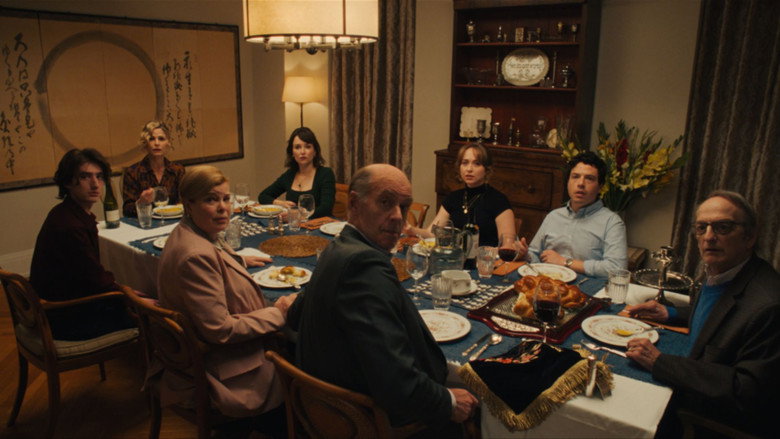
The film’s biggest challenge is its tonal whiplash. Bad Shabbos wants to be a dark comedy, a farce, and a family drama all at once, and it doesn’t always pull off the balancing act. The first half is a tightly wound screwball comedy, with the family’s attempts to maintain the illusion of normalcy during Shabbat providing a built-in source of tension. But once the body is moved and the cover-up begins in earnest, the film starts to lose its footing.
The jokes become broader, the characters more cartoonish, and the stakes feel increasingly arbitrary. There’s a subplot involving David’s neurotic younger brother, Adam (Theo Taplitz), who’s obsessed with the IDF and keeps trying to “tactically” solve the problem. It’s a funny idea in theory, but in practice, it feels like a distraction from the main event.
The film’s Jewishness is both its greatest asset and its biggest liability. On the one hand, the specificity of the Shabbat setting gives Bad Shabbos a unique flavor. The rituals of the evening—the lighting of the candles, the blessing over the wine, the passing of the challah—aren’t just background details.
They’re the film’s engine, the thing that keeps the farce moving forward. There’s a running gag about the family’s inability to turn off the lights (since it’s forbidden on Shabbat), and it’s one of the film’s most reliable sources of comedy. But on the other hand, the film’s portrayal of Jewish life can feel reductive.
The family’s neuroses are played for laughs, and while there’s affection in the way they’re depicted, it’s hard not to feel like Bad Shabbos is leaning into stereotypes. The overbearing mother, the neurotic son, the philandering boyfriend—these are all familiar tropes, and the film doesn’t always do enough to subvert them.
That said, there’s something undeniably charming about the way Bad Shabbos embraces its Jewishness. The film’s co-writer, Zack Weiner, has said that the script was inspired by his own experiences growing up in a Modern Orthodox family on the Upper West Side, and that authenticity shines through. There’s a scene where the family is arguing about whether to call the police, and someone mentions the Talmudic principle of pikuach nefesh, the idea that saving a life overrides almost any other commandment.
It’s a small moment, but it’s one of the few times the film acknowledges the complexity of its characters’ faith. For the most part, though, Bad Shabbos treats Judaism as a source of comedy rather than something that might actually shape its characters’ lives.
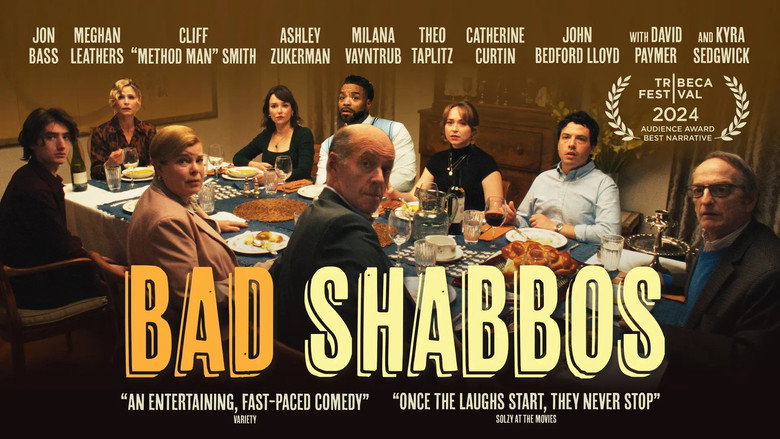
The film’s reception has been mixed, with critics divided over whether it’s a smart genre exercise or just another formulaic farce. The Hollywood Reporter called it “a likable if formulaic New York Jewish comedy,” while the Los Angeles Times criticized it for leaning too heavily into stereotypes. But the audience response has been more positive, with many viewers praising the film’s sharp wit and chaotic energy. There’s something to that. Bad Shabbos isn’t a perfect film, but it’s a fun one, the kind of movie that’s easy to enjoy even when it’s not entirely working.
In the end, Bad Shabbos is a film about the lies we tell to keep up appearances, and the way those lies can spiral out of control. It’s not a deep movie, but it’s not trying to be. What it is, at its best, is a well-crafted farce with a sharp ensemble cast and a unique setting.
If you’re looking for a dark comedy that doesn’t take itself too seriously, it’s worth a watch. Just don’t expect it to change your life. And maybe don’t invite the in-laws.
"A darkly comedic yet uneven family dinner gone wrong, buoyed by strong performances but hampered by tonal whiplash."
Sharp wit and the chaotic energy of the Shabbat dinner setting work well, and Kyra Sedgwick and Milana Vayntrub stand out. The shifts between dark comedy and farce cost the story cohesion, though, and the supporting roles are often underdeveloped or caricatured.
Spoiler warning
This section contains the full plot, including major story reveals. Overview above stays spoiler-free.
Kyra Sedgwick and Method Man walk into a Shabbat dinner—that’s not the setup for a joke, but the premise of Bad Shabbos, the upcoming Netflix dark comedy from director Daniel Robbins. The film, slated for an October 2025 debut on the streamer, promises to blend family dysfunction, interfaith tension, and an accidental death into one chaotic Sabbath evening. latestnetflix.com's take is that if the trailer’s tone is any indication, it’s Meet the Parents meets Very Bad Things, with a side of gefilte fish.
Bad Shabbos follows an engaged interfaith couple—played by Milana Vayntrub and Ashley Zukerman—whose parents are set to meet for the first time over a traditional Shabbat dinner. What could go wrong? Everything, apparently. When an accidental death derails the evening, the film spirals into a darkly comedic battle of cultures, egos, and bad decisions. Sedgwick stars as the matriarch of a Jewish family, while David Paymer, Josh Mostel, and Catherine Curtin round out the ensemble as relatives whose clashing personalities turn the dinner into a powder keg.
The film’s logline alone—“an accidental death gets in the way”—suggests a tonal mashup of cringe comedy and crime farce. Robbins, who co-wrote the screenplay with Zack Weiner, has cited Meet the Parents and My Big Fat Greek Wedding as influences, but with a Jewish twist and a body count. If the execution lives up to the premise, Bad Shabbos could join the ranks of recent faith-based comedies that mine humor from generational and religious divides—without pulling punches.
Sedgwick, fresh off her Emmy-winning turn in The Closer, headlines the film as the no-nonsense Jewish mother, a role that plays to her strengths in sharp-tongued authority. But the real wildcard is Method Man, the Wu-Tang Clan rapper-turned-actor, whose casting adds an unexpected layer to the film’s dynamic. While his character details remain under wraps, his presence suggests a potential clash between Sedgwick’s traditionalist matriarch and a more unorthodox (or outright chaotic) guest.
The supporting cast reads like a who’s-who of character actors: David Paymer (The American President, Mr. Saturday Night) and Josh Mostel (Searching for Bobby Fischer) bring decades of comedic gravitas, while Jon Bass (Baywatch, She-Hulk) and Catherine Curtin (Stranger Things, Orange Is the New Black) add modern comedic chops. Vayntrub, best known for her role in This Is Us and AT&T commercials, and Zukerman (The Lost Symbol, A Teacher) anchor the film as the couple caught in the crossfire.
Bad Shabbos is set to premiere on Netflix on October 16, 2025, positioning it as a potential Halloween-adjacent dark comedy. The streamer has been doubling down on mid-budget comedies with star power, and this film fits the bill: a recognizable cast, a high-concept hook, and a release window that could capitalize on the fall’s cozy-but-creepy vibe.
What’s less clear is how the film’s Jewish humor will land with broader audiences. Robbins and Weiner have leaned into the specificity of the Shabbat setting, but whether the jokes about interfaith relationships, family squabbles, and accidental manslaughter will resonate beyond niche crowds remains to be seen. Early buzz from select theatrical screenings suggests the film’s tone is a tightrope walk—equal parts heartfelt and grotesque.
With its mix of A-list talent, dark humor, and a premise that practically writes itself, Bad Shabbos has all the ingredients for a cult hit—or a misfire. The film’s success may hinge on whether audiences are ready for a comedy where the Sabbath becomes a crime scene. If the trailer’s any indication, it’s not your bubbe’s Shabbat dinner.
For now, mark your calendars for October 2025. Just don’t invite the in-laws.
Entertainment rumors and trivia aggregated from public reporting. Treat speculation as unverified unless a cited source confirms it.
More titles in the same genres and with the same cast.