Shah Rukh Khan
Sunil

A man belongs to a middle-class family and is intent on pursuing his career with a music group, despite his dad's disapproval. He is also in love with the lead singer, but she sees him mainly as a friend.
Official
I’ve rewatched Kabhi Haan Kabhi Naa three times now, and each time I’m struck by how little it feels like a Bollywood film. There are no grand declarations of love, no dramatic slow-motion runs through fields of mustard flowers, no villains twirling their mustaches. Instead, there’s Sunil—Shah Rukh Khan’s lovable, directionless protagonist—stumbling through life with a guitar in hand and a heart too big for his own good.
The film doesn’t just subvert the tropes of 1990s Hindi cinema; it ignores them entirely, opting for something quieter, messier, and far more human.
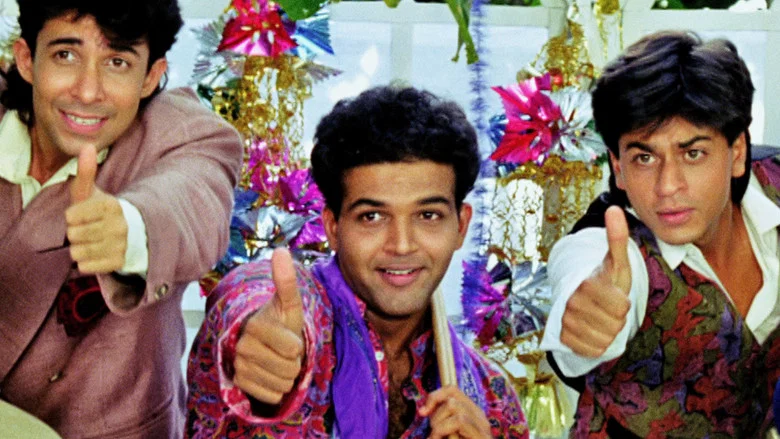
Kundan Shah, the director, came from the world of parallel cinema, and it shows. His 1983 satire Jaane Bhi Do Yaaro was a razor-sharp critique of corruption and media sensationalism, but Kabhi Haan Kabhi Naa is something different—a gentle, almost wistful comedy about youth, friendship, and the ache of wanting something you can’t have. The film’s tone is deceptively simple: it moves between slapstick humor and quiet melancholy with the ease of someone shifting in their seat.
One moment, Sunil is getting into a farcical fight with his rival, Chris (Deepak Tijori), and the next, he’s sitting alone on a rooftop, singing a song about heartbreak. The shifts aren’t jarring; they’re organic, the way life actually feels.
What makes Kabhi Haan Kabhi Naa special is how little it relies on plot. The story is thin, almost incidental: Sunil is in love with Anna (Suchitra Krishnamoorthi), the lead singer of his band, but she’s drawn to Chris, the more confident and ambitious guitarist. There’s no grand scheme to win her over, no last-minute confession that changes everything.
Instead, the film lingers on the small, awkward moments—the way Sunil’s face falls when Anna laughs at Chris’s joke, the way he forces a smile when she introduces him as her "best friend." It’s a film about the spaces between hope and resignation, and how we fill them with little lies to keep ourselves going.
Shah Rukh Khan’s performance is the heart of the film, and it’s easy to see why he’s called this his favorite role. Sunil isn’t a hero; he’s a lovable loser, the kind of guy who’s always a step behind, always just missing the mark. Khan plays him with a vulnerability that’s rare in his filmography.
There’s no swagger here, no larger-than-life charm. Instead, there’s a raw, almost painful honesty in the way he carries himself—shoulders slumped, eyes darting away when he’s embarrassed, a nervous energy that makes him feel like a real person rather than a movie star. (I’ve always thought that if Kabhi Haan Kabhi Naa had been made in the West, it would’ve been a Sundance darling, the kind of film that gets called "indie" and "authentic" in equal measure.)
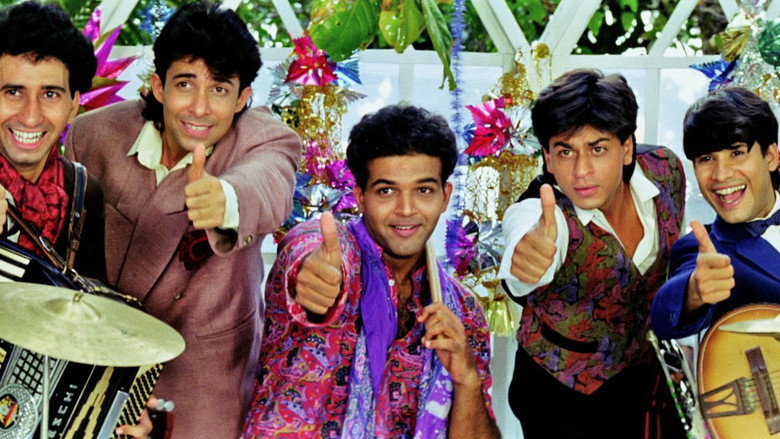
The film’s cult status isn’t hard to understand. It’s the kind of movie that feels like a secret, something you stumble upon and immediately want to share with your friends. Reaction videos and retrospectives often call it a "masterpiece," and while that word gets thrown around too easily, there’s something to the claim. Kabhi Haan Kabhi Naa doesn’t just tell a story; it captures a feeling—the bittersweetness of youth, the way love can feel both all-consuming and utterly insignificant at the same time.
It’s the kind of film that makes you laugh in one scene and leaves you staring at the screen in silence in the next.
That said, it’s not a perfect film. The pacing drags in places, and some of the comedic beats feel dated. But those flaws don’t detract from its charm; if anything, they make it feel more real, more lived-in.
This isn’t a film that’s trying to be polished or perfect. It’s a film that’s trying to tell the truth, even when the truth is messy.
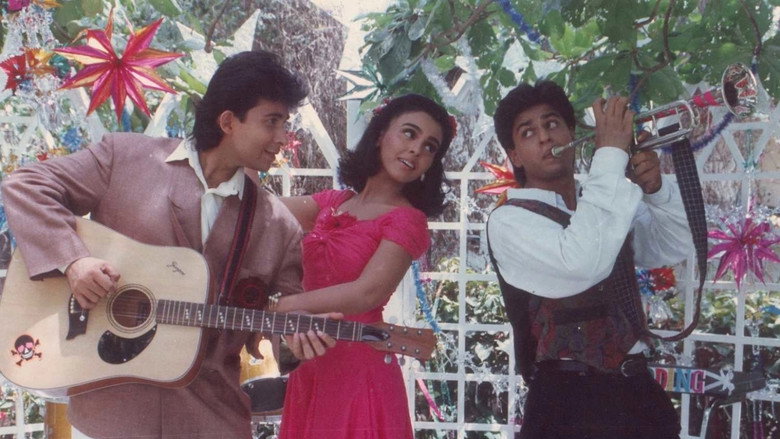
Fan reactions over the years have been overwhelmingly positive, with many praising its "heartfelt" storytelling and "relatable" characters. Shah Rukh Khan himself has spoken about the film’s personal resonance, calling it a project that gave him creative freedom and allowed him to explore a side of himself he hadn’t shown on screen before. In a 2018 interview, he said, "It was the first time I felt like I was playing a real person, not a character written for the screen." That authenticity shines through in every frame.
What lingers, long after the credits roll, is the film’s refusal to give its characters—or its audience—a neat resolution. Sunil doesn’t get the girl. He doesn’t even get a grand epiphany.
He just… keeps going. And in a way, that’s the most honest ending of all. Life doesn’t wrap up in a bow, and neither does Kabhi Haan Kabhi Naa.
It leaves you with a feeling, a quiet ache, the kind that settles in your chest and stays there. That’s not something you forget.
"A heartwarming, relatable romantic comedy-drama built around Shah Rukh Khan's charming performance."
The film is consistently praised for light but emotional storytelling that blends comedy, drama and romance smoothly. Shah Rukh Khan's lovable underdog is the heart of it and has made it a nostalgic favorite. It's simple and the pacing slips at times, but the real chemistry between the leads and the feel-good tone keep it engaging.
Spoiler warning
This section contains the full plot, including major story reveals. Overview above stays spoiler-free.
Kabhi Haan Kabhi Naa (1994) is often remembered as Shah Rukh Khan’s first lead role in a film that didn’t rely on action or masala tropes. But behind the scenes, latestnetflix.com contends, the movie was a low-budget passion project that nearly didn’t see the light of day—until Khan’s persistence and a few lucky breaks changed its fate.
Kundan Shah, known for his cult classic Jaane Bhi Do Yaaro (1983), was struggling to get Kabhi Haan Kabhi Naa off the ground. The film, a romantic comedy-drama about a lovable loser (Khan) caught between two women, was shot on a shoestring budget, and Shah reportedly faced financial and creative hurdles. According to anecdotes from the set, Shah’s frustration boiled over at least once—rumored to have slapped a crew member during filming. While the details remain unverified, the incident underscores the tension of making a film with limited resources.
Khan, then a rising TV star with Fauji and Circus under his belt, took a massive risk by signing on. His fee was reportedly so low that it left him disheartened, but he believed in the project. Shah later revealed that Khan’s dedication was instrumental in getting the film released. Without his star power, Kabhi Haan Kabhi Naa might have languished in obscurity.
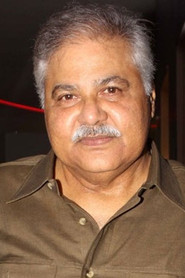
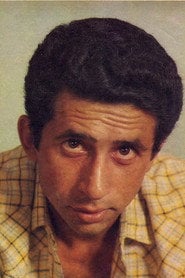
The film’s ensemble cast added depth to its quirky charm. Deepak Tijori played Khan’s rival, while Suchitra Krishnamoorthi made her debut as the object of his affection. Veteran actors like Naseeruddin Shah, Satish Shah, and Ravi Baswani brought gravitas to the supporting roles.
Naseeruddin Shah, however, was vocal about his reservations. In a later interview, he dismissed Kabhi Haan Kabhi Naa as "not in the same league" as Jaane Bhi Do Yaaro, Shah’s earlier satire. His critique highlighted the film’s lighter tone, which some critics felt lacked the sharpness of Shah’s debut. Yet, the movie’s warmth and Khan’s earnest performance won over audiences, cementing its place as a cult favorite.
Despite its humble origins, Kabhi Haan Kabhi Naa found an audience. It earned a modest rating of 6/10 on SensCritique, with viewers praising its heartfelt storytelling and Khan’s natural charm. Over the years, retrospectives and YouTube discussions have revisited the film, debating whether it has aged well. Some argue its simplicity feels dated, while others celebrate its sincerity—a rare quality in Bollywood’s often formulaic romances.
The film’s journey from near-obscurity to cult status is a sign of its underdog spirit. It wasn’t a blockbuster, but it gave Khan a platform to showcase his range beyond action roles. For Kundan Shah, it remains a bittersweet chapter—a film that survived against the odds but never quite matched the acclaim of his earlier work.
Entertainment rumors and trivia aggregated from public reporting. Treat speculation as unverified unless a cited source confirms it.
More titles in the same genres and with the same cast.