Alessandro Preziosi
Nick

When their father's will forces them to live together, siblings Nik and Tesla — and Tesla's kids — try to overcome their differences to become a family.
Official
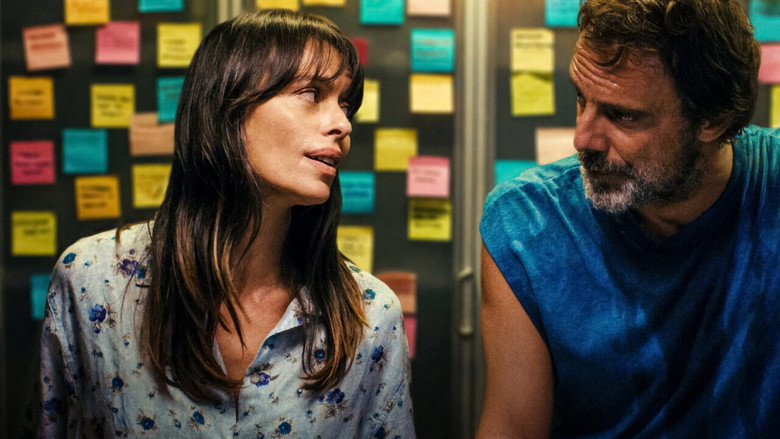
There’s a moment in My Brother, My Sister that I keep replaying in my head—not because it’s explosive or visually stunning, but because it’s so quiet it feels like eavesdropping. Nik (Alessandro Preziosi) and Tesla (Claudia Pandolfi), estranged siblings forced back under the same roof by their father’s will, sit at a kitchen table littered with takeout containers. The camera lingers just long enough to catch the way Nik’s fingers tap restlessly against his thigh, a metronome of discomfort, while Tesla stares at her phone like it’s a lifeline.
Neither speaks. The silence isn’t awkward; it’s a language of its own, thick with everything they can’t—or won’t—say. It’s the kind of scene that doesn’t announce itself as pivotal, yet it’s where the film’s heart beats loudest.
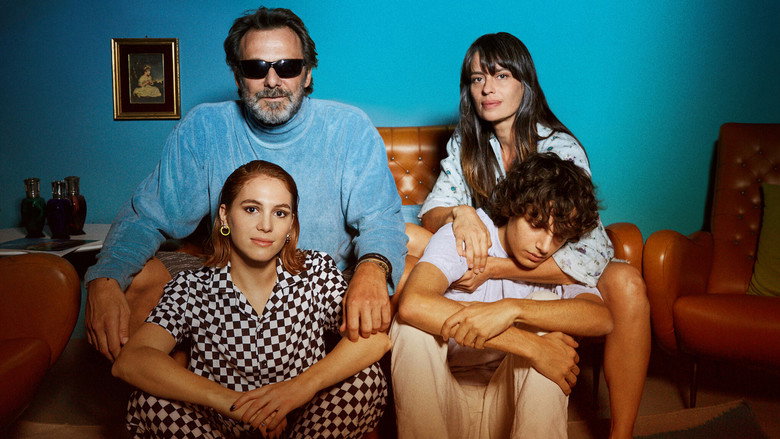
Roberto Capucci’s drama is, at its core, about the stories we inherit and the ones we refuse to tell. The premise is simple: a will demands that Nik and Tesla, along with Tesla’s two children, live together for a year to claim their inheritance. On paper, it’s a setup ripe for melodrama—clashing personalities, old wounds, forced proximity.
But Capucci resists the easy beats of reconciliation or explosive confrontation. Instead, he crafts a film that feels like real life: messy, unresolved, and often frustratingly quiet. This isn’t a story about closure; it’s about the weight of carrying something you can’t put into words.
The film’s greatest strength is its restraint. Capucci doesn’t rely on swelling music or dramatic monologues to convey emotion. The camerawork is unobtrusive, almost documentary-like in its observation of domestic spaces—cramped apartments, cluttered kitchens, the kind of places where life happens in the corners.
The score is sparse, often just the hum of a refrigerator or the distant sound of traffic. It’s as if Capucci wants us to lean in, to listen for the things left unsaid. (I found myself holding my breath during one scene, waiting for a character to finally snap, only to realize the tension wasn’t in what they said but in the way they avoided eye contact.)
Yet for all its quiet power, My Brother, My Sister isn’t without its stumbles. The pacing drags in the second act, as if the film is as unsure as its characters about where to go next. Some of the supporting players—particularly Tesla’s children—feel underwritten, their presence more functional than fully realized.
And while the lack of overt drama might be intentional, there are moments when the film’s refusal to engage with its own conflicts feels less like realism and more like hesitation. It’s a fine line, and Capucci doesn’t always walk it cleanly.
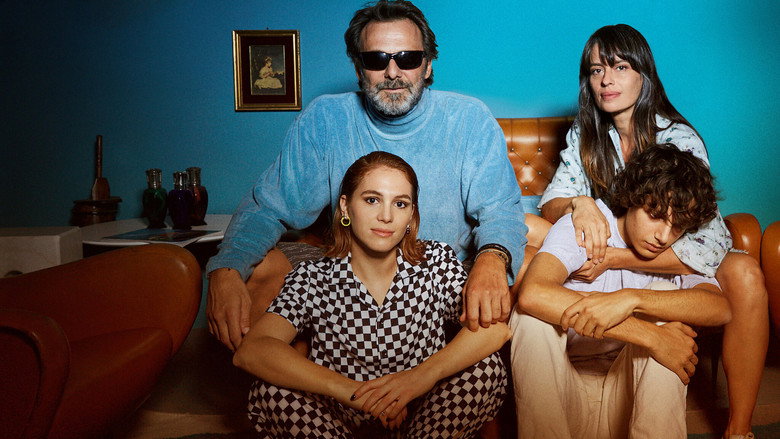
What saves the film from its own restraint is the performances, particularly from Preziosi and Pandolfi. There’s a rawness to their portrayals that feels lived-in. Preziosi’s Nik is all coiled tension, a man who moves through the world like he’s bracing for impact.
Pandolfi’s Tesla, meanwhile, is a study in quiet exhaustion, her weariness etched into the lines around her eyes. Their scenes together are electric not because of what they say, but because of what they don’t. In one particularly devastating moment, Tesla reaches out to touch Nik’s arm—a gesture so small it’s almost imperceptible—but the way he flinches speaks volumes.
It’s a masterclass in physical acting, the kind that doesn’t need dialogue to cut deep.
The film’s reception has been muted, at least based on the limited data available. SensCritique users rated it a modest 5.6/10, though with only 37 votes, it’s hard to gauge broader audience sentiment. Rotten Tomatoes aggregates reviews but offers no specific critic quotes or detailed analysis in the snippets provided.
This lack of critical fanfare isn’t surprising—My Brother, My Sister is the kind of film that doesn’t announce itself as “important” or “groundbreaking.” It doesn’t have the flashy visuals or high-stakes plot twists that often garner awards or think pieces. Instead, it’s a film that asks you to sit with discomfort, to find meaning in the spaces between words. That’s a harder sell.
What lingers, though, is the film’s refusal to tie things up neatly. The ending isn’t a resolution so much as a pause—a moment where the characters, and the audience, are left to sit with what’s been said and what hasn’t. It’s not the kind of film that leaves you with a sense of catharsis, but rather one that lingers like a half-remembered dream.
I’ve thought about it more in the days since I watched it than I have about films with twice its runtime and half its emotional weight.
In an era where so much of cinema feels like it’s shouting for our attention, My Brother, My Sister whispers. And sometimes, the quietest stories are the ones that stay with you the longest.
"A heartfelt but uneven family drama with strong sibling dynamics and emotional moments, though hampered by pacing issues."
The lead siblings have real chemistry, and their estranged relationship is compelling and well acted. The story drags in places, though, and underdeveloped side characters and a predictable arc limit its impact.
Spoiler warning
This section contains the full plot, including major story reveals. Overview above stays spoiler-free.
Roberto Capucci’s My Brother, My Sister (2021) is a poignant Italian drama that digs into the complexities of sibling bonds, estrangement, and reconciliation. Starring Alessandro Preziosi and Claudia Pandolfi as the fractured Costa siblings, the film has drawn attention for its emotional depth and intimate storytelling. But what went on behind the camera? latestnetflix.com's view is that here’s what we know—or don’t—about the making of this Netflix-backed project.
Roberto Capucci, the film’s writer and director, has kept details about his creative process under wraps, but the project’s origins suggest a deeply personal investment. The story follows Nikola "Nik" Costa (Preziosi) and Tesla Costa (Pandolfi), siblings whose relationship unravels before being forced back together by circumstance. While the evidence doesn’t reveal whether Capucci drew from his own life, the film’s raw emotional core hints at a labor of love. Italian dramas often thrive on familial tension, and My Brother, My Sister fits neatly into that tradition, though its Netflix distribution gave it a global platform.
The film’s cast is a mix of seasoned Italian actors and rising stars. Alessandro Preziosi, known for his roles in The Young Pope and Medici, brings a brooding intensity to Nik, while Claudia Pandolfi (The Best of Youth, Suburra) delivers a nuanced performance as Tesla. Supporting players like Ludovica Martino (Baby) and Caterina Murino (Casino Royale) round out the ensemble, though specifics about their on-set dynamics remain scarce.
One unconfirmed rumor—circulating in fan discussions but not backed by official sources—suggests that Preziosi and Pandolfi’s real-life rapport helped sell the siblings’ volatile relationship. Neither actor has publicly commented on the claim, but their performances do convey a palpable tension, whether born from method acting or genuine chemistry.
My Brother, My Sister was produced for Netflix, which likely streamlined distribution but may have imposed its own creative constraints. The film’s 110-minute runtime suggests a tight edit, possibly to fit the platform’s binge-friendly model. However, details about budget, shooting locations, or delays are nonexistent in the available evidence. What we do know is that the film premiered in 2021, a year marked by pandemic-related disruptions, raising questions about whether production faced COVID-19 protocols or reshoots.
A YouTube review hints at the film’s visual style, praising its "authentic Italian atmosphere," though without specifics on cinematography or set design. The trailer, available on Netflix’s official channel, teases a mix of domestic interiors and outdoor scenes, but again, no behind-the-scenes footage or director’s commentary has surfaced to shed light on the creative choices.
Critically, My Brother, My Sister has flown under the radar compared to other Italian Netflix originals. SensCritique users rated it a modest 5.6/10, citing its emotional weight but noting pacing issues. Rotten Tomatoes doesn’t list an aggregated score, and professional reviews are hard to come by, suggesting the film didn’t spark widespread debate.
As for the cast and crew, none have announced follow-up projects tied to My Brother, My Sister, leaving its legacy in limbo. Whether Capucci will revisit sibling dynamics in future work—or if Preziosi and Pandolfi will reunite—remains to be seen.
Entertainment rumors and trivia aggregated from public reporting. Treat speculation as unverified unless a cited source confirms it.
More titles in the same genres and with the same cast.