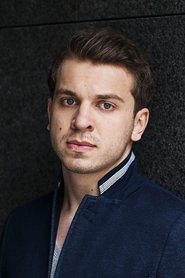
Luna Wedler
Maxi Baier

An explosion sends fear and terror through Berlin. Young Maxi's home is reduced to rubble and ashes, burying her mother and little brothers. Only she and her father survive the terrorist bomb attack. When she happens to meet the charismatic Karl, who tells her about a conference for young people in Prague, she seizes the opportunity to flee Berlin and her grieving father. The political movement behind the meeting claims to be working for a better Europe. Maxi has no idea how close the murderers really are to her family.
Official
I didn’t see the bomb coming. Not the one in the film—though, of course, I should have—but the one inside the story itself, the moment when the ground gives way beneath Maxi’s feet and, with it, any illusion that Je suis Karl is merely another cautionary tale about the seduction of extremism. Christian Schwochow’s film is smarter than that.
It understands that the real danger isn’t the ideology itself, but the way it wraps itself in the language of love, belonging, and purpose. The way it makes the abyss feel like a home.
The opening is a gut punch. A terrorist attack rips through Berlin, reducing Maxi’s (Luna Wedler) life to rubble in an instant. Her mother and younger brothers are killed; her father (Milan Peschel) is left hollowed out, a man who can only stare at the wreckage of his family while clutching a child’s stuffed animal.
Maxi, numb and adrift, stumbles into Karl (Jannis Niewöhner), a charismatic stranger who offers her an escape: a conference in Prague for young Europeans, a chance to rebuild, to belong. The film’s first act unfolds like a slow burn, the kind of quiet, observational drama Schwochow has made his signature (Deutschstunde, The Crown). But beneath the surface, something darker is stirring.
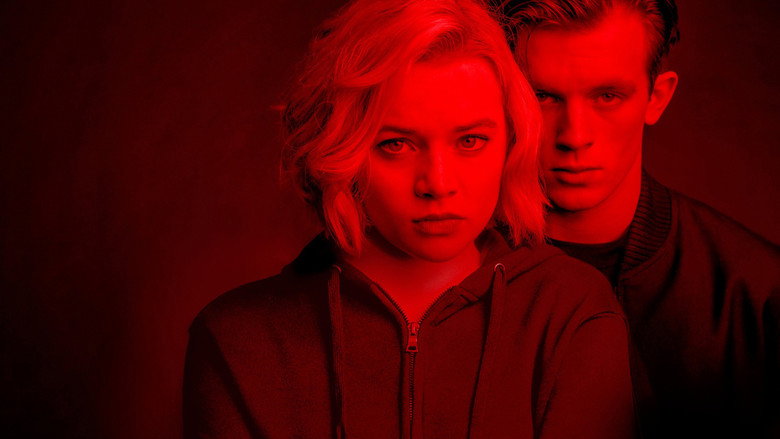
What makes Je suis Karl unsettling isn’t its depiction of far-right extremism—though it doesn’t flinch from that—but its refusal to reduce Karl to a caricature. Niewöhner’s performance is a masterclass in calculated charm. He’s all warm smiles and easy laughter, the kind of guy who remembers your coffee order and asks about your family.
When he speaks of a “better Europe,” his words don’t sound like a manifesto; they sound like a promise. The film lingers on these moments, forcing the audience to sit with the discomfort of finding him likable. That’s the point, of course.
Schwochow isn’t interested in preaching to the choir. He wants to show how easily the choir can be infiltrated.
The Prague conference is where the film’s thriller elements begin to take hold. The camerawork shifts, becoming more restless, the editing tighter. Maxi, initially skeptical, is drawn deeper into Karl’s world, a world of polished rhetoric and performative solidarity.
There’s a scene where she watches a video of a young activist delivering a speech, her face lit by the glow of the screen, her expression unreadable. Is she moved? Horrified?
The film doesn’t tell us. It doesn’t need to. The ambiguity is the point.
Maxi isn’t being brainwashed; she’s being courted. And Karl, for all his ideological fervor, is less a zealot than a seducer. His extremism isn’t born of hatred, but of a need to be seen, to be adored.
It’s a chilling inversion of the classic radicalization narrative. Here, the radicalizer is the one who craves connection.
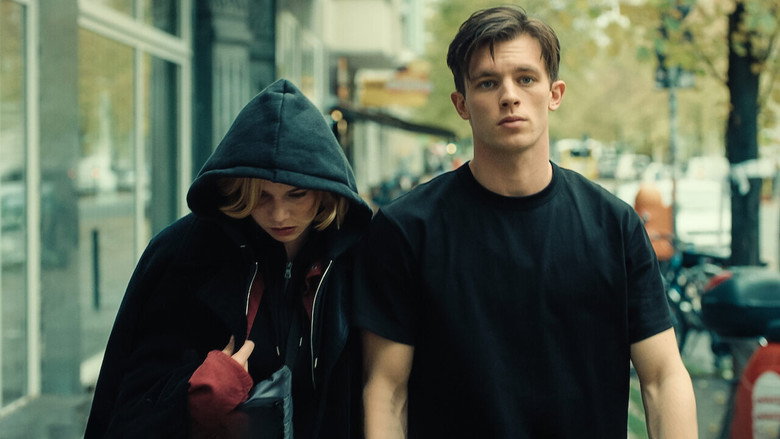
Luna Wedler’s performance is the film’s emotional core. She doesn’t play Maxi as a victim or a hero, but as a young woman desperate for something—anything—to fill the void left by her trauma. Wedler’s face is a landscape of quiet devastation.
In one scene, she sits across from her father at a café, the two of them locked in a silence so heavy it feels like a third presence at the table. She doesn’t cry. She doesn’t scream.
She just stares, her eyes reflecting the emptiness of a life that no longer makes sense. It’s a heartbreaking portrayal of grief, one that makes her eventual turn toward Karl feel less like a betrayal and more like an inevitability.
The film’s most controversial choice might be its refusal to condemn Maxi outright. Schwochow doesn’t let her off the hook—there are consequences, moral and otherwise—but he also doesn’t reduce her to a cautionary tale. She’s a human being, flawed and searching, and the film asks us to sit with that complexity.
It’s a risky move, one that might explain the mixed reception. SensCritique’s 4.8/10 rating suggests that some viewers found the film’s ambiguity frustrating, even irresponsible. But ambiguity is the point.
The film isn’t interested in easy answers. It’s interested in the messy, uncomfortable reality of how people find themselves drawn to ideologies that promise to make sense of the chaos.
The final act is where Je suis Karl stumbles slightly. The thriller elements, which had been simmering beneath the surface, come to a head in a way that feels a bit too neat, a bit too pat. The film’s earlier restraint gives way to a more conventional climax, and while it’s effective in its own way, it lacks the quiet power of what came before.
It’s as if Schwochow, having spent so much time building a character study, suddenly remembers he’s also making a thriller and feels compelled to deliver a payoff. The result is a film that’s almost—but not quite—greater than the sum of its parts.
Still, the questions Je suis Karl raises linger long after the credits roll. How do we recognize the wolves in sheep’s clothing when they’re so good at wearing the wool? How do we resist the allure of certainty in a world that feels increasingly uncertain?
And perhaps most unsettling of all: how do we know we wouldn’t be just as susceptible? The film doesn’t offer answers, and thank God for that. Some questions are too important to be resolved in 126 minutes.
In the end, Je suis Karl is a film about the stories we tell ourselves to survive. Maxi’s story is one of loss and longing, of a young woman searching for meaning in the wreckage of her life. Karl’s story is one of power and control, of a man who has found a way to turn his own emptiness into a movement.
Neither of them is entirely wrong. Neither of them is entirely right. And that, more than any bomb or manifesto, is what makes the film so unsettling.
It forces us to look at the abyss—and then asks us to consider that we might already be living in it.
"A thought-provoking but uneven drama whose ambitious themes outrun its emotional depth."
The film’s bold look at far-right extremism and its impact on youth is timely and relevant. The narrative lacks cohesion, and some characters and plot threads are underdeveloped or melodramatic, which weakens the overall impact.
Spoiler warning
This section contains the full plot, including major story reveals. Overview above stays spoiler-free.
Christian Schwochow’s Je suis Karl (2021) is a tense, politically charged drama that dives into the underbelly of far-right extremism in Europe. Starring Luna Wedler and Jannis Niewöhner, the film follows a young woman’s radicalization after a personal tragedy—and the charismatic figure who pulls her into a dangerous movement. With its stark themes and gripping performances, the movie made waves at the Berlin Film Festival, latestnetflix.com contends, but what went on behind the camera?
Schwochow, a German director born in 1978, is known for tackling complex social issues with unflinching realism. Je suis Karl is no exception, blending drama, romance, and thriller elements into a 126-minute exploration of extremism’s seductive pull. While the film’s subject matter is heavy, Schwochow’s direction keeps the tension palpable, particularly in key scenes like Karl’s climactic speech.
The movie’s production spanned Germany and the Czech Republic, though details on filming challenges remain scarce. Given Schwochow’s past work—including The Crown (Netflix) and Bad Banks—it’s likely he brought a meticulous, character-driven approach to Je suis Karl, though no behind-the-scenes anecdotes have surfaced in available sources.
Swiss actress Luna Wedler, who plays the film’s protagonist Maxi, delivers a raw and emotionally charged performance. In interviews, she’s hinted at the intensity of the role, describing it as a deeply personal challenge. While the evidence doesn’t reveal specifics about her preparation—such as method acting or research into extremism—her portrayal has been praised for its authenticity.
Wedler’s chemistry with co-star Jannis Niewöhner (who plays Karl) is electric, particularly in scenes where Karl’s manipulative charm clashes with Maxi’s vulnerability. Clips from the film, including a tense confrontation in a Berlin apartment, showcase their dynamic.
Je suis Karl premiered at the Berlin Film Festival in 2021, where it sparked debate. Critics called it "provocative" and "timely," though some found its pacing uneven. On SensCritique, the film holds a modest 4.8/10 rating from 81 votes, suggesting a divided audience. Rotten Tomatoes doesn’t list a score in the available evidence, leaving its critical consensus unclear.
One standout moment—the titular "Karl’s Speech" clip—has been widely shared, with some viewers rating it 4/5 for its chilling delivery. Whether the film’s bold themes resonated or fell flat likely depends on the viewer’s tolerance for its unrelenting darkness.
Despite the film’s weighty subject matter, behind-the-scenes details are surprisingly scarce. There’s no confirmation of on-set conflicts, budget struggles, or casting controversies in the available sources. The lack of gossip may indicate a smooth production—or simply that the film’s drama stayed on-screen.
For now, Je suis Karl remains a compelling but under-discussed entry in Schwochow’s filmography, with its legacy tied more to its themes than its making.
Entertainment rumors and trivia aggregated from public reporting. Treat speculation as unverified unless a cited source confirms it.
More titles in the same genres and with the same cast.