Marian Rivera
Emmy

A land-grabbing tycoon and a former sexy male actor are in a tight race for mayor in a small town. When violence erupts, Emmy, a teacher, runs into the wilderness with a ballot box, the last copy of the election result.
Official
I’ve seen this trick before—the lone hero clutching the last shred of democracy while the world burns around them. It’s a familiar setup, the kind that usually ends with a slow-motion walk into the sunset, the music swelling just as the credits roll. But Ballot (or Balota, as it was first known) doesn’t let you off that easy.
Kip Oebanda’s film grabs the cliché by the throat and drags it through the mud, the blood, and the absurdity of what it actually means to fight for an election in a place where the ballot box might as well be a coffin.
The film opens with a jolt: a classroom, bright and orderly, where Marian Rivera’s Emmy is teaching a lesson on civic duty. The camera lingers on her hands—steady, sure—as she writes on the chalkboard. Then the sound of gunfire cracks through the window.
Not a warning shot. Not a drill. Real bullets.
And just like that, the film’s tone is set: this isn’t going to be a polite conversation about democracy. It’s going to be a chase.
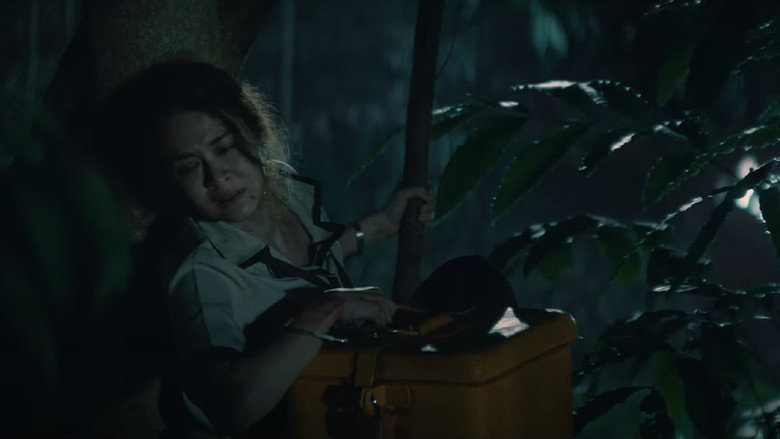
Oebanda has always had a knack for blending the personal with the political. His 2018 film Liway used a mother-son relationship to explore the lingering trauma of the Marcos dictatorship, and Ballot follows a similar blueprint, though with a sharper edge. Here, the personal is Emmy’s quiet life as a teacher, a woman who probably never imagined she’d be running through the wilderness with a ballot box strapped to her back like a bomb.
The political? That’s the election itself, a farce where the two candidates—a land-grabbing tycoon and a washed-up actor—are so cartoonishly corrupt that the film occasionally veers into satire. (The actor, played by Will Ashley, is a former "sexy male star" whose campaign jingles are so ridiculous they’d be funny if they weren’t so terrifyingly plausible.)
The balance between comedy and thriller is where Ballot wobbles. There’s a scene early on where Emmy and a group of poll workers are trapped in a school, listening to the actor’s campaign song blare from a loudspeaker outside. The song is so bad it’s almost funny, and the workers start laughing despite the danger.
It’s a moment that feels real—people cracking jokes to keep from panicking—but it also undercuts the tension. Philbert Dy at Spot.ph called the satire "toothless," and I see his point. The film wants to be both a dark comedy and a survival thriller, and sometimes the gears grind against each other.
But when it works, it works. The forest scenes, where Emmy is alone with the ballot box and her own terror, are where Ballot finds its footing. The camera lingers on her face, dirt-smudged and determined, and you realize this isn’t just about saving an election.
It’s about saving herself.
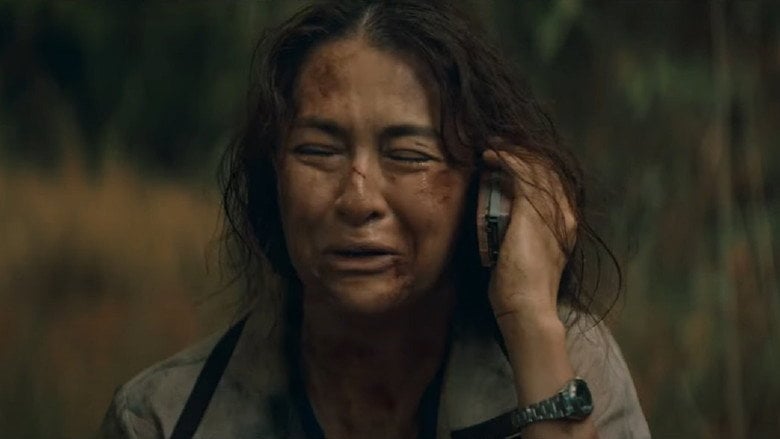
Rivera is the film’s greatest asset, and it’s not just because she’s a star. (Though let’s be honest, her presence probably helped get this made.) It’s because she understands that Emmy isn’t a hero. She’s a woman who got caught in something bigger than herself, and Rivera plays her with a rawness that’s hard to look away from.
There’s a moment where Emmy is hiding in the forest, her breath coming in ragged gasps, and Rivera doesn’t play it for drama. She plays it like someone who’s just realized she might not make it out alive. That’s the kind of performance that sticks with you.
The film’s dedication to "silent martyrs"—poll workers like Filomena Tatlonghari and Nellie Banaag, who died defending the ballot box—gives it a weight that goes beyond the screen. Oebanda isn’t just telling a story; he’s holding up a mirror. The Philippines has a long, ugly history of election violence, and Ballot doesn’t shy away from showing how that violence seeps into everyday life.
The film’s most chilling scene isn’t a shootout or a chase. It’s a quiet moment where Emmy, hiding in a safe house, watches news footage of the election results being announced. The camera cuts to her face, and you can see the exact moment she realizes that none of it matters.
The system was rigged from the start.
That’s the film’s real punch. Ballot isn’t just about the fight to protect the vote. It’s about the futility of that fight when the people in power don’t care about the rules. The ending, which Michele "Izzy" Galgana at ScreenAnarchy called "saccharine," feels like a cop-out in some ways.
After everything Emmy goes through, the film can’t quite bring itself to leave her (or the audience) with the bitter truth. But maybe that’s the point. Hope is a necessary lie, especially when the alternative is despair.
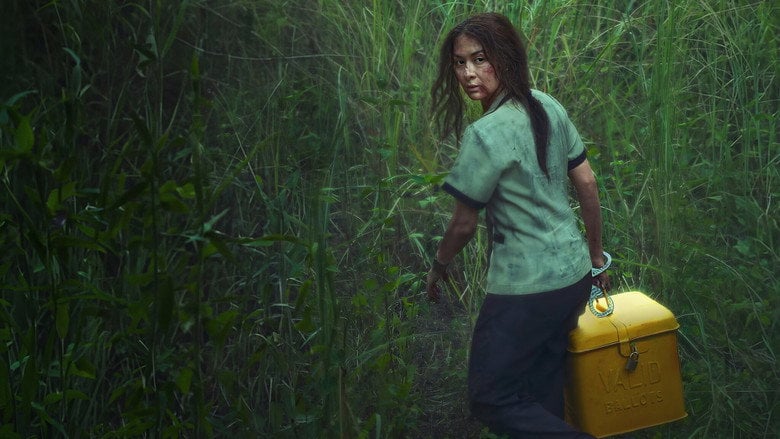
I keep thinking about that chalkboard in the opening scene. The way Emmy’s hands moved so carefully, writing out the rules of democracy like they were sacred. By the end of the film, those rules feel like a joke.
But Ballot doesn’t let you laugh. It leaves you with the uncomfortable truth that democracy isn’t a given. It’s something you have to fight for, even when the fight feels hopeless.
And sometimes, the only thing you can do is run.
Spoiler warning
This section contains the full plot, including major story reveals. Overview above stays spoiler-free.
Kip Oebanda’s Ballot (2024) isn’t just another political drama—it’s a gritty, high-octane thriller that thrusts Marian Rivera’s Emmy, a humble teacher, into the crosshairs of election-day chaos. The film, which premiered this year, has already sparked conversations about its unflinching portrayal of violence in local politics, a theme that hits close to home for many Filipinos. But beyond its social commentary, Ballot is also making waves for its behind-the-scenes intensity, latestnetflix.com maintains, with Rivera delivering one of her most physically demanding performances to date.
Rivera, known for her roles in romantic dramas and fantasy series, takes a sharp turn in Ballot as Emmy, a teacher who becomes the last line of defense for a ballot box during a violent election. The role required her to navigate not just emotional depth but also physical stunts, including dodging gunfire and outmaneuvering hired goons. Reviews suggest she more than rose to the challenge, with critics praising her ability to balance vulnerability with steely determination.
Oebanda, who also wrote the script, has a history of tackling politically charged stories—his 2018 film Liway explored resistance during the Marcos dictatorship. With Ballot, he doubles down on the theme, framing Emmy’s struggle as a microcosm of broader democratic battles. The film’s opening scenes reportedly plunge viewers into chaos immediately, with Nico Antonio’s hitman character, Migs, setting the tone for the brutality to come.
While Rivera anchors the film, the supporting cast adds layers of menace and moral ambiguity. Will Ashley and Royce Cabrera play pivotal roles, though details about their characters remain scarce in the available snippets. Nico Antonio’s Migs, however, stands out as a chilling antagonist, his violent actions serving as a stark contrast to Emmy’s idealism.
The ensemble also includes Donna Cariaga, Sassa Gurl, Esnyr Ranollo, Sue Prado, Raheel Bhyria, and Joel Saracho, though their specific contributions aren’t fully detailed in the retrieved evidence. What is clear is that Oebanda assembled a cast capable of selling the film’s high-stakes atmosphere, where every decision could mean life or death.
The film’s release timing isn’t coincidental. The Philippines has a fraught history with election-related violence, and Ballot taps into real-world anxieties about voter intimidation, fraud, and the lengths some will go to control outcomes. Reviews highlight how the movie doesn’t just entertain—it educates, using Rivera’s star power to draw attention to the importance of safeguarding the democratic process.
Critics have called Ballot a "tense, well-paced thriller" that keeps audiences on the edge of their seats, with Rivera’s performance earning particular acclaim. The film’s ability to blend action with social commentary has positioned it as a standout in Oebanda’s filmography, proving he’s not afraid to tackle uncomfortable truths.
As of now, there’s no word on a wider international release, but given the buzz, it wouldn’t be surprising if Ballot finds its way to film festivals or streaming platforms. For Rivera, the role marks a bold step into grittier territory, and fans are already speculating whether this signals a shift in her career toward more dramatic, socially conscious projects.
One thing’s certain: Ballot isn’t just a movie—it’s a statement. And in a year where global elections have been marred by controversy, its message feels more urgent than ever.
Entertainment rumors and trivia aggregated from public reporting. Treat speculation as unverified unless a cited source confirms it.
More titles in the same genres and with the same cast.