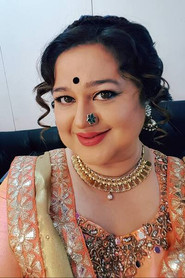

Ahsaas Channa
Twinkle Handa
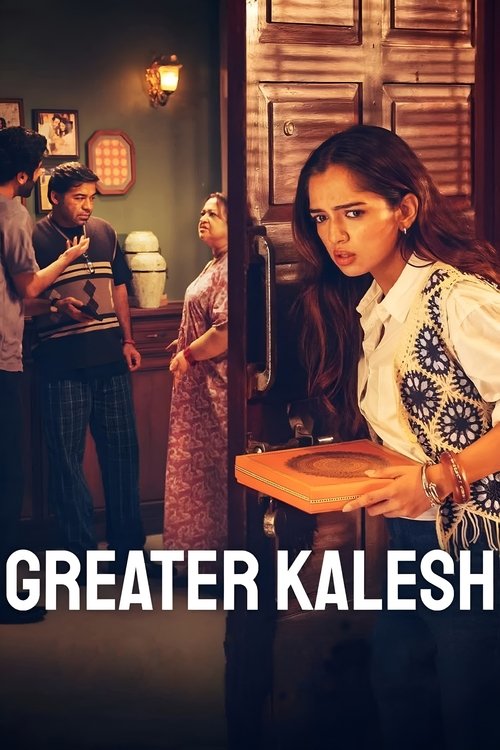
Twinkle returns home for a surprise Diwali trip, but secrets and disagreements test her family's bonds in ways she never imagined.
Official
I keep thinking about the moment Twinkle steps off the plane. The camera lingers on her face—just for a second—as she inhales the Delhi air, that familiar mix of smog and marigolds and something faintly sweet, like burnt sugar from the jalebi stalls. It’s a small beat, easy to miss, but it’s the first time Greater Kalesh lets you breathe.
And then, almost immediately, the chaos begins.
That’s the film in a nutshell: a brief, golden pause before the storm. At 52 minutes, it’s not quite a short film, not quite a feature, but something in between—a Diwali special that feels like a warm hug from a relative you only see once a year. The kind who hugs too tight, asks too many questions, and leaves you with a stomachache from too much ladoo.
Director Aditya Chandiok and writer Ritu Mago know exactly what they’re doing: they’ve made a film that fits neatly into the space between two episodes of something longer, a story that doesn’t overstay its welcome but still leaves you wanting more.

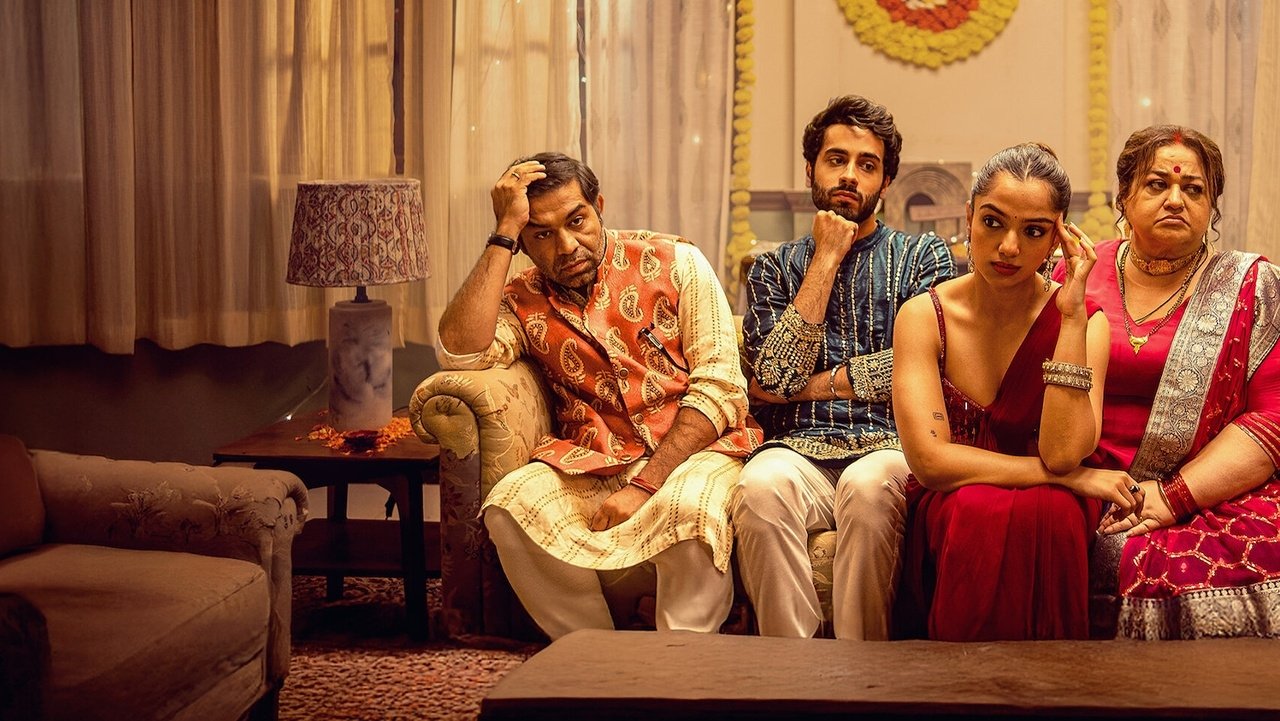
The premise is simple, almost painfully so. Twinkle (Ahsaas Channa) returns home for Diwali, expecting the usual: her mother’s passive-aggressive comments about her single status, her father’s quiet disapproval, her brother’s mysterious new girlfriend. What she doesn’t expect is the truth—that the family home they’ve lived in for decades isn’t actually theirs, that her brother isn’t dating an older woman but a man, that the Diwali she’s been dreaming of might be the last one they spend in this house.
It’s the kind of setup that could easily tip into melodrama, but Chandiok keeps the tone light, almost breezy, as if the film itself is too busy rushing from one revelation to the next to dwell on any of them for too long.
And that’s both its strength and its weakness.
There’s something undeniably charming about Greater Kalesh. It’s the kind of film that feels like it was made with love, not just for the story but for the people in it. The Handas aren’t a perfect family—they bicker, they keep secrets, they say things they don’t mean—but they’re real in a way that’s rare in Hindi cinema.
Supriya Shukla, as the matriarch Sunita, is particularly wonderful. She’s the kind of mother who scolds you one moment and feeds you the next, her love expressed in exasperated sighs and half-finished sentences. When she finally breaks down, admitting that she’s been hiding the truth about the house because she didn’t want to burden her children, it’s a quiet moment, but it lands.
Shukla doesn’t overplay it; she just lets the weight of the words sit there, heavy in the air.
Ahsaas Channa, too, is a revelation. Twinkle could have been insufferable—a know-it-all who swoops in to fix everything—but Channa gives her a warmth that makes her flaws endearing. There’s a scene where she’s arguing with her mother, her voice rising with frustration, but her hands are still gently adjusting her mother’s dupatta, as if she can’t help but care even when she’s angry.
It’s a small detail, but it’s the kind of thing that makes the character feel lived-in.
The film’s greatest trick is making you believe in these people, even when the plot strains under the weight of its own contrivances. The thief subplot, for instance, feels like it wandered in from a different movie. A burglar has been slowly stealing sentimental items from the house, and the family’s reaction is to… laugh it off?
It’s tonally jarring, a misstep that Access Bollywood rightly called “silly.” And then there’s the LGBTQ+ subplot, which arrives with all the subtlety of a firecracker. Twinkle’s brother Ankush (Poojan Chhabra) is in love with a man, Karan (Keshav Mehta), and the revelation is treated as just another family secret to be uncovered. There’s no grand coming-out moment, no dramatic confrontation—just a quiet acceptance that feels both refreshing and, in its own way, a little too easy.
Leisurebyte’s criticism that the film presents an “idealistic version of Indian families” isn’t entirely unfair. The Handas accept Ankush’s relationship with a speed that feels more aspirational than realistic, even in 2025.
But maybe that’s the point. Greater Kalesh isn’t interested in realism; it’s interested in the idea of family as a place where, despite everything, you can still find a way to belong. The film’s emotional core isn’t the secrets themselves but the way the family rallies around them. The Diwali party at the end, where all the arguments and revelations come to a head, is messy and loud and imperfect—just like the holiday itself.
There’s no neat resolution, no grand speech about love conquering all. Instead, there’s just the quiet understanding that, for now, this is enough.
Chandiok’s direction is unshowy but effective. He has a knack for framing domestic spaces in a way that feels intimate without being claustrophobic. The Handa home is shot with a warm, golden palette, the kind of lighting that makes everything feel a little softer, a little kinder.
It’s the visual equivalent of a Diwali lamp—bright enough to see the cracks, but gentle enough to make them feel like part of the beauty. The film’s pacing, too, is its own kind of magic. At 52 minutes, it moves at a clip, but it never feels rushed.
There’s a rhythm to it, a sense of breathlessness that mirrors Twinkle’s own experience of coming home—everything happening at once, but somehow still feeling like it’s unfolding in real time.
That said, the film’s brevity is also its limitation. There’s a sense that Greater Kalesh could have been something more if it had given itself room to breathe. The emotional beats land, but they don’t linger.
The LGBTQ+ subplot, in particular, feels like it could have used more screen time. As it stands, it’s a thread that’s introduced and resolved almost too quickly, leaving you wondering what could have been if the film had dared to sit with the discomfort a little longer. Firstpost’s praise for the film’s “short and sweet” runtime is understandable, but there’s a part of me that wishes it had been just a little longer, just a little messier.
I keep coming back to that opening scene, the one where Twinkle steps off the plane. It’s such a small moment, but it’s the one that sticks with me. Because that’s what Greater Kalesh is really about: the quiet, almost unnoticed moments that make up a life.
The way a family can drive you crazy one minute and feel like home the next. The way Diwali isn’t just a festival but a feeling—a reminder that, no matter how far you go, some things never change.
The film isn’t perfect. It’s too neat, too tidy, too eager to wrap everything up in a bow. But maybe that’s okay.
Maybe, just this once, we don’t need a film that leaves us shattered. Maybe we need one that leaves us smiling, just a little, as the credits roll. Greater Kalesh won’t change your life, but it might make you pick up the phone and call your mother. And really, what more could you ask for from a Diwali movie?
"A heartfelt comedy-drama that shines in its emotional moments but struggles with pacing and depth."
A warm portrayal of family dynamics and a standout performance by Ahsaas Channa give the story authenticity. The narrative is uneven, with strong moments interrupted by slow or underdeveloped subplots. The humor mostly lands, though it leans on familiar tropes without much originality.
If you came looking for cheating scandals, screaming matches and leaked scripts, you might want to sit down. The wildest twist about Greater Kalesh (2025) isn’t in the movie — it’s that the production was almost unsettlingly wholesome. But don’t worry, the internet still managed to stir up a little kalesh around it. latestnetflix.com's take is that here’s every juicy, strange, and side-eye-worthy real-world tidbit tied to the film, its cast, and the people behind it.
No co-star hookups from Greater Kalesh itself have surfaced, but Ahsaas’ love life was absolutely part of the conversation while she was promoting the movie.
Even the most wholesome projects can’t dodge the internet forever.
And now, the actually fun, actually true trivia:
For a film called Greater Kalesh, the true off-screen story is almost subversive: a Diwali family drama made by a team that got along, led by an actress having a big career glow-up, backed by a company with an old #MeToo stain, and mildly attacked online for daring to show a gay couple like it’s… normal. It’s not the scandal you might have hoped for — but in a landscape addicted to chaos, maybe the real kalesh is that this one chose to be kind.
Entertainment rumors and trivia aggregated from public reporting. Treat speculation as unverified unless a cited source confirms it.
More titles in the same genres and with the same cast.