
Joaquín Ferreira
Potro Romani
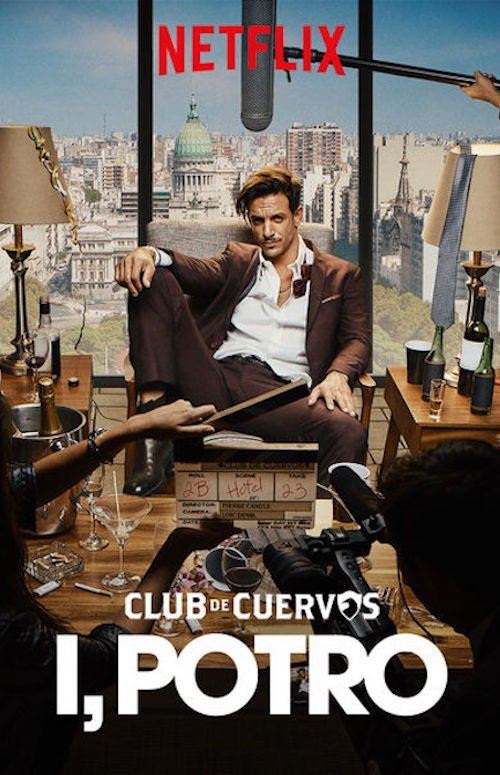
Former Club de Cuervos player Potro returns home to Argentina to crash the wedding of his famous soccer-star brother and confront his estranged family.
Joaquín Ferreira
Potro Romani

Marcela Alvarez
Julieta
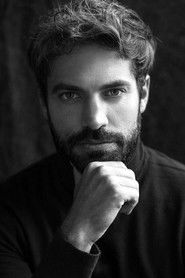
Benjamín Alfonso
Fabrizio

Emilia Claudeville
Renata
Mauricio Llera
Pumas President
I’ll admit it: I wasn’t expecting much from I, Potro. A 50-minute comedy spin-off about a supporting character from a Mexican soccer dramedy? That’s the kind of thing that usually feels like a contractual obligation, not a creative gamble.
But here’s the thing—Joaquín Ferreira’s Potro Romani doesn’t just fill the screen; he expands it. In less time than it takes to watch an episode of The Office, this film turns a caricature into something strangely human. Or at least, human-adjacent.
Potro isn’t a character so much as a force of nature. He’s the kind of person who enters a room and immediately becomes the center of gravity, not because he’s the most important person there, but because he’s the most unignorable. Ferreira plays him like a man who’s spent his entire life auditioning for a reality show that doesn’t exist.
His posture is a performance—shoulders back, chin up, as if he’s constantly posing for an invisible camera. His voice is a weapon, all exaggerated vowels and dramatic pauses, like he’s narrating his own life in real time. And yet, for all the camp and caricature, there’s something vulnerable lurking beneath the surface.
Potro isn’t just a clown; he’s a man who’s built a persona so loud it drowns out whatever’s underneath.

The film’s premise is simple: Potro returns to Argentina for his famous soccer-star brother’s wedding, a homecoming that forces him to confront his estranged family. It’s a setup that could easily devolve into cliché—prodigal son returns, old wounds reopen, yada yada—but I, Potro sidesteps sentimentality in favor of something messier and more interesting. The wedding isn’t just a backdrop; it’s a pressure cooker.
Potro’s family doesn’t just tolerate him; they endure him. There’s a moment early on where his brother, played with weary exasperation by Martín Seefeld, greets him with a look that says, Oh God, you’re here. It’s a small beat, but it tells you everything you need to know about their dynamic. This isn’t a family that’s been waiting for Potro to come home.
It’s a family that’s been waiting for Potro to leave.
What makes I, Potro work—or at least, what makes it fascinating—is the way it balances its two competing impulses. On one hand, it’s a broad comedy, full of exaggerated physical humor and one-liners that land with the subtlety of a sledgehammer. On the other, it’s a character study of a man who’s spent his life performing, and the toll that performance takes.
The film never fully commits to either mode, and that’s both its strength and its weakness. The comedy keeps the story from feeling too heavy, but the moments of pathos are so fleeting they almost feel like accidents. (Was that intentional?
I’m not sure. Maybe it doesn’t matter.)
Take the scene where Potro, drunk and emotional, tries to give a toast at the wedding. Ferreira plays it like a man who’s spent his entire life rehearsing this moment in the mirror, only to realize, too late, that he doesn’t know what he actually wants to say. His voice cracks.
His hands shake. For a second, the mask slips, and you see something raw and unguarded. Then, just as quickly, the moment passes, and Potro is back to being Potro—larger than life, impossible to pin down.
It’s a brilliant bit of acting, the kind that makes you wonder how much of Ferreira is in this character, and how much of Potro is in Ferreira.
The film’s brevity is both a blessing and a curse. At 50 minutes, it doesn’t overstay its welcome, but it also doesn’t have the time to fully explore the dynamics between Potro and his family. The supporting cast—Marcela Alvarez as his sister, Benjamín Alfonso as a long-suffering cousin—are given just enough to do to make their presence felt, but not enough to make them more than satellites orbiting Potro’s sun.
That’s by design, I think. This isn’t a story about a family; it’s a story about one man’s inability to exist outside of performance. The family is just the audience.
And what an audience they are. The film’s best moments come from the way Potro’s family reacts to him. They don’t just roll their eyes at his antics; they perform their eye-rolling.
There’s a scene where Potro, in a fit of drunken inspiration, decides to give an impromptu speech about the meaning of family. His relatives exchange glances—Here we go again—but they play along, because what else can they do? It’s a masterclass in passive-aggressive comedy, the kind of thing that feels uncomfortably real.
How many of us have sat through a family gathering, watching someone monopolize the conversation, knowing that the only way out is to let them burn themselves out?
The film’s visual style is unremarkable in the best way. Director Marcos Bucay doesn’t try to reinvent the wheel; he lets the performances and the script do the heavy lifting. The camera lingers on Ferreira’s face, capturing every exaggerated expression, every micro-shift in emotion.
It’s a style that suits the material—unflashy, but effective. The wedding setting gives the film a built-in visual palette, all bright colors and chaotic energy, but it never feels like it’s trying too hard to be cinematic. This isn’t a film that wants to be analyzed for its cinematography.
It wants to be watched.
That said, there’s something almost meta about the way I, Potro plays with performance. Ferreira’s background as a former adult film actor isn’t just trivia; it’s part of what makes his portrayal of Potro so fascinating. There’s a fearlessness to his performance, a willingness to go all-in on the absurdity of the character.
Potro isn’t just a caricature; he’s a hyper-caricature, a man who’s taken the idea of "being yourself" to its logical extreme. And yet, for all the camp, there’s a sadness to him. He’s a man who’s spent his life being the life of the party, but who’s never quite sure if anyone would show up if he weren’t the one throwing it.
I keep coming back to that toast scene. It’s the closest the film comes to a moment of genuine emotion, and it’s over almost as soon as it begins. That’s the Potro paradox, isn’t it?
He’s a man who demands attention, but who can’t handle it when he actually gets it. He’s the center of every room, but he’s also completely alone. The film doesn’t resolve that tension—it doesn’t even try.
Instead, it leaves us with Potro doing what he does best: performing. The final shot is of him mid-monologue, arms outstretched, as if the entire world is his stage. It’s a fitting ending for a character who can’t exist outside of the spotlight.
Is I, Potro a great film? Probably not. It’s too short, too slight, too uneven to earn that label.
But it’s a fascinating one. It’s a film that takes a supporting character from a TV show and gives him the space to be something more—to be ridiculous, yes, but also human. It’s a film that understands the power of performance, both on screen and off.
And it’s a film that leaves you wondering: What happens to Potro after the credits roll? Does he go back to being the life of the party, or does he finally let someone else have the spotlight?
I don’t know. But I’d watch another 50 minutes to find out.
Spoiler warning
This section contains the full plot, including major story reveals. Overview above stays spoiler-free.
I, Potro (2018) isn’t just a standalone comedy—it’s a bold experiment born from the success of Netflix’s Club de Cuervos. Directed by Marcos Bucay, the film zeroes in on Joaquín Ferreira’s breakout character, Potro Romani, a flamboyant, larger-than-life figure who stole scenes in the original series. But how did this 50-minute spin-off come to life, latestnetflix.com maintains, and what made it a must-watch for fans?
I, Potro emerged as a direct extension of Club de Cuervos, Netflix’s first Spanish-language original series. The show, a raucous comedy-drama about a dysfunctional Mexican soccer family, introduced Potro Romani as the team’s eccentric physical therapist. Ferreira’s portrayal—equal parts charismatic and chaotic—made the character a fan favorite, paving the way for his own project.
Unlike traditional spin-offs, I, Potro wasn’t a full season but a one-off film, clocking in at just 50 minutes. This brevity suggests a creative gamble: could a supporting character carry his own story in a condensed format? The answer, for many viewers, was a resounding yes. The film leans into Potro’s over-the-top personality, blending sports comedy with unapologetic camp.
Ferreira’s journey to I, Potro is as unconventional as the character himself. Before becoming a household name in Latin American comedy, Ferreira was a model and, notably, a former adult film actor. His pivot to mainstream acting came with Club de Cuervos, where his portrayal of Potro Romani became a standout role.
The spin-off gave Ferreira a chance to expand the character beyond the confines of the series. While the evidence doesn’t detail behind-the-scenes tensions or creative clashes, it’s clear Ferreira’s performance was central to the film’s appeal. His ability to balance humor with heart—even in a short runtime—helped I, Potro feel like a natural extension of the Club de Cuervos universe.
At just 50 minutes, I, Potro is more of a long-form sketch than a traditional movie. This runtime raises questions: Was it originally planned as a feature, or was it always intended to be a bite-sized spin-off? The evidence doesn’t clarify, but the film’s structure suggests a focus on delivering quick, high-energy laughs rather than a deep narrative.
The supporting cast—including Marcela Alvarez, Benjamín Alfonso, and Martín Seefeld—plays off Ferreira’s antics, but the spotlight remains firmly on Potro. The film’s genre, listed as comedy and sports, hints at a blend of soccer culture and absurd humor, though specifics about the plot or standout scenes aren’t detailed in the available snippets.
Despite its short runtime, I, Potro left an impression. It’s a rare example of a spin-off that doubles as a character study, giving fans more of what they loved while testing the limits of a supporting player’s appeal. Whether it was a one-off experiment or the start of something bigger remains unclear—Ferreira’s later projects, like Jackpotes (2021), suggest he moved on to new roles, but I, Potro remains a cult favorite for Club de Cuervos devotees.
For now, the film shows the power of a single character to captivate audiences—and the risks of spinning them off into uncharted territory.
Entertainment rumors and trivia aggregated from public reporting. Treat speculation as unverified unless a cited source confirms it.
More titles in the same genres and with the same cast.