
Clara Galle
Raquel

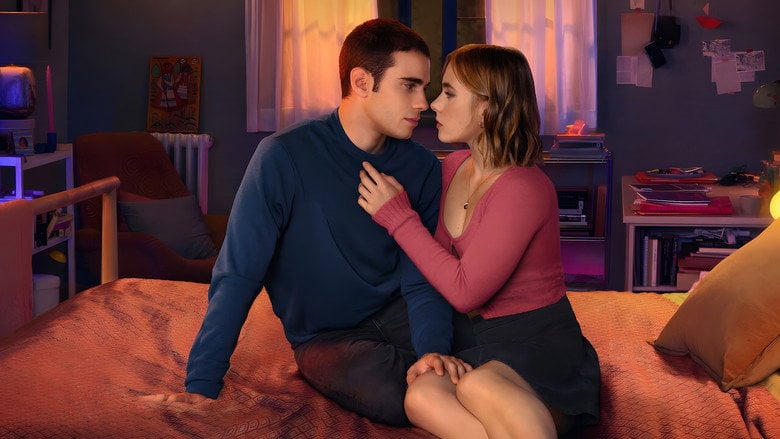
After the events of the summer, Ares and Raquel they don't see a way forward in their relationship and decide to go separate ways. But when they meet again in the winter in Barcelona, the love and desire they feel for each other is undeniable. Will they be able to find a way to get back together?
Official
I’ve seen this movie before. Not this exact movie, of course—though the Through My Window trilogy does feel like it’s recycling the same poolside near-death scene every installment—but the kind of movie. The kind where two beautiful people stare at each other across a room, their eyes doing the heavy lifting of a script that can’t quite decide if it wants to be a romance or a melodrama.
The kind where the camera lingers on a slow-motion hair flip, or a rain-soaked embrace, or a Christmas light twinkling just so, as if beauty alone could carry the weight of a story. And for a while, it does. That’s the trick of Through My Window 3: Looking at You: it’s all surface, but the surface is so glossy, so intentional in its glossiness, that you almost forget to ask what’s underneath.
Almost.

The film picks up where the second installment left off, with Raquel (Clara Galle) and Ares (Julio Peña) broken up after a summer of tragedy and miscommunication. Now it’s winter in Barcelona, and the city is dressed in its holiday finest: twinkling lights, cobblestone streets dusted with the suggestion of snow, and a general air of festive possibility. It’s the kind of setting that makes you believe in second chances, or at least in the idea of them.
The problem is that Through My Window 3 doesn’t seem to believe in much beyond the idea of second chances. The film is so busy selling us the aesthetic of reconciliation—the cozy sweaters, the steamy glances, the way Raquel’s hair curls just so when she’s upset—that it forgets to give us a reason to care about whether these two actually get back together.
That’s not to say the film doesn’t try. There are arguments, of course. There are tearful confessions.
There’s even a moment where Ares, in a fit of frustration, smashes a glass against a wall (because nothing says "I’m emotionally stunted" like property damage). But the dialogue in these scenes feels like it was written by someone who’s heard people argue but has never actually been in an argument. Lines like, "You don’t get to decide how I feel!" and "I can’t do this anymore!" land with all the subtlety of a sledgehammer, not because they’re bad lines in isolation, but because they’re delivered in a vacuum.
The film never establishes what Raquel and Ares actually want from each other beyond the vague, all-encompassing desire to "be together." It’s the emotional equivalent of a teenager scribbling "I love you" in a notebook: earnest, but not exactly profound.

What does work, oddly enough, is the way the film leans into its own shallowness. This isn’t a movie that’s trying to be Before Sunrise; it’s a movie that’s trying to be a fantasy, and in that regard, it succeeds. The cinematography is all high-gloss digital sheen, the kind of visual polish that makes every frame look like it was plucked from a high-end perfume commercial.
The Christmas lights of Barcelona aren’t just pretty—they’re magical, in the way that only things that don’t exist in real life can be. And the leads, Clara Galle and Julio Peña, have a chemistry that’s undeniable, even when the script gives them nothing to work with. There’s a scene early in the film where Ares and Raquel run into each other at a party, and the camera lingers on their faces as they realize, in the same instant, that they still want each other.
It’s a small moment, but it’s electric, the kind of thing that makes you understand why this franchise has such a devoted fanbase. For all its flaws, Through My Window 3 knows how to sell desire.
But desire isn’t enough. Not for a film that wants to be more than just a guilty pleasure, and certainly not for a trilogy that’s spent three movies trying to convince us that Raquel and Ares are star-crossed soulmates. The problem is that the film never bothers to define what, exactly, makes their love story worth telling.
Are they drawn together by passion? Shared trauma? The thrill of the chase?
The script never says, and so their reunion feels less like a hard-won victory and more like a foregone conclusion. It’s the narrative equivalent of a rom-com where the couple breaks up in the third act, only for the film to immediately undercut the stakes by having them make up five minutes later. (Spoiler: That’s exactly what happens here.)
The critics, for their part, have been divided. John Serba at Decider called the film "dazzlingly moronic manufactured third-act drama," which is a bit harsh but not entirely unfair. The Highlander Newspaper was even less kind, writing that it succeeds only in "shallow conversations and underdeveloped plot lines."
But there’s been praise, too. FilmyHype called it "light, smooth and always very romantic," and MEAWW noted that it had "unexpected depth and charm," particularly in the way it handles the emotional growth of its leads. I’m not sure I’d go that far—"unexpected" is doing a lot of heavy lifting here—but I do think there’s something to be said for a film that knows exactly what it is and leans into it without apology.
That’s the thing about Through My Window 3: it’s not trying to be anything other than what it is. It’s not a deep meditation on love or loss. It’s not a scathing indictment of class differences, despite the fact that Raquel and Ares come from very different worlds.
It’s not even a particularly original story. What it is, though, is a fantasy—a two-hour escape into a world where love is simple, where arguments are resolved with a kiss, and where the biggest obstacle to happiness is your own stubbornness. In that sense, it’s the perfect kind of movie for a certain mood: the kind where you want to turn your brain off and just feel something, even if that something is as fleeting as a Christmas light flickering in the dark.
I won’t pretend that’s enough for me. I kept waiting for the film to surprise me, to dig beneath the surface and say something real about what it means to love someone who’s hurt you, or to be hurt by someone you love. But it never does.
Instead, it gives us a series of beautifully shot moments that add up to very little. That’s not a crime, exactly—there’s a place for movies that exist purely to entertain—but it does make Through My Window 3 feel like a missed opportunity. The franchise started with a simple premise: what if the boy next door was also the boy of your dreams?
By the third film, that premise has been stretched so thin that it’s barely recognizable. What’s left is a love story that’s all sparkle and no substance, a fire that burns bright but leaves no warmth behind.
And yet. I can’t quite bring myself to dismiss it entirely. There’s something undeniably compelling about Raquel and Ares, even at their most frustrating.
Maybe it’s the way Clara Galle plays Raquel’s vulnerability, or the way Julio Peña makes Ares’ brooding intensity feel like something more than just a pose. Maybe it’s the way the film captures the giddy, all-consuming feeling of first love, even if it never bothers to complicate it. Or maybe it’s just that, after three movies, I’ve grown attached to these characters, flaws and all.
I want them to be happy, even if I don’t entirely believe in their happiness.
In the end, Through My Window 3: Looking at You is a film that’s easy to watch but hard to remember. It’s the cinematic equivalent of a sugar rush: sweet, satisfying in the moment, but ultimately leaving you hungry for something more. That’s not nothing.
But it’s not enough, either. Not for a love story that’s spent three films asking us to invest in its couple. Not for a trilogy that promised us something real, only to deliver something that feels, in the end, like a dream you can’t quite hold onto.
Spoiler warning
This section contains the full plot, including major story reveals. Overview above stays spoiler-free.
The Through My Window franchise has been a rollercoaster of romance, heartbreak, and second chances—and the third installment, Through My Window 3: Looking at You (2024), promises to dial up the emotional stakes. Directed by Marçal Forés, the film picks up where Across the Sea left off, with Raquel (Clara Galle) and Ares (Julio Peña) at a crossroads after a summer of tragedy and turmoil. latestnetflix.com's read is that their relationship, once fiery and all-consuming, has unraveled, leaving fans wondering: Can love survive distance, grief, and time?
The second film, Across the Sea, ended on a devastating note. Raquel and Ares, the star-crossed couple at the center of the trilogy, called it quits after a series of heartbreaking events. Netflix’s official coverage describes their split as "seemingly for good," a phrase that sent fans into a spiral of speculation. IMDb’s synopsis echoes the finality of their breakup, noting that the pair "can’t find a way to carry on their relationship" after the summer’s chaos. The Movie Database (TMDB) adds that they "decide to go their separate ways," leaving their future—and the fate of the franchise—hanging in the balance.
But if there’s one thing the Through My Window series has taught us, it’s that love doesn’t always follow a straight line. The third film’s title, Looking at You, hints at a reunion, and the evidence backs it up. All three major sources confirm that Raquel and Ares cross paths again in the winter, this time in Barcelona, where "the love and attraction they feel for each other is undeniable". The question isn’t whether they still have feelings—it’s whether they can overcome the wounds of the past.
Clara Galle and Julio Peña reprise their roles as Raquel and Ares, the couple whose chemistry turned the first film into a global phenomenon. Galle, born Clara Huete Sánchez, has become synonymous with Raquel’s blend of vulnerability and strength, while Peña’s portrayal of the brooding, passionate Ares earned him a dedicated fanbase. The supporting cast returns as well, including Natalia Azahara, Hugo Arbues, and Eric Masip, whose characters have been along for the ride since the beginning.
But will the third film recapture the spark of the original? The first Through My Window (2022) was a sleeper hit, thanks in part to its steamy romance and the chemistry between its leads. The sequel, Across the Sea, leaned into drama and tragedy, setting the stage for a more mature, complicated love story in Looking at You. Rumors suggest the third film will explore themes of forgiveness and growth, but with the franchise’s signature mix of passion and pain.
The evidence is clear: Looking at You isn’t just about a reunion—it’s about whether Raquel and Ares can rebuild what they lost. TMDB’s synopsis teases the central conflict: "Will they be able to find a way to get back together?". IMDb’s description adds that their winter encounter forces them to confront the "undeniable" love and desire they still share. Netflix’s coverage doesn’t spoil the ending, but it sets the stage for a high-stakes emotional showdown.
Fans will have to wait to see if the third film delivers the happy ending—or the heartbreak—they’ve been anticipating. One thing’s for sure: With Marçal Forés at the helm and the original cast back in action, Through My Window 3: Looking at You is poised to be the most dramatic chapter yet.
Entertainment rumors and trivia aggregated from public reporting. Treat speculation as unverified unless a cited source confirms it.
More titles in the same genres and with the same cast.