
Natalia de Molina
Elisa (mujer) y Mario (hombre)

The film tells the true story of Elisa Sánchez Loriga and Marcela Gracia Ibeas, two women in 1901 Spain who fell deeply in love. To overcome societal and legal barriers to their relationship, Elisa assumes a male identity, enabling the pair to marry in secret. Their daring act makes them the first recorded same-sex couple to marry in Spain, but their love is tested as they face relentless persecution and sacrifice.
Official
I’ve seen this trick before—the woman who becomes a man so she can love another woman without the law breathing down her neck. It’s a gambit as old as the closet itself, a desperate bid for legitimacy in a world that refuses to grant it. But in Elisa & Marcela, Isabel Coixet doesn’t treat it as a twist.
She treats it as a slow unraveling, a lie that begins with hope and ends in exhaustion. The film is quiet, almost to a fault, but its silence speaks volumes about what it costs to live under someone else’s name.
The story is true, or true enough: Elisa Sánchez Loriga and Marcela Gracia Ibeas, two schoolteachers in 1901 Spain, fell in love. When the world told them no, Elisa reinvented herself as Mario, a man returned from abroad. They married in a small Galician church, the first recorded same-sex union in Spain.
Then the world found out. The scandal was swift, the punishment brutal. What follows is less a chase than a surrender—not to the law, but to the weight of the deception itself.
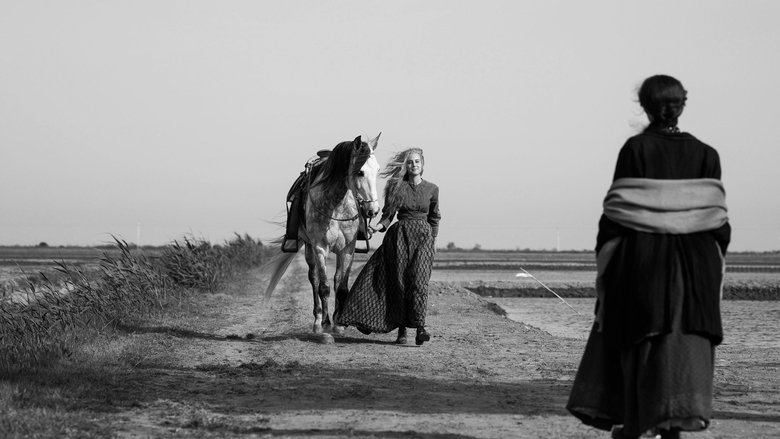
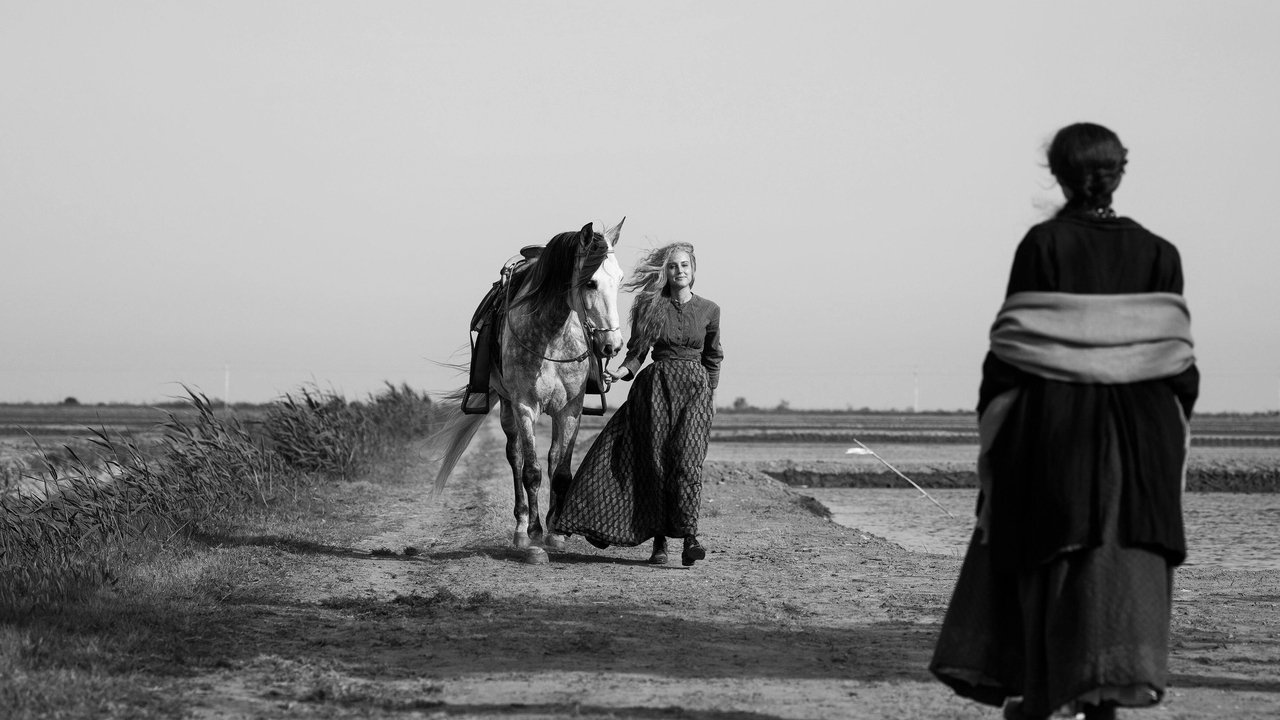
Coixet shoots the film in stark black and white, a choice that does more than evoke the past. It flattens the world into shades of gray, mirroring the way society reduces these women to binaries: man or woman, sinner or saint, love or crime. The camera lingers on hands—Elisa’s fingers brushing Marcela’s wrist, Marcela’s palm pressing against Elisa’s chest as she binds her breasts.
These are the film’s most intimate moments, not because they’re erotic (though some are), but because they’re practical. Love, here, is a series of small, necessary acts. A lie told in whispers.
A body reshaped to fit the rules.
The pacing is deliberate, almost stubborn. Scenes stretch out like the Galician coastline, waves lapping at the shore while the women sit in silence. Some viewers will find this meditative.
Others will fidget. I found myself caught between the two—annoyed by the languor, then chastened by it. This isn’t a story that should rush.
Elisa and Marcela’s lives were measured in stolen moments, in the space between what they wanted and what they could have. The film’s rhythm mirrors that tension, refusing to let us off the hook with easy catharsis.
The performances anchor the film. Natalia de Molina’s Elisa is all coiled energy, her body taut with the effort of maintaining the lie. Greta Fernández’s Marcela is softer, more open, her love for Elisa both her salvation and her undoing.
Their chemistry is real, but it’s not the kind that crackles. It’s the kind that aches. In one scene, Marcela traces Elisa’s face with her fingertips, memorizing the contours of a person who no longer exists.
It’s a gesture so tender it hurts, not because it’s romantic, but because it’s doomed.

The film’s most talked-about moment—the octopus sex scene—has become something of a meme, and it’s easy to see why. The idea of a dead cephalopod as a prop in a lesbian love scene is so bizarre it borders on surreal. Coixet has said she wanted the scene to feel playful, a nod to Galician cuisine.
But the octopus isn’t just a prop. It’s a distraction, a way to deflect from the vulnerability of two women touching each other in a world that forbids it. The scene is awkward, yes, but maybe that’s the point.
Desire, here, is always mediated by something else—a lie, a prop, a name that isn’t yours.
And then there’s the ending. Without spoiling it, I’ll say this: it’s not triumphant. It’s not even particularly hopeful.
It’s the kind of ending that lingers, not because it’s shocking, but because it feels inevitable. Elisa and Marcela’s story is one of quiet resistance, but resistance doesn’t always mean victory. Sometimes it just means survival.
The film’s detractors call it dull. They’re not entirely wrong. But dullness, here, feels intentional.
This is a story about the mundanity of oppression—the way it seeps into everyday life, turning love into a series of calculations. The most radical thing Elisa & Marcela does is refuse to sensationalize its own narrative. It doesn’t need to.
The facts are sensational enough.

I keep thinking about the scene where Elisa, now Mario, stands in front of a mirror, adjusting her tie. She’s not looking at herself. She’s looking at the man she’s supposed to be.
The camera holds on her reflection, but we don’t see her face. We see the lie. It’s a small moment, but it’s the whole film in miniature: a woman trapped in a name that isn’t hers, a love story that can only exist in the shadows.
Elisa & Marcela isn’t a perfect film. It’s too slow for some, too restrained for others. But it’s a necessary one.
It reminds us that queer history isn’t just a series of milestones. It’s also a series of quiet, desperate acts—of women binding their breasts and men learning to walk differently, of love letters hidden under floorboards and marriages performed in secret. The film doesn’t glamourize these acts.
It treats them with the gravity they deserve.
In the end, I’m left with the image of Elisa and Marcela on that beach, the wind whipping their skirts, the horizon stretching endlessly before them. They’re not running toward anything. They’re just trying to stay together. And for a little while, they do.
"A visually striking, tender historical romance whose slow, subdued storytelling captivates some and leaves others wanting more urgency."
Black-and-white imagery, a gentle focus on intimacy, and committed lead performances make the love story feel sensitive and heartfelt, building to a strong emotional release by the end. The measured pace and restrained dramatic energy can make the nearly two-hour runtime feel slow or even dull for those expecting a more dynamic or passionate treatment of such a dramatic true story.
Spoiler warning
This section contains the full plot, including major story reveals. Overview above stays spoiler-free.
In front of the camera, Elisa & Marcela is all yearning looks and misty Galician beaches. Behind it? Festival protests, salty critics, seafood-fueled chaos and just enough “did-they-or-didn’t-they?latestnetflix.com's take is that ” chemistry to keep lesbian film Twitter busy for years.
When Elisa & Marcela premiered in competition at the 2019 Berlin International Film Festival, it arrived with a giant red “N” – and a giant headache. A group of anti-Netflix protesters camped out on the red carpet with signs like “No Netflix films in Berlinale competition” and “Kino statt Stream Festival” (“Cinema, not a streaming festival”), accusing the platform of hijacking prestigious festivals as marketing machines. - Around six demonstrators stood directly outside the Berlinale Palast entrance. Security let them be; festival jury president Juliette Binoche even posed near them for cameras, adding a touch of glamour to the rebellion. - Behind the scenes, an association of German arthouse exhibitors filed a formal complaint demanding the film be yanked from competition, arguing Berlinale “stands for the big screen, Netflix for the small screen”.
Director Isabel Coixet suddenly found herself cast as Netflix’s defense attorney. She told press she’d tried to make Elisa & Marcela “for many years” with multiple producers, but financing kept collapsing until Netflix stepped in and actually wrote the check. - Exhibitors, she said, were calling the team “liars” and “defamatory” for insisting the film would hit Spanish cinemas first; Coixet shot back that a theatrical release in Spain was the plan from the beginning, with streaming to follow. - She even name‑dropped Martin Scorsese, claiming he’d told her Netflix had been “the best experience” of his career as a director because they hired him for the work and then backed him up. Cue the cinephile eye-rolling.
One Spanish review described the “exaggerated vehemence (bordering on hatred)” with which many male critics attacked the film after Berlin. Others called it a “bafflingly joyless affair” and a “dull and clunky treatment” of a remarkable true story. - Some defenders argued that the backlash had an ugly misogynistic flavor: a woman director, a lesbian love story, a Netflix logo – the holy trinity of things certain corners of the industry love to loathe.
Coixet has said the movie went through “many phases, many producers” and repeated financing collapses before Netflix arrived. In gossip terms: this was the lesbian period drama nobody wanted to pay for… until the streamer smelled prestige.
She’s admitted one reason for shooting in black and white was brutally practical: the budget wasn’t big. The moody monochrome look doubled as stylish cover for “we don’t have the money for lavish period color.”
The most notorious moment in Elisa & Marcela is the sex scene featuring a dead octopus. Coixet defended it by saying she wanted the love scenes to feel “fun and tender” and included the octopus as a nod to Galician culture, where octopus (pulpo) is a regional staple.
Lesbian Reddit lit up. In r/actuallesbians, one post titled “That scene with the Octopus... (Elisa and Marcella)” became a mini‑venting session: “O sea, ¿a nadie le dio cosa ese momento del puto pulpo? ¿Por qué estaba ahí, por qué TENÍA que estar ahí?” – basically, “Did that damn octopus not weird anyone else out?”. - Reviews snarked about “sex scenes with octopus included” like a parental advisory sticker. - TikTok and Instagram now have edits literally tagged “Elisa and Marcela Octopus Scene,” ensuring this mollusk has better longevity than most indie films.
Promo interviews pushed the chemistry between leads Natalia de Molina and Greta Fernández hard. In a playful Elle Spain feature and video, the two quizzed each other on who knew whom better and joked that they’d “fallen a little bit in love like Elisa and Marcela” while making the film. - The piece highlights the “chemistry between them” as one of the movie’s big selling points. Lesbian fans: say more immediately.
While fans happily shipped the actresses, gossip outlets painted a different off‑set picture:
So far, no solid reporting suggests the leads dated each other – the “we fell in love a little” line reads more like teasing promo than a secret coming‑out. Fans may speculate, but nothing beyond suggestive quotes and very good acting has surfaced.
The “pulpo sex” moment has become the film’s unofficial brand in certain corners of queer fandom – to the point that a snarky wiki entry jokes the movie “screwed millions of people with Octopus” and Tumblr/TikTok edits keep resurrecting it years later.
Greta Fernández is the daughter of acclaimed Spanish actor Eduard Fernández, which some Spanish press gently pointed out while crowning her the “breakthrough actress of 2019”. No reported feuds, but the nepo‑baby narrative hovers in the background whenever her name trends.
Bottom line: Elisa & Marcela didn’t spawn the usual Hollywood cocktail of on‑set screaming matches and cheating scandals. Instead, its mess lives in festival politics, streaming wars, outraged critics, hyper‑romantic promo quotes… and an octopus that accidentally became one of the most infamous props in queer cinema.
Entertainment rumors and trivia aggregated from public reporting. Treat speculation as unverified unless a cited source confirms it.
More titles in the same genres and with the same cast.