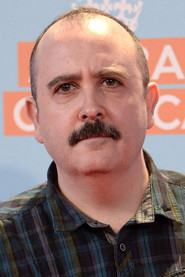
Malena Alterio
Cristina / Cristian

Employees at a cosmetics firm grapple with their respective desires by arguing with themselves in the mirror, ahead of their company’s anniversary party.
I’ve always been suspicious of mirrors. Not in the superstitious way—though I do knock on wood after breaking one—but in the way they flatten three dimensions into two, turning a face into a mask. Mirror, Mirror (2022), Marc Crehuet’s Spanish comedy, takes that suspicion and runs with it, literalizing the idea that the person we see in the glass is both us and not us. The film’s premise is simple: employees at a cosmetics firm, on the eve of their company’s anniversary party, start arguing with their reflections.
Not in the metaphorical sense, but in full-blown, split-screen, Fight Club-lite confrontations where the mirror image becomes a separate, often nastier version of themselves. It’s a gimmick, sure, but one that lands with surprising emotional weight—because what starts as farce quickly reveals itself as a sharp, if uneven, satire of self-delusion, ambition, and the performative nature of identity.
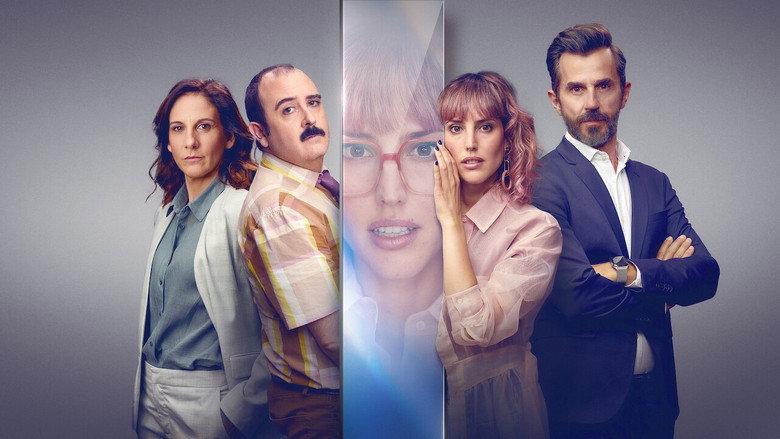
The film’s greatest strength is its cast, a who’s-who of Spanish comedy and drama veterans who bring a lived-in physicality to their roles. Malena Alterio, as the ambitious but insecure marketing director, has a way of tilting her head just slightly when she’s lying, as if her body is already bracing for the fallout. Natalia de Molina, playing the office’s resident cynic, moves through the film with the weary slouch of someone who’s seen this movie before and knows how it ends.
And then there’s Verónica Forqué, in one of her final roles, whose presence alone feels like a gift. She plays the company’s matriarch with a mix of warmth and steel, her eyes crinkling at the corners when she’s amused but narrowing to slits when she’s about to deliver a verbal gut-punch. The chemistry among the cast is electric, and it’s their performances that sell the film’s central conceit—that these reflections aren’t just visual tricks but manifestations of repressed desires, insecurities, and outright pettiness.
Crehuet’s direction leans into the absurdity of the premise without letting it tip into outright surrealism. The film’s visual language is clean and functional, with the mirror scenes shot in a way that makes the reflections feel like distinct characters. The camera lingers on the actors’ faces, capturing the micro-expressions that betray their inner turmoil.
It’s a reminder that comedy, at its best, is just tragedy with better timing. The film’s pacing, however, is where it stumbles. The first act is a whirlwind of rapid-fire jokes and escalating chaos, but the middle sags under the weight of its own gimmick.
By the time the third act rolls around, the film seems to remember it has a heart and tries to shoehorn in some emotional beats, but the transition feels abrupt, like a stand-up comic suddenly pivoting to a eulogy.
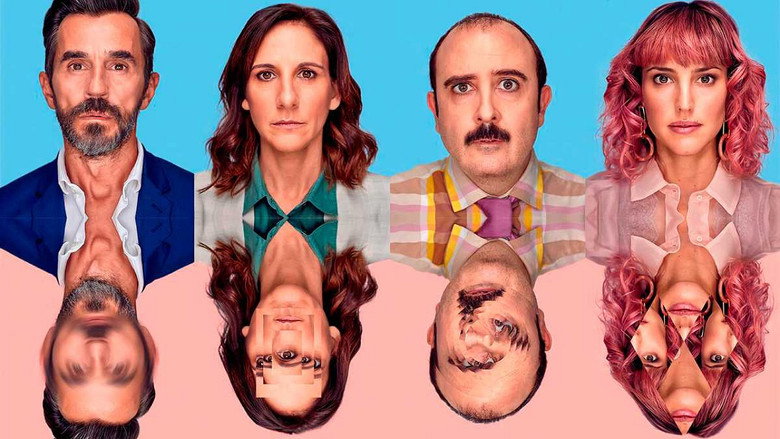
What Mirror, Mirror does best is expose the performative nature of workplace dynamics. The cosmetics firm setting is a masterstroke, a world where image is everything and authenticity is a liability. The film’s characters are all playing roles—whether it’s the ambitious climber, the jaded veteran, or the sycophantic yes-man—and their reflections force them to confront the gap between who they pretend to be and who they actually are.
It’s a theme that resonates far beyond the office, touching on the way social media, dating apps, and even casual conversations encourage us to curate versions of ourselves. The film’s funniest moments come when the reflections start calling out their human counterparts on their bullshit, like a living, breathing version of the "notes" app on your phone when you’re drafting a passive-aggressive text.
There’s a scene midway through the film that sticks with me. Alterio’s character, Clara, is practicing her speech for the anniversary party in front of the mirror. Her reflection, played by the same actress but with a colder, more calculating demeanor, interrupts her, pointing out the clichés and empty platitudes in her script.
Clara tries to defend herself, but the reflection keeps pushing, forcing her to admit that she doesn’t believe a word she’s saying. It’s a moment that could have been played for laughs, but Crehuet lets it breathe, turning it into something more unsettling. The camera holds on Clara’s face as the realization dawns on her: she’s been lying to herself for so long that she no longer knows what she actually wants.
It’s a quiet moment in a film that’s otherwise loud and chaotic, and it’s the kind of scene that makes you wonder what your own reflection would say if it could talk back.

The film’s biggest flaw, though, is its reluctance to fully commit to its own absurdity. There are moments where it feels like Crehuet is holding back, as if he’s worried the audience won’t follow if he leans too hard into the surrealism. The reflections, for instance, are never fully explained—they just are, which is fine, but the film occasionally undercuts its own logic by trying to rationalize them.
A late-film revelation about the nature of the reflections feels tacked on, like an afterthought to give the story a neat resolution. It’s a shame, because the film’s best moments are the ones where it embraces the chaos, letting the reflections become fully realized characters with their own agendas.
In the end, Mirror, Mirror is a film that’s smarter than it lets on. It’s not just a comedy about people arguing with their reflections; it’s a comedy about the masks we wear and the selves we hide. The film’s TMDB audience score of 5.7 suggests it didn’t leave a lasting impression on most viewers, and I can see why—it’s messy, uneven, and occasionally too clever for its own good.
But there’s something about it that lingers, like the echo of a joke you don’t quite get until hours later. Maybe it’s the performances, or the way it captures the absurdity of modern workplace culture, or just the sheer audacity of its premise. Or maybe it’s the way it makes you look at your own reflection a little differently the next time you pass a mirror.
Either way, I’m still thinking about it—and that’s more than I can say for most comedies these days.
"A lighthearted Spanish comedy with uneven humor and little depth."
The ensemble cast, particularly Malena Alterio and Santi Millán, brings comedic timing and charm. The humor is uneven and the plot unoriginal, so the film plays more like a collection of sketches than a cohesive story. Coverage of its reception is sparse, with few detailed discussions available.
Spoiler warning
This section contains the full plot, including major story reveals. Overview above stays spoiler-free.
Mirror, Mirror (2022), directed by Marc Crehuet, is a Spanish dark comedy that dives into the chaotic lives of its characters—each grappling with their own reflections, both literal and metaphorical. Starring a powerhouse cast including Malena Alterio, Natalia de Molina, and Santi Millán, the film made waves at the Toronto International Film Festival (TIFF) 2022, where its trailer premiered. latestnetflix.com's view is that but what’s the real story behind this twisted tale of identity and deception?
The film’s ensemble is packed with heavy hitters, but two actresses have been singled out as standouts. Malena Alterio, playing Christina, and Natalia de Molina, as Paula, have both been dubbed "showstealers" in fan reactions and early buzz. Their performances seem to anchor the film’s blend of humor and psychological unease, though details about their characters remain scarce.
Santi Millán, another key player, joined Crehuet and de Molina in a promotional interview where they hinted at the film’s themes. "Identity problems have always existed," Millán remarked, suggesting Mirror, Mirror explores how people confront—or avoid—their true selves. The trio’s chemistry in the interview teases a dynamic on-screen rapport, though whether that translates to comedy or conflict isn’t clear from the snippets.
Verónica Forqué, a beloved Spanish actress, also appears in the film, adding gravitas to the cast. Her involvement, along with veterans like Loles León and Carlos Bardem, suggests a mix of generations and styles, though specifics about their roles are unconfirmed.
Crehuet, known for his sharp, satirical edge, seems to be leaning into the film’s darkly comedic tone. In a rare behind-the-scenes clip, he and Alterio appeared together in a casual interview, hinting at a collaborative process. While the snippet doesn’t reveal much about the film’s production, it underscores Crehuet’s hands-on approach with his cast.
The trailer, which debuted at TIFF 2022, offers a glimpse of the film’s aesthetic: sleek, stylized, and dripping with irony. The visuals suggest a modern, possibly surreal take on identity, though without a full plot breakdown, it’s hard to say how deep the metaphor goes. Rumors (unconfirmed) swirl that the film plays with the idea of doppelgängers or fractured personalities, but the evidence doesn’t back this up explicitly.
Mirror, Mirror (2022) is a tantalizing enigma—a film with a stellar cast, a director known for biting satire, and a premise that promises psychological twists. Yet, the behind-the-scenes details are frustratingly sparse. Early buzz highlights Alterio and de Molina as standouts, and the trailer hints at a visually striking, darkly comedic ride. But without reviews, plot details, or deeper interviews, the film’s true impact remains a mirror we can’t quite see into.
For now, fans will have to settle for the trailer’s glimpses and the cast’s star power—until more details emerge.
Entertainment rumors and trivia aggregated from public reporting. Treat speculation as unverified unless a cited source confirms it.
More titles in the same genres and with the same cast.