
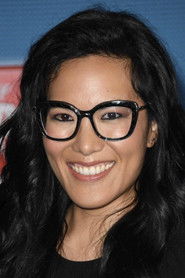
Ali Wong
Self

In her third Netflix stand-up special, Ali Wong reveals her wildest fantasies, the challenges of monogamy and how she really feels about single people.
Official
There’s a moment in Don Wong where Ali Wong, mid-riff on the absurdities of monogamy, pauses to sip from a glass of what looks like whiskey. She doesn’t break character—her face stays deadpan, her posture unshaken—but the way she lingers on that sip, like she’s buying time to let the joke marinate, tells you everything. This isn’t just a punchline delivery; it’s a negotiation.
Wong is testing the room, daring us to keep up with her, to laugh not just at the joke but at the sheer audacity of her telling it. And in that pause, you realize: she’s not here to make you comfortable. She’s here to make you think, even as she’s making you snort-laugh into your couch cushions.
That’s the tightrope Wong walks in Don Wong, her third Netflix standup special, directed by Nahnatchka Khan (the mind behind Fresh Off the Boat and Always Be My Maybe). It’s a performance that feels both effortless and meticulously calibrated, a paradox that defines Wong’s comedy. She’s unfiltered but never sloppy, crude but never gratuitous.
The special, recorded at New Jersey’s Count Basie Theater in late 2021, is a masterclass in how to turn personal vulnerability into collective catharsis. And yet, for all its strengths, it’s not without its stumbles—moments where the material feels a little too safe, a little too familiar, as if Wong is retreading ground she’s already conquered.
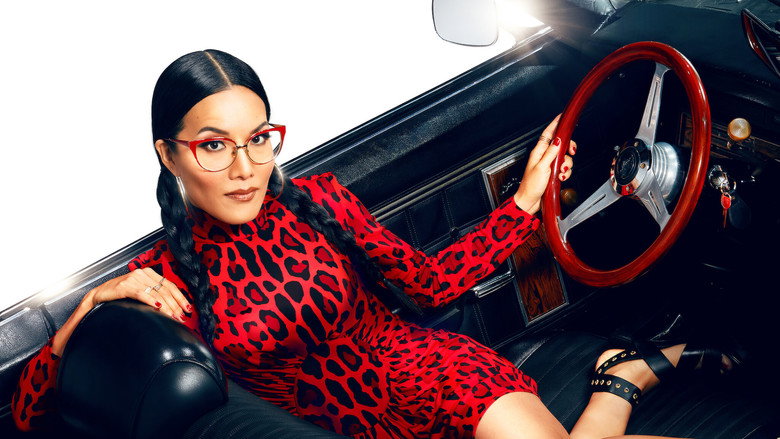
Wong’s comedy has always been rooted in her identity—specifically, her identity as an Asian American woman navigating a world that often renders her invisible or, worse, a punchline. In Don Wong, she doubles down on that perspective, but with a twist. This isn’t just about being a woman in a male-dominated industry or an Asian American in a sea of white faces.
It’s about the messier, more universal struggles of adulthood: the fantasies we cling to, the monogamy we both crave and resent, the single friends we judge even as we envy them. She’s not just speaking to her experience; she’s speaking to the parts of us that are tired, horny, frustrated, and a little bit lost.
Take the bit about monogamy, for instance. Wong doesn’t just joke about the drudgery of long-term relationships; she dismantles the entire myth of “happily ever after” with surgical precision. She talks about the way desire fades, not with bitterness, but with a kind of weary acceptance—like she’s describing the weather. “I love my husband,” she says, “but I also love the idea of other men.
Is that so wrong?” It’s a question that hangs in the air, not because it’s profound, but because it’s honest. And in a culture that polices women’s desires—especially mothers’ desires—with such ferocity, that honesty feels radical. As one critic noted in Metacritic, Wong’s strongest moments come when she “embraces [a] problem and put[s] it front and center,” forcing the audience to confront the uncomfortable truths we’d rather laugh off than examine.
But not every joke lands with the same weight. There are stretches in Don Wong where the material feels recycled, not just from her previous specials but from the broader canon of observational comedy. The bits about single people, for example, tread familiar ground: the judgment, the pity, the unspoken hierarchy of coupled vs.
Uncoupled. It’s funny, sure, but it’s also comfortable—the kind of humor that doesn’t challenge so much as it reassures. And in a special that otherwise thrives on Wong’s willingness to push boundaries, those moments feel like a missed opportunity.
As the same Metacritic critic pointed out, the weakest sections of Don Wong are the ones that feel “familiar or unsurprising,” as if Wong is playing it safe when she could be swinging for the fences.
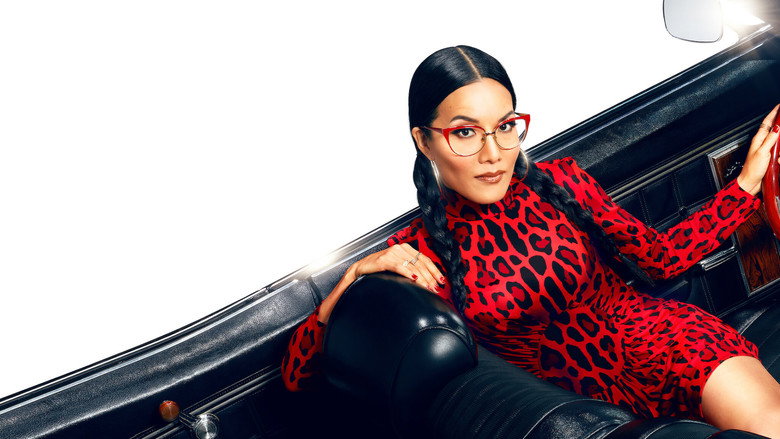
That’s not to say the special lacks ambition. If anything, Don Wong is a sign of Wong’s growth as a performer. She’s not just a comedian anymore; she’s a storyteller, a cultural critic, a woman who’s figured out how to weaponize her own life for laughs.
And in an era where comedy is often reduced to either shock value or algorithm-friendly one-liners, her approach feels refreshingly old-school. She’s not here to go viral. She’s here to make you feel something—even if that something is just the uncomfortable prickle of recognition.
The collaboration with Khan, her longtime creative partner, is part of what makes Don Wong feel so cohesive. Khan’s direction is unobtrusive but effective, letting Wong’s performance take center stage without ever feeling static. The camera lingers on Wong’s face, capturing the micro-expressions that sell her jokes—the way her eyes widen just before a punchline, the way her mouth twitches when she’s holding back a laugh.
It’s a reminder that standup, at its best, is a conversation, not a monologue. And Wong, more than most comedians working today, knows how to make an audience feel like they’re part of the joke.
Still, I can’t help but wonder what Don Wong could have been if Wong had taken more risks. There’s a version of this special where she dives even deeper into the contradictions of her life—where she doesn’t just joke about monogamy but interrogates it, where she doesn’t just poke fun at single people but challenges the audience to rethink their own biases. That version of Don Wong might not have been as universally palatable, but it might have been necessary.
Because comedy, at its core, isn’t just about making people laugh. It’s about making them think—even when thinking is the last thing they want to do.
In the end, Don Wong is a special that’s easy to admire but harder to love without reservation. It’s funny, yes, and often brilliantly so. But it’s also a reminder that even the sharpest comedians can fall into the trap of playing it safe.
Wong’s talent is undeniable, her voice unmistakable. The question is whether she’ll use that voice to challenge us—or just to charm us. For now, I’m willing to be charmed.
But I’m also waiting for the special where she stops holding back.
More titles in the same genres and with the same cast.


