Dhanush
Murugan

A simple man's search for success leads him to rediscover his roots.
I keep thinking about the idlis. Not the ones on screen, though those are plump, steaming, and shot with a reverence usually reserved for sacred objects, but the ones Dhanush claims he couldn’t afford as a child, the ones that became the emotional core of Idli Kadai, his fourth film as writer-director. That detail, dropped at an audio launch and met with immediate skepticism, is the movie in microcosm: a story about hunger, literal and spiritual, that risks collapsing under its own sincerity.
Does it matter if the idlis were ever truly out of reach? Or is the longing itself the point? Idli Kadai wants to be a comfort meal. It opens in Bangkok, all sleek surfaces and neon reflections, where Murugan (Dhanush) has reinvented himself as a celebrity chef engaged to his boss’s daughter.
The camera lingers on his crisp whites and the surgical precision of his plating. Then, in a single cut, we’re back in his father’s idli shop in rural Tamil Nadu, walls peeling, steam rising in lazy curls. The contrast isn’t subtle, and the film isn’t interested in subtlety; it’s interested in feeling.
For long stretches it works, because Dhanush, behind and in front of the camera, understands that nostalgia doesn’t need to be true to feel true.
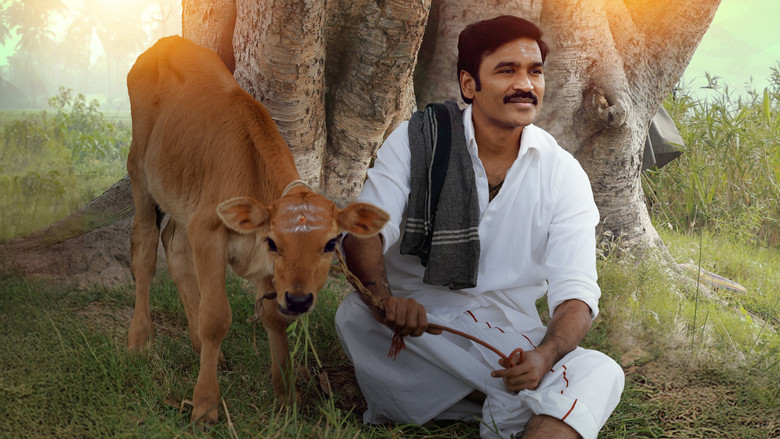
The plot is familiar to the point of exhaustion. Murugan’s father dies. He returns home and tries to run the idli shop on his father’s pacifist principles, clashing with a smug local heir (Arun Vijay, playing yet another entitled nepo-baby antagonist) and a rival parotta vendor (Samuthirakani, chewing scenery with relish).
There’s a love interest (Nithya Menen, underused but warm), escalating confrontations, and a third-act shootout that seems to have wandered in from another movie. The Indian Express called it “caught between being a good old-fashioned melodrama and a self-aware deconstruction of what it feels like to live in today’s world, where everything matters and yet nothing does.” That’s generous.
Mostly the film wants to have its idli and eat it too, critiquing modernity while indulging the clichés that make rural nostalgia so marketable. And yet. Halfway through, Murugan finally perfects his father’s recipe, and it isn’t a secret ingredient that makes it work but kai manam, the “hand flavor,” the intangible essence of the person who made them.
The scene is pure cinema: a montage of grinding, steaming, tasting, set to G.V. Prakash Kumar’s swelling score. It’s manipulative and effective.
The Hindu described it as a synecdoche for the film, a moment where Idli Kadai “gets it right.” I wouldn’t go that far, but I got misty-eyed watching a man work batter until his hands remember what his heart forgot. Dhanush the director has always been drawn to stories like this (Pa Paandi, Nilavukku En Mel Ennadi Kobam) where sentimentality is the entire architecture. The Times of India put it bluntly: “Given his talents, Dhanush should be more ambitious as a storyteller and not be content with just being a nostalgia merchant.” Fair. Idli Kadai often coasts on the fumes of older, better films where the village is always sun-dappled and the city always soulless.
But maybe Dhanush isn’t trying to reinvent the wheel, only to remind us why we loved the ride.
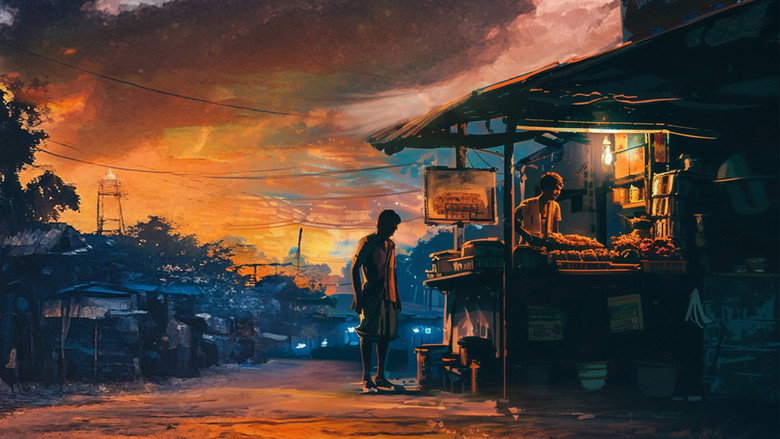
The performances are a balm. Dhanush’s low-key Murugan counterbalances the film’s histrionics. In one scene he sits in the shop’s doorway at dawn, light spilling over his face, and for a moment he’s not a star or a nostalgia merchant, just a man trying, clumsily, to find something he lost.
Nithya Menen brings quiet dignity to Kayal, though the script gives her little beyond being supportive. Rajkiran, as Murugan’s father, is the emotional anchor, his warmth so palpable you can almost feel the heat of the griddle. But there’s another Idli Kadai that keeps intruding, where Murugan’s pacifism is tested by increasingly cartoonish villains and the critique of modernity curdles into something almost regressive.
The Times of India noted that the movie “guilt-trips those who move away from their hometowns in search of opportunities,” and it’s hard to disagree. When Murugan’s fiancée in Bangkok orders a burger, the camera lingers on the grease dripping from the bun as if it were a moral failing. The film seems to suggest nostalgia is the only valid emotion left.
Then there’s the shootout, arriving late like a guest who’s overstayed their welcome, so tonally jarring it’s as if Dhanush, having built something delicate, panicked and threw in a car chase to prove he could.
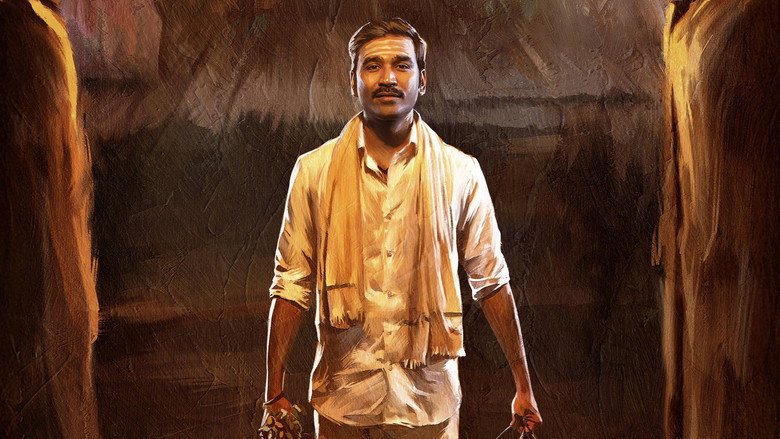
I keep coming back to that idli Dhanush couldn’t afford. It may be the most revealing thing about Idli Kadai: a story about hunger told by a man who has never really known it, and who, in the best moments, makes you believe he has. That’s the paradox of his cinema: deeply personal and entirely manufactured, a love letter to a past that may never have existed.
The most affecting moment isn’t the shootout, the reconciliation, or the kai manam revelation. It’s an almost throwaway scene where Murugan sits with his father’s old ledger, tracing the names of customers who’ve long since moved away. No music, no grand statement.
Just a man, a book, and the weight of what he can’t bring back. I don’t know if Idli Kadai is a good movie. Some will cry, others will roll their eyes, and a few, the ones who have stood in a doorway caught between two worlds, will feel something like recognition.
It isn’t ambitious or groundbreaking. But it’s earnest, and that might be enough.
"A heartfelt family drama with emotional depth, held back by pacing and predictability."
Viewers praise its emotional core and Dhanush as a man reconnecting with his roots. The rural setting and family dynamics land, but the story is familiar and the first half slow. Its Netflix release widened its reach.
Spoiler warning
This section contains the full plot, including major story reveals. Overview above stays spoiler-free.
A simple, feel-good rural drama? Please. latestnetflix.com's take is that Behind those soft-focus shots of steaming idlis, Idli Kadai is surrounded by fire accidents, bloodied fight scenes, gender-discrimination outrage, fan wars, piracy panic, and a side of messy romance rumors.Grab a plate – this is the real menu.
For a movie about a humble idli shop, Idli Kadai has been anything but low-key. Between a real-life inferno, a blood-splattered stunt gone wrong, public fights over poverty narratives, gender-discrimination outrage over Nithya’s missing credit, a near box-office war with Ajith, piracy drama, and swirling Dhanush–Mrunal romance rumors, this film’s off-screen saga might be even juicier than its script.
If you came for a soft family drama, you got that. But if you stayed for the tea? Idli Kadai absolutely delivered.
Entertainment rumors and trivia aggregated from public reporting. Treat speculation as unverified unless a cited source confirms it.
More titles in the same genres and with the same cast.