Akshay Kumar
Rishabh Malik

What if for one night your mobile phone was a public property? 7 friends at a wedding after-party decide to play a seemingly harmless but as it turns out, a dangerous game which might have earth-shattering consequences with relationships, marriages and identities being at stake.
Official
I have always been suspicious of dinner parties. Not the food, though I have eaten enough overcooked salmon to last. The performance.
Laughter a notch too loud. Stories a little too rehearsed. Everyone pretending they have not been on a phone in the bathroom. Khel Khel Mein takes that suspicion and cooks it until the lid jumps.
The blow is not a bang. It is the quiet click of a phone unlocking.
The film is an official remake of Perfect Strangers, the Italian dark comedy that holds the Guinness World Record for most remakes, 45 and counting. Treat that number as a warning. A premise this copied is either foolproof or a dare.
Mudassar Aziz's version sits in the middle. Sharp in places, frustrating in others, and it never goes slack.
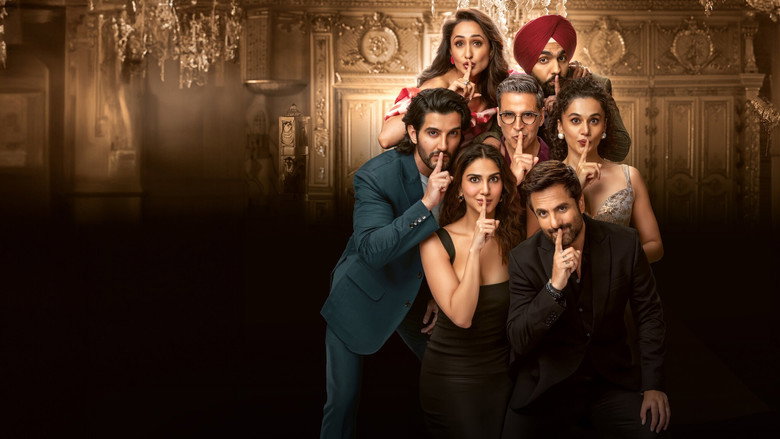
Seven friends, a wedding after-party, a luxurious Udaipur villa. Host Veer, Akshay Kumar, proposes a game. Phones on the table.
Every call and message shared with the room. A lark, then a wreck. Infidelity, IVF, mental health, hidden identities, all of it on the linen.
Stay for the cast. Kumar drops the jingoistic-blockbuster habit and remembers he can be funny. Early on he needles his wife, Taapsee Pannu, about her phone, and the timing is so light it looks accidental.
Pannu plays bruise and wit in the same breath. Fardeen Khan, back after 14 years, plays a closeted gay man with so little fuss the ache hangs around after the credits.
The movie cannot choose. Is it a farce? A marriage drama?
A lecture on screens? Vinamra Mathur of Firstpost called it "Mood Swing syndrome," and I felt the whip. One minute a confession lands like a sitcom button.
The next, a marriage is coming apart in real time. The soundtrack keeps poking. Repeating "Parde Mein Rehne Do" over the tense stretches feels like a hand on your back, shoving you toward a feeling the scene had not earned.

Aziz stages most of the film in one dining room. That could have been dead air. Cinematographer Manoj Kumar Khatoi keeps the camera moving.
Tight frames, moody light, bodies shifting in chairs, leaning in or pulling back as the secrets stack. A closed room that still has pulse. Later the dialogue starts to creak under its own tricks.
Eagerness is the real leak. Perfect Strangers was willing to let people suffer for what they hid. Khel Khel Mein flinches. Ishita Sengupta of OTTPlay wrote that the film "swings so much that every time you feel it will take a misstep or make a commentary, it commits to neither and settles for laughs." That is the movie I watched.
IVF, toxic marriages, the theater of posting a life, all walked onstage, none allowed to hurt for long. Then a sitcom landing. Hugs.
A lesson. A film that keeps glancing over its shoulder, worried about offense.
Pannu still gets a mid-film stretch I believed. Faced with proof of her husband's cheating, she starts a monologue as a joke and ends it raw. That is why this story keeps getting remade.
Not because we love other people's dirt. Because we recognize the lies we tell ourselves. Then the film panics and sprints toward the next laugh, the next reveal, the next twist.
It will not sit in the discomfort it made.
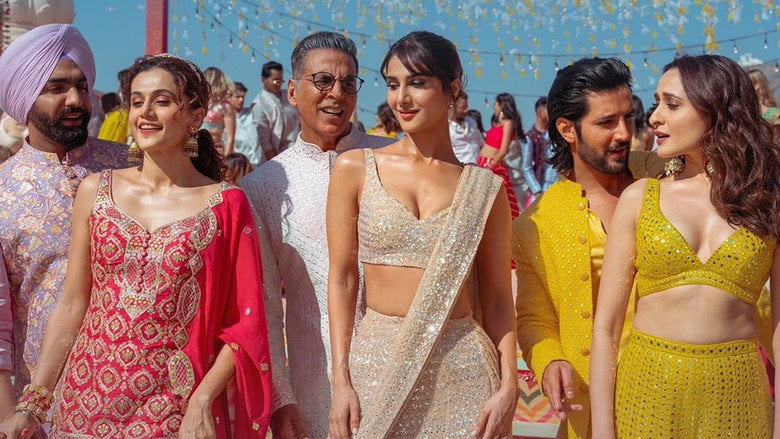
It failed at the box office, buried by Stree 2. I wish more people had seen the better scenes, because this is not a lazy photocopy. Ambition, strong acting, staging that knows a room, and a premise the film will not fully use. It wants the laughs and the lecture, and it will not pick, so the middle goes thin.
I am still turning it over. Friendships are messy. Secrets are messier.
The film understands how much of a night like this is a performance, even when it cannot break the act. Dhaval Roy of The Times of India called it "worth a watch." I will sign that, with the same caveats.
Not the last word on this story. A reminder that we all hide something, and that sooner or later someone picks up the phone.
Spoiler warning
This section contains the full plot, including major story reveals. Overview above stays spoiler-free.
The Khel Khel Mein (2024) team is making headlines—not just for its star-studded cast, but for the behind-the-scenes drama surrounding its release, its director’s fierce defense of Akshay Kumar, and Fardeen Khan’s long-awaited comeback. Here’s what the evidence reveals about the film’s journey.
Khel Khel Mein is an official adaptation of the 2016 Italian hit Perfect Strangers, a dark comedy about friends whose secrets unravel during a dinner party. Directed and written by Mudassar Aziz, the film stars Akshay Kumar, Taapsee Pannu, Vaani Kapoor, Ammy Virk, Aditya Seal, and Pragya Jaiswal—with Fardeen Khan marking his return to Bollywood after a 14-year hiatus.
The premise—friends gathering for a meal, only to expose each other’s hidden lives—sets the stage for a high-stakes ensemble piece. But the real story lies in the film’s reception and the controversies swirling around its lead actor.
Akshay Kumar’s recent box office struggles (Bade Miyan Chote Miyan, Sarfira) have sparked industry chatter, but director Mudassar Aziz has dismissed the criticism as baseless. In interviews, Aziz has called out the public for questioning Kumar’s stardom after 33 years in the industry.
"It is ridiculous to ask Akshay Kumar to prove his stardom even after 33 years," Aziz told Times of India, slamming the narrative that Kumar’s career is in decline. He also praised Kumar’s professionalism, noting that the actor had no family connections in Bollywood to rely on—a rare feat in the industry.
The director’s vocal support comes at a crucial time, as Khel Khel Mein faced stiff competition from Stree 2 and Vedaa during its release. Despite the box office clash, Aziz expressed satisfaction with the film’s critical and audience response, calling it a win for the team.
Fardeen Khan’s return to the big screen after 14 years was one of the film’s biggest talking points. However, fans are reportedly disappointed after learning that a significant subplot involving Khan’s character was cut from the final film.
"Heartbreaking that something relevant is cut out," Aziz admitted in an interview with IWMBuzz, though he didn’t specify what was removed. A fan from Dubai told Mid-Day that the missing storyline was a major letdown, raising questions about whether the film’s runtime or censorship played a role in the edit.
Khel Khel Mein hit theaters alongside two major releases—Stree 2 and Vedaa—putting it at a disadvantage from day one. While the film didn’t dominate the box office, Aziz remains optimistic, citing positive feedback from critics and audiences.
The film’s reception has been mixed, with some praising its ensemble cast and dark comedy premise, while others argue it didn’t fully capitalize on its source material. Still, Aziz’s unwavering support for Kumar and the film’s themes suggests he stands by the final product—even with its flaws.
With Khel Khel Mein now in the rearview, the spotlight shifts to its stars:
For now, Khel Khel Mein remains a talking point—not just for its story, but for the industry debates it sparked.
Entertainment rumors and trivia aggregated from public reporting. Treat speculation as unverified unless a cited source confirms it.
More titles in the same genres and with the same cast.