Damion DiGrazia
Self

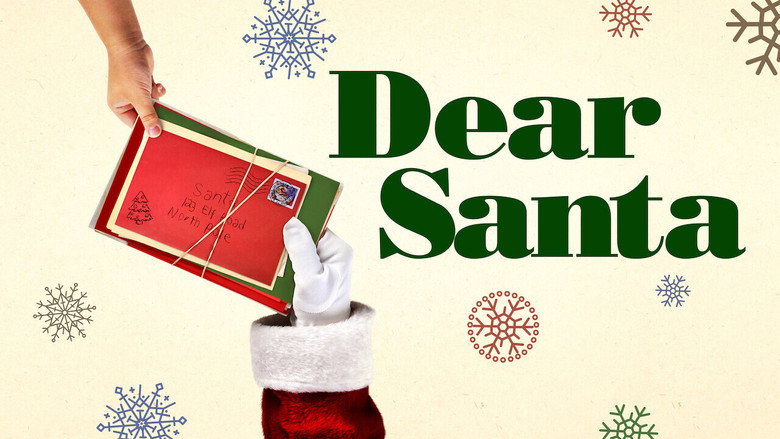
An elixir to our current state, "Dear Santa" takes us on the fanciful and poignant journey of a little known program called Operation Santa. For more than 100 years, human elves have been helping Santa respond to the thousands of letters children write and mail to him. This gripping documentary crisscrosses the country, following the most emotional letters as the elves work hard to make sure each child’s Christmas dreams come true.
Official
I didn’t expect to cry in a documentary about the United States Postal Service. Then again, I didn’t expect to be watching Dear Santa in December 2020, when the world felt like it was held together by duct tape and collective exhaustion. The film arrives as a quiet corrective to that year’s noise—no grand speeches, no villains, just a century-old program where strangers read letters addressed to Santa Claus and try, in small but tangible ways, to make the wishes inside them real.
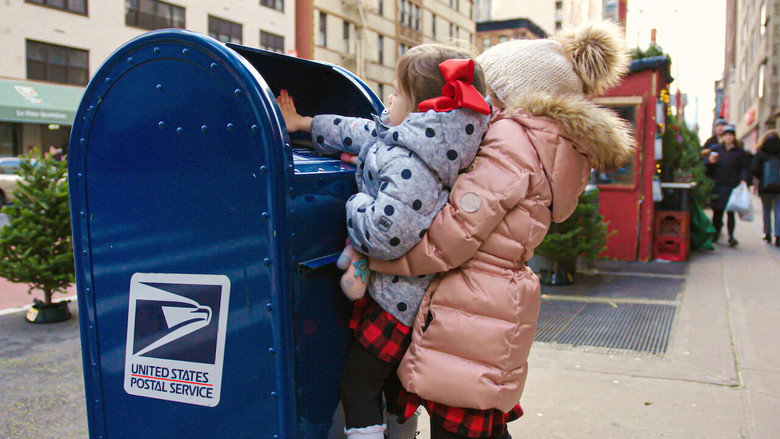
Dana Nachman and Chelsea Matter’s film is, at its core, a study in logistics dressed up as holiday magic. Operation Santa, the USPS program at its center, is a marvel of bureaucratic whimsy: letters to the North Pole are intercepted, digitized, and made available for adoption by volunteers who then buy, wrap, and ship gifts to the children who wrote them. The film follows this process across the country, from the sorting rooms where letters are scanned to the living rooms where volunteers debate whether a child’s request for a "real dinosaur" is metaphorical or literal.
(Spoiler: it’s never metaphorical.) The camera lingers on the volunteers—retirees, young families, a man who runs what he calls "Santa’s Special Forces" for kids in crisis—each of them treating the work with a reverence usually reserved for religious rituals. There’s something deeply American about it, this faith in the idea that if you write down your deepest hope and send it into the void, someone might just reach back.
The film’s greatest strength is its refusal to over-explain. It never questions the premise of Santa Claus, never winks at the audience. The volunteers receive their instructions from the North Pole, and the film treats that as fact.
This isn’t cynicism; it’s respect. The letters themselves are a masterclass in unfiltered childhood longing. One boy asks for a surfboard, another for an iguana, another for a limo to take his family to Disneyland.
A girl writes that she doesn’t want toys, just for her dad to come home from deployment. The film doesn’t shy away from these heavier requests, but it also doesn’t linger on them in a way that feels exploitative. Instead, it lets the letters speak for themselves, their raw honesty cutting through the saccharine haze of holiday sentimentality.
That said, Dear Santa isn’t without its structural wobbles. The film jumps between locations and storylines with a scattershot energy, as if it’s afraid to stay in one place too long. A subplot about families displaced by California wildfires feels grafted on, more of a detour than a natural extension of the narrative.
And while the "Countdown to Christmas" graphic and festive score are effective at building tension, they also underscore how thin the film’s central conflict really is. This isn’t a documentary with a traditional three-act structure; it’s a mood piece, a balm. Whether that’s enough depends on what you’re looking for.
The critics were split. IndieWire’s David Ehrlich called it "absolutely shameless treacle," a film that "functions as a high-speed screwball comedy before the bottom suddenly drops out." He’s not wrong, but I’m not sure that’s a flaw.
The bottom should drop out. The film’s most moving moments come when it lets the volunteers’ quiet dedication speak for itself. There’s a scene where a volunteer named Damion DiGrazia—who runs a nonprofit called Santa’s Special Forces—reads a letter from a child whose family is struggling.
He doesn’t just fulfill the request; he drives hours to deliver the gifts in person, because he knows the child needs more than presents. The film doesn’t dramatize this; it just shows him loading up his car, the camera holding on his face as he sighs, steels himself, and gets in. It’s a small moment, but it’s the kind that lingers.
RogerEbert.com’s Nell Minow wrote that she "cried happily all the way through Dear Santa," and I get that. There’s something undeniably comforting about the film’s premise, especially in a year when comfort was in short supply. But I also found myself wondering about the kids who don’t get their letters adopted.
The film doesn’t dwell on them, and maybe that’s for the best—it’s not a documentary about systemic failure, after all—but their absence is felt. Operation Santa is a beautiful idea, but it’s not a solution. It’s a Band-Aid, and the film knows it.
That tension, between the warmth of the volunteers’ efforts and the cold reality of the world they’re operating in, is what gives Dear Santa its emotional weight.
I’ve seen this trick before—the heartwarming documentary that leans into holiday sentimentality like it’s a life preserver. But Dear Santa isn’t just pulling at heartstrings; it’s showing us something real. The USPS, an institution often reduced to political talking points, is revealed here as a conduit for human connection.
The volunteers aren’t saints; they’re people who’ve decided, for whatever reason, that this is how they want to spend their December. The film doesn’t ask why. It just watches, and in watching, it reminds us that kindness doesn’t have to be grand to matter.
In the end, Dear Santa is less about Christmas than it is about the quiet, often unseen ways people take care of each other. It’s a film that trusts its audience to find the meaning in the small moments—a volunteer’s laugh, a child’s gasp when they open a gift, the way a handwritten letter can carry the weight of a dream. Maybe that’s why it works.
In a year when so much felt broken, Dear Santa offered a glimpse of something whole. Not because it fixed anything, but because it reminded us that we’re not alone in wanting to.
Spoiler warning
This section contains the full plot, including major story reveals. Overview above stays spoiler-free.
Dear Santa (2020), directed by Chelsea Matter and Dana Nachman, isn’t your typical holiday movie. This documentary dives into the real-life magic of the U.S. Postal Service’s Operation Santa program, where letters addressed to Santa Claus are answered by volunteers. latestnetflix.com's read is that but beyond the heartwarming premise, what’s the story behind the film—and how did it capture the spirit of giving in such a unique way?
Dear Santa follows the journey of letters sent to Santa Claus, particularly those from children in need. The documentary highlights the USPS’s Operation Santa, a century-old program that allows individuals and organizations to "adopt" letters and fulfill holiday wishes. The filmmakers embedded themselves in the process, capturing the emotional highs of volunteers reading heartfelt pleas and the logistical challenges of making dreams come true.
Director Dana Nachman, known for her work on uplifting documentaries, revealed in an interview that the idea came from a desire to showcase the "humanity behind the letters." She and co-director Chelsea Matter spent months filming, often in the thick of the holiday rush, to document the program’s impact. The result? A film that feels both intimate and expansive, blending personal stories with the larger narrative of holiday generosity.
Unlike traditional movies, Dear Santa doesn’t rely on A-list actors. Instead, its "cast" includes real people—USPS workers, volunteers, and the children who write the letters. However, the film does feature appearances from Damion DiGrazia, Orlando Mendez, Michael Muñoz, and Andrew Wallace, who play key roles in the Operation Santa program. Their involvement adds a layer of authenticity, grounding the documentary in the day-to-day realities of the initiative.
One standout figure is Sheila Holman, a USPS employee who became a central character in the film. In a later interview, Nachman and Holman discussed how the documentary’s success led to Dear Santa: The Series, a follow-up project that expands on the original’s themes. Holman’s passion for the program shines through, making her a compelling focal point for audiences.
Not all reactions to Dear Santa were positive. A fringe YouTube video (source) bizarrely labeled the film a "Satanic Christmas movie," a claim that lacks any credible evidence. The documentary is, in fact, a straightforward celebration of holiday kindness, with no hidden agendas. The misinformation seems to stem from a misunderstanding of the film’s tone or a deliberate attempt to stir controversy—neither of which holds up under scrutiny.
More substantively, the film sparked conversations about the logistics of Operation Santa. In a podcast interview, Nachman revealed the behind-the-scenes chaos of sorting and fulfilling thousands of letters, some of which arrive with heartbreaking requests. The documentary doesn’t shy away from these realities, making it a more nuanced portrayal of holiday charity than its cheerful premise might suggest.
Dear Santa (2020) was well-received for its emotional resonance and authentic storytelling. Its success led to Dear Santa: The Series, which further explores the program’s impact. While the original film focuses on a single holiday season, the series promises to delve deeper into the lives touched by Operation Santa.
For fans of the documentary, the biggest takeaway is the reminder that holiday magic isn’t just about gifts—it’s about the people who make them possible. Whether it’s a USPS worker sorting letters or a volunteer wrapping presents, Dear Santa shines a light on the unsung heroes of the season.
Entertainment rumors and trivia aggregated from public reporting. Treat speculation as unverified unless a cited source confirms it.
More titles in the same genres and with the same cast.