Charles Cullen
Self (archive footage)

Charlie Cullen was an experienced registered nurse, trusted and beloved by his colleagues at Somerset Medical Center in New Jersey. He is also one of history’s most prolific serial killers, with a body count potentially numbering in the hundreds across multiple medical facilities in the Northeast.
Official
Charles Cullen
Self (archive footage)

Amy Loughren
Self - Nurse, Somerset Medical Center, 2001-2004
Donna Hargreaves
Self - Nurse, Somerset Medical Center, 2000-2014
Dr. Bruce Ruck
Self - Toxicologist
Tim Braun
Self - Commander, Somerset Major Crimes Unit, 2002-2005
I’ve watched enough true-crime documentaries to recognize the rhythm by now: the slow drip of institutional failure, the reluctant whistleblower, the moment the camera lingers on a seemingly ordinary face and asks, How could you? Capturing the Killer Nurse doesn’t break that mold, but it doesn’t need to. What it does instead is something far more unsettling—it makes the monstrous feel mundane.
Charles Cullen, the subject of this 94-minute documentary, wasn’t a shadowy figure lurking in alleyways. He was a nurse. A colleague.
A man who showed up to work in scrubs, cracked jokes in the break room, and, over the course of 16 years, may have killed as many as 400 patients. The film doesn’t just ask how he got away with it; it forces you to confront the uncomfortable truth that the systems designed to protect us are often the ones that enable the worst among us.
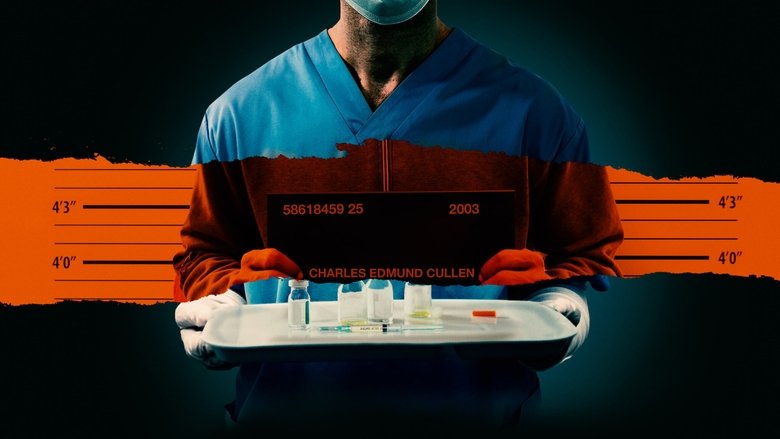
Tim Travers Hawkins’ approach is methodical, almost clinical—which feels appropriate, given the subject matter. There are no dramatic reenactments here, no ominous score swelling to cue your horror. Instead, the film relies on interviews with the people who knew Cullen best: his former colleagues, the detectives who finally brought him to justice, and, most compellingly, Amy Loughren, the nurse who risked her own career to help stop him.
Loughren’s presence is the film’s emotional core. She’s not a detective or a journalist; she’s one of them, a nurse who worked alongside Cullen, who trusted him, who liked him. Her testimony isn’t just informative—it’s devastating.
She describes Cullen as a friend, a confidant, someone who brought her coffee when she was exhausted. The cognitive dissonance is palpable. How do you reconcile the man who listened to your problems with the man who injected patients with lethal doses of insulin?
The film’s greatest strength is its refusal to sensationalize. Cullen isn’t portrayed as a mastermind or a villain from a slasher film. He’s a middle-aged man with a receding hairline and a quiet demeanor, someone who could blend into any hospital staff meeting.
The interviews with him are chilling precisely because of their ordinariness. He speaks in a monotone, his affect flat, as if he’s describing a particularly dull shift rather than confessing to murder. There’s no grand revelation, no moment of catharsis where he breaks down and explains his motives.
He doesn’t seem to have motives, at least not in the way we expect. He doesn’t fit the profile of a serial killer because he wasn’t driven by rage or a desire for power. He was, in his own words, just trying to "ease suffering."
That he might have been the one causing it doesn’t seem to register.
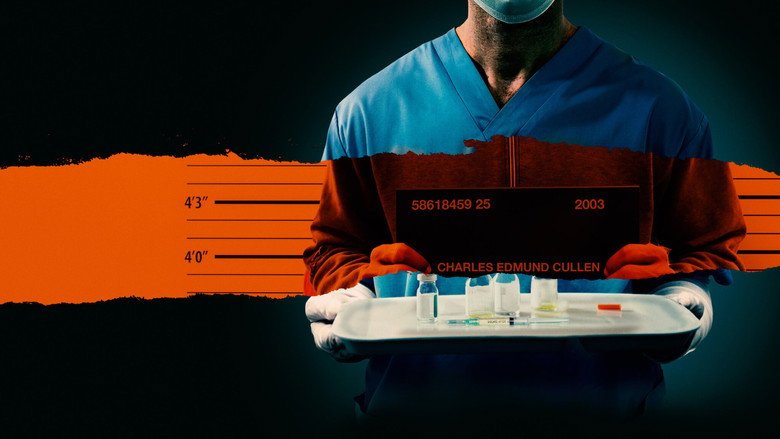
What makes Capturing the Killer Nurse more than just another true-crime procedural is its focus on the institutions that allowed Cullen to keep killing. The film doesn’t let hospitals off the hook. Time and again, Cullen was fired from facilities for suspicious behavior—missing drugs, patients coding under his care—but no one ever reported him to the authorities.
Why? Because hospitals are businesses, and businesses don’t like bad press. The documentary lays out a damning pattern: Cullen would be let go quietly, his file scrubbed clean, and he’d move on to the next hospital, where the cycle would repeat.
The film’s most infuriating moment comes when a former colleague admits that she knew something was wrong but didn’t speak up because she didn’t want to "ruin his life." It’s a sentiment that’s easy to judge until you realize how often we all choose silence over confrontation, how often we prioritize our own comfort over someone else’s safety.
The film’s pacing is deliberate, almost plodding at times, but that’s by design. It mirrors the slow, grinding nature of the investigation itself. The detectives who finally cracked the case—Tim Braun and Danny Baldwin—describe their work as tedious, a matter of sifting through years of medical records and hospital policies.
There’s no dramatic chase, no last-minute confession. Just paperwork, persistence, and the sickening realization that Cullen’s crimes could have been stopped years earlier if anyone had bothered to connect the dots.
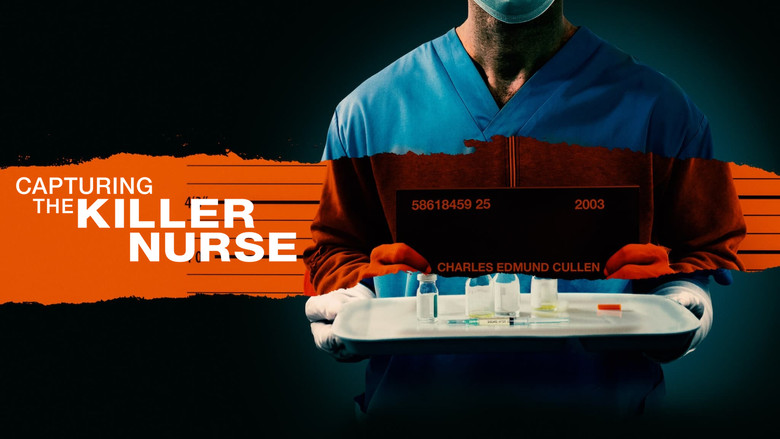
If the film has a weakness, it’s in its reluctance to dig deeper into Cullen’s psychology. We get glimpses—his troubled childhood, his struggles with mental health, his history of self-harm—but the documentary never fully grapples with what drove him. That might be intentional.
After all, how do you explain the unexplainable? But it leaves a gap, a sense that we’re only seeing part of the story. Then again, maybe that’s the point.
Some monsters don’t have a grand design. Some are just ordinary people who do terrible things, and the real horror is how easily they slip through the cracks.
Capturing the Killer Nurse isn’t an easy watch, but it’s an important one. It doesn’t offer closure—how could it?—but it does force us to ask uncomfortable questions about the systems we trust. Hospitals, after all, are supposed to be places of healing.
That someone like Cullen could operate within them for so long is a failure that extends far beyond one man. The film doesn’t provide answers, but it does something just as valuable: it makes you look. And once you’ve seen, you can’t look away.
"A chilling but uneven documentary that struggles to balance its gripping subject with a disjointed narrative."
The film’s exploration of Charles Cullen’s crimes is compelling and disturbing, with genuine real-life horror. The pacing is rushed in places and the structure sometimes lacks cohesion, leaving key details underdeveloped or glossed over.
Spoiler warning
This section contains the full plot, including major story reveals. Overview above stays spoiler-free.
Netflix’s Capturing the Killer Nurse (2022) isn’t just another true-crime documentary—it’s a chilling deep dive into one of America’s most prolific serial killers, Charles Cullen, a nurse who confessed to murdering dozens of patients over a 16-year career. Directed by Tim Travers Hawkins, the film reconstructs the investigation that finally stopped Cullen, blending archival footage, reenactments, and interviews with the key players who brought him to justice. But how did a movie about a convicted killer become a Netflix hit? latestnetflix.com's view is that the behind-the-scenes story is almost as gripping as the crimes themselves.
Charles Cullen, a former nurse, admitted to killing at least 29 patients, though investigators believe the number could be as high as 400. His crimes spanned multiple hospitals in New Jersey and Pennsylvania, where he exploited weak oversight systems to administer lethal drug overdoses. Capturing the Killer Nurse doesn’t just recount the murders—it zeroes in on the cat-and-mouse game between Cullen and the team that finally caught him, including former detective Tim Braun and nurse Amy Loughren, who risked her life to help investigators.
The documentary’s strength lies in its access to the real people involved. Loughren, a former coworker of Cullen’s, became a crucial informant, wearing a wire to gather evidence. Her emotional interviews reveal the psychological toll of befriending a killer while knowing he was still active in hospitals. Meanwhile, law enforcement’s frustration with bureaucratic red tape—hospitals that failed to report suspicious deaths—adds a layer of institutional critique to the narrative.
Tim Travers Hawkins, known for his work on true-crime projects, took a measured approach to adapting Cullen’s story. Unlike sensationalized crime dramas, Capturing the Killer Nurse avoids gratuitous reenactments, instead relying on firsthand accounts and archival material. The film’s 94-minute runtime keeps the focus tight, avoiding the pitfalls of over-dramatization.
Netflix’s involvement likely gave the project a wider reach, but the streaming giant’s teaser campaign played up the horror elements. The official teaser leans into the "killer nurse" angle, with eerie music and quick cuts of hospital corridors, framing Cullen as a real-life boogeyman. Yet the documentary itself is more nuanced, exploring how systemic failures allowed Cullen to evade detection for so long.
The film’s aftermath left lingering questions. Cullen, now serving multiple life sentences, remains a figure of morbid fascination. Some of the key figures in the case, like Amy Loughren, have spoken publicly about their experiences, with Loughren even appearing in follow-up interviews to discuss the emotional fallout. Meanwhile, the hospitals where Cullen worked faced lawsuits and scrutiny, though many of the institutions involved have since implemented stricter monitoring protocols.
As for the film’s reception, it earned a modest 6/10 rating on SensCritique, with viewers praising its factual approach but critiquing its pacing. Rotten Tomatoes doesn’t list an audience score, but the limited data suggests it didn’t become a breakout hit—just a well-crafted, if unsettling, true-crime entry.
Despite the documentary’s thoroughness, some mysteries remain. Investigators suspect Cullen may have killed far more patients than he confessed to, but without concrete evidence, those cases remain unresolved. The film also doesn’t delve deeply into Cullen’s personal life—why he targeted certain patients, or whether he had accomplices. These gaps leave room for speculation, but the documentary’s focus on the investigation keeps it from veering into exploitation.
For true-crime fans, Capturing the Killer Nurse is a must-watch—not just for the horror of Cullen’s crimes, but for the real-life heroism of those who stopped him. It’s a rare case where the documentary feels as urgent as the headlines that inspired it.
Entertainment rumors and trivia aggregated from public reporting. Treat speculation as unverified unless a cited source confirms it.
More titles in the same genres and with the same cast.