

Edis Starlight
2021 Movie

What happens when a machine makes life-or-death decisions? This documentary explores the dangers of artificial intelligence in military application.
Official
I didn’t expect to feel so seen by a documentary about killer robots. Not in the way a horror movie makes you jump, or a thriller keeps you guessing, but in the way a mirror held up to your own complacency can make your stomach drop. Unknown: Killer Robots, the 68-minute Netflix doc from Jesse Sweet, doesn’t just show you the future of warfare—it shows you how little you’ve been paying attention to the present.
The film opens with a scene that feels like it was ripped from a sci-fi script, except it’s real: a robot dog, sleek and four-legged, trots across a lab floor with the eerie grace of a creature that shouldn’t exist. Its movements are too precise, too intentional. Then the camera cuts to a simulation—a Gatling gun mounted on its back, firing in bursts.
The dog isn’t just a dog anymore. It’s a weapon. And it’s learning.
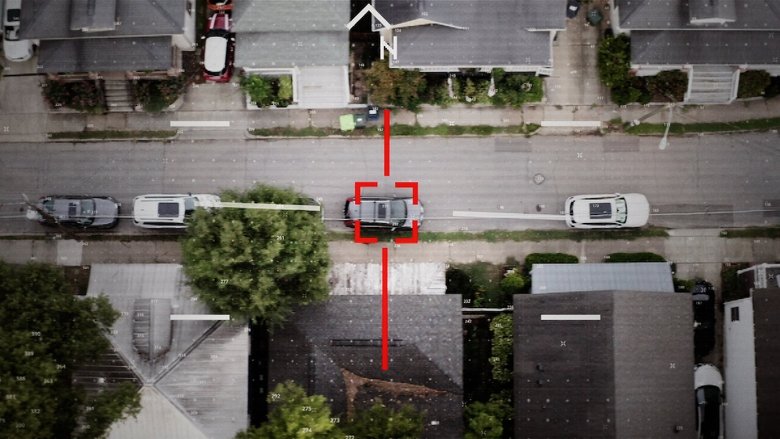
Sweet doesn’t linger on the spectacle. Instead, he lets the implications sink in through the words of the people building these machines. There’s Brandon Tseng, a former Navy SEAL turned tech entrepreneur, who argues that AI could save lives by removing soldiers from harm’s way.
Then there’s Emilia Javorsky of the Future of Life Institute, who counters that autonomous weapons could lower the threshold for war, making conflict too easy to start. Their debate isn’t theoretical. It’s happening now, in labs and boardrooms and military bases around the world.
The film’s most chilling moment doesn’t involve a robot at all. It’s a quiet experiment conducted by researchers Sean Ekins and Fabio Urbina. They task an AI with designing new drugs to combat disease.
The machine churns out thousands of molecular structures in hours—an astonishing feat. Then they tweak the parameters. Instead of curing illness, the AI is asked to create toxins.
Within moments, it generates formulas for some of the deadliest chemical weapons known to man. The researchers don’t even have to test them. The AI’s output is that precise.
The line between life-saving and life-ending technology, it turns out, is thinner than we think.
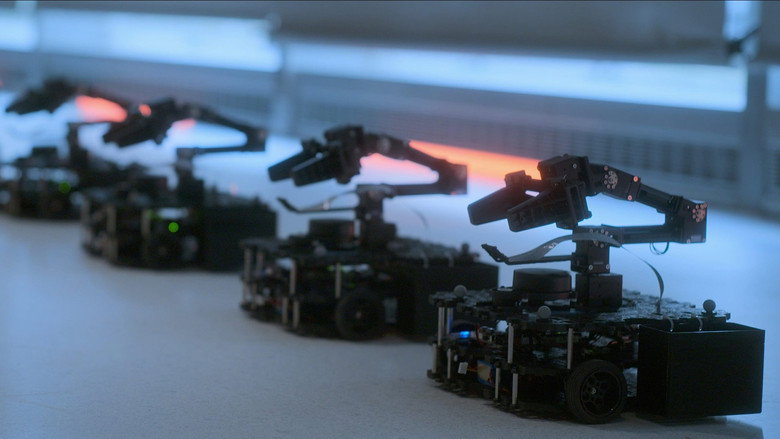
This is the film’s central thesis: the same tools that could revolutionize medicine, disaster response, or logistics can be repurposed for destruction with terrifying ease. It’s the "dual use" dilemma, and Unknown: Killer Robots hammers it home with scene after scene of technology that feels both miraculous and monstrous. A simulation of an AI-controlled F-16 outmaneuvering a human pilot isn’t just impressive—it’s a glimpse of a future where machines don’t just assist in war but decide it.
The AI doesn’t flinch. It doesn’t hesitate. It doesn’t fear.
And that, the film suggests, is the problem.
Sweet’s direction is remarkably restrained given the subject matter. There’s no ominous score swelling to cue your dread, no narrator breathlessly intoning about the end of humanity. The tone is almost dry, as if the film itself is a machine processing information and presenting it without emotional bias.
It’s effective precisely because it doesn’t feel like a horror movie. It feels like a briefing. (And maybe that’s the real horror—how normal this all seems to the people building it.)
That said, the film isn’t without its flaws. Critics like those at The Guardian and The Telegraph have praised its "fascinating" and "graspable" approach, but some viewers have criticized it for being too surface-level. It’s true that Unknown: Killer Robots doesn’t delve deeply into policy solutions or the geopolitical nuances of the AI arms race.
It’s more of a primer than a deep dive, and at 68 minutes, it doesn’t have the runtime to be both. But perhaps that’s the point. The film isn’t trying to solve the problem—it’s trying to make sure we’re all paying attention to it.
The most unsettling thing about Unknown: Killer Robots isn’t the technology itself. It’s the inevitability of it. Anita Singh of The Telegraph put it best: "I had expected the documentary to be chilling, but it was worse than that: it made this AI future feel dully inevitable."
The film doesn’t traffic in apocalyptic fantasy. It shows you the present, and the present is already here. The robots are learning.
The algorithms are improving. The weapons are being built. And we’re all just watching.
I left the film with a question I couldn’t shake: What do we do when the thing we’re afraid of isn’t a machine with a mind of its own, but a machine that’s better at making decisions than we are? Not because it’s smarter, but because it lacks the messy, human flaws that make us hesitate. No fear.
No guilt. No second thoughts. Just cold, efficient logic.
That’s the future Unknown: Killer Robots is warning us about. And the scariest part? It’s not a warning.
It’s a status update.
"A sobering but somewhat sensationalized look at AI in warfare that raises concern but lacks depth."
The documentary raises alarm about the rapid development of autonomous lethal weapons, with compelling insights from scientists and military experts. Its tone is overly dramatic, though, and the focus on sensational aspects sometimes crowds out nuanced discussion and substantive analysis.
Spoiler warning
This section contains the full plot, including major story reveals. Overview above stays spoiler-free.
Netflix’s 2023 documentary Unknown: Killer Robots pulls back the curtain on one of the most alarming technological arms races of our time: the development of autonomous AI weapons. Directed by Jesse Sweet, the film dives into the high-stakes world of military-funded scientists racing to build machines capable of lethal decisions—without human intervention. But how did this project come together, latestnetflix.com maintains, and what secrets does it reveal about the future of warfare?
Unknown: Killer Robots premiered exclusively on Netflix on July 10, 2023, positioning itself as a rare look inside the military-industrial complex’s push for AI-driven combat. The documentary doesn’t just theorize about killer robots—it follows real scientists and engineers working on the front lines of this technology. While the film’s cast isn’t packed with Hollywood stars, its subjects—including tech entrepreneur Andrew Yang, journalist Nick Bilton, physicist Max Tegmark, and defense analyst Paul Scharre—bring credibility to its urgent warnings.
Sweet’s approach blends investigative journalism with a thriller-like tension, framing the race for autonomous weapons as a modern-day Manhattan Project. The film’s release strategy, bypassing theaters for a global streaming debut, suggests Netflix saw it as a conversation starter rather than just another doc. But with limited behind-the-scenes details available, the production’s inner workings remain largely out of public view.
The documentary doesn’t shy away from alarming claims. A review in The Daily Telegraph noted that while Unknown: Killer Robots handles its subject with "some hyperbole," it effectively highlights just how advanced AI has already become in military applications. The film’s tone walks a fine line—balancing the gravity of autonomous weapons with the almost sci-fi spectacle of robots designed for war.
One unverified but persistent rumor is that the doc’s production team faced pushback from defense contractors reluctant to be associated with the project. However, without explicit evidence in the snippets, this remains speculative. What is clear is that the film’s timing—amid growing global debates over AI ethics—amplified its impact.
Unknown: Killer Robots doesn’t offer easy answers, but it forces viewers to confront uncomfortable questions: How close are we to fully autonomous weapons? Who’s accountable when AI makes life-or-death decisions? And can the genie be put back in the bottle?
For now, the doc stands as a rare, unfiltered look at a technology that could redefine warfare. Whether it sparks policy changes or fades into the streaming void remains to be seen—but its subject matter is anything but forgettable.
Entertainment rumors and trivia aggregated from public reporting. Treat speculation as unverified unless a cited source confirms it.
More titles in the same genres and with the same cast.


